WhatsApp
 Eric.wang@ltzzc.com
 0086-379-69950051

Wie ist ein Drehkranz aufgebaut?
What is a slewing bearing?
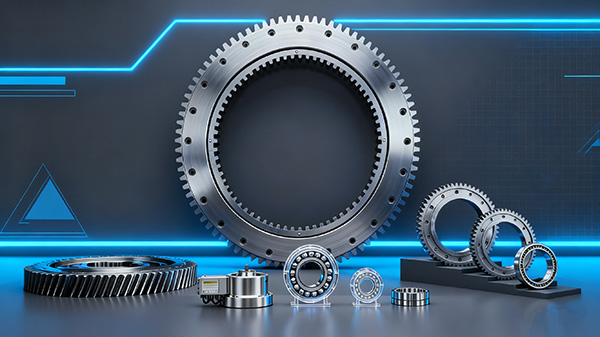
Drehlager (also commonly known as slewing rings) are large, heavy-duty bearings that can simultaneously withstand axial force, radial force, and overturning moment. Their core function is to provide rotation and support heavy loads for equipment, making them a core component of engineering machinery, port machinery, wind power equipment, and other equipment requiring relative rotation and heavy-duty support.
Unlike ordinary small bearings, their main characteristics are large size, multi-load composite bearing capacity, and high degree of integration. Most can directly integrate gears, flange connection holes, and other structures, eliminating the need for additional connecting parts and allowing for direct connection to the fixed and rotating ends of the equipment, simplifying the overall machine structure.
Slewing BearingsCore Application:
Widely used in heavy-duty equipment requiring 360° rotational operation, typical examples include:
Engineering machinery: excavators, cranes, rotary drilling rigs, tower cranes
Port/logistics machinery: gantry cranes, quay cranes, container cranes
New energy equipment: wind turbine mainframes, photovoltaic tracking brackets
Others: mining machinery, radar antennas, amusement park rides, ship deck machinery
Wie ist ein Drehkranz aufgebaut?
Slewing bearings typically consist of an inner ring, an outer ring, rolling elements, a cage, and seals. Some slewing bearings also have a gear structure, including internal gear slewing bearings, external gear slewing bearings, and gearless slewing bearings, to suit different structural and load requirements. The following is a detailed description:
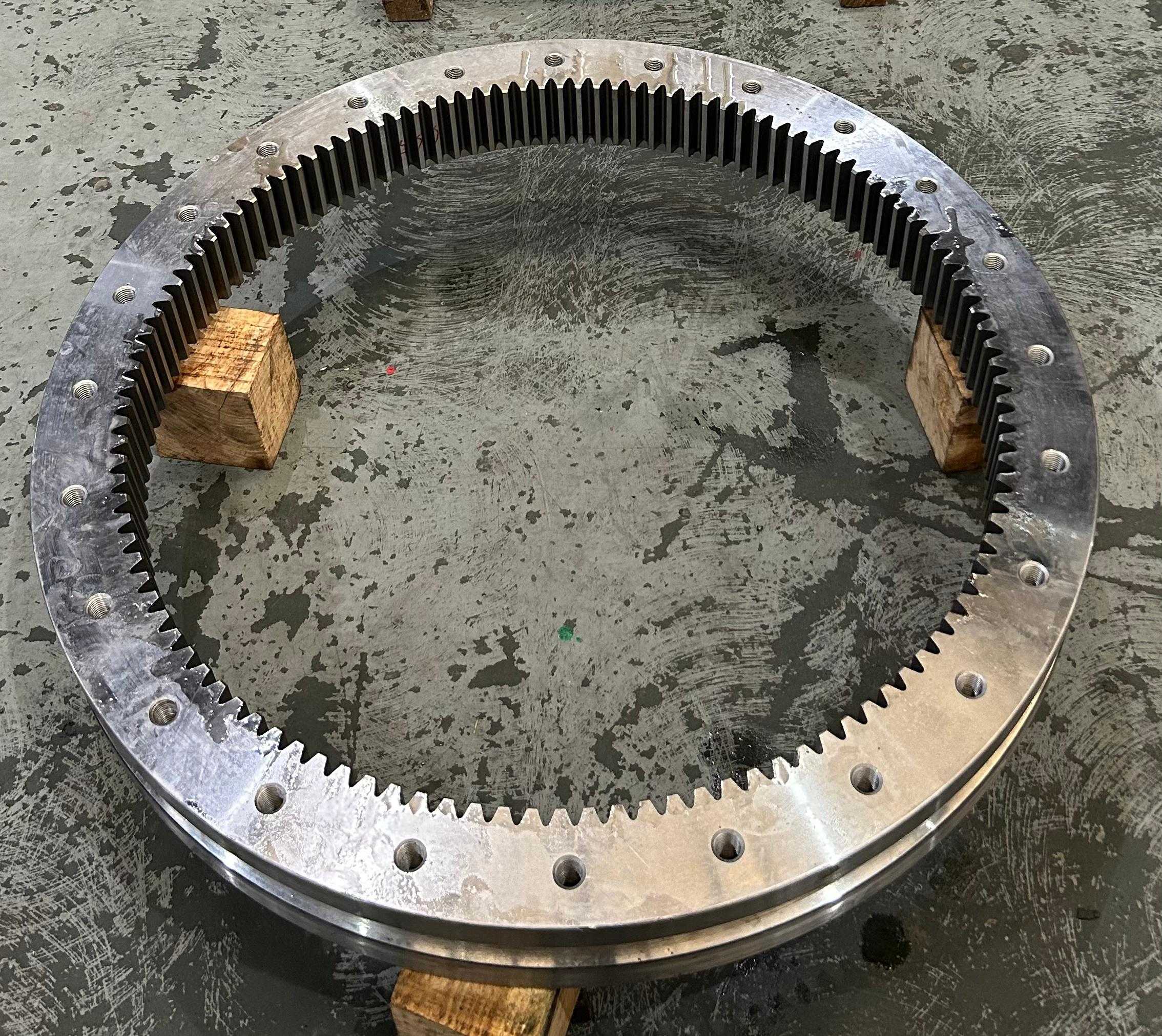
Bearings Inner and Outer Rings: These are the main load-bearing parts of the slewing bearing. The two rings rotate independently of each other, connecting to different parts of the machine. One of the rings (usually the inner ring) may have a gear mechanism connected to the machine's hydraulic system to drive the slewing bearing's rotation. Based on the gear structure, they can be divided into external gear type, internal gear type, and gearless type. The external gear type has external gears machined on the outer circumference of the outer ring; the internal gear type has internal gears machined on the inner circumference of the inner ring; and the gearless type has no gears machined on either the inner or outer ring, and is rigidly connected to other components through flanges, pins, or bolts.
Rolling Elements: The rolling elements are located between the inner and outer rings, sliding and rotating relative to each other on the raceways of the inner and outer rings, allowing the two rings to rotate, reducing friction and maintaining the gap between the rings. Common rolling elements include bearing balls, but some Drehlageruse other designs such as rollers.
Cage: The cage is located between the rolling elements, separating them to prevent friction between the rolling elements, ensuring their even distribution within the bearing, and allowing the rolling elements to rotate freely.
Bearings Seals: Seals are installed on both sides of the slewing bearing to ensure that lubricating oil does not escape from the bearing and to prevent dust, debris, and other impurities from entering the bearing, thus ensuring proper lubrication and operation of the bearing.
How does slewing bearing work?
The core function of a slewing bearing is to utilize friction between rolling elements and raceways. One ring of the slewing bearing is fixed to the equipment, while the other rotating end achieves low-resistance relative rotation. Simultaneously, it withstands axial forces, radial forces, and overturning moments during operation. Essentially, it acts as a "rotating load-bearing joint" for heavy-duty equipment. The working process combines two key actions: load bearing and rotational transmission. The overall operating principle is simple and suitable for heavy-duty, low-speed working conditions. The specific working process is divided into three types: gearless, internal gear, and external gear driven, but the cooperation logic of the core components remains consistent.
Type 1: Gearless Slewing Bearing (Passive rotation, directly driven by external force)
Applicable scenarios: Small equipment, applications that do not require active and precise driving (e.g., some small cranes, photovoltaic tracking brackets)
Working process: External power directly drives the rotating end connected to the inner/outer ring of the slewing bearing, causing the inner and outer rings to rotate relative to each other. The rolling elements roll in the raceway during the rotation, only bearing the load and reducing friction during rotation, without any self-driving function.
Type 2: With gear Slewing Bearing (Active Rotation, Gear Mesh Drive)
Geared slewing bearings combine load-bearing and active transmission. They use gear meshing to amplify the torque from a smaller gear, driving the heavy-duty rotating end. They can support various loads and allow for full 360-degree rotation.
Contact LTZC bearing for a quote