WhatsApp
 jessica.chai@ltzzc.com
 0086-379-69950051

A Practical Guide to Excavator Slewing Bearing Replacement Fit Checks
Replacing an excavator's main turntable bearing is a significant maintenance operation. A dimensional mismatch discovered mid-installation brings the entire project to a halt, leading to extended machine downtime, wasted labor hours, and potential damage to the new component. The key to a successful replacement is not just ordering the correct part number, but performing a series of methodical fit checks before the old bearing is even removed. This guide provides a clear process for parts managers and service teams to verify a new Excavator Slewing Bearing is a perfect match for the machine, ensuring a smooth and efficient installation.
At LTZC, our work is guided by stringent quality management systems, including ISO 9001:2015, ISO 14001:2015, and ISO 45001:2018 certifications. This commitment to precision ensures that the measurements and specifications of our bearings meet the demands of heavy industrial applications.
Why Pre-Installation Verification is Non-Negotiable
The assumption that a matching part number guarantees a perfect fit can be a costly one. Manufacturing tolerances, undocumented machine modifications, and even shipping damage can introduce subtle discrepancies. Verifying the new bearing against both the machine's structure and the old bearing's specifications is a low-effort, high-reward step that mitigates significant operational risks.
Consider the consequences of a mismatch:
Extended Downtime: The single greatest cost is an idle machine. If a new bearing doesn't fit, the excavator remains out of service while the correct part is sourced and delivered. This can halt entire projects.
Wasted Labor and Crane Costs: The process of lifting an excavator's upper structure requires specialized equipment and skilled technicians. Discovering a problem after this process has begun means these costs are incurred for a failed attempt.
Risk of Component Damage: Attempting to force a mismatched bearing into place can damage the precision-ground raceways, gears, or the machine's mounting surfaces. This can turn a standard replacement into a much more complex and expensive repair.
Logistical Hurdles: Returning a large, heavy industrial bearing and expediting a replacement involves significant freight costs and administrative effort, further delaying the repair.
A structured verification process transforms the replacement from a gamble into a predictable maintenance task. It provides the confidence needed to schedule crane time and allocate technicians effectively.
The Essential Pre-Installation Checklist for Replacement Bearings
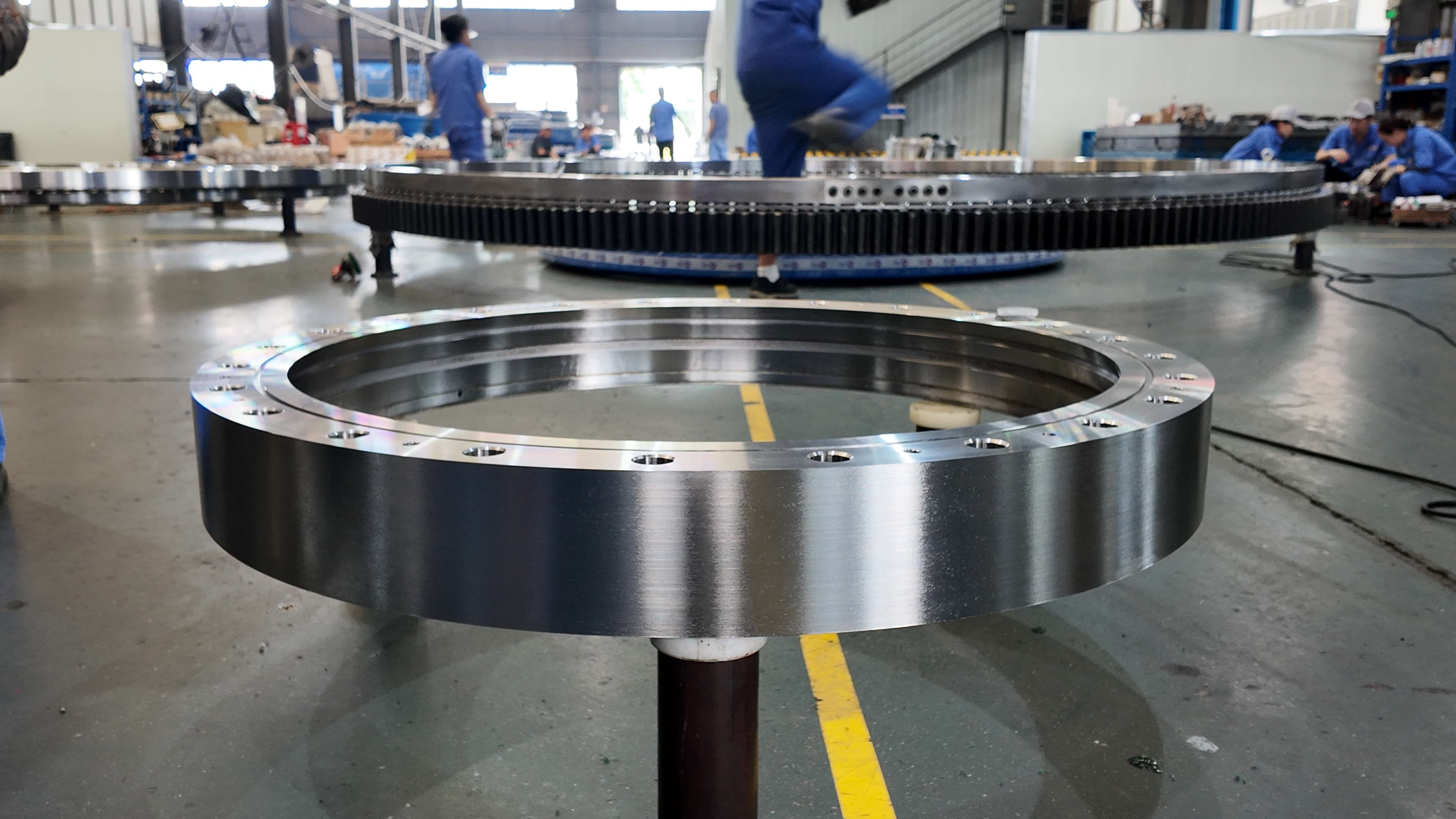
Before beginning the disassembly, use the new replacement bearing as your template. This checklist covers the critical geometric and functional checks that confirm compatibility. Perform these steps with precision measuring tools such as calipers, tape measures, and feeler gauges.
| Checkpoint | Verification Method | Common Failure Point |
|---|---|---|
| Mounting Face Flatness | Use a straight edge and feeler gauge on the new bearing's mounting surfaces. The surface should be free of distortion, shipping damage, or manufacturing defects. Refer to the manufacturer's specification for flatness tolerance, typically within 0.05mm. | Damage during shipping or handling can create high spots, preventing the bearing from seating correctly and leading to uneven load distribution and premature failure. |
| Bolt Hole Pattern (PCD & Count) | Measure the Pitch Circle Diameter (PCD) of both inner and outer rings. Count the number of holes on each ring and confirm they match the old bearing or machine drawings. Check the diameter of the holes themselves. | An incorrect PCD is an immediate installation failure. Even a slight deviation will prevent the mounting bolts from aligning with the machine's tapped holes. This is a common error with aftermarket parts. |
| Gear Engagement & Specifications | Identify if the gear is internal or external. Count the number of teeth. If possible, use a gear pitch gauge to verify the module and pressure angle match the machine's pinion. A mismatch here will cause catastrophic slewing ring gear failure. | Ordering a bearing with an incorrect gear module is a frequent mistake. The gears will either not mesh or will bind and destroy each other under load. |
| Lubrication Ports | Locate all grease fittings or lubrication ports on the new bearing. Confirm their position and thread type are accessible and compatible with your equipment's grease lines. Ensure they are not blocked. | Inaccessible grease points will lead to inadequate lubrication, resulting in rapid raceway wear and bearing seizure. |
| Rotational Clearance & Smoothness | While the bearing is on a flat surface, attempt to rotate it by hand. It should move smoothly without binding, grinding, or excessive noise. Check the axial and radial clearance (play) to ensure it is within the specified tolerance for a new bearing. | Excessive play might indicate an internal defect or incorrect assembly. A bearing that feels "gritty" or binds could have internal contamination or damage from improper storage. |
For more in-depth procedures on the final mounting process, refer to our detailed guides on bearing installation.
Decoding Bearing Specifications: Matching Old vs. New
The part number stamped on the side of a bearing is the primary identifier, but it's crucial to verify the physical dimensions that the number represents. Cross-referencing part numbers between different manufacturers can sometimes introduce small but critical variations. Always trust direct measurement over catalog numbers alone.
Here are the key parameters to measure on both the old bearing (if accessible and intact) and the new replacement. Record these values to create a clear comparison.
Key Dimensional Comparison Checklist
Overall Diameter (OD): Measure the full outer diameter of the bearing.
Inner Diameter (ID): Measure the inner bore diameter.
Overall Height: Measure the total height of the bearing assembly, including both rings.
Outer Ring Bolt Holes:
Number of Holes
Pitch Circle Diameter (PCD)
Hole Diameter
Inner Ring Bolt Holes:
Number of Holes
Pitch Circle Diameter (PCD)
Hole Diameter
Gear Data:
Gear Location (Internal / External)
Number of Teeth
Gear Module (If known/measurable)
This systematic comparison provides irrefutable evidence that the new part is a one-to-one replacement. If any dimension is out of tolerance, you have identified the problem before it escalates into a major worksite issue.
Custom Solutions for Obsolete or Modified Equipment
What happens when a direct replacement is unavailable? This is common with older machinery, heavily modified equipment, or excavators from manufacturers who are no longer in business. In these situations, a standard off-the-shelf part will not work. Attempting to fit a "close enough" bearing is a recipe for failure.
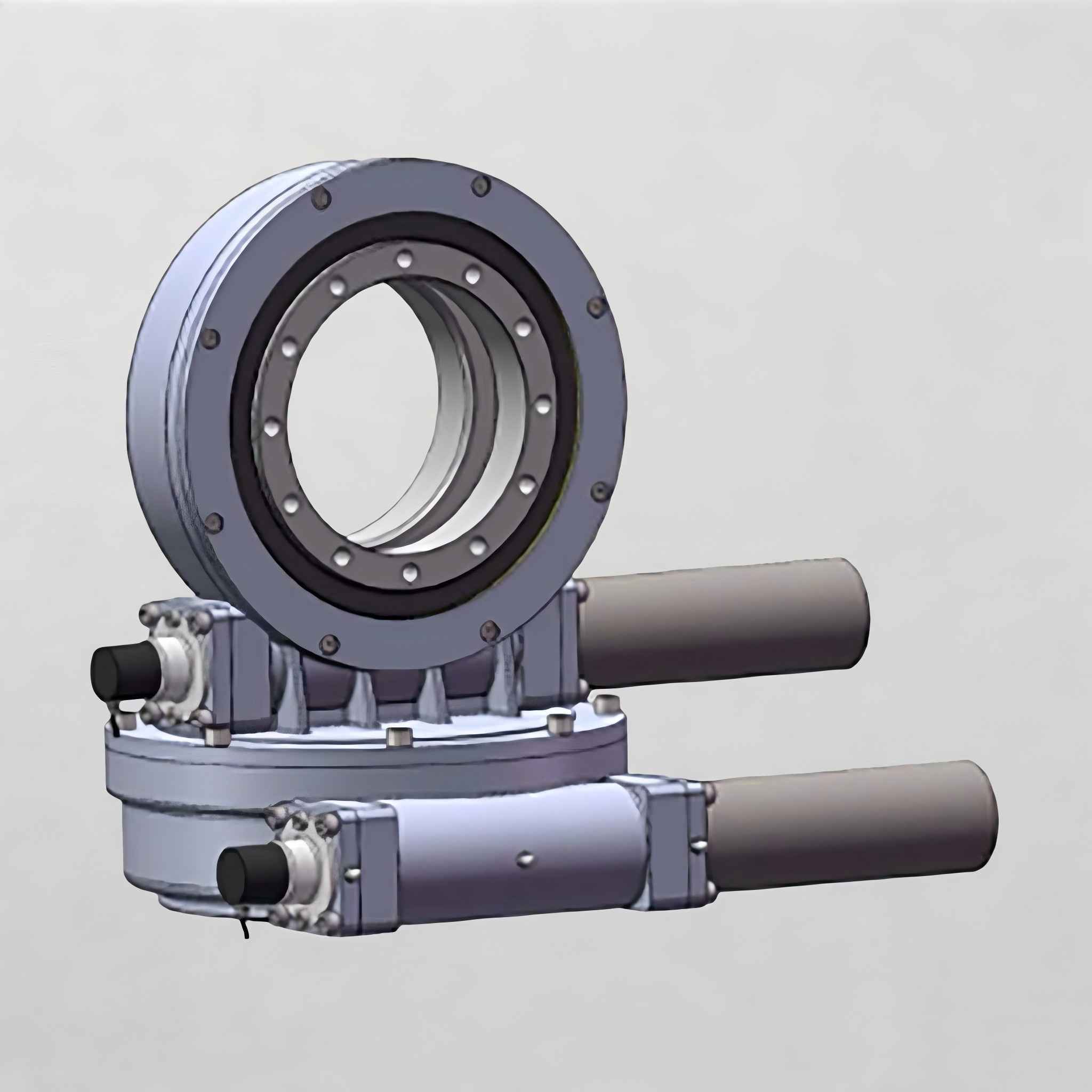
This is where custom manufacturing becomes essential. At LTZC, we specialize in providing customized bearing solutions based on your specific needs. By supplying our engineering team with the original bearing, detailed drawings, or precise measurements from the machine itself, we can produce a bespoke bearing that matches your requirements perfectly. Whether you need specific materials for a harsh environment, unique dimensions for a modified boom, or a gear configuration for a non-standard drive pinion, our advanced production capabilities ensure high precision and consistent quality.
A key advantage of our approach is that we have no Minimum Order Quantity (MOQ). This means you can source a single, custom-engineered non-standard bearings without committing to a large production run, making it a practical solution for one-off repairs or specialized machinery. Our standard delivery timeframe of 30-90 days allows for predictable project planning, even for custom components.
By taking these verification steps, you protect your investment in the new bearing and ensure the excavator returns to service reliably and on schedule. A few hours of measurement on the ground saves days of costly downtime in the workshop.
If you are planning a replacement for a unique or obsolete machine, submit your technical specifications to our engineers. We can provide a detailed review and quotation for a custom-fit solution.