WhatsApp
 jessica.chai@ltzzc.com
 0086-379-69950051

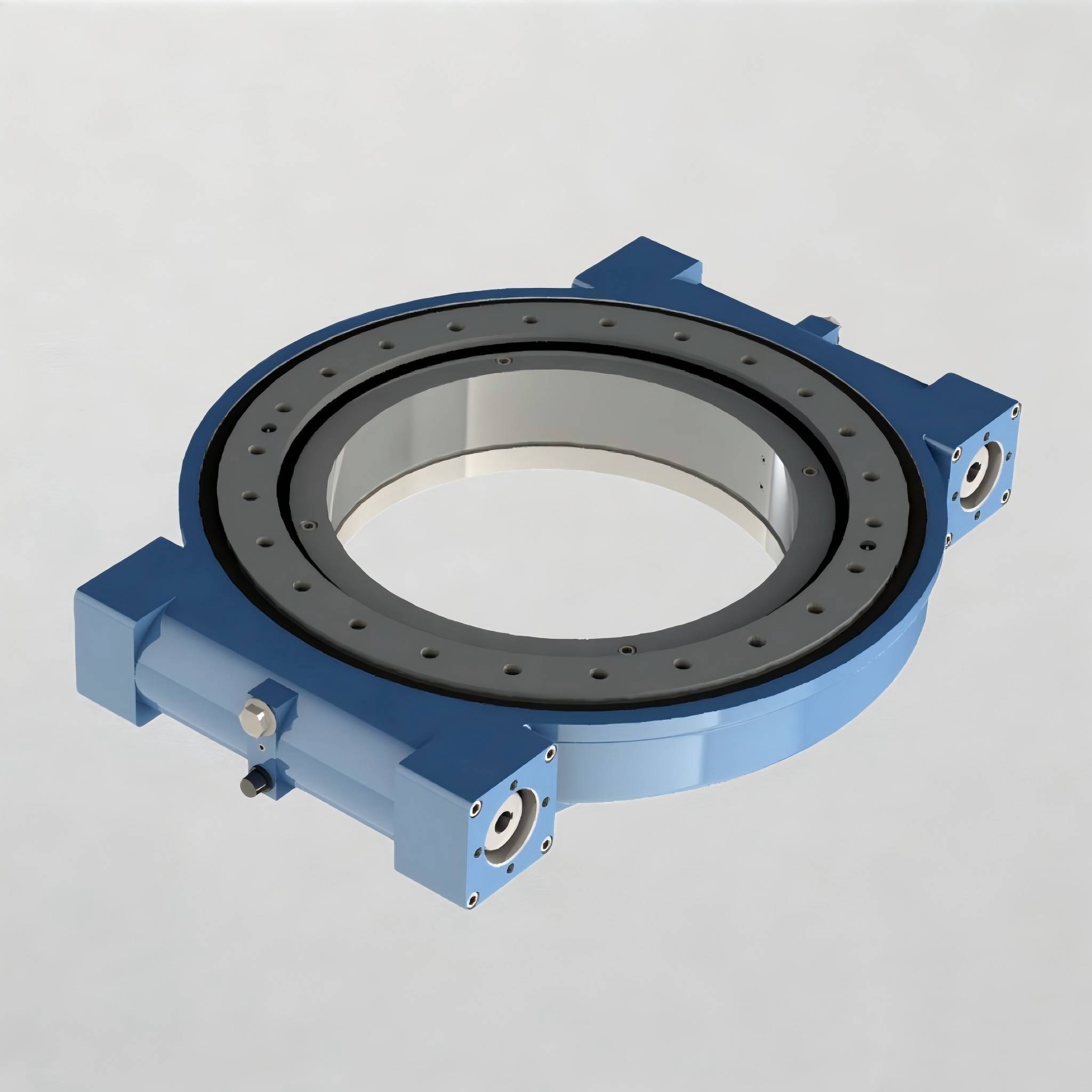
Reduce Platform Weight with Compact Slewing Drives
Every kilogram on a rotating turntable is a kilogram the chassis, outriggers and counterweight must carry. A lighter drive helps payload and stability, but only if it still holds the load and survives shock. A well-chosen Compact Slewing Drive can take mass out of the rotating assembly, though the saving depends on where you cut and what you leave untouched. This article is for aerial lift and mobile-equipment designers weighing that trade-off. It looks at the problem as an application, not a catalog.
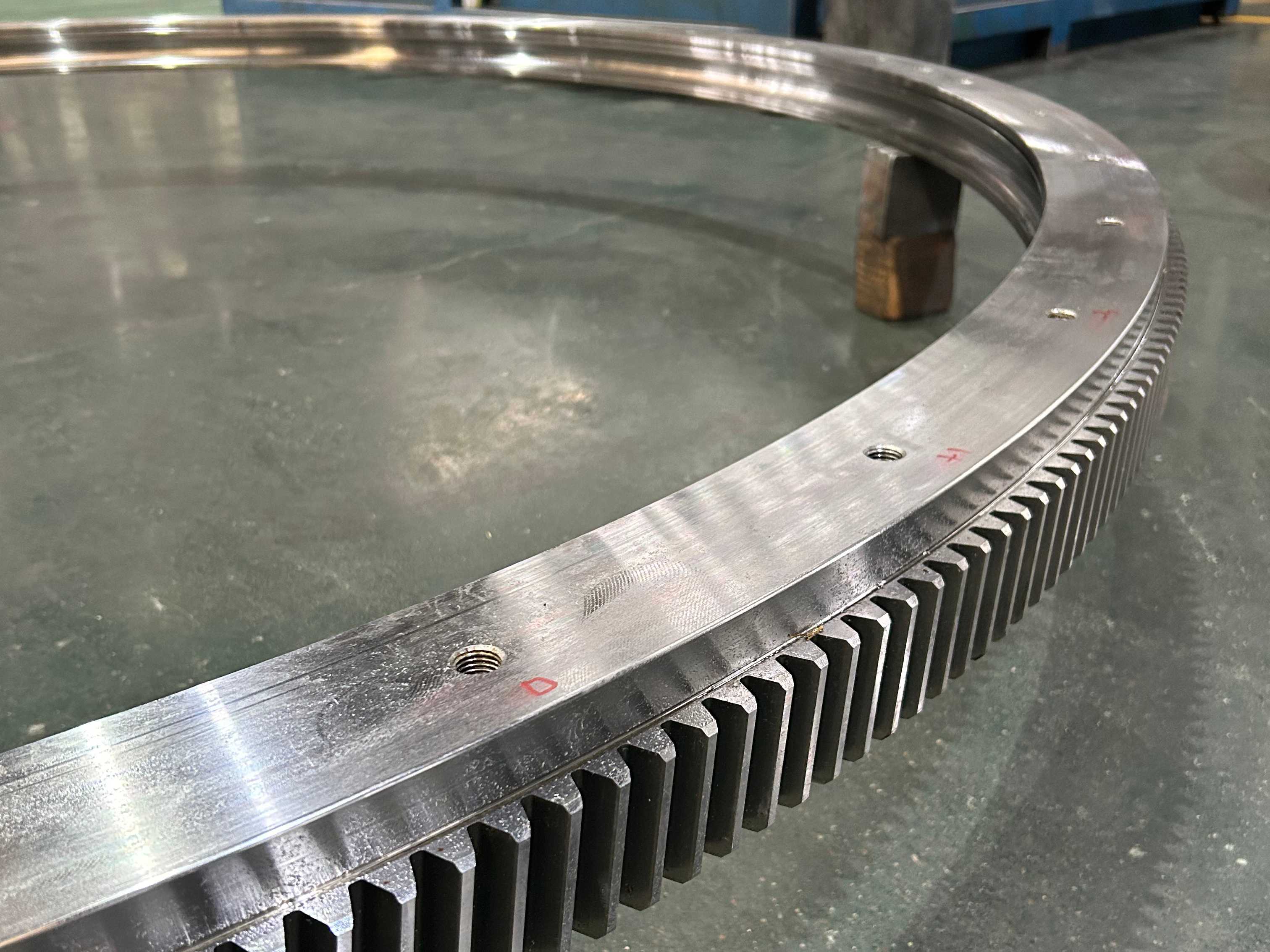
Most selection pages start from torque, load and ratio. Those inputs matter. For a platform they are only half the question, because the drive, its housing, the bearing and the mounting structure all add up on the same turntable. LTZC supplies Slewing Drives alongside a precision slewing bearing range, so the two can be reviewed together instead of as separate line items.
Why rotating mass drives the drive choice on aerial platforms
On a boom lift or access platform, the slewing assembly sits high in the load path. Weight added there raises the machine's overall mass and moves the center of gravity upward. Both reduce the margin before stability limits are reached. Shaving the rotating assembly is one of the few ways to gain payload without changing the boom.
If you are asking how to reduce boom lift weight, the answer rarely lies in one component. Three areas usually share the opportunity:
- Drive housing: material and wall design.
- Drive layout: where the motor, worm or gear stage sits relative to the bearing.
- Mounting integration: how much adapter plate, flange and fastener mass sits between drive and turntable.
The constraint is that aerial work platform rotation also has to resist tipping moment, wind load and the shock of a stop. Lighter is only useful when the holding capacity stays inside your design case.
How housing material, drive layout and mounting integration cut rotating mass without losing holding capacity
The table compares the three levers. It states what each one changes, what protects holding capacity, and where it stops working. These are design principles, not guaranteed weight savings. Actual results depend on your loads and structure.
| Lever | How it reduces mass | What protects holding capacity | Where it stops working |
|---|---|---|---|
| Housing material (for example, an aluminum housing slew drive) | Lower-density housing replaces heavy cast or fabricated steel around the gear stage. | The raceway and gear elements stay in suitable bearing steel such as 42CrMo or GCr15. The housing carries enclosure and alignment duty, not the rolling contact load. | Where the housing is also a primary structural member in the load path, where shock loading is high, or where heat and galvanic contact with steel are not managed. |
| Drive layout | A compact drive that sits close to the bearing removes separate gearboxes, couplings and brackets. | Tooth contact and bearing size are checked against the real moment load, not the nominal rating alone. | Where the motor must be offset for clearance, or where the gear ratio needed forces a larger stage. |
| Mounting integration | Bolting the drive straight to a machined turntable face reduces adapter plates and extra flanges. | Flatness, bolt pattern and a stiff supporting structure keep the bearing from deforming under load. | Where the turntable plate is thin and would need local reinforcement that cancels the saving. |
The order that avoids false savings
- Fix the load case first: tipping moment, axial load and radial load at the worst boom position.
- Choose the bearing type and size that carries that case.
- Only then decide how light the housing and mounting can be.
Reversing this order is the usual source of failures. A light housing chosen first can force a heavier bearing or stiffening plates later, which wipes out the gain.
Mapping platform requirements to drive attributes and limits
Use this list to translate each requirement into something you can check on a drawing or a quote.
| Requirement | Attribute to check | Limit or open question |
|---|---|---|
| Lower turntable mass | Housing material, drive envelope, adapter count | Confirm stiffness of the lighter housing under your moment load. |
| Hold position with a person in the basket | Brake arrangement, backdriving behavior of the gear stage | Do not treat gear self-locking as the only safety device. Check applicable safety rules for your market. |
| Outdoor use | Sealing, corrosion protection, material pairing | Mixed metals need isolation. Ask for the coating and seal specification. |
| Smooth start and stop | Backlash, ratio, motor control | Backlash targets must be agreed in writing before production. |
| Fit to existing turntable | Bolt circle, flange height, bearing interface | Existing designs may need a custom interface. |
When a standard unit does not match, LTZC works from your drawings and working conditions. Our Customized Bearings service covers material, size and performance requirements, and we also produce non-standard bearings where a catalog size will not fit.
Illustrative scenario: lightening the turntable of a mid-size boom lift
This is a general illustrative scenario, not a completed LTZC customer project. It shows how the reasoning works.
Imagine a design team with a telescopic boom lift that is close to its axle load limit. Payload cannot rise without a weight saving elsewhere. The current rotation assembly uses a steel-housed drive bolted to the turntable through an adapter plate, with a separate motor bracket.
Step-by-step review
- List the heavy items on the turntable ring: drive housing, adapter plate, motor bracket, fasteners.
- Remove what the layout can eliminate: a drive that mounts directly to a machined face may remove the adapter plate and bracket.
- Test a lighter housing: an aluminum housing slew drive is a candidate only if the housing does not carry bearing load and the thermal and corrosion pairing are acceptable.
- Re-check the bearing: confirm the raceway and bolt pattern still carry the worst-case tipping moment.
- Verify the structure: check that the turntable plate stays flat under load without added ribs.
The outcome here is qualitative: possible mass reduction from fewer parts first, a lighter housing second. The quantity can only be calculated once loads and drawings are shared. That is why we ask for them before recommending a unit.
Common mistakes when specifying a lightweight slew drive
- Choosing by drive weight alone. Adapter plates and reinforcement can erase the saving.
- Using the catalog torque rating as the holding rating. Static holding under tipping moment is a different check.
- Ignoring bolt preload and flatness. A light mounting face that flexes shortens bearing life.
- Mixing aluminum and steel without isolation. Galvanic corrosion appears outdoors.
- Relying on self-locking as the only holding method on a man-carrying platform.
- Skipping installation guidance. Poor bearing installation causes damage that looks like a drive problem.
What LTZC's recorded cases do and do not show
LTZC has no recorded project in this article that is specifically a lightweight platform drive, so we do not claim a measured weight result for one. The cases below show manufacturing and engineering capability, not platform weight reduction:
- In 2024 we delivered a 10.87-meter integral three-row roller slewing ring for 2,000-ton fixed lifting equipment, our largest to date.
- Also in 2024, we produced an 8.445-meter integrated bearing for a crane-industry client in South Korea.
- We supplied a 3-meter-diameter turntable bearing that held the main torch tower at the World Military Olympic Games opening ceremony.
These are far larger than aerial platform sizes. They show we can control precision and quality on demanding rotating structures, backed by ISO9001:2015, ISO14001:2015 and ISO45001:2018 management systems, and a 20,000 m² facility operating since 1992. They do not prove a result on a boom lift. For heavy-duty rotation outside platforms, see our Construction & Heavy Machinery applications.
Fit, exclusions and what to send for assessment
The approach fits when:
- Weight is the limiting factor and the load case is well defined.
- The turntable can be machined to accept a direct mount.
- The housing is not part of the main structure.
Treat it with caution or rule it out when:
- Shock or impact loads are high and not yet quantified.
- The housing doubles as a structural member.
- Operating temperature range or corrosion exposure is unknown. Verify before committing.
Inputs that let us assess your application
- Tipping moment, axial and radial load at the worst boom position.
- Required rotation speed, ratio and backlash expectations.
- Existing turntable drawing, bolt circle and available envelope.
- Duty cycle, environment and any safety standard you design to.
Our terms support early-stage prototypes: no MOQ, and a typical 30 to 90 day delivery window that depends on the specification. After delivery, we respond to quality objections within 24 hours. On-site service in China starts within 48 hours. Our bearing selection guide is a good starting point for the bearing side of the decision.
If you are weighing a Compact Slewing Drive for a new or existing platform, send us your drawings and load case. We will review housing, layout and mounting options with you and give you selection advice before you request a quote.