WhatsApp
 jessica.chai@ltzzc.com
 0086-379-69950051

Slew Drives Need Seal Choices Matched to Outdoor Exposure
How should an OEM engineer choose a seal when a rotary drive will face rain, airborne dust, salt spray, and repeated temperature changes? The answer is not simply to select the tightest seal available. A seal must match the contamination route, lubricant condition, mounting arrangement, shaft motion, and service access of the application.
A Slew Drive used inside a protected industrial enclosure faces a different risk profile from one installed on a solar tracker, mobile machine, port-side handling system, or exposed marine structure. Load capacity and torque transmission remain essential selection factors, but outdoor reliability also depends on preventing contaminant entry and retaining usable lubricant over the service interval.
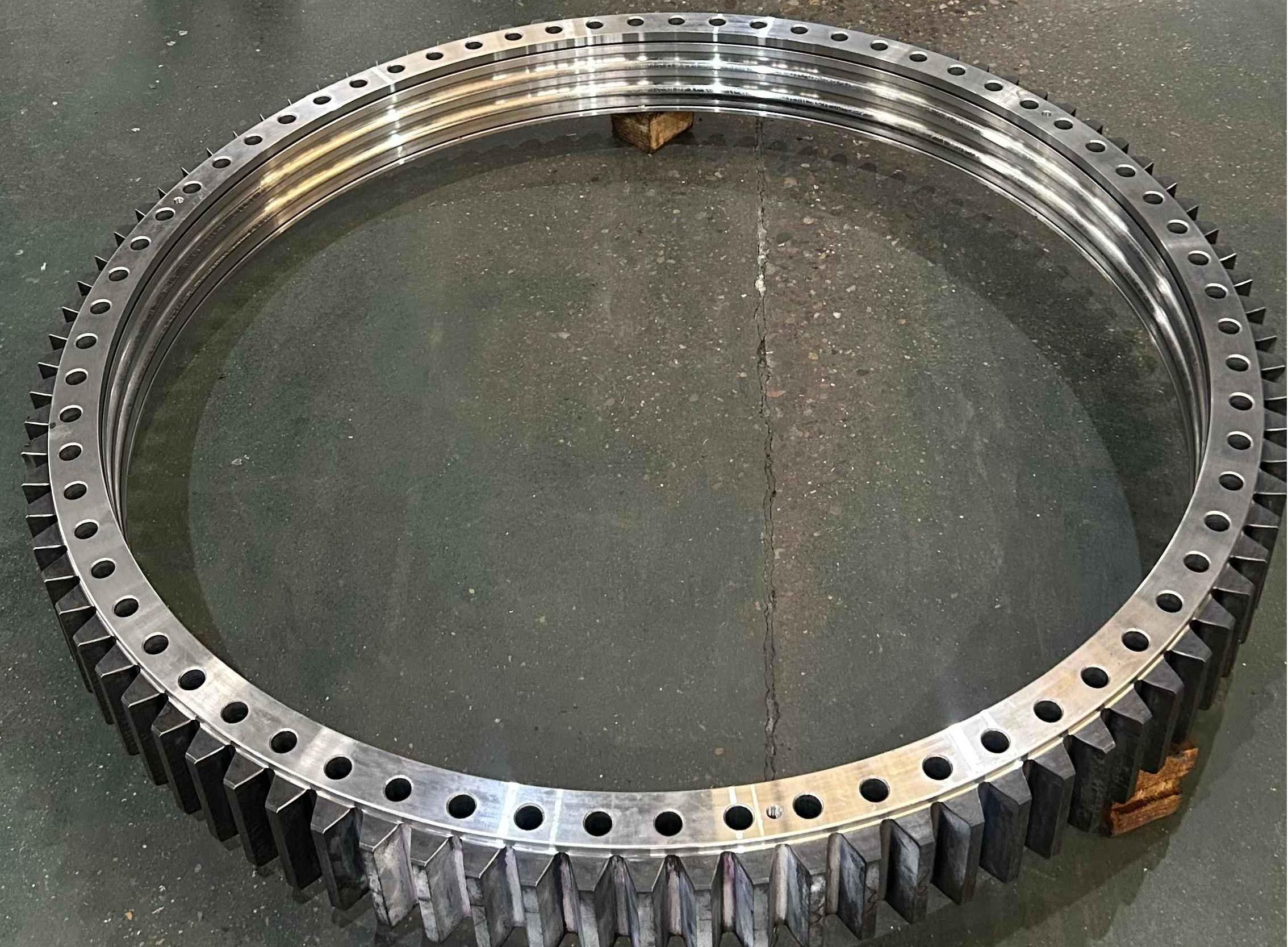
For the rotary bearing and gear interface, engineers should assess the drive as an assembly rather than as a single sealed component. The bearing arrangement, gear engagement, housing joints, fastener interfaces, breather location, grease points, and mounting surface can all become paths for water or particles. Related selection information is available for Slewing Drives, while a bearing selection guide can help organize the loads, mounting conditions, and operating details needed before issuing an RFQ.
Start with the exposure mechanism rather than the application name
Recommendation: Define the actual contamination mechanism before selecting a seal arrangement. “Outdoor use” is too broad to support a reliable decision because rainwater, windblown dust, salt spray, and thermal cycling enter equipment in different ways. This approach fits every exposed installation, including solar trackers, construction equipment, marine equipment, and remote automation. It does not replace load, torque, duty-cycle, or mounting calculations; it adds environmental requirements to them.
Industry product pages often emphasize torque, bearing capacity, and application sectors such as cranes or turntables. Those factors matter. However, they do not explain whether water will pool at a housing joint, whether dry abrasive dust will reach a rotating interface, or whether daily heating and cooling will draw humid air into the enclosure.
The available evidence here supports an evergreen engineering observation rather than a claim of a recent market shift: outdoor installations can experience multiple contamination modes at once. The practical interpretation is that a component selected only by application label may have an incomplete environmental specification. A solar tracker in a dry inland area may be dust-dominated; a tracker near the coast may be exposed to both fine particles and salt-bearing moisture. Both are “solar” applications, but they require different inspection priorities.
Separate observed conditions from engineering interpretations
Observed condition: Rain can collect on horizontal surfaces, flow along fasteners, and reach housing joints. Interpretation: Water-shedding geometry and protected joint locations may be as relevant as the lip seal itself. Limit: The amount of water exposure must be confirmed from the installed orientation and local cleaning practice.
Observed condition: Fine dust can settle during downtime and be moved by vibration or rotation. Interpretation: A seal that retains lubricant but permits abrasive particles past the exclusion interface may not meet the service objective. Limit: Particle size, volume, and pressure-washing practices must be known before selecting added exclusion features.
Observed condition: Salt spray can remain on external metal surfaces after moisture evaporates. Interpretation: Surface protection, drainage, protected fasteners, and inspection access should be evaluated together. Limit: “Marine” alone does not define the severity, frequency, or directness of salt exposure.
Observed condition: Temperature changes can alter lubricant consistency and create pressure differences across a closed housing. Interpretation: Seal material compatibility and housing ventilation strategy require review. Limit: The actual temperature range and cycle frequency must come from site data.
For applications where the drive interfaces with a larger rotary bearing, the sealing plan should be coordinated with the precision slewing bearing arrangement. A protected drive cannot compensate for an adjacent bearing or gear interface that receives water and abrasive debris without an appropriate maintenance plan.
Map rain, dust, salt spray, and temperature cycling to sealing, lubrication, and housing-protection choices
Recommendation: Use a contamination map during design review and record one choice for sealing, lubrication, and housing protection for each exposure. The reason is simple: one measure rarely controls every failure route. This method fits new designs and redesigns of existing outdoor equipment. It does not determine the final seal material or grease grade by itself; supplier review must confirm compatibility with motion, lubricant, temperature, and geometry.
| Exposure risk | Likely entry or damage route | Sealing choice to evaluate | Lubrication choice to evaluate | Housing-protection choice to evaluate | Limit or verification needed |
|---|---|---|---|---|---|
| Rain and standing water | Water follows housing joints, fasteners, cable paths, or low points | Evaluate lip seals, protected joint faces, and external exclusion features where geometry permits | Confirm that the lubricant remains suitable when incidental moisture is possible; define inspection after water exposure | Use drainage paths, avoid water traps, and orient joints away from direct runoff where possible | Check installed orientation and whether washdown or heavy rainfall can create direct impingement |
| Dry or abrasive dust | Particles reach rotating interfaces or settle near seal lips during stopped periods | Evaluate multi-stage exclusion rather than relying only on lubricant retention | Set a contamination inspection routine and verify grease replenishment points remain clean during service | Add shields or guarded openings where dust is driven by wind, vibration, or nearby processing | Confirm particle type, airborne concentration, and whether cleaning uses compressed air |
| Salt spray and coastal moisture | Deposits remain on exposed surfaces and moisture reaches joints or fasteners | Evaluate seal materials and external interfaces for the stated environment; protect static joints as well as rotating ones | Review lubricant suitability for moisture-prone operation and define inspection for discolored or contaminated grease | Specify corrosion-protection strategy, drainage, protected fasteners, and access for regular rinsing or inspection when appropriate | Confirm direct spray, distance from the coast, enclosure condition, and maintenance access |
| Temperature cycling | Seal stiffness changes, lubricant behavior changes, and pressure differences can move humid air across interfaces | Evaluate seal material compatibility with the expected temperature range and cyclic movement | Confirm lubricant behavior across the expected operating and parked temperatures | Review enclosure breathing, condensation control, and whether warm air can be trapped against cold surfaces | Obtain actual site temperatures rather than using the annual average |
The table is a decision tool, not a universal specification. For example, a sheltered mobile machine may need strong dust exclusion but not the same external corrosion measures as permanently installed equipment near salt water. Conversely, a coastal installation that experiences low dust levels can still need close attention to drainage and surface protection.
Choose the seal system as part of the complete drive boundary
Recommendation: Review dynamic seals, static joints, gear-facing openings, and service interfaces together. The reasoning is that contamination often bypasses the most visible seal through a flange joint, damaged grease fitting cover, improperly positioned breather, or poorly drained mounting surface. This is especially relevant where drives are mounted horizontally or where access covers face upward. It may be less significant for a fully enclosed, climate-controlled installation, but even then installation damage should be considered.
Dynamic and static interfaces have different jobs
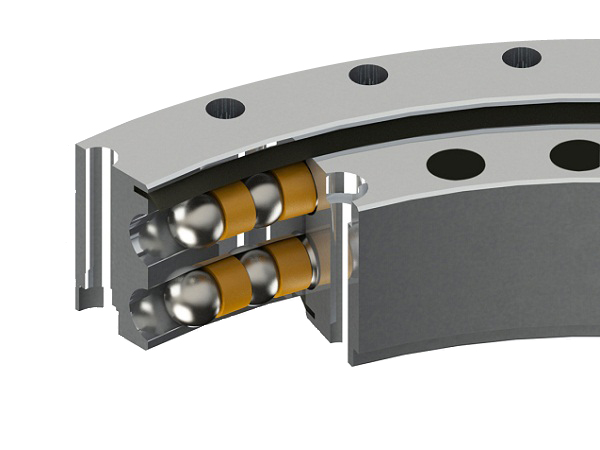
A dynamic seal works at a moving interface. Its role may include retaining lubricant, excluding contaminants, or both. The final arrangement should reflect shaft or ring motion, runout, speed, lubricant, and environmental contact. A static joint does not move in normal operation, but it can still leak or admit moisture if flange faces, fastener loading, sealing media, or surface condition are not controlled.
Do not assume that a higher-contact seal is automatically better. Greater contact can increase friction and heat at the interface. In some cases, an external shield or labyrinth-style exclusion feature can reduce direct contaminant contact before material reaches the primary sealing interface. That may suit wind-driven dust or splash exposure. It may not suit an installation with restricted radial space, difficult assembly access, or a geometry that traps water behind the shield.
Housing design can prevent problems a seal cannot solve
Use drainage rather than relying on seal compression alone. This fits surfaces exposed to rain or washdown because standing water increases the duration of contact at joints. It does not help if the drain location becomes blocked by mud, ice, or installation debris; access for inspection is needed.
Protect upward-facing interfaces from direct runoff. This fits stationary solar and marine installations where orientation can be controlled during design. It is less applicable when machine articulation requires multiple orientations.
Keep lubrication points clean and reachable. This fits any equipment requiring field maintenance because contaminated servicing can introduce debris even when the original sealing design is sound. It does not remove the need for trained maintenance procedures.
Specify the mounting condition for the whole assembly. A distorted or uneven mounting interface can affect alignment and sealing behavior. This is relevant for large fabricated structures and mobile equipment frames. It does not replace a bearing and drive load review.
Where a project requires a special housing, unusual mounting flange, or a non-standard geometry, LTZC can provide customized bearing solutions based on working conditions, existing designs, and technical specifications. The product range includes Slewing Drives, gear parts, and non-standard bearing parts. Engineers should submit the drawing and exposure description together; a drawing without orientation, contamination, and maintenance information leaves major seal decisions unresolved.
Set lubrication and inspection requirements before purchasing
Recommendation: Make lubrication access, inspection triggers, and contamination response part of the purchase specification. The reason is that outdoor performance depends on condition monitoring after installation, not only on the initial seal selection. This fits exposed equipment with planned preventive maintenance. It does not justify arbitrary service intervals; the interval should be based on the actual duty, environment, lubricant, and equipment instructions.
Rain, dust, salt deposits, and temperature cycling can affect lubricant condition in different ways. Moisture may change grease appearance or promote corrosion risk. Dust can create an abrasive mixture when it enters a lubricated interface. Temperature changes can alter grease flow and can contribute to condensation concerns inside protected spaces. These are mechanisms to inspect for, not predictions that every installation will fail in the same way.
A practical commissioning and maintenance sequence
Record the installed orientation. Identify upward-facing joints, drainage routes, grease points, cable entries, and areas that receive direct spray or dust loading.
Inspect before first operation. Confirm seals are not folded, cut, displaced, or contaminated during installation. Verify covers and grease-point protection are in place.
Document the lubricant used. Record the lubricant identification and the service procedure selected for the equipment. Do not mix products without compatibility review.
Define event-based checks. Inspect after unusual water exposure, washdown, dust storms, long shutdowns, or any damage to a cover or housing.
Look for specific warning signals. These include visible grease loss, grease with unexpected contamination, external corrosion at joints or fasteners, blocked drainage, abnormal movement resistance, or damaged shields.
Escalate with evidence. Provide photographs, operating condition, installation orientation, lubricant information, and the equipment drawing when requesting technical support.
LTZC provides installation and commissioning guidance, preventive maintenance training, fault diagnosis, and on-site technical assistance. The company states that quality objections receive a response within 24 hours and on-site service in China starts within 48 hours. These service details are most useful when the buyer has already recorded the application evidence listed above.
For seal-related questions after assembly, follow the documented bearing installation requirements for the associated rotary components. Installation practices can affect sealing surfaces and housing alignment, so a correct product selection can still be undermined by poor assembly control.
Compare common outdoor specification approaches before issuing an RFQ
Recommendation: Compare protection approaches by risk reduction, service burden, and uncertainty rather than requesting “outdoor sealing” as a single line item. This is suitable for OEM sourcing teams that need a traceable basis for comparing quotations. It does not replace supplier-specific design validation, because available space and internal geometry can limit which features can be used.
| Specification approach | Best-fit scenario | What it addresses | What it can miss | Buyer question |
|---|---|---|---|---|
| Basic sealed drive request | Sheltered outdoor equipment with low contamination and accessible maintenance | Provides a starting point for lubricant retention and normal environmental protection | May not address direct spray, abrasive dust, poor drainage, or salt deposits | What exposure assumptions are included in the proposed seal arrangement? |
| Seal plus external exclusion features | Dusty or splash-prone applications with space for guards or shields | Reduces direct contact between contaminants and the primary sealing interface | Can create debris or water traps if drainage and cleaning access are ignored | How will the feature shed water and permit inspection? |
| Environmental package including housing measures | Coastal, remote, difficult-access, or high-consequence installations | Coordinates sealing, corrosion protection, drainage, service access, and mounting orientation | Requires clearer project data and may increase design coordination effort | Which interfaces beyond the rotating seal are protected against moisture and deposits? |
A real procurement limitation is uncertainty. A buyer may know the machine sector but not yet have confirmed site conditions, cleaning methods, or service access. In that case, do not present an assumed condition as a fixed requirement. State the uncertainty in the RFQ, request alternatives, and identify which site fact will decide between them.
For example, an OEM designing a tracker for multiple deployment regions could request one base proposal and ask for identified options for dust-dominant and coastal-moisture conditions. The decision should then be made after confirming installed orientation, access frequency, and direct environmental exposure. This is more defensible than applying the same seal arrangement to every location.
Use supplier capability as evidence of scope, not as a substitute for application data
Recommendation: Use proven manufacturing scope and quality systems to qualify a supplier, then validate the environmental design against your application inputs. This fits projects requiring custom dimensions, special interfaces, or large equipment. It does not mean that a supplier’s performance on one project automatically proves suitability for a different exposure condition.
LTZC Bearings Co., Ltd. was established in 1992 and operates a 20,000 m² facility. Its quality management and management systems are certified to ISO9001:2015, ISO14001:2015, and ISO45001:2018, with ISO, CCS, and ABS certification stated by the company. For projects with custom requirements, LTZC offers no MOQ and states a delivery range of 30–90 days, subject to the order and technical requirements.
Its delivered-project scope illustrates the ability to support large rotary-bearing work, but these cases should remain correctly bounded. In 2024, LTZC delivered an integral three-row roller slewing ring with a 10.87-meter outer diameter for 2,000-ton fixed lifting equipment. Also in 2024, it produced an integrated bearing with an 8.445-meter outer diameter for a crane-industry client in South Korea. These examples demonstrate completed projects of substantial size; they do not define a standard configuration, seal package, or environmental rating for every drive.
Material selection also requires application review. LTZC lists GCr15 for hardness, wear resistance, and strength; AISI 440C for corrosion and oxidation resistance; 20CrMo and 42CrMo for improved strength, hardness, and wear resistance; CuSn6 for wear resistance, thermal conductivity, and corrosion resistance; SUJ2 for high-strength and high-precision uses; and Ti-6Al-4V for lightweight, high-temperature aerospace applications. Material names alone should not be treated as a corrosion-protection plan. Surface condition, joint design, coating approach, water retention, and maintenance all affect outdoor results.
RFQ checklist for an outdoor rotary drive seal decision
Recommendation: Send the following information with the drawing. It reduces assumption-driven quotations and lets the supplier assess whether sealing, lubrication, and housing features fit the operating condition. This checklist applies to standard and custom configurations. It does not remove the need to validate the final assembly after installation.
Installation orientation, including whether the drive is horizontal, vertical, or changes position during operation.
Direct exposure to rainfall, washdown, splash, standing water, airborne dust, salt spray, or chemical residues.
Expected temperature conditions, including parked and operating conditions and the frequency of temperature changes.
Duty cycle, rotation pattern, loads, torque requirement, and expected period of inactivity.
Mounting drawing, housing interface, available space for shields, drainage paths, and service access.
Lubrication method, maintenance access, planned inspection practice, and restrictions on lubricant selection.
Required corrosion-protection approach for exposed surfaces, fasteners, interfaces, and gear-related components.
Whether the application uses a standard product or requires a special design such as Customized Bearings or a tailored gear interface.
Submit your drawing and site exposure details to LTZC for selection advice on an outdoor seal and housing-protection arrangement.