WhatsApp
 Eric.wang@ltzzc.com
 0086-379-69950051

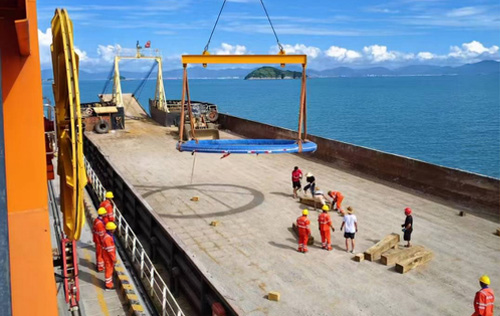
How to Mount a Slewing Bearing?
How to Mount a Slewing Bearing?
Correct installation is essential for ensuring the long-term performance, accuracy, and safety of a slewing bearing. As a leading slewing bearing manufacturer, LTZC provides comprehensive engineering guidance to help users complete both new installations and slewing bearing replacement tasks with high reliability. A slewing bearing operates under heavy loads, alternating stress, and continuous rotation, so every step—from surface preparation to final torque inspection—must follow strict procedures to avoid premature wear, deformation, or functional failure.
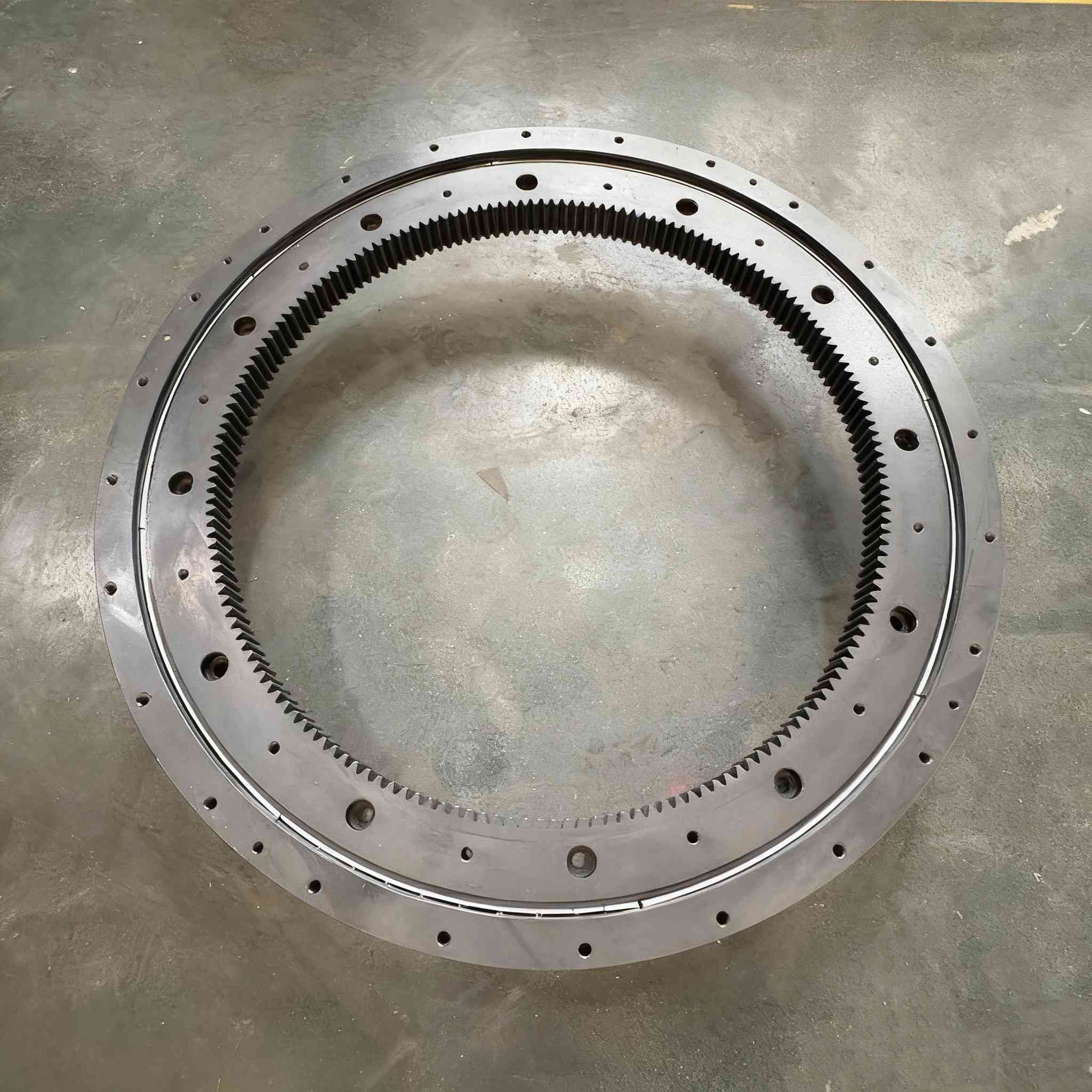
1. Preparation Before Slewing Bearing Installation
Before the installation begins, ensure the following steps are completed:
✓ 1.1 Inspect the mounting structure
Check flatness, rigidity, and machining accuracy of the mounting surface.
Remove burrs, welding beads, rust, oil, and any contamination.
The flatness tolerance should comply with LTZC’s slewing bearing technical standards.
✓ 1.2 Verify bearing model and specifications
Confirm the bearing type, gear form, preload, and mounting hole layout.
Ensure the slewing bearing matches your machine’s operating load and structure.
✓ 1.3 Prepare tools and equipment
Common tools include torque wrenches, cranes, feeler gauges, grease guns, and anti-corrosion oil.
2. Positioning and Aligning the Slewing Bearing
✓ 2.1 Correctly align the soft zone (mark “S”)
All slewing bearings include a soft zone marking. LTZC recommends positioning the soft zone at the area with the smallest load or avoiding it from high-impact load paths.
✓ 2.2 Use lifting holes or eye bolts
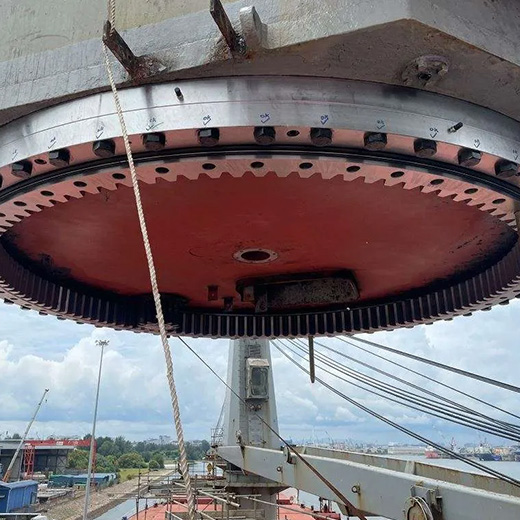
Lift the slewing bearing vertically to prevent deformation. Never drag the slewing ring on the mounting surface.
✓ 2.3 Check circumferential gap
After placing the bearing on the frame:
Use feeler gauges to check the uniformity of the axial gap.
Unevenness indicates that re-machining or adjustment is needed.
3. Bolt Installation and Pre-tightening
Bolts are critical to the performance of any slewing bearing installation.
✓ 3.1 Apply bolt lubrication
Use suitable bolt grease to maintain friction stability.
✓ 3.2 Tighten bolts in a star pattern
Tighten 30% torque → 60% torque → 100% torque.
Ensure consistent clamping force across all mounting holes.
✓ 3.3 Recommended bolt classes
LTZC suggests using 10.9 or 12.9 high-strength bolts according to application loads.
✓ 3.4 Re-check torque after 24 hours
Bolt settling occurs due to surface matching. A second torque check ensures long-term stability.
4. Greasing and Functional Testing
✓ 4.1 Apply grease thoroughly
Use high-quality lithium or extreme-pressure grease (EP).
Fill each lubrication point until fresh grease appears around the seals.
✓ 4.2 Rotate the bearing after greasing
Rotate the slewing bearing slowly to distribute grease evenly inside raceways.
✓ 4.3 Check operation
Smooth rotation
No noise or tight spots
Even seal compression
LTZC’s high-precision slewing bearings undergo strict factory lubrication tests to ensure performance consistency.
Why Choose LTZC as Your Slewing Bearing Manufacturer?
As a trusted Chinese slewing bearing manufacturer with more than 30 years of industrial experience, LTZC provides:
Precision slewing bearings with P0–P4 accuracy levels
Large-size slewing rings up to 7 meters
Custom slewing bearing solutions for heavy machinery
High-strength materials, advanced heat treatment, and CNC machining
Professional support for installation, maintenance, and replacement
With LTZC’s engineering expertise, every slewing bearing installation and replacement becomes easier, safer, and more reliable.
Viem the LTZC installation bearing guide