WhatsApp
 jessica.chai@ltzzc.com
 0086-379-69950051

How to Choose an Agricultural Machinery Bearing Supplier with Lot Traceability
The costly mistake is rarely the unit price. It is discovering, after a field failure, that nobody can tell you which steel heat, which grinding batch or which seal specification went into the failed part. For an Agricultural Machinery Bearing, that gap turns a warranty claim into an argument. This guide shows OEM procurement teams and aftermarket distributors how to separate a supplier who can prove what it ships from one who only lists catalog sizes.
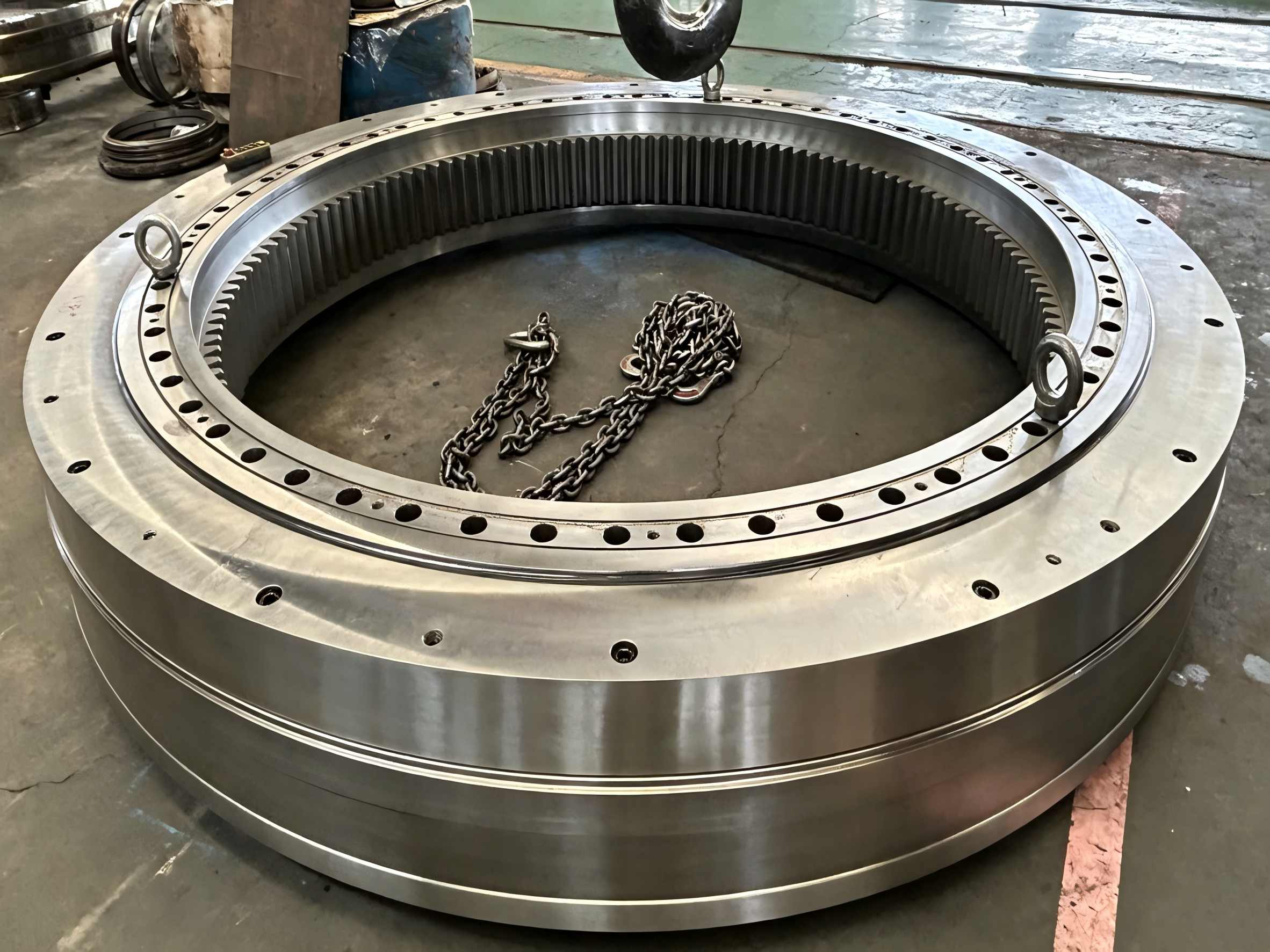
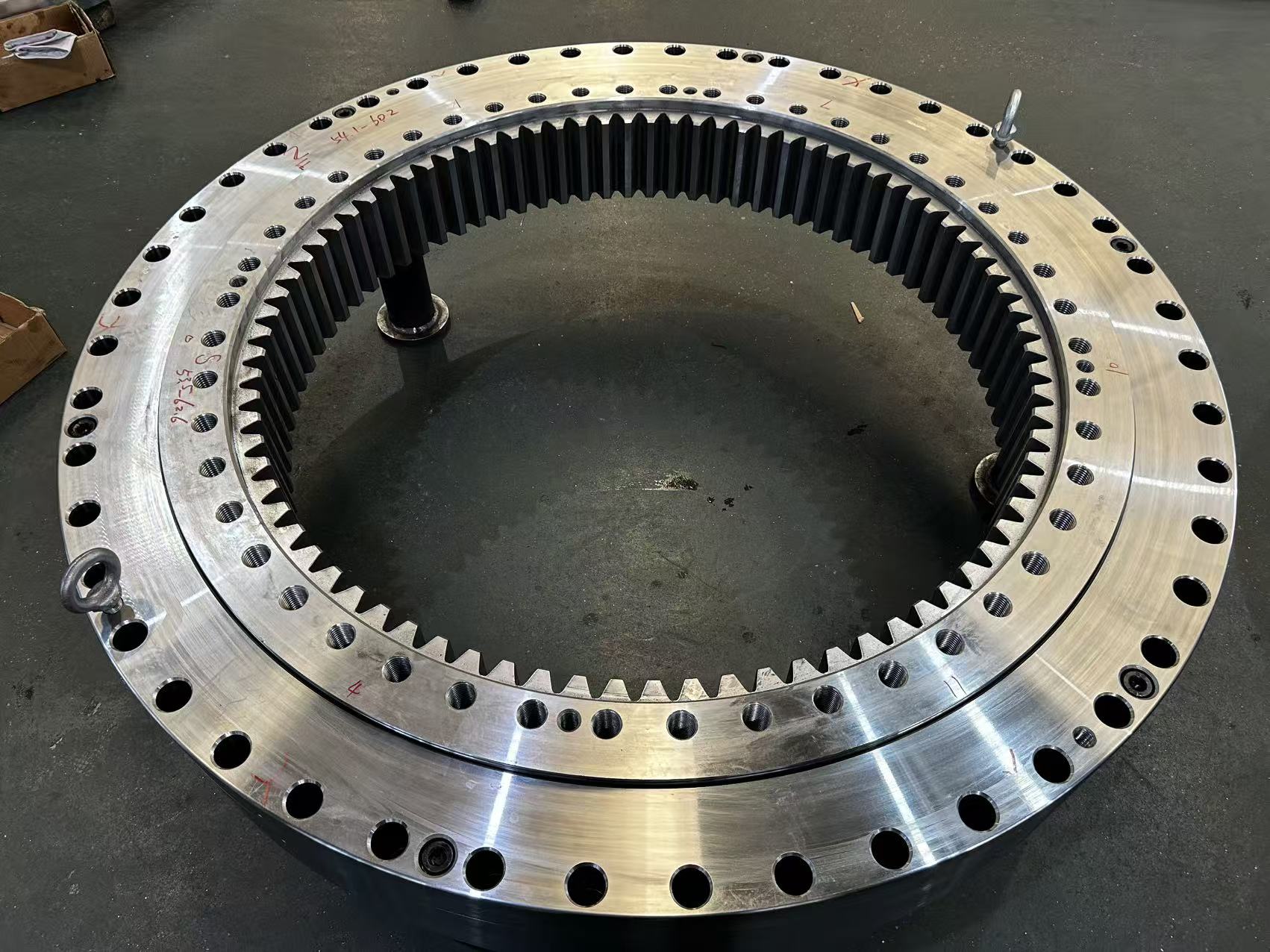
A note on scope. LTZC Bearings Co.,Ltd. makes slewing bearings, non-standard precision bearings, gear rings, racks and bearing unit assemblies. Where a farm machine needs a rotating joint, such as a loader, crane-type attachment or turntable, a precision slewing bearing or a drawing-based part from our Customized Bearings range may fit. If you are unsure which structure suits the load case, start with our bearing selection guide. We are not a catalog seller of small standard deep-groove bearings, and we say so up front because it saves both sides time.
Why Traceability Matters More Than Catalog Range
Farm equipment works in dust, mud, fertilizer residue and wide temperature swings. Loads are irregular, and seasonal use means a defect can sit unnoticed until harvest, when downtime is most expensive. In that setting, three questions decide whether a supplier is safe to qualify:
- Can they link a delivered ring to a material batch? Without that link, a bearing material certificate is just a generic sheet.
- Can they show how it was heat-treated and measured? Hardness and dimensional results belong to a specific lot, not to a product family.
- Will they accept a recall boundary? If one lot is suspect, you need to know which machines are affected and which are not.
This is the practical meaning of bearing lot traceability. It limits the scope of a failure, which is what OEM farm equipment bearings programs and distributors with recurring supply contracts actually need. It does not guarantee the bearing is right for the application; selection and load calculation remain separate checks.
Comparison: Supplier-Evidence Matrix for Farm Bearing Sourcing
Use the matrix below when you compare two or more candidates. It covers the five evidence types that most often separate a capable supplier from a catalog-only seller. Score each supplier on the actual documents they send, not on what the website claims.
| Evidence item | What to request | Acceptable signal | Red flag |
|---|---|---|---|
| Material certificates | Mill or material certificate naming the grade (for example GCr15, SUJ2, 42CrMo, AISI 440C) and heat number | Heat number on the certificate matches the marking or lot record of the shipped rings | Generic "material: bearing steel" statement with no heat number |
| Heat-treatment records | Process record per lot: treatment type, hardness result, test location | Hardness values tied to a lot ID and to your drawing requirement | Only a catalog hardness range; no lot-level record |
| Dimensional inspection | Inspection report for critical features: bore, OD, raceway, mounting-hole pattern, gear data if applicable | Measured values (not "OK") against drawing tolerances, with date and lot reference | Pass/fail stamp only, or tolerances restated from the drawing as results |
| Seal specification | Seal type, material, groove design, and grease specification | Written spec matched to dust, water and wash-down exposure in your machine | "Sealed" with no material or design detail |
| Batch traceability | Description of how lot ID is marked and how records are retained and retrieved | Lot ID on the part or packaging, and a stated way to pull records after delivery | Cannot explain how a returned part would be traced to its lot |
Limit of this matrix: it tells you what evidence exists, not whether the design is correct. A perfectly documented bearing can still be the wrong size for the load. Pair the matrix with a technical review of your drawing.
What Documents Should a Bearing Supplier Provide Before You Place a Trial Order
Buyers often ask what documents a bearing supplier should provide, and the honest answer depends on the part. For a precision or non-standard part, this pack is a sensible starting request:
- Quality system certificates. Confirm scope and validity dates, not just the logo.
- Material certificate for the quoted grade, with heat number.
- Heat-treatment and hardness record for the lot, or the supplier's written procedure if records only exist after production.
- Dimensional inspection report for the critical dimensions you flag on the drawing.
- Seal and lubrication specification in writing.
- Lot marking and record-retention statement describing how you can trace a part later.
- Packing and corrosion-protection description for sea freight, since farm-equipment shipments often wait in yards.
Ask early which of these exist as standard and which are produced only on request. Documents requested after the order is placed tend to arrive late, or in a weaker form.
What LTZC Can Show, and What You Should Still Ask Us
We try to keep claims inside what we can support. Here is how our supplied facts map to the buyer concerns above.
| Buyer concern | Supplied fact | What it does and does not prove |
|---|---|---|
| Is there a managed quality system? | ISO9001:2015, ISO14001:2015 and ISO45001:2018, certified by ISO, CCS and ABS | Shows a documented system exists. It does not replace lot-level records for your part. |
| Can the supplier handle large or unusual parts? | Established in 1992; 20,000 m² facility; delivered a 10.87 m three-row roller slewing ring in 2024 and an 8.445 m integrated bearing for a crane client in South Korea | Shows large-diameter manufacturing capability. These are crane and lifting references, not farm-equipment field data. |
| Can gear and tooth accuracy be delivered? | 8-meter high-precision segmented gear rings for Wuhan Heavy Industry; a 6-meter segmented gear ring with ground teeth supplied through a Hengshui customer | Supports gear-ring capability in large sizes. It is not a promise about your tooth class. |
| Which materials are available? | GCr15, SUJ2, AISI 440C, 20CrMo/42CrMo, CuSn6, Ti-6Al-4V | Material choice must still be matched to your load, corrosion and temperature case. |
| What happens after delivery? | Response to quality objections within 24 hours; on-site service starting within 48 hours in China; installation and maintenance guidance | The 48-hour on-site term applies in China. Service outside China needs to be agreed per project. |
Our published references come from heavy lifting, welding systems and tunneling equipment, so for a farm-equipment project, ask us directly which lot records we can issue for your specific part. Our sales engineer, Jessica Chai, handles these requests with ten years of slewing bearing and after-sales experience. For parts working in heavy duty cycles, our Construction & Heavy Machinery page shows the kind of application evidence we can offer today.
Common Mistakes When Qualifying a Supplier
- Accepting a certificate without a heat number. It proves the grade exists somewhere, not in your parts.
- Comparing quotes before comparing records. The cheaper quote often excludes inspection reports and lot marking.
- Treating ISO certificates as a part-level guarantee. They show system control; they do not show your lot's hardness.
- Skipping the seal specification. In dusty fields, seal failure usually shows up before raceway fatigue.
- Ignoring where traceability ends. If the supplier outsources rings or heat treatment, ask whether the lot link survives that step.
- Agreeing acceptance criteria after delivery. Dispute risk rises sharply when tolerances and sampling rules are not written down first.
A Step-by-Step Qualification Sequence for a Trial Order
Our supplied terms do not define a fixed sample-to-bulk workflow, and we would not present one as universal. The sequence below is a buyer-side method you can apply to any supplier, including us.
- Define the application. Load direction, rotation speed, mounting structure, exposure to dust and water, and annual volume.
- Send the drawing and the evidence matrix. Ask the supplier to mark which of the five items they can supply and when.
- Review technical feedback. A capable supplier will question tolerances, material or seal choice rather than simply quoting.
- Agree acceptance criteria in writing. Critical dimensions, hardness check, marking, and how nonconformance is handled.
- Place a trial order and audit the records against the parts. Check that lot marks on the rings match the paperwork.
- Confirm installation and maintenance guidance. See our bearing installation resources for what support is available.
Cooperation Terms and Boundaries
The terms we can state as supplied are simple: no MOQ, and a delivery window of 30 to 90 days. Treat the delivery window as a planning range; the exact date depends on size, material and drawing complexity and should be confirmed in the quotation. A no-MOQ position suits trial lots and low-volume non-standard parts. It does not mean unit cost stays constant across quantities.
Several items are not fixed in advance and need agreement per project:
- Which inspection reports and material certificates accompany each shipment.
- Lot-record retention period and how you request records later.
- Warranty scope and responsibility split between design, manufacture and installation.
- Service coverage outside China.
If your design is not standard, our non-standard bearings line is built around working conditions, existing designs and technical specifications you provide.
Send the Details We Need to Qualify Your Inquiry
A useful first message includes: the drawing or part number, target material grade, annual and trial quantities, operating environment, and the documents your quality team requires. With that, we can tell you which records apply, what is a standard deliverable and what needs a separate agreement.
If you are comparing an Agricultural Machinery Bearing supplier against others, send your drawing and your document checklist to our team and we will respond with a part-specific answer on what we can provide.