WhatsApp
 jessica.chai@ltzzc.com
 0086-379-69950051

How to Source an Agricultural Machinery Bearing for Wet Fields
The most expensive mistake in wet-field sourcing is sending an RFQ that lists only bore size and quantity. Suppliers then quote an open or lightly shielded design, and the first season of mud, washdown and fertilizer spray finds the weak point. A well-specified Agricultural Machinery Bearing starts with the exposure, not the catalog number.
Where LTZC Fits in a Wet-Field Bearing RFQ
LTZC Bearings Co.,Ltd. was established in 1992 and works from a 20,000 m² facility. Our products are precision slewing bearing designs, non-standard bearings, gear rings, racks, bearing unit assemblies and slewing drives. We are not a catalog source for every off-the-shelf insert. If you need a standard sealed disc harrow bearing in high volume, confirm with us first whether your drawing falls within our scope.
The fit is strongest where the application is non-standard. Examples are rotating platforms, turntable-type mounts, large-diameter rings, or a bearing unit assembly where housing, seal and bearing must be designed together. In those cases, a wet-field requirement is a design input rather than an afterthought. Our bearing selection guide covers the load and geometry side. This article covers the exposure side that most RFQs leave out.
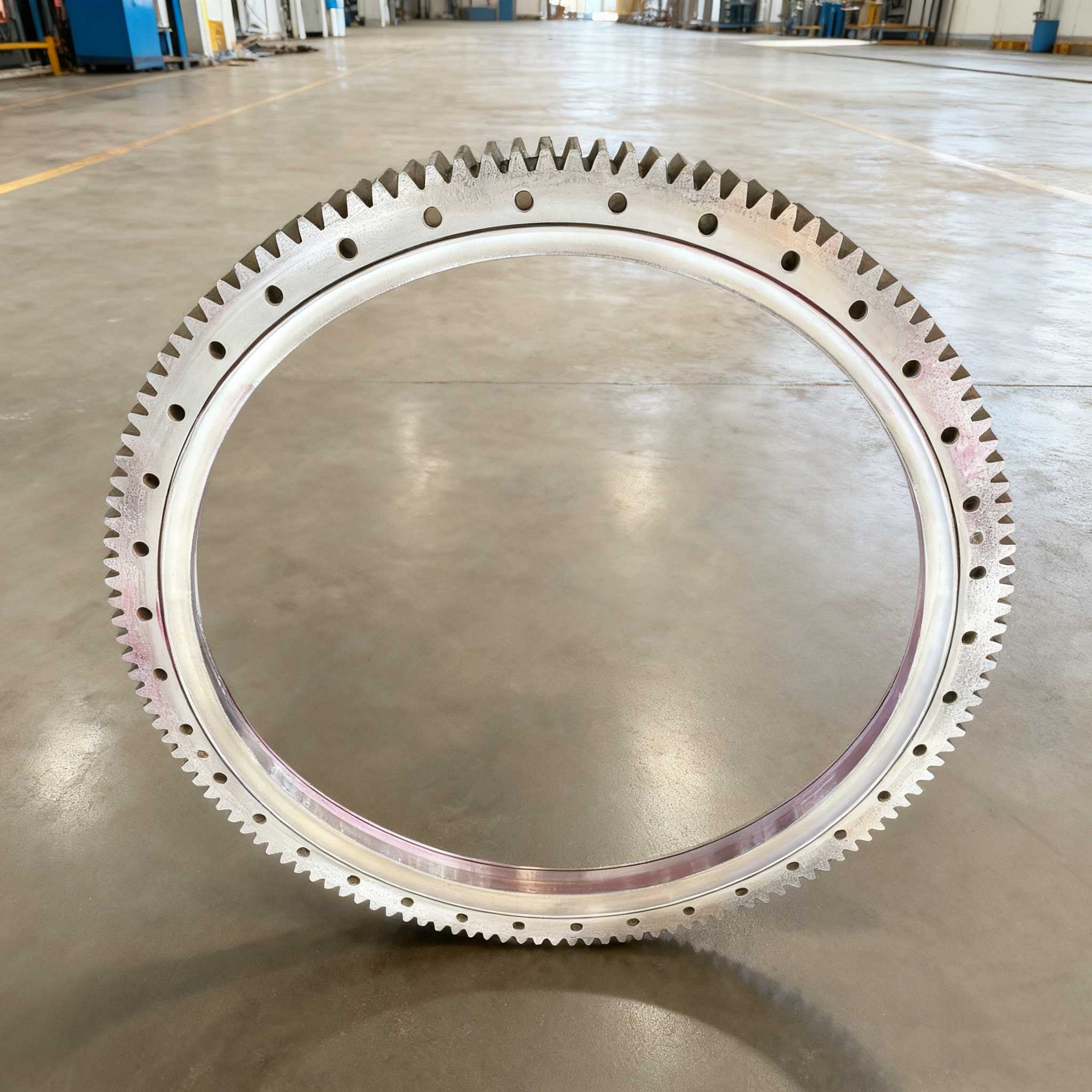
Match Seal, Grease, Bore and Housing Fit to Mud, Washdown and Fertilizer Exposure
Do this before you request quotes. Each exposure attacks a different part of the bearing, so one generic "sealed, corrosion resistant" line is not a specification. The table links each condition to what you should write in the RFQ.
| Exposure | What usually fails | What to specify | Limit of the approach |
|---|---|---|---|
| Mud and abrasive soil | Particles pass the seal lip and wear the raceway | Multi-lip or labyrinth-style seal, plus housing shoulders that shed soil | More lips add friction and heat, so check the speed of the application |
| High-pressure washdown | Water forces past the seal and washes out grease | Seal rated for your wash method, water-resistant grease, a drain or relief path | No seal is permanent. Plan a regreasing interval |
| Fertilizer and chemical spray | Salts and chemicals corrode steel surfaces and degrade seal material | Name the chemicals. Ask about seal compounds and corrosion-resistant materials or surface protection | Material compatibility must be confirmed per chemical, not assumed |
| Standing water and splash | Water collects in the cavity and rust starts at the bore | Bore profile and tolerance that suit corrosion-resistant shaft or sleeve, plus sealed housing joints | A fit that is too tight can stress the ring. Confirm with the housing designer |
Grease compatibility
Grease is where wet-field projects quietly go wrong. If your maintenance crew tops up with a different grease than the factory fill, thickener incompatibility can soften the grease and let water in. State the grease type you already use in the field, and ask the supplier to match it or tell you what to replace it with.
Bore profile and housing fit
A corrosion-resistant bearing in a rusting seat still fails. Give the housing material, the shaft or sleeve surface condition, and the fit class you use today. If the housing is cast and cannot be redesigned, say so. Seal and ring geometry then have to adapt to the housing, not the other way around.
How to Choose Bearings for Wet Farm Equipment, Step by Step
Record the exposure. Write down mud type, wash frequency and method, and every chemical that touches the machine. Include seasonal storage, since wet equipment left standing corrodes in the off-season too.
Record the load and motion. State axial, radial and moment loads, the speed, and whether the bearing rotates continuously or oscillates. A disc harrow and a slow-turning platform need different seal compromises.
Pick the sealing concept. Decide between integral seals, external labyrinth protection or a sealed bearing unit assembly. Choose based on how much space the housing allows.
Shortlist materials. Discuss the options in the next section. Do not default to the most expensive one.
Define maintenance access. If the grease point is unreachable in the field, the best seal in the world will not save the bearing.
Request quotes with a drawing. Send the drawing, the exposure sheet and the target annual volume together.
Material Options Worth Discussing for Corrosive Fields
The right material for a corrosion resistant agricultural bearing depends on the failure you are trying to prevent. These are the grades in our material range that are relevant here.
| Material | Supplied characteristics | Where it fits | Where to be careful |
|---|---|---|---|
| GCr15 / SUJ2 | High hardness, wear resistance and strength | General load-bearing rings when sealing and housing do the corrosion protection | Not a corrosion-focused grade. A failed seal exposes the steel |
| AISI 440C | Good corrosion and oxidation resistance | Parts in direct contact with moisture or fertilizer | Confirm suitability for your specific chemicals and load |
| 20CrMo / 42CrMo | Alloy strength, hardness and wear resistance for heavy loads | Heavy-load rings and gear parts | Needs surface protection or sealing in wet service |
| CuSn6 | Wear resistance, thermal conductivity and corrosion resistance | Bushing-type or sliding positions | Check load limits and the mating surface |
| Ti-6Al-4V | Lightweight, high temperature resistance | Specialized high-strength designs | Rarely justified for routine field machines on cost grounds |
Material alone rarely solves wet-field failures. Pairing a sound steel grade with the right seal and a maintainable grease path usually matters more than upgrading the grade.
Evidence and Qualification You Can Check
Our quality system is certified to ISO9001:2015, with ISO14001:2015 and ISO45001:2018 also in place, and we hold certification from ISO, CCS and ABS. Ask any supplier, including us, for the certificate copies and the scope they cover.
We have not published an agricultural-machinery case, and we will not present one. What we can point to is large-diameter, non-standard work:
In 2024 we delivered a 10.87 m outer diameter, integral three-row roller slewing ring for 2,000-ton fixed lifting equipment, the largest in our history.
Also in 2024 we produced an 8.445 m integrated bearing for a crane-industry client in South Korea.
We developed φ24 m segmented bearings, delivered to Jiangsu Nantong Rainbow Heavy Machinery.
We supplied a 6 m segmented gear ring with ground teeth to Hengshui customers, delivered to end customers.
These cases show we can engineer and build to custom drawings, including large split slewing bearing and segmented designs. They do not prove wet-field durability. For that, ask for a design review of your seal and housing arrangement rather than relying on case references.
Common Mistakes in Wet-Field Bearing RFQs
Specifying "waterproof." No bearing is waterproof. Specify the wash pressure, the frequency and the chemicals instead.
Ignoring the grease already in the field. Mixing incompatible greases undoes the seal's work.
Quoting on bore size only. Two bearings with the same bore can have very different seal and shoulder designs.
Choosing material before exposure. A stainless-type grade in a poorly sealed, rusted housing does not fix the root cause.
Leaving out the installation method. Damage during fitting breaks seals before the machine reaches the field. Our bearing installation guidance covers handling and fitting.
Cooperation Terms and Boundaries
These are the terms we can state from our current ordering conditions:
No MOQ. Small replacement batches and single custom parts can be quoted.
Delivery of 30 to 90 days. The actual date depends on size, material and design complexity, and it is confirmed at quotation. It is not a fixed promise for every order.
After-sales support. We respond to quality objections within 24 hours. On-site service in China starts within 48 hours. That 48-hour commitment applies to China only, and service outside China needs to be agreed per project.
Support content. Installation guidance, maintenance training, fault analysis and technical assistance.
Warranty period, acceptance criteria and responsibility for field failures are not fixed in our general terms. Agree them in writing per project, including who tests the seal, which wash and chemical conditions count as normal use, and how a failed unit is analysed.
What to Send With Your RFQ
Drawing or sample dimensions, including bore, outer diameter, width and housing details.
Load, speed and motion type.
Exposure sheet covering mud type, wash method and frequency, and chemicals.
Current grease type and maintenance interval.
Housing and shaft materials and fit classes.
Annual volume, target delivery window and any certification you need.
If you have an application in mind, send your drawings and exposure details to our engineering team for selection advice, and we will tell you plainly whether the part fits our scope. For custom designs, see our customized bearings page, then request a quote.