WhatsApp
 jessica.chai@ltzzc.com
 0086-379-69950051

Sourcing an Amusement Ride Slewing Bearing That Guarantees Safety
Submitting an incomplete or inaccurate Request for Quotation (RFQ) for an amusement ride slewing bearing is a critical sourcing risk. Unlike standard industrial applications, a failure here doesn't just mean downtime; it represents a catastrophic safety hazard. The wrong material, an underestimated load, or a mismatched gear can lead to premature wear and failure. Ensuring your technical specifications are precise from the outset is the first and most important step toward securing a component that guarantees public safety and long-term operational integrity for your Amusement Equipment.
As an engineer with a decade of experience in this field, I've seen how detailed front-end communication prevents costly back-end failures. This guide outlines the essential data your manufacturing partner needs to engineer a bearing that performs safely for its entire design life.
Key Material and Structural Choices for Ride Dynamics
The dynamic forces on theme park ride bearings are intense and variable. Selecting the right material and structure is fundamental to managing these stresses. Your choice depends directly on the ride's function, load characteristics, and operating environment.
For most standard applications with predictable loads, GCr15 (SUJ2) bearing steel offers a reliable balance of high hardness, wear resistance, and strength. However, for rides exposed to the elements, material choice becomes more strategic.
Water Rides & Coastal Parks: For log flumes, pirate ship rides, or attractions in coastal areas, corrosion is a primary concern. AISI 440C stainless steel provides good corrosion and oxidation resistance, protecting the bearing's structural integrity against moisture and salt spray.
High-Impact & Heavy-Load Rides: Drop towers, large roller coasters, and pendulum rides exert immense, sudden forces. For these, alloy steels like 20CrMo or 42CrMo are superior. These materials offer enhanced strength, hardness, and wear resistance to withstand heavy shock loads without deformation.
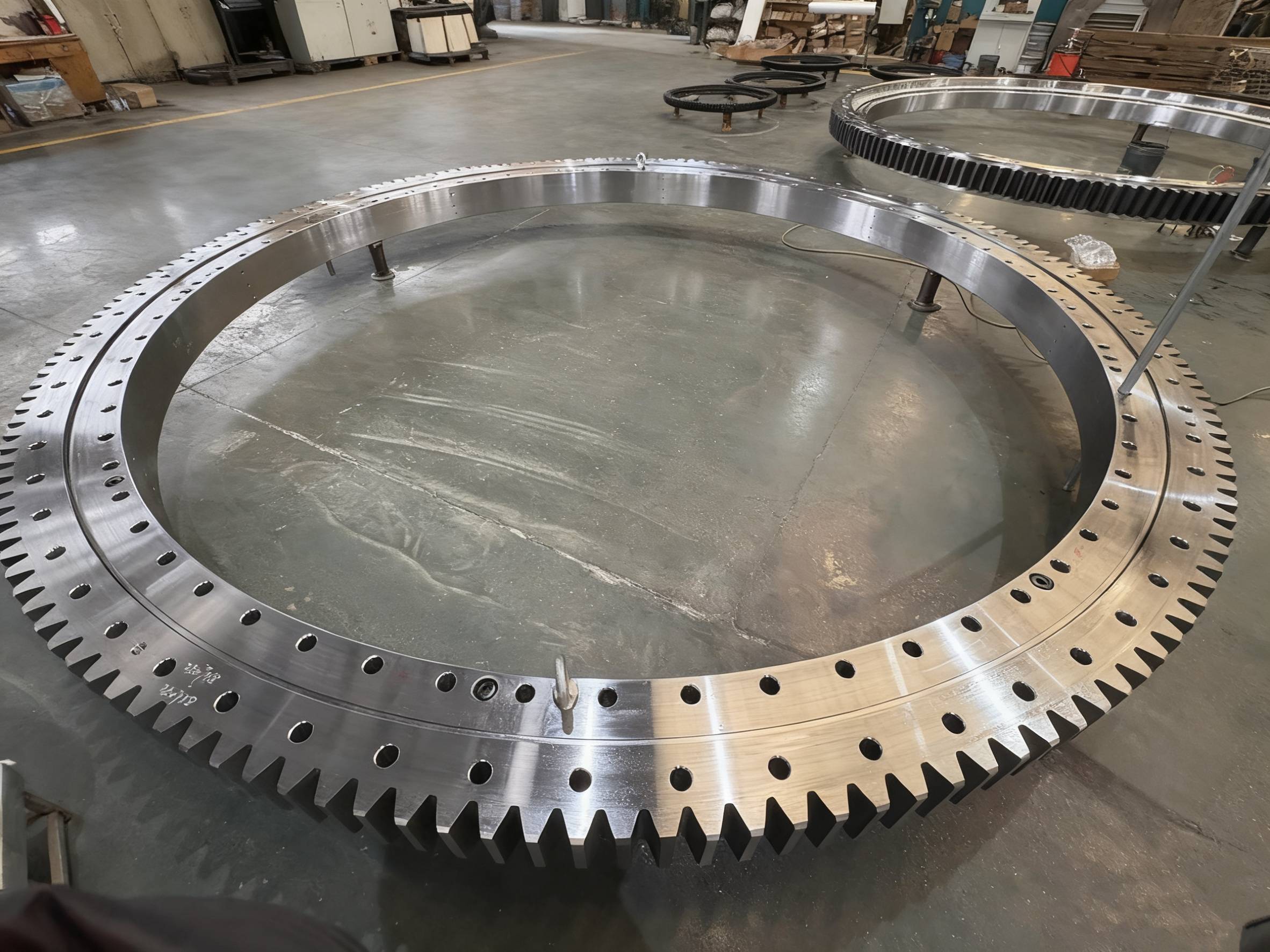
The bearing's internal structure is just as important. While a Single Row Ball Slewing Bearings design might be suitable for a small carousel turntable bearing, larger and more complex rides require more advanced configurations. For major attractions like large observation wheels, a three-row roller structure provides the highest load capacity, accommodating significant axial forces and tilting moments. At LTZC, we have proven experience with these demanding structures; in 2024, we delivered an integral three-row roller slewing ring with a massive 10.87-meter outer diameter for 2,000-ton lifting equipment, demonstrating our capability to engineer for extreme loads.
Critical RFQ Data Your Manufacturer Needs
To provide an accurate quotation and a truly safe component, your bearing manufacturer requires a complete technical picture. Providing vague or incomplete data forces assumptions that can compromise the final design. Your RFQ should answer the following questions with specific figures and documentation.
| RFQ Question | Why It's Essential & What to Provide |
|---|---|
| What are the combined loads? | Provide the full load spectrum, not just the maximum. Specify static and dynamic values for Axial Load (vertical force), Radial Load (horizontal force), and Tilting Moment (forces trying to tip the bearing). Tilting moment is often the most critical and underestimated load in amusement rides. |
| What is the required bolt pattern? | Specify the bolt circle diameter (PCD), the number of holes, hole diameter, and whether they are through-holes or tapped (threaded). This ensures the bearing mounts correctly and securely to your structure, distributing clamping force evenly. |
| What are the gear requirements? | If the bearing is geared, state whether it requires an internal gear, external gear, or is non-geared. You must provide the gear module, pressure angle, and required precision level. For smooth and quiet operation, specifying a ground tooth finish may be necessary, a capability we demonstrated by delivering a 6-meter segmented gear ring with ground teeth for our Hengshui customer. |
| What are the operating cycles and environment? | Detail the duty cycle (e.g., 10 hours/day, 300 days/year), rotational speed (rpm), and angle of rotation. Also, describe the operating environment: indoor/outdoor, temperature range, and exposure to contaminants like dust, water, or chemicals. This informs decisions on sealing solutions and lubrication. |
| What safety and inspection evidence is required? | List all required documentation. This may include material certificates (3.1 certs), dimensional inspection reports, non-destructive testing (NDT) reports for critical welds or components (e.g., UT, MT), and theoretical calculation reports for load capacity and fatigue life. Our ISO 9001:2015 certified quality management system ensures all documentation is traceable and accurate. |
Common Specification Mistakes to Avoid
Even with the best intentions, engineers can make specification errors that compromise a bearing's performance and safety. Here are five common mistakes we see in RFQs and how to prevent them.
Underestimating Tilting Moments: This is the most frequent and dangerous error. Rides with cantilevered arms or off-center passenger loads, like pendulum rides or rotating observation arms, generate enormous tilting moments. Failing to calculate and specify the maximum tilting moment can lead to excessive raceway wear, bolt failure, and catastrophic separation of the bearing rings.
Ignoring Environmental Factors: Focusing solely on mechanical loads while ignoring the environment is a recipe for premature failure. A bearing for an indoor carousel has very different sealing and material requirements than one for an outdoor ferris wheel slewing ring in a humid, coastal climate. Always specify the operating environment to ensure proper material selection (e.g., AISI 440C) and seal configuration.
Vague Gear Specifications: Simply requesting a "geared bearing" is insufficient. Without the module, pressure angle, and helix angle (if applicable), it's impossible for a manufacturer to ensure the bearing's gear will mesh correctly with your drive pinion. This can result in excessive noise, high wear rates, and eventual tooth failure.
Overlooking Maintenance Access: The bearing design must account for long-term serviceability. If grease fittings (zerks) are placed in locations that become inaccessible after the ride is assembled, routine lubrication becomes impossible. This leads to dry running, accelerated wear, and seizure. Specify preferred locations for lubrication points in your drawings.
Providing Only Maximum Load Data: While maximum load is important for static capacity checks, it doesn't tell the whole story. The bearing's fatigue life is determined by the full spectrum of operating loads. Provide a load-duty cycle, including the percentage of time the bearing operates at various load levels, to allow for an accurate lifespan calculation.
Our comprehensive after-sales support includes providing detailed guidance on bearing installation and preventive maintenance to help your team avoid these issues throughout the equipment's lifecycle.
When to Choose a Custom Slewing Ring
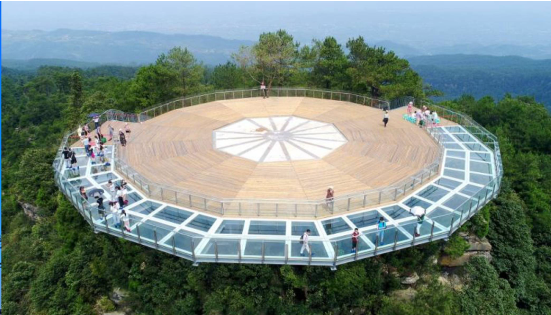
While standard bearings exist, most large-scale amusement rides require a custom solution. The unique combination of large diameters, complex load profiles, and stringent safety demands often falls outside the scope of off-the-shelf products. A custom slewing ring is not a luxury; it's an engineering necessity for ensuring performance and safety.
Our facility, established in 1992, is equipped to produce Customized Bearings with outer diameters up to 20 meters. We have a long history of tackling these challenges, from the 3-meter turntable bearing supporting the main torch at the World Military Olympic Games to the massive φ24-meter segmented bearings delivered for heavy machinery. This experience is directly applicable to creating a large diameter bearing for any major attraction.
Use this checklist to determine if you need a custom solution:
Unique Dimensions: Does your design require a specific, non-standard diameter, height, or cross-section?
Extreme Loads: Does the ride generate exceptionally high tilting moments or combined loads that exceed standard bearing capacities?
Special Materials: Is the ride in a highly corrosive environment or require lightweight materials like titanium alloys (e.g., Ti-6Al-4V) for a specific performance goal?
Integrated Features: Do you need integrated gears, mounting flanges, or specific sealing arrangements not found in standard catalogs?
Segmented Design: Is the bearing too large to be transported or installed as a single piece, requiring a segmented design?
If you answered "yes" to any of these questions, a custom-engineered bearing is the most reliable and safest path forward. Working with a manufacturer experienced in non-standard designs ensures that every aspect of the bearing is optimized for your specific application.
Specifying the correct amusement ride slewing bearing is a process that demands precision and thoroughness. By providing a complete and accurate RFQ, you empower your manufacturing partner to build a component that meets the highest standards of safety and reliability. Submit your drawings and technical specifications to our engineering team for a detailed review and proposal.