WhatsApp
 jessica.chai@ltzzc.com
 0086-379-69950051

How to Audit a Slewing Bearing Supplier for Full Traceability
Sourcing a large, mission-critical slewing ring is not a simple transaction. A component failure in heavy lifting equipment, mining machinery, or a wind turbine can lead to catastrophic downtime and safety risks. While many suppliers present similar technical specifications, the real differentiator lies in their ability to prove quality through a transparent and auditable manufacturing process. Choosing a slewing bearing supplier without verifying their traceability is a significant risk many procurement managers and engineers cannot afford to take.
At LTZC, we believe that complete transparency is the foundation of trust. Since our establishment in 1992, we have built our processes around verifiable quality control, ensuring every component we ship meets exact specifications. This article, drawing from my decade of experience in sales and after-sales service, will guide you through the key traceability points you should audit before committing to a supplier. We will cover how to verify everything from raw material origins to final inspection reports, empowering you to make a more informed sourcing decision for components like a precision slewing bearing.
Beyond Certificates: Verifying a Supplier's Material Control
The performance of any slewing bearing begins with its raw materials. A supplier’s ISO 9001:2015 certification is a good starting point, but it doesn't tell the whole story. You need to know that the specific material used for your bearing—whether it's standard GCr15 or a specialized alloy—is exactly what was specified and can be traced back to its source. A failure to control this initial step can introduce defects that are impossible to correct later.
Different applications demand different material properties. For instance, a bearing for a marine crane requires high corrosion resistance, while one for a tunnel boring machine needs extreme hardness and wear resistance. A capable supplier will not only offer a range of materials but also maintain strict control over their sourcing and inspection.
Here’s a breakdown of common materials and their typical applications, which a reliable supplier should be able to provide with full traceability documentation:
| Material | Key Properties | Common Applications |
|---|---|---|
| GCr15 / SUJ2 | High hardness, wear resistance, and fatigue strength. | Standard ball and roller bearings, industrial machinery. |
| AISI 440C | Good corrosion and oxidation resistance. | Marine environments, food processing equipment, medical devices. |
| 20CrMo / 42CrMo | Improved strength, hardness, and toughness for heavy loads. | Mining and metallurgy slewing bearings, construction equipment, large gear rings. |
| CuSn6 | Good wear resistance and thermal conductivity. | Cages, separators, and specific bearing components. |
| Ti-6Al-4V | Lightweight, high strength, and high-temperature resistance. | Communication & Aerospace Slewing Bearings, high-performance applications. |
When you audit a potential partner, ask for material test reports (MTRs) for the specific steel heat they intend to use for your order. This document is the first link in the traceability chain.
The Core of Quality: Creating an Auditable Manufacturing Trail
A truly transparent slewing bearing supplier can provide an unbroken chain of documentation that follows your component from raw steel to final crating. This isn't about paperwork for its own sake; it's about creating an auditable quality trail that guarantees accountability at every stage. If an issue arises years later, this documentation allows for precise root cause analysis.
Here are the critical traceability elements you should demand from any potential supplier:
Heat Numbers: Each batch of raw steel from a mill is assigned a unique "heat number." This number should be recorded and follow the material as it's forged into a ring. It links the final product directly back to the original material certificates, confirming its chemical composition and mechanical properties. Without this, there is no verifiable proof of the material's origin or quality.
Raceway Hardness Records: The bearing's raceway—the path where the balls or rollers move—is the most critical surface. It undergoes a heat treatment process, such as induction hardening, to achieve a specific hardness and depth. A supplier must provide records showing the measured hardness values at multiple points around the raceway. This confirms the uniformity and effectiveness of the heat treatment, which is essential for the bearing's load capacity and service life.
Rolling-Element Batch IDs: The balls or rollers used within the bearing are sourced in batches, each with its own identification. These batch IDs must be recorded as part of the bearing's assembly record. This ensures that all rolling elements are from the same manufacturing lot, guaranteeing consistent size, grade, and material properties. Mixing batches can lead to uneven load distribution and premature failure.
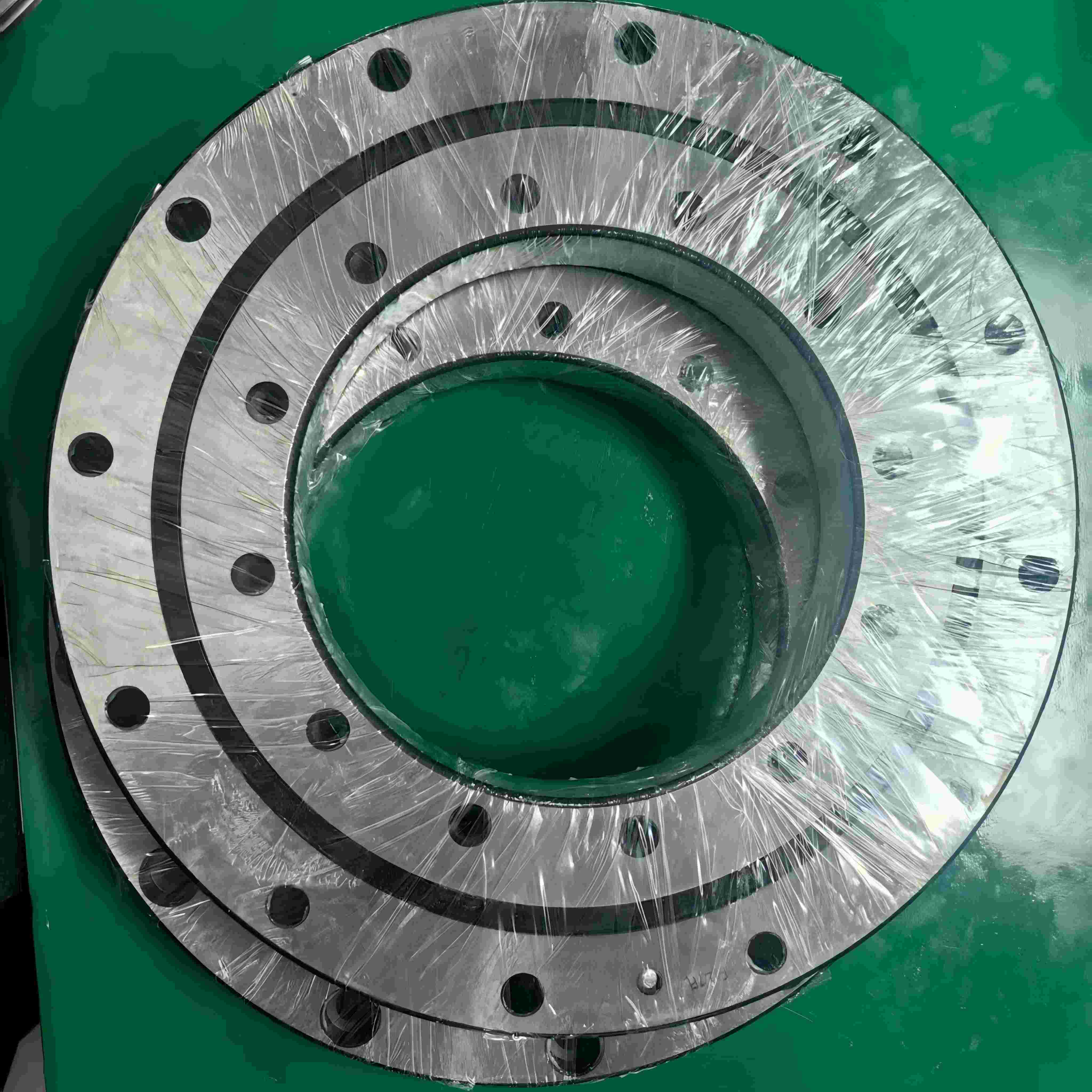
Final Inspection Reports: This is the culmination of the quality process. The report should detail all final dimensional and geometric checks, including inner and outer diameter, height, roundness, and rotational torque. It serves as objective proof that the finished bearing meets every specification on your technical drawing. At LTZC, our final inspection reports are part of the standard documentation package for every custom and Large Slewing Bearing we produce.
Evaluating Production Capability and Customization
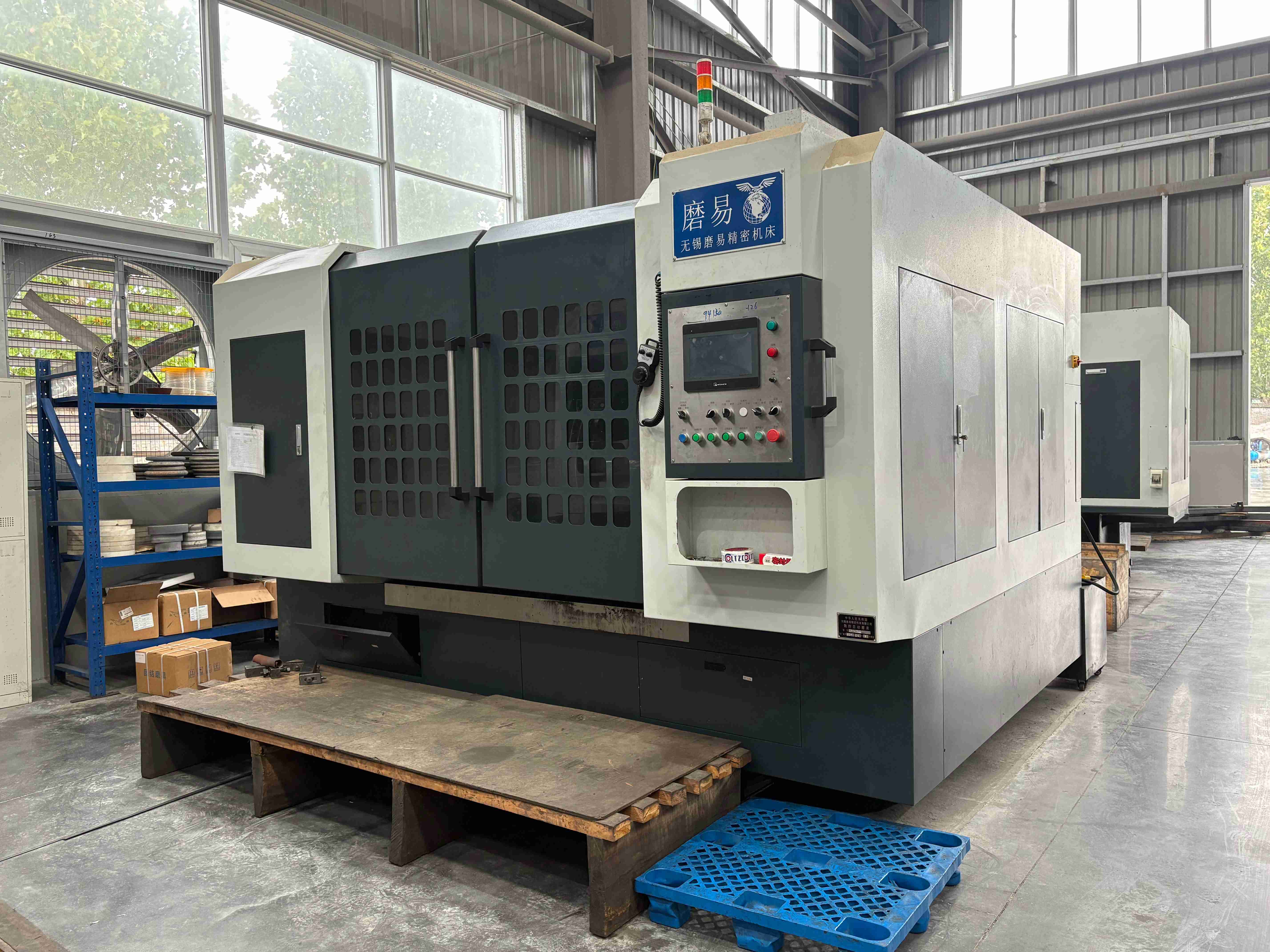
Traceability is meaningless if a supplier lacks the engineering and manufacturing capability to produce the component you need. Your audit should extend to their facility, equipment, and portfolio of past projects. Look for evidence that they can handle the scale, precision, and complexity your application requires.
Our 20,000 m² facility is certified to ISO9001:2015, ISO14001:2015, and ISO45001:2018 standards, providing a framework for consistent production. But proof is in the execution. For example, in 2024, LTZC produced a slewing ring with a 10.87-meter outer diameter for 2,000-ton fixed lifting equipment. That same year, we delivered an 8.445-meter integrated bearing to a major crane client in South Korea. These projects demonstrate our capacity for large-scale, high-precision manufacturing.
When evaluating a new supplier, use this checklist to assess their practical capabilities:
Supplier Capability Audit Checklist:
Dimension Range: What are the minimum and maximum diameters they can produce? (Our range is from 200mm to over 20 meters).
Proven Large-Scale Projects: Can they provide case studies of successfully delivered large or complex bearings? For instance, our work with Wuhan Heavy Industry on 8-meter gear rings for a national project showcases our ability in high-precision segmented gears.
Customization Process: How do they handle non-standard requirements? We provide customized bearing solutions based on working conditions, existing designs, and technical specifications.
Flexibility: Do they impose a minimum order quantity (MOQ)? LTZC has no MOQ, making us a flexible partner for prototypes, one-off projects, and series production.
Delivery Lead Time: What are their typical delivery times? (Ours range from 30-90 days, depending on complexity).
Industry Certifications: Do they hold relevant industry-specific approvals? We are certified by CCS (China Classification Society) and ABS (American Bureau of Shipping), qualifying our products for marine applications.
Assessing After-Sales Support and Partnership Value
The relationship with your slewing bearing supplier shouldn't end at the shipping dock. The long-term performance of your equipment depends on correct installation, proper maintenance, and swift support if an issue arises. A supplier committed to your success will offer a full suite of after-sales services.
From my experience in after-sales service, I know that many operational problems stem from minor installation errors or a lack of preventive maintenance knowledge. That's why our support extends far beyond simple troubleshooting. We provide:
Installation & Commissioning Guidance: On-site or remote assistance to ensure the bearing is mounted correctly, which is critical for achieving its designed lifespan. Proper bearing installation prevents issues like bolt overload and uneven raceway wear.
Preventive Maintenance Training: We train your teams on lubrication schedules, bolt torque checks, and seal inspection to maximize operational availability.
Fault Diagnosis & On-site Support: If a problem occurs, we help analyze the cause. We guarantee a response to quality objections within 24 hours, and for customers in China, on-site service can begin within 48 hours.
This level of support transforms a supplier from a simple component provider into a long-term technical partner. It ensures your equipment operates reliably for years to come, maximizing your return on investment.
By thoroughly auditing a supplier’s traceability, production capabilities, and after-sales support, you can confidently select a partner who will deliver not just a product, but lasting value and operational peace of mind.
If you require a slewing bearing with fully documented quality and dedicated technical support, submit your drawings and technical specifications to our engineering team for a detailed proposal.