WhatsApp
 jessica.chai@ltzzc.com
 0086-379-69950051

Slewing Bearing Supplier Quotes Cover Tooling Testing and Freight
A low unit price can become an expensive purchase if the quotation leaves out tooling, inspection scope, export packing, freight assumptions, or replacement parts. Before issuing a purchase order, buyers should compare the full commercial basis rather than comparing only the price shown beside the bearing model.
A qualified Slewing bearing supplier should help the buyer identify which costs are fixed, which costs change with quantity, and which responsibilities remain open for agreement. This matters most when the bearing is non-standard, large in diameter, supplied with gearing, or intended for demanding lifting, mining, marine, automation, or welding equipment.
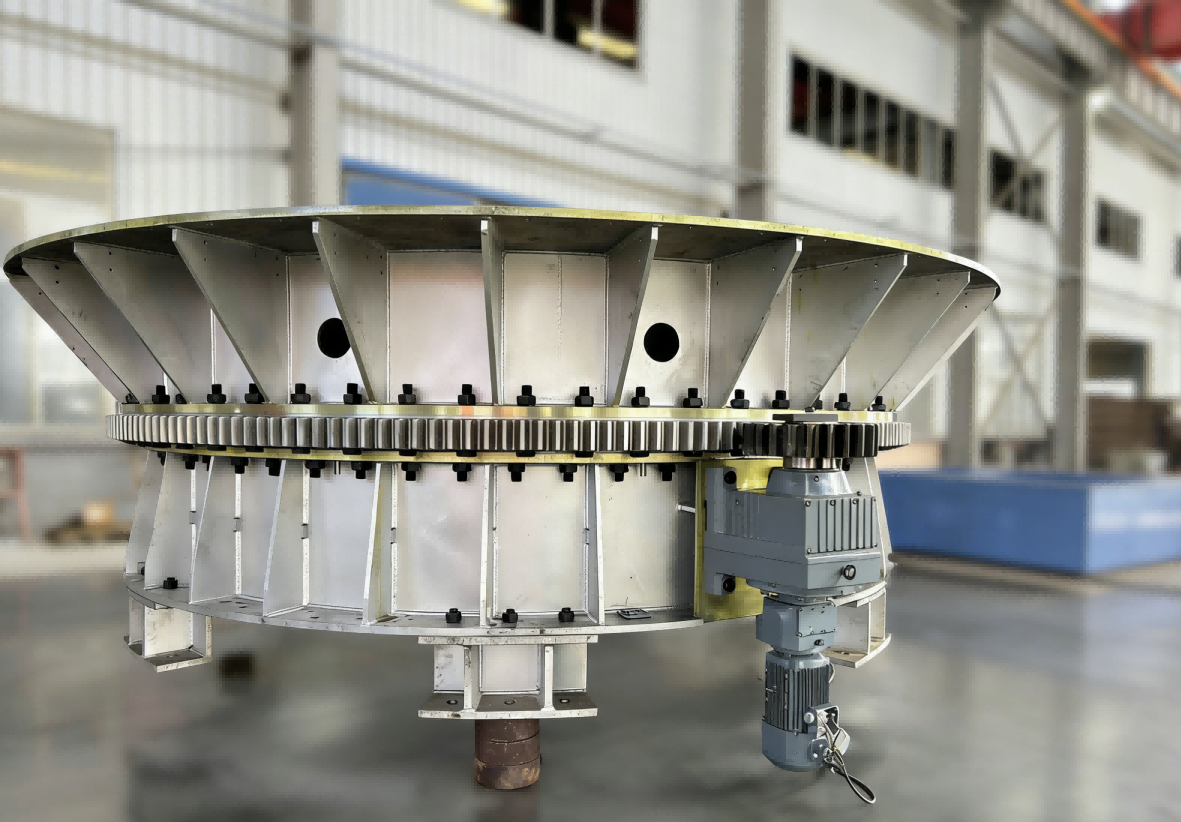
LTZC Bearings Co., Ltd. supplies slewing bearings, non-standard precision bearings, gear rings, racks, bearing unit assemblies, Slewing Drives, gear parts, and non-standard bearing parts. Where the application requires a defined bearing configuration, buyers can compare a precision slewing bearing against the required load arrangement, mounting interface, gear requirement, and delivery destination. Product selection should be completed before a quote is treated as commercially comparable.
Confirm what the quoted bearing includes before comparing price
The first decision is simple: compare like with like. A quote for a bearing ring only is not commercially equal to a quote that includes a gear, machining changes, defined inspection documents, special preservation, and export packing. Ask each bidder to state the supplied configuration in writing.
For example, a buyer sourcing a crane ring should establish whether the quoted item is a bearing only or whether it includes teeth, a pinion interface, mounting hardware, lubrication provisions, and any requested spare items. A Crane Slewing Bearing may need a different commercial scope from an automation component, where rotational accuracy and compact arrangement may receive more attention.
Use this RFQ comparison checklist
Drawing revision: State the revision number and confirm that every supplier is quoting the same document. Do not compare prices against drawings with different hole patterns, raceway geometry, or tooth requirements.
Bearing design: Identify the selected structure, such as single-row ball, cross roller, or three-row roller. A Three Row Roller Slewing Bearing should not be compared with a lighter arrangement solely because both fit a similar outside diameter.
Material requirement: Specify required material where it is known. LTZC lists GCr15, AISI 440C, 20CrMo, 42CrMo, CuSn6, SUJ2, and Ti-6Al-4V among materials applicable to different bearing conditions. The correct choice depends on the actual corrosion, load, temperature, weight, and precision requirement.
Gear scope: Clarify whether teeth are required, whether the gear is internal or external, and whether teeth need finishing. If a gear ring is part of the supply, identify it separately rather than hiding it inside a general bearing line.
Quantity basis: State prototype quantity, initial production quantity, and expected repeat quantity separately. Fixed costs can look high in a one-piece quote yet be allocated differently in a repeat order.
Commercial basis: Record currency, Incoterm, named port or destination, quote validity, payment terms, and whether freight is included or shown only as an estimate.
This checklist fits buyers who already have a bearing design and are choosing between final offers. It does not replace engineering confirmation when the design itself remains undecided. In that situation, submit working conditions, existing designs, and technical specifications first; LTZC states that it provides customized bearing solutions based on those inputs.
Cost items that change total landed cost
The correct comparison is total landed cost, not the bearing line alone. Prototype tooling, third-party testing, export packing, freight, and spare-part provisions can each move the final purchase value. None should be assumed to be included without a stated line item or a written inclusion note.
| Quote line item | Why it changes landed cost | What the buyer should request | When the cost may not apply |
|---|---|---|---|
| Base bearing and gear price | It reflects the stated design, material, size, gear arrangement, and quantity. A different configuration makes a direct price comparison invalid. | Separate pricing for the bearing, gear features, and any supplied accessory or assembly. | Do not separate items unnecessarily when the drawing clearly defines one integrated supplied part and all bidders use the same scope. |
| Prototype tooling | Custom geometry, non-standard interfaces, or special production needs may require a one-time cost. It can materially affect a low-quantity order. | Ask whether tooling is required, whether it is one-time, what it covers, and whether any reuse or ownership terms apply. | It may not apply where an existing suitable production method can be used. Do not assume that is the case without confirmation. |
| Third-party testing | An independent inspection or testing request can add service, handling, documentation, and timing costs. | Name the requested inspection body, test scope, acceptance basis, witness requirement, report format, and who pays. | It does not apply when the buyer does not require an external party. Internal and external inspection are not interchangeable unless the buyer accepts that arrangement. |
| Export packing | Large rings and machined surfaces require packing scope to be defined. Preservation, lifting arrangement, packing method, and package dimensions influence transport handling. | Request a packing description, gross shipping weight, package dimensions when available, marking requirement, and preservation period to be agreed. | Local collection or domestic supply may need a different packing basis, but collection responsibility should still be clear. |
| Freight and insurance | Transport is affected by route, shipping method, package size, weight, named destination, and market conditions at booking. | Ask for the Incoterm, freight validity period, freight inclusion or exclusion, insurance responsibility, and destination named in the offer. | Do not compare freight if one offer is ex-works and another includes delivery to a port or destination. First normalize the commercial basis. |
| Spare-part provisions | Planned spares can reduce later sourcing delay, but they increase the initial order value and may need separate packing or freight. | List each spare item, quantity, unit price, preservation requirement, and whether it ships with the main bearing or separately. | Do not add spares by default when the equipment owner has no maintenance plan or storage arrangement. Agree the maintenance responsibility first. |
A useful quote worksheet has three totals: product total, export-ready total, and delivered total under the named Incoterm. The product total covers the agreed bearing scope. The export-ready total adds agreed packing, documentation, and any inspection or testing charges. The delivered total then adds the freight basis and any agreed insurance responsibility. Import duty, taxes, destination handling, and inland delivery should be assessed according to the buyer’s import route and commercial terms; they should not be silently treated as included.
For a one-off custom order, prototype tooling deserves separate attention. The buyer should not reject it automatically, because a stated tooling charge can be more transparent than burying the cost within the bearing price. The limit is that the supplier must explain what the charge covers and the buyer must agree its treatment before order placement.
Assess supplier fit through documented capability and relevant evidence
Commercial transparency is more useful when it comes from a supplier whose product scope fits the application. LTZC has been established since 1992 and lists a 20,000 m² facility. Its quality management and management system certifications include ISO9001:2015, ISO14001:2015, and ISO45001:2018, with certification by ISO, CCS, and ABS stated in its company information. These facts help a buyer assess the supplier background, but they do not replace application-specific approval of the drawing, specification, and acceptance requirements.
For large-load equipment, the bearing structure and project reference matter more than a generic product catalogue. In 2024, LTZC delivered an integral three-row roller slewing ring with an outside diameter of 10.87 meters for 2,000-ton fixed lifting equipment. The same year, it reported successful production of an integrated bearing with an outside diameter of 8.445 meters for a crane industry client in South Korea. These are relevant references for buyers reviewing large lifting or crane applications. They do not prove that every proposed design has the same size, load case, or installation conditions.
Other documented projects show relevance for segmented and specialized ring requirements. LTZC supplied 8-meter high-precision segmented gear rings for a vertical friction stir welding system in a key national project, developed and delivered 24-meter segmented bearings to Jiangsu Nantong Rainbow Heavy Machinery, and supplied a 6-meter segmented gear ring, model US8.419.1606, with ground teeth to Hengshui customers for delivery to end customers. Buyers requiring a slewing ring gear should ask whether their requested tooth arrangement, machining scope, and segment joint requirements match the quote.

Match evidence to the actual application
Large lifting equipment: Review the 10.87-meter three-row roller delivery as evidence of relevant large-ring work. It fits a buyer whose need is large-scale lifting support. It does not establish suitability for a smaller precision turntable.
Crane projects: Review the 8.445-meter integrated bearing produced for a South Korean crane industry client. It fits a crane buyer assessing comparable project experience. The buyer must still provide its own duty cycle, load data, interface, and operating environment.
Segmented systems: Review the 24-meter segmented bearing delivery and the 8-meter segmented gear ring application. It fits projects where transport, installation access, or equipment configuration creates a segmented-ring requirement. A one-piece ring may remain preferable if transport and installation permit it.
Shield machine drive systems: LTZC developed a whole set of ring rolls for CRCC shield machine main drive, covering 15 series and 90 pieces in total. This is relevant background for heavy equipment inquiries, but it should not be used as a substitute for confirming the buyer’s own load and fit requirements.
Set testing and acceptance terms before a purchase order is released
The phrase “testing included” is too vague for an export purchase. A buyer should define exactly what inspection or third-party activity is required, what documents are expected, and what acceptance basis applies. If the requirement is absent from the request, each supplier may price a different interpretation.
Identify the controlled characteristics. Use the approved drawing and technical specification to identify dimensions, geometry, gear features, material requirements, marking, and any application-specific points that require confirmation.
State the inspection method and witness requirement. If third-party testing is needed, identify the organization or approval process. State whether the buyer needs a witness, a report, or both.
Define documentation. List requested certificates, inspection records, packing list requirements, and shipping documents. Do not assume a document is included because another project required it.
Agree the acceptance point. Define whether acceptance occurs before dispatch, at delivery, after inspection, or under another agreed condition. The responsible party for costs resulting from changes should also be clarified.
Connect acceptance to packing and dispatch. Third-party inspection and buyer witnessing can affect release timing. Reflect this in the delivery plan instead of treating it as an afterthought.
This procedure suits buyers who have an established technical approval process. It is less suitable for an early feasibility inquiry, where the priority is first confirming whether the proposed bearing concept can meet the operating requirement. In that earlier stage, a bearing selection guide can help organize the essential application inputs.
Agree delivery, support, and open commercial boundaries
LTZC states a delivery range of 30 to 90 days and no MOQ. No MOQ can be useful for prototypes, replacement requirements, and low-volume custom programs. It should not be read as a promise that every design will have the same lead time. Delivery depends on the agreed scope, design status, required tooling, inspection conditions, order quantity, and freight arrangement.
For an export quote, ask the supplier to identify when the delivery period begins. The start point may depend on matters such as drawing approval, technical clarification, commercial agreement, payment arrangement, or third-party testing instructions. These items should be agreed rather than assumed.
After installation, the commercial discussion should also identify support boundaries. LTZC offers bearing installation guidance, preventive maintenance training, fault diagnosis, and on-site technical assistance. It states that customer quality objections receive a response within 24 hours and that on-site service in China starts within 48 hours. For projects outside China, buyers should request the specific remote-support and site-support arrangement for their location rather than assuming the China on-site timing applies internationally.
Common mistakes in landed-cost negotiation
Choosing the lowest bearing price: This fails when packing, freight, testing, or tooling are excluded. Compare normalized totals under the same commercial basis.
Leaving the Incoterm blank: This creates disagreement over who arranges transport, insurance, export steps, and destination charges. Name the Incoterm and place.
Calling third-party inspection “standard”: External inspection has to be defined by scope, party, documents, and payment responsibility.
Ignoring spare parts until equipment start-up: This can create later delays. Decide whether spares are needed with the main shipment, and price them separately.
Assuming no MOQ means no fixed cost: No MOQ addresses order quantity, not necessarily tooling, special inspection, or export preparation costs.
Releasing a purchase order before acceptance terms are fixed: This can lead to different views of what constitutes an acceptable delivered bearing.
The strongest late-stage RFQ comparison is therefore not a single unit-price ranking. It is a documented comparison of the same design, identical acceptance requirements, stated export packing, a named freight basis, and a clear spare-part decision. That approach gives procurement, engineering, and logistics teams a shared basis for approval.
Send LTZC your drawing, quantity, testing requirement, packing destination, and preferred Incoterm to request a quote with the relevant cost items clearly separated.