WhatsApp
 jessica.chai@ltzzc.com
 0086-379-69950051

Understanding the Tradeoff Between Accuracy and Torque in Cross Roller Slewing Bearings
As a slewing bearing engineer, one of the most common challenges I help clients solve is the delicate balance between rotational accuracy and turning torque. Engineers often specify a bearing for maximum rigidity and minimal runout, only to find the rotational torque is too high for their drive system. Conversely, a system designed for low friction may suffer from insufficient stiffness and positioning errors. This conflict is not a product flaw; it is a fundamental engineering principle inherent to the design of any Cross Roller Slewing Bearing.
Understanding the sources of torque and their relationship to accuracy is essential for proper specification. The goal is to define an acceptable performance window for both parameters, not to maximize one at the expense of the other. At LTZC, we provide non-standard bearings and customized solutions that address these specific application requirements, ensuring you don't have to compromise on performance. Our approach is grounded in a quality management system certified to ISO 9001:2015, ensuring consistent and reliable manufacturing.
Key Factors Influencing the Accuracy-Torque Relationship
The relationship between rotational accuracy and torque is not controlled by a single factor. It is the sum of several interconnected variables. A change in one area, such as increasing preload to improve accuracy, will directly impact another, like frictional torque. Below, we break down the four primary contributors you must consider during the design and specification phase.
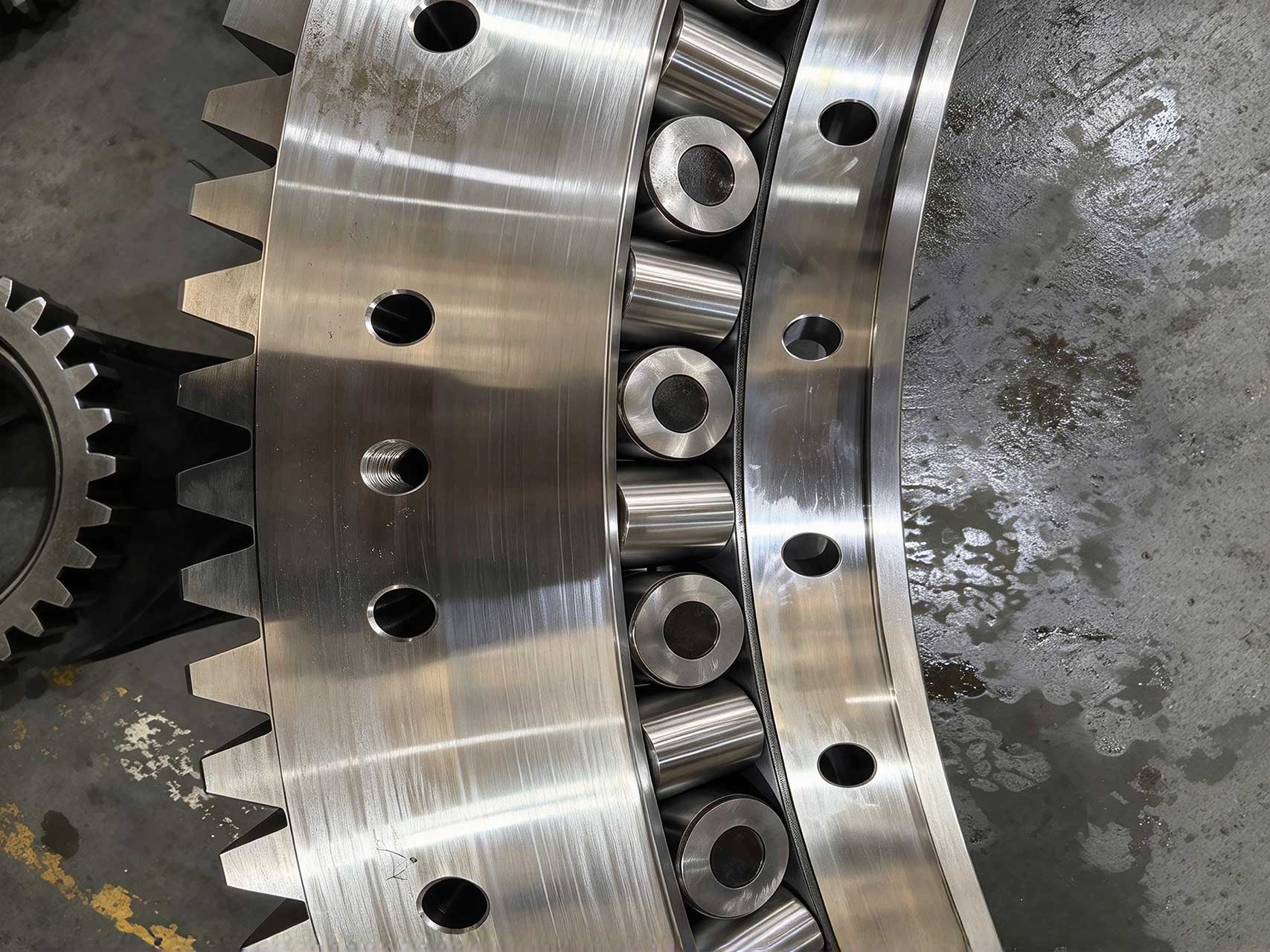
Internal Preload: Preload is the internal axial force applied to a bearing to eliminate clearance and increase its stiffness. Higher preload reduces the potential for roller movement under load, leading to better rotational accuracy and repeatability. However, this increased force also squeezes the rollers and raceways together more tightly, significantly increasing frictional drag and the torque required to initiate and sustain rotation.
Lubrication Choice: The type and amount of grease used for slewing ring lubrication directly influence torque. A high-viscosity grease provides a durable film that protects against wear under heavy loads, but it also creates more viscous drag, increasing torque, especially at low temperatures or high speeds. A lower-viscosity grease reduces torque but may offer less protection in demanding conditions.
Seal Design and Material: Seals are a primary source of constant, load-independent friction. A tight, double-lip contact seal provides excellent protection against contamination but generates significant drag. A non-contact labyrinth seal offers much lower friction but less effective protection. The material, design, and pressure of the seal against the running surface are major torque contributors.
Mounting Surface Distortion: A bearing is only as accurate as the structure it is mounted on. If the mounting surface is not perfectly flat and rigid, tightening the mounting bolts can deform the bearing rings. This distortion creates tight spots in the raceway, causing significant spikes in torque and destroying the bearing's inherent precision. Proper bearing installation is not just a recommendation; it is a requirement for performance.
How to Specify Preload for Optimal Performance
Specifying the right amount of preload is critical for achieving the desired bearing rotational accuracy without generating excessive torque. Preload is typically defined as light, medium, or heavy, but these are relative terms. For precision applications, a specific numerical range of clearance or preload is required.
A bearing can be supplied with negative clearance (preload) or positive clearance (play). For applications requiring high stiffness, such as robotics or machine tool tables, a specific preload value is necessary. This removes internal play, ensuring that the axis of rotation is precisely controlled. However, this preload is the largest contributor to no-load running torque. Our team helps clients define this value based on their load spectrum, drive system capability, and required positioning accuracy. With no MOQ, we can produce a single prototype or a full production run tailored to your exact preload requirements.
Checklist for Determining Preload Requirements
What is the maximum acceptable runout for your system? Higher accuracy requirements generally demand higher preload.
What are the operational loads (axial, radial, moment)? The preload must be sufficient to prevent the bearing from entering a clearance condition under load.
What is the maximum available torque from your drive system? The bearing's frictional torque, dictated by preload, must be well below this limit.
What is the operational temperature range? Thermal expansion of the housing and shaft can alter the installed preload, which must be accounted for in the initial specification.
Is the primary goal stiffness or low friction? You must prioritize one. A single bearing cannot deliver maximum stiffness and minimum friction simultaneously.
Analyzing and Managing Frictional Torque Sources
Total bearing torque is a combination of several components. Understanding each one allows for a more targeted approach to torque reduction. The main components are load-independent torque (from seals and lubrication) and load-dependent torque (from applied forces and preload). A proper bearing torque measurement can help isolate which factor is the primary issue.
At LTZC, our engineering process involves a detailed friction torque calculation to model performance before manufacturing. We consider all variables to provide a realistic estimate of the torque you can expect. This is part of our commitment to delivering precision slewing bearing solutions that work as intended in the final assembly.
The table below outlines common sources of torque and practical strategies for their management.
| Torque Source | Primary Cause | Management Strategy | Associated Tradeoff |
|---|---|---|---|
| Seal Drag | Friction from seal lips rubbing against the bearing ring. | Specify low-friction seals (e.g., non-contact labyrinth) or seals made from low-friction materials like PTFE. | Reduced protection against moisture and particulate contamination. |
| Grease Churning | Resistance from the rolling elements moving through viscous grease. | Use a lower NLGI grade grease, a grease with lower base oil viscosity, or reduce the grease fill percentage. | May reduce load-carrying capacity and lubrication intervals. |
| Roller/Raceway Friction | Elastic deformation and sliding under preload and external loads. | Specify the minimum preload necessary to achieve the required stiffness. Improve raceway surface finish. | Lower preload reduces stiffness and may increase runout under load. |
| Mounting Distortion | Non-flat mounting surfaces or uneven bolt torquing deforming the bearing rings. | Ensure mounting surface flatness and rigidity meet specifications. Use a calibrated torque wrench and follow a star pattern for tightening. | Requires additional machining and careful assembly, increasing costs. |
Common Mistakes When Specifying for Accuracy and Torque
Over years of providing after-sales service, I have seen recurring mistakes that lead to performance issues. Avoiding these common pitfalls during the design phase can save significant time and cost later on. These issues often arise from a specification that over-emphasizes one performance metric without considering its consequences.
Here are some of the most frequent errors engineers make:
Over-specifying Accuracy: Requesting the highest possible precision class (e.g., P2) when a lower grade (e.g., P5) would suffice. This needlessly increases preload, torque, and cost without providing a functional benefit to the application. Always match the bearing's precision to the system's actual requirements.
Ignoring Mounting Surface Flatness: Assuming that a high-precision bearing will compensate for a poor mounting structure. A warped or uneven mounting surface will distort even the most accurate bearing, creating high torque and premature failure. Our bearing selection guide provides clear specifications for surface preparation.
Using the Wrong Lubricant: Selecting a standard, heavy industrial grease for a low-torque, high-precision application. The viscous drag from such a lubricant can easily exceed the torque budget of the drive motor. Lubricant selection must be an integral part of the bearing design process.
Disregarding Seal Friction: Focusing only on load-related torque and ignoring the constant drag from seals. In many low-load applications, seal drag is the dominant component of total torque. The bearing seal design must be chosen carefully.
Our commitment extends beyond manufacturing. As an ISO 14001:2015 and ISO 45001:2018 certified company, we support our clients with the technical guidance necessary to integrate our products successfully, ensuring both performance and safety. With a delivery lead time of 30-90 days, we can align production with your project schedule.
If you are facing challenges with balancing the accuracy and torque of your equipment, our engineering team can help. Submit your design specifications, and we will provide a detailed analysis and a customized bearing solution for your application.