WhatsApp
 jessica.chai@ltzzc.com
 0086-379-69950051

Customized Slew Bearings Quote Inputs That Change Lead Time
Before placing an RFQ, project buyers should identify which details affect engineering review, material preparation, machining, and acceptance requirements. A low unit-price quotation can become a schedule problem when the supplier has not priced the actual raceway, gear, mounting, or inspection requirements.
Customized Slew Bearings are specified for applications where a catalogue bearing does not match the required envelope, load arrangement, gear interface, material, or installation layout. The buyer’s main risk is not simply receiving a higher quotation. It is receiving a quote that excludes design details later identified as necessary for the equipment build.
LTZC Bearings Co., Ltd. supplies slewing bearings, non-standard precision bearings, gear rings, racks, bearing unit assemblies, Slewing Drives, gear parts, and non-standard bearing parts. For buyers comparing bearing options, our precision slewing bearing range and customized solutions can be evaluated against the application drawing, working conditions, and technical specifications rather than against a part number alone.
Define the bearing requirement before comparing supplier quotations
Conclusion: Compare quotations only after all suppliers receive the same technical input package. This is the most direct way to identify a real price and schedule difference rather than a difference in scope.
The reasoning is simple. A quotation for an outer-geared bearing with standard mounting holes is not directly comparable with one that includes a special gear module, a non-standard raceway, a revised bolt pattern, corrosion-resistant material, or application-specific inspection records. Each change can affect manufacturing work, purchased material, and approval time.
This approach fits equipment builders, crane manufacturers, mining machinery companies, automation integrators, and maintenance teams replacing an obsolete bearing. It does not apply when the requirement is genuinely open and the buyer needs a preliminary budget only. In that situation, label the inquiry as a budgetary estimate and list the assumptions so they can be reviewed later.
Minimum RFQ package for a custom bearing
Assembly drawing: Include outside diameter, inside diameter, overall height, mounting faces, hole locations, and clearances to surrounding structures.
Load information: State axial load, radial load, overturning moment, direction of loading, static or rotating ring, and whether loads are continuous, intermittent, or shock-related.
Rotation details: Provide speed, duty cycle, rotation angle, reversal frequency, and the required positioning behavior.
Gear requirement: Identify internal gear, external gear, or gearless construction. Include the mating pinion information when available.
Raceway and rolling-element preference: State whether the design must follow an existing ball, roller, cross-roller, or multi-row arrangement, or whether the supplier may propose alternatives.
Material and environment: Describe corrosion exposure, temperature conditions, lubrication restrictions, contamination, and any requested material grade.
Acceptance requirement: Specify dimensional checks, marking requirements, certificates, inspection documents, packing requirements, and delivery destination.
Commercial timing: State the required delivery date and whether it is a firm equipment milestone or an estimate.
A buyer replacing a failed unit should also provide photographs, identification marks, measured dimensions, and the reason for failure if known. This can help distinguish a like-for-like replacement from a redesign request. A bearing that failed because of mounting distortion or pinion engagement may need a broader review than a duplicate part.
For early product-type selection, compare a Three Row Roller Slewing Bearings arrangement with other options only after defining the load paths. A three-row configuration may suit heavy-duty load separation, but it is not automatically the best answer for every compact or low-speed application.
Separate quote turnaround from the custom slew bearing production schedule
Conclusion: Ask for two dates in every RFQ response: the expected quotation date and the expected delivery date after technical scope confirmation. They measure different activities and should not be treated as one promise.
A quote turnaround concerns the time needed to review the input, clarify missing data, select a design direction, and prepare commercial scope. Manufacturing lead time begins only when the bearing configuration, commercial terms, and acceptance scope are sufficiently defined. Asking “how long does a custom slewing bearing take” without separating these stages often produces an answer that cannot be used for equipment planning.
LTZC states a delivery range of 30–90 days. This range should be read as a planning input, not as a fixed lead time for every configuration. The actual custom slew bearing lead time depends on the confirmed design scope, selected materials, gear work, and required documentation. Buyers should ask what assumptions support the stated delivery window.
| Schedule stage | Buyer action | What can delay the stage | What to request from the supplier |
|---|---|---|---|
| RFQ review | Send drawings, loads, environment, and required date | Missing load cases, unclear mounting details, unidentified gear data | List of technical assumptions and clarification questions |
| Technical scope confirmation | Approve the selected configuration and interface details | Changes to holes, gears, raceway type, material, or dimensions | Defined deliverables and approved design basis |
| Material and production planning | Confirm priority and delivery destination | Special material availability and late changes | Delivery range based on the confirmed scope |
| Inspection and dispatch preparation | Confirm records, packing, and shipping instructions | Added documentation or destination changes after production | Included inspection documents and shipment responsibilities |
This separation is especially useful when a purchasing department wants an immediate budget while the engineering team is still choosing an interface. The budget can proceed with stated assumptions. The production commitment should wait until the drawing and technical obligations are closed.
Cost and schedule analysis for raceways, gearing, heat treatment, testing, and materials
Conclusion: A useful quotation identifies which design decisions change both price and schedule. Buyers should not compare only the final total because a lower price may exclude the work needed for the actual application.
The following table connects common design choices to the questions that should appear in a commercial and technical comparison. These points are quote factors, not universal claims about a particular bearing design. The supplier should confirm their effect after reviewing the drawing and operating conditions.
| Design choice | Effect on quotation scope | Potential schedule effect | Buyer check before order |
|---|---|---|---|
| Non-standard raceways | May require special geometry, rolling-element selection, or revised machining scope | Can extend technical review and manufacturing planning if geometry is not final | Freeze raceway profile, load direction, and any interchangeability requirement |
| Internal or external gearing | Adds tooth geometry, gear accuracy, and mating-pinion considerations | Gear data clarification can hold the design release | Provide module or tooth information, gear direction, and mating-pinon details where available |
| Heat-treatment requirement | Can change material selection and processing scope | May affect planning where a specified treatment or verification is required | State the requested standard, hardness requirement if applicable, and certificate need |
| Testing and inspection records | May add dimensional, document, or witness requirements beyond a basic delivery | Late additions can affect release and dispatch preparation | List required reports before the quotation is issued |
| Material availability | Specified grades may differ in purchase and machining cost | Availability should be checked before a date is committed | Allow approved alternatives where the application permits them |
Material selection should follow the service condition rather than habit. GCr15 is commonly used for roller and ball bearings because of its hardness, wear resistance, and strength. AISI 440C may suit environments requiring corrosion and oxidation resistance. 20CrMo and 42CrMo can suit heavy-load bearing applications where alloy elements improve strength, hardness, and wear resistance. CuSn6 offers wear resistance, thermal conductivity, and corrosion resistance. SUJ2 is used for high-precision and high-load applications, while Ti-6Al-4V can suit lightweight, high-temperature aerospace or high-strength needs.
These descriptions do not replace application verification. For example, selecting AISI 440C solely because moisture is present may be unsuitable if the total load, contact condition, or mating components indicate a different design route. Likewise, Ti-6Al-4V should not be requested simply to reduce weight without reviewing the entire load-bearing arrangement and cost impact.
The term slewing ring tooling cost should also be clarified. Ask whether the price includes any non-recurring tooling, special fixtures, design work, inspection work, or gear-related setup. If a quotation has no separate tooling line, ask whether those costs are included in the unit price or whether the supplier considers the design to use existing methods. This avoids comparing an incomplete low quote with an all-inclusive quote.
Use supplier evidence to judge whether the quotation fits the project scale
Conclusion: Review documented project evidence that resembles the size, structure, or industry risk of your requirement. Broad capability statements are less useful than examples tied to actual delivered bearing configurations.
LTZC was established in 1992 and operates a 20,000 m² facility. The company holds ISO9001:2015, ISO14001:2015, and ISO45001:2018 certifications, with certification by ISO, CCS, and ABS stated in its company information. For a buyer, these are relevant qualification points to include in a supplier assessment, but they do not remove the need to agree project-specific acceptance requirements.
For large and heavy-duty requirements, LTZC delivered a 10.87-meter outer-diameter integral three-row roller slewing ring in 2024 for 2,000-ton fixed lifting equipment. In the same year, LTZC completed an integrated bearing with an 8.445-meter outer diameter for a crane industry client in South Korea. These are specific examples of delivered large bearing work. They do not mean every large-ring inquiry has the same configuration or delivery requirement.
Additional documented references include 8-meter high-precision segmented gear rings supplied for a vertical friction stir welding system on a key national project, and 24-meter segmented bearings delivered to Jiangsu Nantong Rainbow Heavy Machinery. Where gearing is central to the equipment design, review the supplier’s slewing ring gear scope alongside the bearing quote so that gear and bearing interfaces are not treated as separate, conflicting specifications.
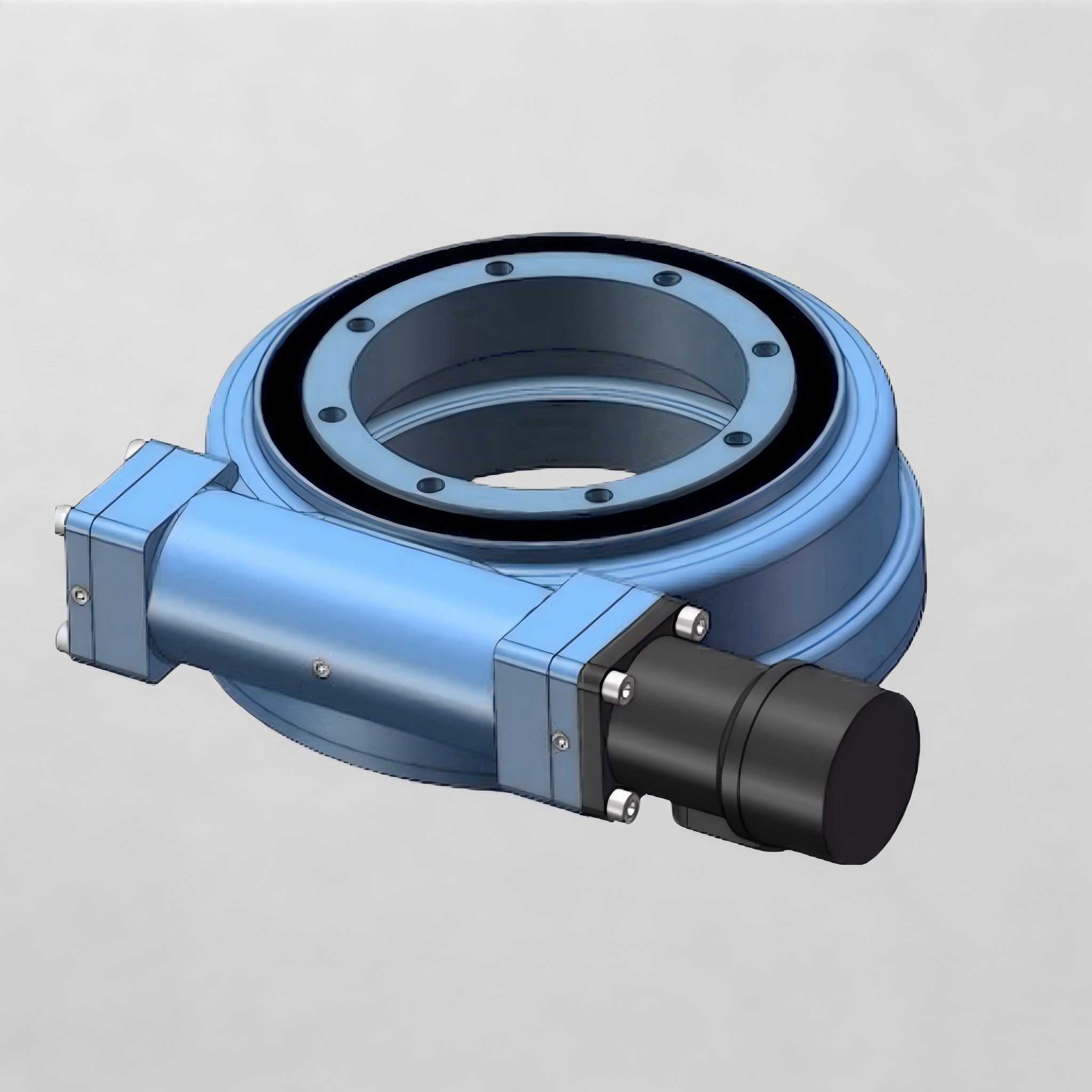
For buyers needing a non-standard interface rather than an exceptionally large diameter, LTZC also provides non-standard bearings based on working conditions, existing designs, and technical specifications. This may fit a replacement project, a revised mounting envelope, or an integrated assembly requirement. It does not mean an existing drawing can be reproduced without checking dimensions, load conditions, and installation interfaces.
Prevent avoidable quote revisions with a buyer decision checklist
Conclusion: The best way to protect the build schedule is to resolve the high-impact choices before issuing the purchase order. A short technical checklist can prevent multiple quote revisions and reduce the chance that delivery expectations are based on incomplete information.
Confirm the application role: Is the bearing for lifting, positioning, tilting, indexing, or continuous rotation? This determines which loads and duty information matter.
Check both rings: Identify which ring rotates, how each ring mounts, and whether the support structures are sufficiently defined. Do not provide only the bearing envelope.
Freeze the gear decision: Confirm internal, external, or no gear before requesting a firm price. A later gear change affects both interface and production scope.
State the documentation level: Ask for required certificates and inspection records in the RFQ, not after the product is ready for dispatch.
Distinguish required from preferred materials: Mark material grades as mandatory only when the application requires them. Otherwise, request technically suitable alternatives for comparison.
Ask what the delivery date assumes: Confirm whether the stated date depends on approved drawings, buyer-supplied mating parts, inspection approval, or shipping instructions.
Plan installation early: Bearing performance can be affected by mounting condition, bolt practice, lubrication, and gear engagement. Review the supplier’s bearing installation information before equipment commissioning.
A common mistake is issuing an RFQ marked “urgent” while leaving the final bolt pattern or gear arrangement open. Urgency does not reduce the technical work created by uncertain inputs. Another mistake is treating no minimum order quantity as a reason to omit production details. LTZC states that there is no MOQ, which can help projects requiring a single customized unit or a small replacement quantity. However, one-off work still requires a defined drawing, technical scope, and mutually understood delivery basis.
Set cooperation terms that protect delivery planning
Conclusion: The purchase order should identify technical scope, acceptance requirements, commercial responsibilities, and support expectations in the same document set. This is most suitable for equipment projects with fixed assembly milestones. It may be less necessary for an uncomplicated repeat order where the full specification is already controlled.
Before issuing an order, confirm the part designation, revision level, quantity, delivery destination, required date, packing requirements, and acceptance documents. Also record what happens if the buyer changes a drawing after the supplier has begun work. Without this agreement, neither party has a sound basis for measuring the effect on price or delivery.
LTZC provides after-sales support that includes installation and commissioning guidance, preventive maintenance training, fault diagnosis, and on-site technical assistance. The company states that customer quality objections receive a response within 24 hours and that on-site service starts within 48 hours in China. Buyers outside China should confirm the available support arrangement, responsibility, and response method for their location rather than assuming the same on-site timing applies internationally.
For a custom bearing quotation that can be compared line by line, submit your drawing, load data, gear requirement, material preference, acceptance documents, and required delivery date to LTZC.