WhatsApp
 jessica.chai@ltzzc.com
 0086-379-69950051

How to Specify a Double Row Roller Slewing Ring for an Accurate RFQ
Submitting an incomplete Request for Quotation (RFQ) is the most common reason for delays in sourcing large-scale industrial bearings. When key operational data is missing, suppliers cannot accurately calculate load capacity or bearing life, leading to vague quotes, incorrect component selection, and potential project setbacks. Before you can secure a reliable component for your heavy machinery, you must provide a precise technical package that allows engineers to validate performance and confirm manufacturability. This is especially true for a Double Row Roller Slewing Ring, where immense loads require absolute certainty in design.
As a slewing bearing engineer with over a decade of experience, I've reviewed thousands of RFQs. The best ones are always built on a foundation of clear, comprehensive data. This guide outlines the essential information our team at LTZC needs to provide you with a fast, accurate, and technically sound quotation for your specific application.
Critical Load Data: The Foundation of Your Bearing Specification
The performance of a slewing ring is defined by its ability to handle the specific combination of loads it will experience in operation. Without this data, any calculation is just a guess. You must provide clear values for the three primary load types, ensuring they represent the maximum operational and survival conditions for your equipment.
For a recent project, we delivered a 10.87-meter outer diameter slewing ring for a 2,000-ton fixed lifting crane. The successful design of this record-breaking component for LTZC depended entirely on the client providing precise calculations for all load combinations, especially the tilting moment under maximum lift.
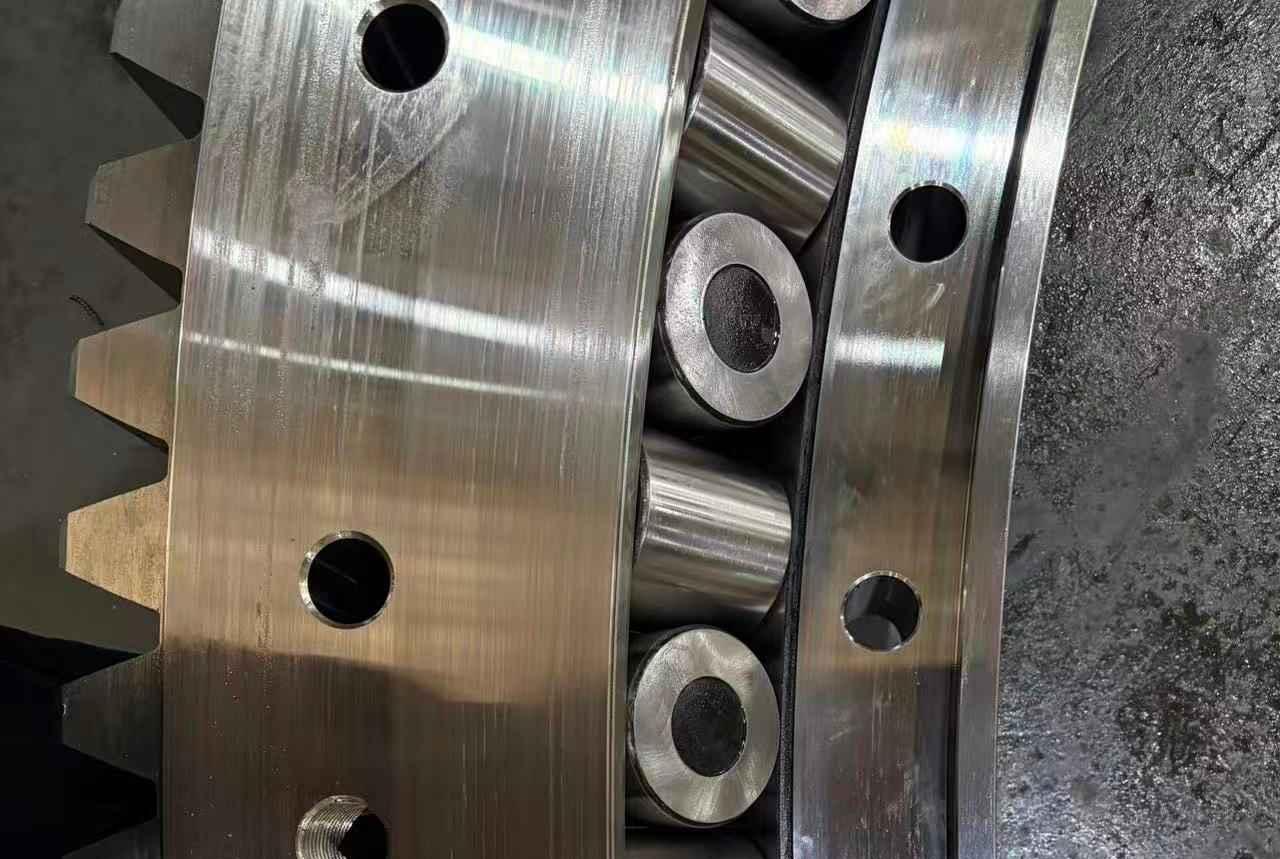
Use this checklist to gather the fundamental load data for your RFQ:
- Maximum Axial Load (Fa): This is the total vertical force acting parallel to the bearing's axis of rotation. Specify the maximum static load (when stationary) and any dynamic loads during operation.
- Maximum Radial Load (Fr): This is the force acting perpendicular to the bearing's axis of rotation, pushing from the side. Like axial load, both static and dynamic values are important.
- Maximum Tilting Moment (M): This is the turning force that tries to tip the bearing over. It is often the most critical load for large equipment like cranes, excavators, and wind turbines. It's calculated by multiplying a load by its distance from the bearing's centerline.
- Load Combinations: Bearings rarely experience just one load at a time. Provide data for combined load cases, such as the maximum axial load occurring simultaneously with a corresponding tilting moment.
- Duty Cycle: Describe how often and for how long the bearing will operate under these loads. A bearing that operates continuously has different life requirements than one that operates intermittently.
The Missing Data That Delays Your Quote
An RFQ with just the basic loads is a start, but it's the operational context that allows us to confirm if a standard design is sufficient or if non-standard bearings are required. Omitting these details forces us to make assumptions, which can lead to an over-engineered, costly solution or, worse, an under-engineered one that fails prematurely. Here are the common missing inputs I see and why they are essential for confirming capacity, life, and mounting compatibility.
| Missing Information | Why Our Engineers Need It | Consequence of Omission |
|---|---|---|
| Operating Environment | To select the correct material, sealing solution (e.g., NBR, Viton), and corrosion protection. Is it a marine, desert, or cryogenic environment? | Risk of premature failure from corrosion, contamination ingress, or seal degradation. An AISI 440C material might be needed instead of standard GCr15. |
| Rotational Speed & Duty Cycle | Required to calculate the bearing's fatigue life (L10h). A slow-slewing crane has different requirements than a continuously rotating bottling machine. | Inaccurate life prediction. The quoted bearing may not meet the equipment's required operational lifespan. |
| Mounting Structure Details | The flatness, rigidity, and material of the supporting structure affect the bearing. We need this to recommend the correct preload, bolt grade, and tightening torque. | Risk of bearing deformation, uneven load distribution, or catastrophic mounting bolt failure. A non-rigid structure can destroy a perfectly good bearing. |
| Required Precision / Runout | Determines the manufacturing tolerance class. A radar antenna requires much higher precision than a construction excavator. | The quote might be for a standard precision bearing when a high-precision one is needed, leading to performance issues. Or, you might pay for precision you don't need. |
| Gear Requirements (if any) | If a slewing ring gear is needed, we must know the module, pressure angle, accuracy grade, and whether it's internal or external. | Inability to quote a geared bearing. The gear is an integral part of the design and cannot be an afterthought. |
Material Selection and Gearing Requirements
The choice of material directly impacts the bearing's load capacity, wear resistance, and suitability for the operating environment. While GCr15 bearing steel is a common and reliable choice for general heavy machinery, demanding applications require specialized alloys. Our ISO 9001:2015 certified production ensures full material traceability, giving you confidence in the quality of the raw materials we use.
This table provides a simple guide for initial material consideration:
| Material | Key Properties | Typical Application Scenario |
|---|---|---|
| GCr15 / SUJ2 | High hardness, excellent wear resistance, and high strength. | Standard for rollers and rings in most industrial machinery, including excavators, cranes, and machine tools. |
| AISI 440C | Good corrosion and oxidation resistance. | Marine environments, offshore cranes, food processing equipment, or any application with high moisture. |
| 42CrMo / 20CrMo | Higher strength, hardness, and toughness through alloying and heat treatment. | Heavy-duty applications with extreme shock loads, such as in mining, steel mills, and large tunnel boring machines. |
For geared slewing rings, the gear specification is just as important as the bearing specification. We have extensive experience producing high-precision gears, such as the 8-meter segmented gear rings with ground teeth supplied to Wuhan Heavy Industry for a key national project. When submitting your RFQ, be sure to include your requirements for module, pressure angle, helix angle (if any), and desired tooth quality level (e.g., ISO 1328 Grade 6).
Dimensional, Precision, and Customization Needs
Your drawings should clearly define the key dimensional constraints for the bearing, including the outer diameter (OD), inner diameter (ID), and overall height. At LTZC, our manufacturing capabilities are extensive, with product dimensions ranging from 200mm to an impressive 20,000mm. We recently demonstrated this scale by producing an 8.445-meter OD integrated bearing for a crane client in South Korea.
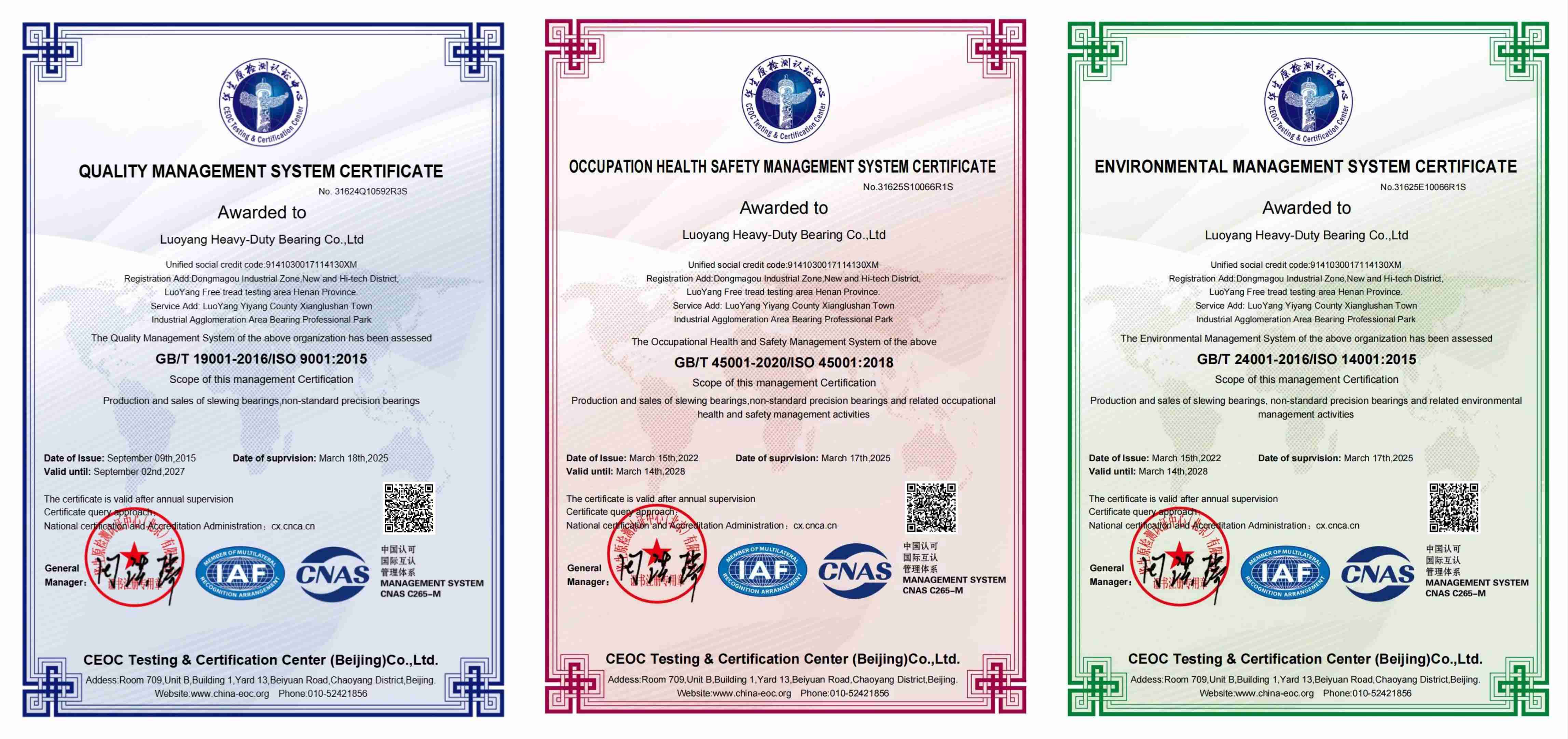
Beyond basic dimensions, defining the required precision is key. This is typically specified as the maximum allowable axial and radial runout. A higher precision bearing will have less "wobble" and is essential for applications like medical scanners, telescopes, and precision indexing tables. For other applications, like a simple log loader, standard precision is perfectly adequate and more cost-effective.
If a standard catalog bearing does not meet your needs, we specialize in providing customized solutions. Whether you require specific materials like Ti-6Al-4V for aerospace, unique mounting hole patterns, or integrated gearing, our engineering team can design a bearing based on your technical specifications. Our successful delivery of a full set of shield machine main drive rings for CRCC showcases this custom capability.
After-Sales and Installation Considerations
A successful project does not end with delivery. Proper installation and maintenance are vital for achieving the calculated bearing life. While not strictly part of an initial RFQ, thinking ahead about these factors can simplify the entire process. For example, specifying the location of lifting holes, lubrication points, and access for inspection on your drawing ensures the final product is easy to handle and maintain.
We provide full after-sales support to ensure the long-term, stable operation of your equipment. This includes a complete bearing installation and commissioning guidance, preventive maintenance training for your teams, and fault diagnosis support. By partnering with a supplier who understands the full lifecycle of the component, you are investing in reliability beyond just the part itself.
By providing a complete and detailed RFQ using the guidelines above, you enable us to be a more effective partner. You will receive a faster, more accurate quote for a component designed to meet the precise needs of your application.
If you have prepared the technical data for your heavy-duty application, submit your drawings to our engineering team for a detailed review and quotation.