WhatsApp
 Eric.wang@ltzzc.com
 0086-379-69950051

Extending Loader Turntable Bearing Life: LTZC Bearing Maintenance Guide
I. Reasons for Reduced Service Life of Loader Turntable Bearings
1.1 Core Structure and Operational Characteristics
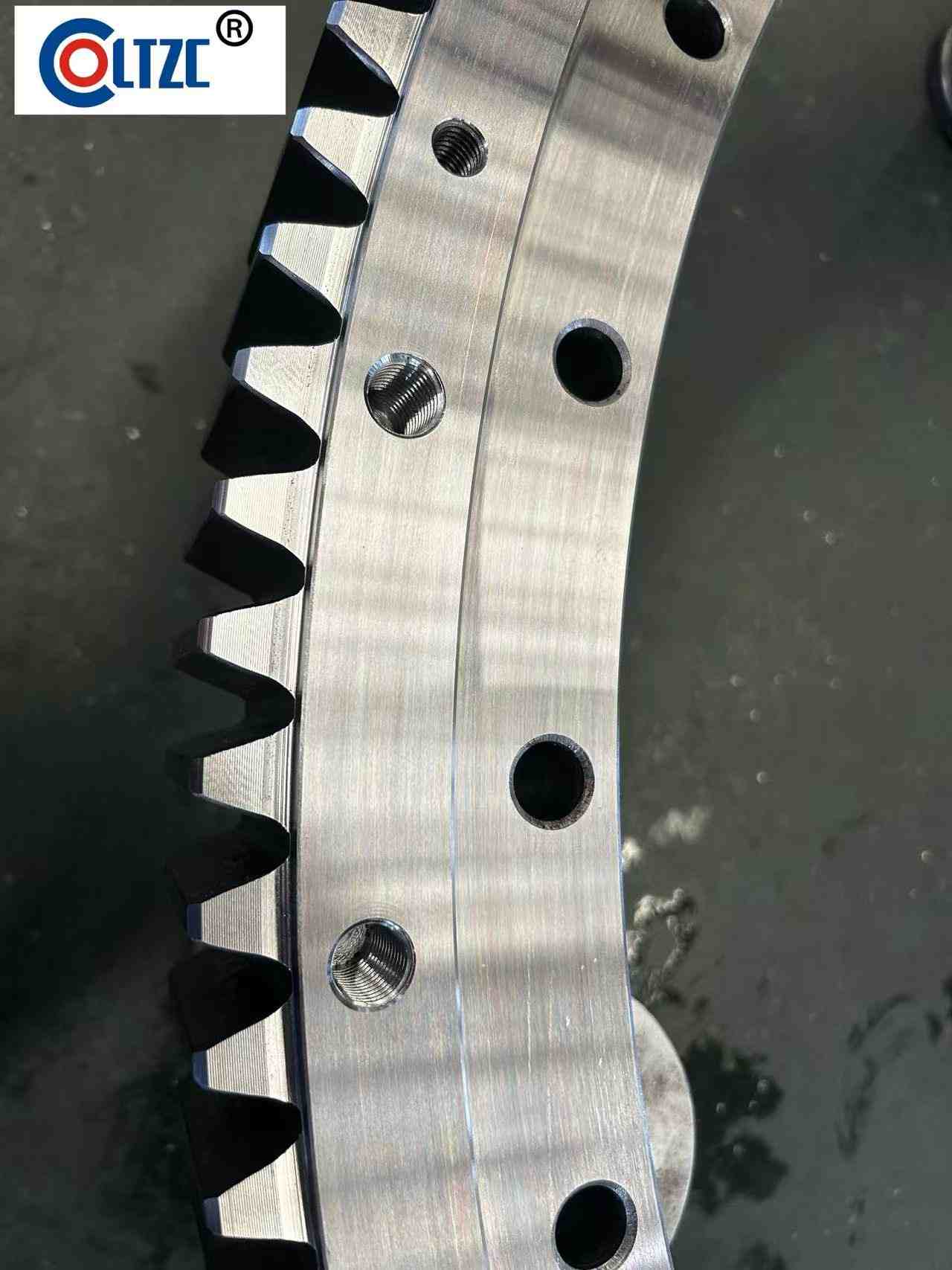
The loader turntable bearing is a large, heavy-duty, precision slewing bearing. Its structure comprises raceways, rolling elements, spacers, inner and outer rings, sealing devices, mounting bolts, and a gear ring. It is designed to simultaneously withstand axial forces, radial forces, and overturning moments, accommodating the operational demands of loaders—specifically frequent 360° rotation, heavy-duty start-stop cycles, and variable-load operations.
1.2 Primary Reasons for Reduced Service Life
First, improper lubrication and maintenance. Many overseas field construction teams lack standardized maintenance protocols for slewing bearings. Issues such as incorrect grease selection, insufficient or excessive grease application, irregular lubrication intervals, and the mixing of new and old grease lead to a shortened bearing lifespan.
Second, seal failure and contaminant ingress. Operating conditions must be carefully considered when selecting loader turntable bearings to ensure adequate lubrication and sealing protection. In major overseas construction regions—such as Southeast Asia, sandy areas in Africa, and the hot, windy, and sandy environments of the Middle East—contaminants like dust, silt, rainwater, and acidic or alkaline mists are prevalent. If the slewing bearing's seal ring ages, breaks, or deforms, contaminants can enter the raceway, scratching the precision raceways and rolling elements. This triggers corrosion, binding, and abnormal noise, ultimately causing a loss of bearing precision. Additionally, salt spray corrosion at coastal construction sites accelerates metal oxidation, significantly reducing the bearing's service life.
Third, issues with bolt fastening and assembly. Loader turntable bearings are secured to the equipment frame using high-strength bolts. Prolonged vibration and heavy-duty start-stop operations can cause bolts to loosen and preload to drop, resulting in uneven load distribution and localized overload wear. Some overseas maintenance teams fail to use the diagonal cross-tightening method or standard torque wrenches during assembly, or even reuse high-strength bolts more than three times. These practices easily lead to bearing misalignment and load imbalance, resulting in premature failure.
Fourth, overloading and improper operation. Overseas engineering projects often operate under tight schedules, leading to common issues such as overloading during lifting, rapid slewing, and prolonged continuous operation. These practices exceed the rated load capacity of the loader's turntable bearing, resulting in plastic deformation of the raceways and fatigue damage to the rolling elements. Furthermore, prolonged equipment idleness and unprotected outdoor storage can cause bearing grease to solidify and metal components to rust, making the equipment highly prone to failure when put back into service.
II. Standardized Slewing Bearing Maintenance Procedures: Extending Loader Turntable Bearing Lifespan
2.1 Daily Cleaning and Environmental Protection
Proper maintenance effectively prevents damage to the bearing caused by dust, grit, and corrosive agents. Before daily operations, use a clean, lint-free cloth and compressed air (high or low pressure) to remove dirt, dust, and debris from the bearing's outer race, seal edges, and gear ring surfaces. If the equipment comes into contact with seawater, acidic or alkaline materials, or corrosive industrial mists, promptly rinse the bearing surface with fresh water and dry it thoroughly to prevent residual corrosive agents from causing metal oxidation and rust.
2.2 Selecting the Right Bearing Grease
Lubrication is the core of slewing bearing maintenance; precise selection of lubricant, intervals, and application methods can extend the bearing's service life by over 50%. LTZC has established tiered lubrication standards tailored to diverse operating conditions across global regions, meeting the specific maintenance needs of international customers.
Contact LTZC to select the optimal lubrication solution for your bearings.
2.3 Standardized Control of High-Strength Bolts
Loose bolts and insufficient preload are primary causes of sudden failures in loader turntable bearings—an aspect of maintenance that is frequently overlooked. Loose bolts cause uneven load distribution and localized overloading, leading to rapid wear on raceways and rolling elements, which drastically shortens the bearing's lifespan.
After 100 hours of operation following the installation of a new machine or bearing, all connecting bolts must be retightened using a professional torque wrench in a diagonal cross-pattern, adhering to the manufacturer's torque specifications to ensure even load distribution. Subsequently, perform a comprehensive check of bolt torque and tightness every 500 hours of operation; for heavy-load or high-vibration conditions, re-inspect every 300 hours. Regularly assess the condition of the bolts and replace them when necessary.
2.4 Regular Inspection of the Sealing System
The sealing system serves as the "protective barrier" for the loader turntable bearing. The integrity of the seal rings and O-rings directly determines whether impurities, moisture, or corrosive agents penetrate the bearing interior, making it fundamental to preserving the bearing's service life. In overseas operating environments characterized by high dust levels, frequent rainfall, and salt spray, prioritizing seal maintenance is essential.
Conduct daily inspections of the seal edges to check for grease leakage, cracking, aging, deformation, or detachment. Perform a comprehensive weekly check of the entire sealing structure, paying particular attention to areas subject to frequent rotational stress. Immediately shut down the equipment and replace the seal with an identical genuine part if damage, hardening/failure, or severe leakage is detected; operating with a damaged seal is strictly prohibited.
III. Anticipation and Emergency Maintenance for Common Loader Turntable Bearing Faults
3.1 Abnormal Noise and Sticking/Binding During Slewing
Causes: Insufficient lubrication, grease deterioration, ingress of contaminants into the raceway, loose bolts, or uneven load distribution. Frequently occurs in high-dust or heavy-load operating conditions; it is the most common early-stage fault for overseas equipment.
Emergency Maintenance Plan: Immediately stop the machine to clean the bearing surface and sealing gaps; inspect the seal for damage. Completely replace the old grease with new, compatible grease and slew the equipment at a steady speed to ensure even distribution. Re-inspect all fastening bolts and retighten them to standard torque specifications. Conduct a no-load test run to check if the noise or sticking has been eliminated; if the fault persists, it indicates raceway wear, requiring disassembly for a comprehensive overhaul.
3.2 Seal Leakage and Grease Extrusion
Causes: Over-greasing, seal aging or damage, or excessive bearing temperature rise.
Emergency Maintenance Plan: Clean up extruded grease and check seal integrity; replace aged or damaged seals immediately. Investigate whether the equipment is overheating due to heavy loads and optimize operating methods to prevent grease thinning and leakage caused by sustained high temperatures.
3.3 Localized Bearing Overheating and Abnormal Temperature Rise
Causes: Insufficient or excessive lubrication, grease carbonization/deterioration, uneven bolt tightening, continuous heavy-load operation, or raceway wear/binding.
Emergency Maintenance Plan: Conduct a comprehensive check of the lubrication status; replace carbonized or deteriorated grease and re-apply grease according to standards. Re-check bolt tightening torque and adjust for even load distribution. Optimize the operating pace to avoid prolonged continuous heavy-load slewing and investigate potential internal wear issues.
3.4 Surface Rust, Oxidation, and Blackening
Causes: Moisture accumulation, salt spray corrosion, water ingress due to seal failure, prolonged unprotected idleness, or inadequate cleaning. Highly prevalent in hot, humid, or coastal overseas operating environments. Emergency maintenance plan: For bearings with mild rust, use a specialized anti-rust agent to clean and polish the surface, removing the oxide layer; for bearings with severe rust or pitting, inspect for precision and replace components if necessary; repair or replace seals to prevent the ingress of moisture and corrosive agents; and subsequently enhance waterproofing and anti-rust maintenance by shortening the interval between anti-rust treatments.