WhatsApp
 jessica.chai@ltzzc.com
 0086-379-69950051

Selecting the Right Heavy Duty Slewing Bearing for Your Application
Choosing between ball and roller elements is a foundational decision in specifying a heavy duty slewing bearing. This choice directly impacts the component's load capacity, rotational speed limits, and resilience to shock and vibration. Making an incorrect selection can lead to premature wear, unexpected downtime, and costly equipment failure. The fundamental difference lies in how each rolling element distributes load: balls provide point contact, while rollers offer line contact. This single geometric distinction creates significant performance trade-offs.
As an engineer, I've seen projects delayed by bearings that were specified based on cost or availability alone, without a full analysis of the operating conditions. This guide provides a clear comparison to help you select the optimal design for your equipment's specific demands, ensuring reliability and performance. At LTZC, we base our recommendations on a complete evaluation of your technical requirements, leveraging our ISO 9001:2015 certified manufacturing processes to deliver a solution that fits.
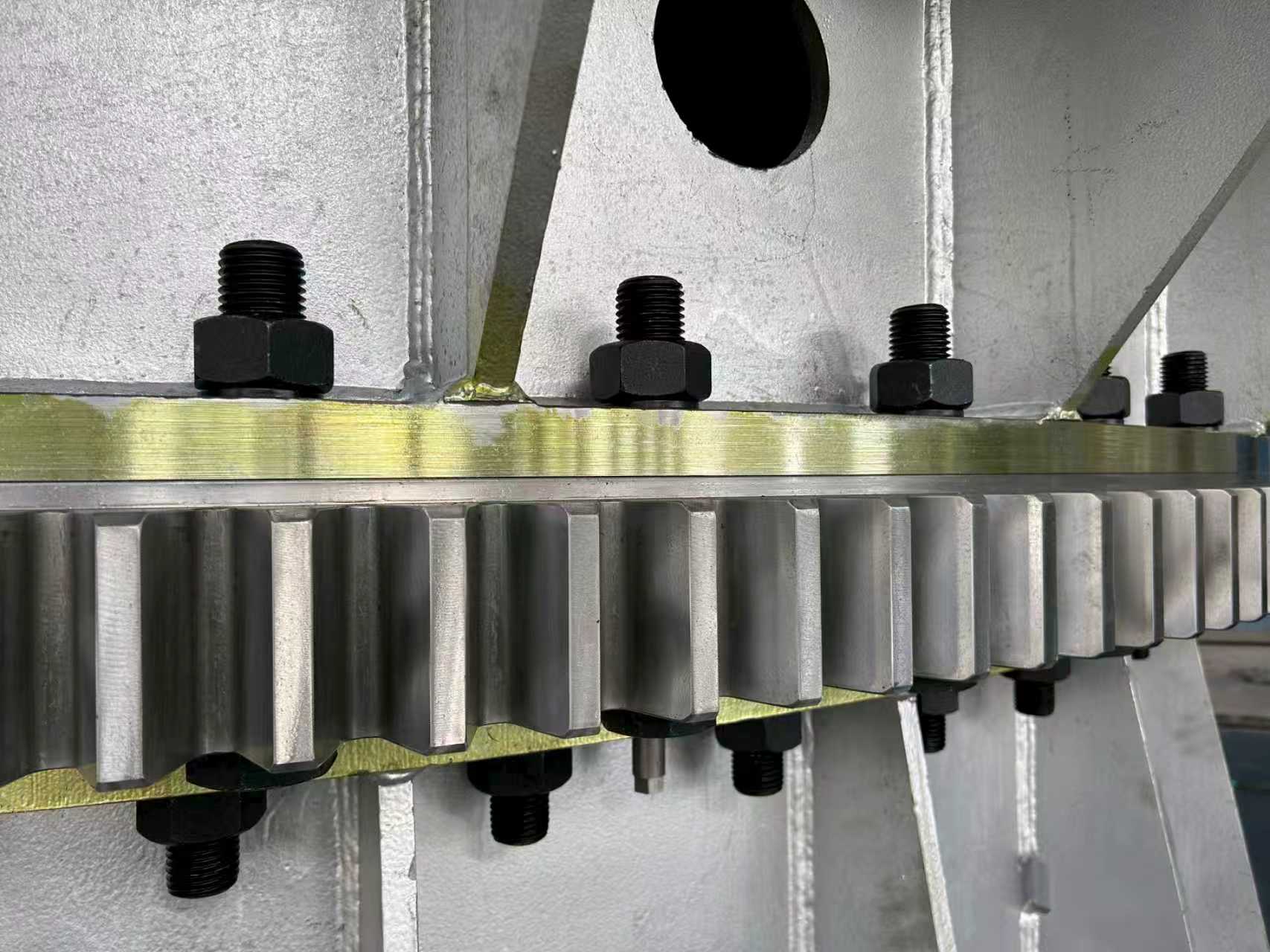
Ball vs. Roller Slewing Bearings: A Direct Comparison
The selection between a ball or roller slewing bearing is not about which is universally "better," but which is appropriate for a specific set of forces and operational demands. A ball bearing might excel in a high-speed, moderate-load application, while a roller bearing is better suited for the immense, slow-moving forces of a crane or excavator. The following table breaks down their key differences to guide your decision-making process.
| Characteristic | Ball Slewing Bearings (e.g., Four-Point Contact) | Roller Slewing Bearings (e.g., Crossed Roller) |
|---|---|---|
| Contact Geometry | Point Contact. Each ball touches the raceway at a single, small elliptical point. | Line Contact. Each roller touches the raceway along its entire length, creating a rectangular contact patch. |
| Load Capacity | Lower. The concentrated stress at the point of contact limits its ability to handle very high axial, radial, and moment loads. | Significantly Higher. The load is distributed over a much larger area, allowing it to support extreme loads without excessive stress or deformation. |
| Shock Tolerance | Lower. Sudden impact or shock loads can cause brinelling (permanent indentation) on the raceway due to the high stress at the point of contact. | Higher. The line contact geometry is more effective at absorbing and distributing shock loads, making it ideal for machinery like excavators and tunnel boring machines. |
| Rotational Speed Limits | Higher. The lower friction generated by point contact allows for higher rotational speeds compared to roller bearings of a similar size. | Lower. The increased surface contact and sliding friction at the roller ends generate more heat, limiting the maximum permissible rotational speed. |
| Friction & Torque | Generally lower. Less contact area results in lower rolling friction and smoother operation at speed. | Generally higher. Increased contact area and potential for sliding friction result in higher rotational torque requirements. |
| Stiffness & Rigidity | Lower. The bearing will exhibit more deflection under a given load due to the point contact geometry. | Higher. The broad line contact minimizes deflection, providing a very stiff and rigid rotational system, which is critical for precision machinery. For demanding applications, a precision slewing bearing with rollers is often the best choice. |
Common Mistakes in Slewing Bearing Selection
Choosing the wrong type of slewing ring can be a costly error. Based on years of providing after-sales service, I have identified several recurring mistakes that engineers and procurement managers make during the specification process. Avoiding these pitfalls can save significant time and resources over the equipment's lifecycle.
- Focusing Solely on Static Load Ratings: A bearing might be able to handle a high static load, but the application may involve dynamic loads, shock, and vibration. A ball bearing may seem adequate on paper for static axial load, but it will fail quickly in a high-vibration environment where a crossed roller slewing bearing would thrive. Always analyze the complete load spectrum.
- Underestimating Moment Loads: Moment loads—the forces that try to tilt the bearing—are often the most demanding. Because they place immense pressure on small sections of the raceway, they are particularly challenging for point-contact ball bearings. Roller bearings, with their line contact, provide superior rigidity and capacity for handling high moment loads.
- Ignoring Rotational Speed in High-Load Scenarios: Engineers sometimes specify a high-capacity roller bearing for an application that also requires moderate speed. While rollers handle the load, they can overheat and fail if the speed requirement exceeds their design limits. In such hybrid cases, a double-row ball bearing or a custom design might be necessary.
- Neglecting Environmental Factors: Contamination, corrosion, and extreme temperatures can drastically shorten a bearing's life. Specifying the correct sealing solution (e.g., nitrile or Viton seals), lubrication, and base materials is just as important as choosing between balls and rollers. Our team can help you select materials and coatings for your specific working conditions.
- Prioritizing Initial Cost Over Total Cost of Ownership: A standard ball bearing is often less expensive upfront than a comparable roller bearing. However, if it is not suited for the application, it will lead to more frequent replacements, extended downtime, and higher maintenance costs. The higher initial investment in the correct roller bearing often yields a lower total cost of ownership.
Key Decision Factors for Your Application
To ensure you select the correct bearing, your technical team should perform a thorough analysis of the application's requirements. Use this checklist as a guide to structure your evaluation and prepare the necessary data for a request for quotation (RFQ).
Buyer's Decision Checklist:
- Define Your Load Spectrum:
- What is the maximum axial (thrust) load?
- What is the maximum radial load?
- What is the maximum overturning moment load?
- Are these loads constant, intermittent, or subject to shock? Gather data on both the magnitude and frequency of loads.
- Determine Operational Parameters:
- What is the required rotational speed (in RPM)?
- Is the rotation continuous or oscillating over a small angle?
- What level of rotational accuracy and stiffness is required for the machine to perform its function?
- Assess the Physical and Environmental Constraints:
- What are the required inner diameter, outer diameter, and height dimensions?
- Will the bearing operate in a clean environment or be exposed to dust, debris, or moisture?
- What is the ambient operating temperature range?
- Consider Gearing Requirements:
- Does the application require an integrated slewing ring gear?
- If so, should it be internal, external, or ungeared?
- What are the specifications for the gear (module, pressure angle, quality level)?
Once you have this information, you can make an informed preliminary decision. For high-load, low-speed, and high-stiffness applications like cranes, excavators, and wind turbines, a roller bearing is almost always the answer. For higher-speed, moderate-load applications like bottling machines, medical scanners, or light-duty industrial positioners, a ball bearing is often more suitable. For unique challenges, we provide non-standard bearings designed to your precise specifications, with no minimum order quantity and delivery in 30-90 days.
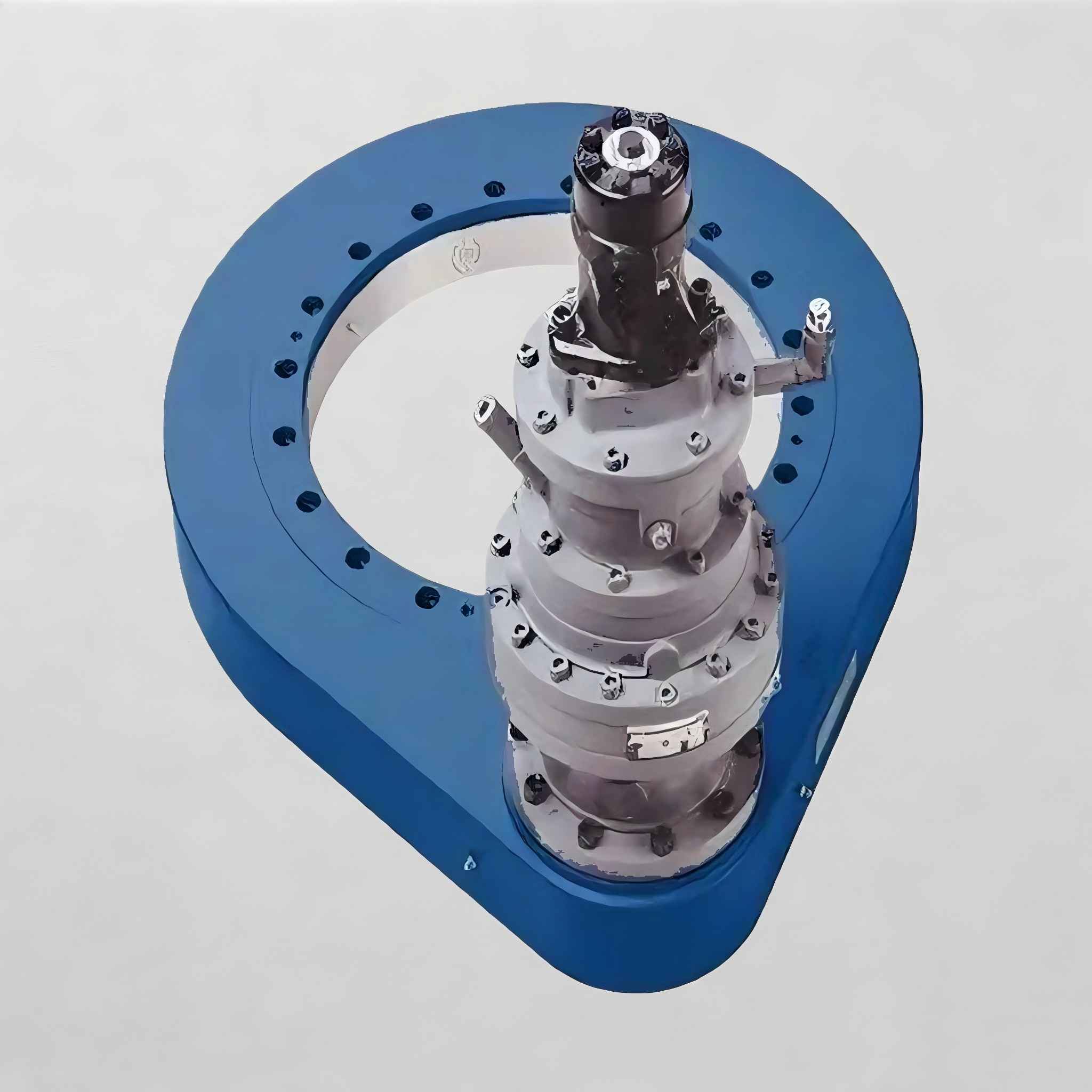
Customized Solutions for Complex Demands
Standard, off-the-shelf bearings may not always meet the unique demands of specialized machinery. When performance requirements push beyond catalog specifications, a custom-engineered solution is necessary. At LTZC, our engineering process is built around collaboration and precision.
We work directly from your technical drawings, working condition data, and existing designs to develop a heavy duty slewing bearing tailored to your application. This can involve using specific materials like 42CrMo or 50Mn, creating unique gear profiles, or implementing advanced sealing systems for harsh environments. Our capabilities are backed by certifications from ISO, CCS, and ABS, giving you confidence in our quality and process control.
Whether you require a modified version of a standard design or a completely new component, our team provides the technical support to ensure the final product integrates perfectly into your system. This collaborative approach eliminates the risks associated with forcing a standard part into a non-standard application, ensuring optimal performance and equipment longevity.
If your project involves complex loads or challenging environmental conditions, do not compromise with a standard part. Submit your technical specifications, and let our engineers propose a solution designed specifically for your needs.