WhatsApp
 jessica.chai@ltzzc.com
 0086-379-69950051

When a Large Diameter Slewing Ring Needs Segmentation
At the early design stage, engineers often ask a practical question: when does a Large Diameter Slewing Ring stop being a one piece component and become a segmented assembly? The answer is not based on diameter alone. Transport routes, lifting methods, site access, installation sequence, ring stiffness, gear requirements, and future maintenance all affect the decision.
A one piece ring generally offers a simpler load path and fewer assembly interfaces. However, a single ring can become difficult or impossible to move through factory doors, onto transport equipment, under bridge clearances, through port handling areas, or into a confined installation location. A segmented design can solve those constraints, but it also adds engineering work around joint accuracy, mounting support, gear alignment, and assembly control.
For oversized rotating equipment, the best time to decide is before the base structure, drive arrangement, and installation method are fixed. LTZC Bearings Co.,Ltd. provides customized bearing solutions based on working conditions, existing designs, and technical specifications, so the ring design can be reviewed alongside the machine layout rather than treated as a late purchasing item.
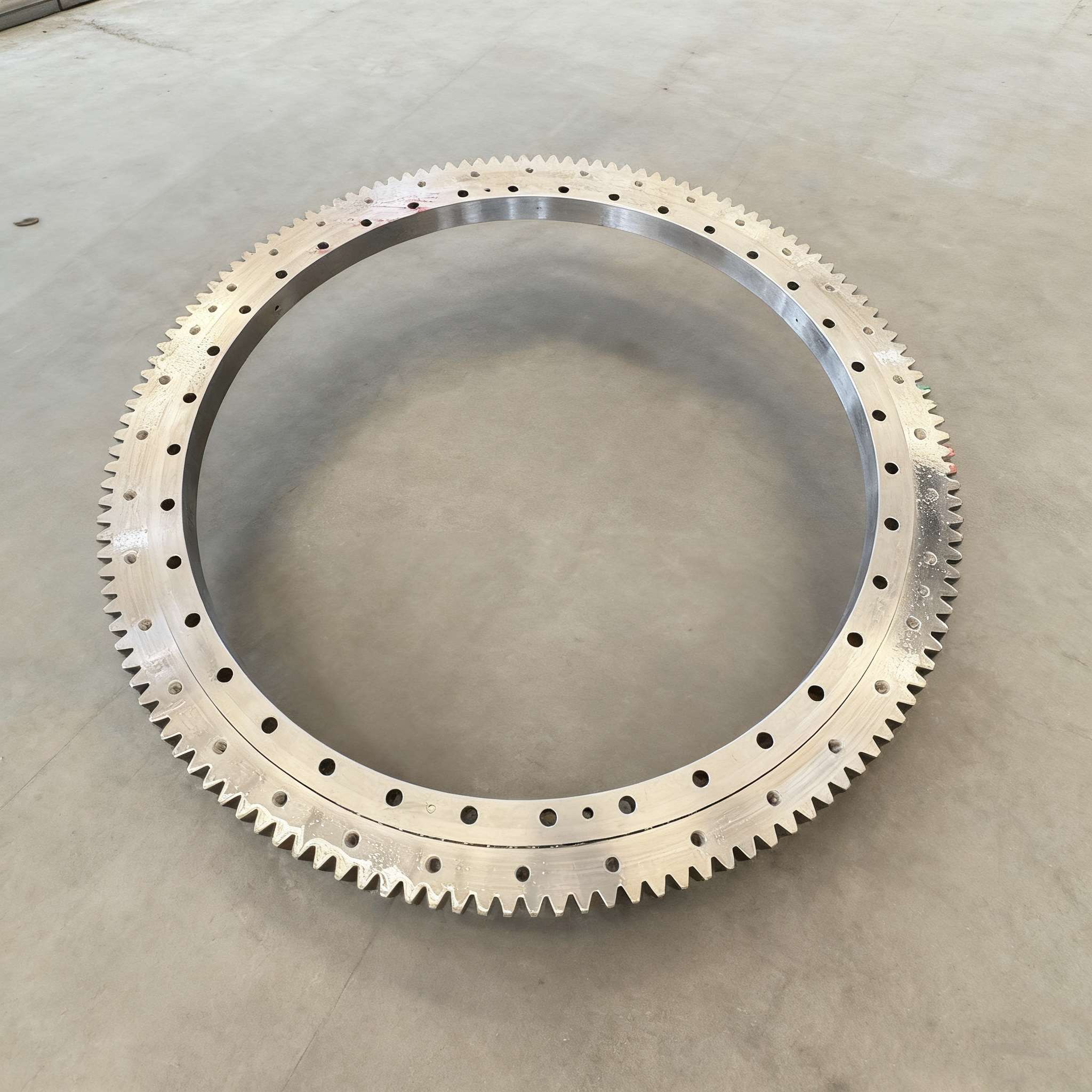
Use a segmented ring when transport and installation limits control the design
The boundary between one piece and segmented construction is reached when the finished ring cannot be safely manufactured, moved, lifted, or installed as one unit within the actual project constraints. The key word is actual. A ring may fit on a supplier’s production floor but still fail at the loading port, on a road route, at the project gate, or inside the machine structure.
| Decision parameter | What it affects in practice | What happens if it is missed | When segmentation is usually appropriate |
|---|---|---|---|
| Finished ring diameter | Determines whether the ring can clear factory exits, loading areas, transport envelopes, and site openings. | The ring may be complete but unable to leave the supplier or enter the project site. | Use segments when one piece movement creates a route restriction that cannot be removed. |
| Transport limits | Influence vehicle selection, route permits, port handling, packaging, securing method, and unloading equipment. | Unexpected transport changes can delay delivery, raise logistics cost, or require a redesign after production planning. | Use segments when route approval, handling equipment, or shipment configuration cannot accept the complete ring. |
| Installation access | Controls whether the bearing can pass through building doors, vessel openings, structural frames, or machine cavities. | A delivered bearing may be trapped outside the final assembly area. | Use segments when access is smaller than the assembled ring or when the ring must be installed around fixed structure. |
| Available lifting method | Determines how the ring is picked, rotated, positioned, and lowered without distortion or unsafe handling. | Improvised lifting can damage raceways, create alignment problems, or stop installation work. | Use segments when site lifting equipment cannot safely handle the complete assembly. |
| Mounting structure stiffness | Controls how consistently each ring section is supported after tightening. | Uneven support can lead to local distortion, poor rotation, abnormal bolt loading, and uneven gear contact. | Use segmentation only when the mating structure can be machined, checked, and assembled to suit the jointed design. |
The conclusion is straightforward: select a one piece ring when manufacturing, transport, lifting, and installation can all be planned without exceptional risk. Select a segmented arrangement when a single ring creates a physical access barrier or an unacceptable logistics burden. Segmentation is not automatically the better answer for a large design. It is a response to a defined constraint.
Do not treat nominal bearing diameter as the only trigger. The finished package, protective supports, lifting points, and transport orientation can all change the required clearance. A ring that fits through an opening in a drawing may not fit once packaging and safe handling space are included.
Compare one piece and segmented construction before fixing the machine layout
The selection should be made as a system decision. The ring, mounting faces, drive position, transport plan, and assembly procedure must work together. The table below helps engineering and procurement teams compare the two routes before issuing an RFQ.
| Selection area | One piece ring | Segmented ring | Buyer decision point |
|---|---|---|---|
| Raceway continuity | Provides a continuous circular raceway without assembly joints. | Requires controlled interfaces between sections and careful verification after assembly. | Choose one piece where transport is practical and continuous geometry is the priority. |
| Site handling | Requires the site to lift and position the full ring. | Allows smaller components to be moved and installed in sequence. | Choose segments where crane capacity, access openings, or installation space limit the full assembly. |
| Installation work | Fewer bearing sections to place, but a larger single lift. | More alignment and fastening work is required at site. | Choose segments only when the installer can follow a controlled assembly plan. |
| Drive interface | Can use an integrated or separate gear arrangement according to the design. | Needs added attention to gear ring alignment across section interfaces. | Review tooth continuity, drive location, and backlash checks before approving the split arrangement. |
| Future replacement | Replacement requires access for another full ring. | May allow removal by sections if the machine layout supports that process. | Consider segments when future access will remain restricted after the machine is commissioned. |
| Documentation need | Requires standard mounting and handling instructions. | Requires joint identification, assembly order, torque sequence, alignment checks, and inspection records. | Do not select a segmented design without a documented site assembly plan. |
A segmented arrangement fits projects such as large positioners, marine equipment, bulk material machinery, and rotating platforms where the final machine structure is assembled around the bearing location. It does not fit every oversized application. If the machine can accept a complete ring and logistics are controlled, a one piece design may reduce installation variables.
For applications that also require a powered rotation package, review the relationship between the bearing and the drive early. A Slewing Drives arrangement may influence mounting geometry, gear engagement, and access around the ring. The drive should never be selected after the bearing support structure has already been finalized.
Assess diameter, transport limits, and installation access as one boundary
Diameter, transport, and access form a connected boundary. If any one of them fails, the one piece design may no longer be feasible. Engineers should assess this boundary using the finished assembly condition, not only the bearing drawing.
Diameter affects more than the bearing envelope
The bearing diameter affects the rotating platform layout, bolt circle location, drive position, support frame shape, handling fixtures, and protected shipping arrangement. A larger ring may require special orientation during transport. It may also need a wider clear area for lifting and rotation during installation.
The common mistake is to compare only ring outside diameter with the narrowest opening. That approach ignores lifting slings, temporary supports, packaging, safe personnel clearance, and the need to rotate the component while positioning it. If the design leaves no installation allowance, the project team may need to remove structural members or change the assembly sequence.
Transport limits affect project cost and delivery planning
Transport restrictions can arise at the supplier exit, road route, port, vessel loading point, destination terminal, project gate, and internal site roads. These restrictions should be confirmed by the buyer’s logistics team because local route conditions vary by project.
A segmented solution is appropriate when the ring cannot be transported in one piece through the approved route or when the handling plan becomes impractical. However, segmentation should not be used solely because transport planning was delayed. First confirm whether alternate orientation, special handling equipment, route permissions, or staged delivery can support a one piece ring. If those options remain unsuitable, a split bearing design becomes the more practical route.
Installation access determines whether the ring reaches its final position
Installation access includes every point between unloading and final mounting. Check doors, hatches, removable panels, building columns, machine guards, structural braces, cable routes, and available turning space. Also check whether the bearing must be lowered vertically, inserted horizontally, or assembled around a fixed central structure.
If the ring must pass through a restricted opening after other machine parts are installed, segmentation may be necessary. If the machine can be assembled around the full ring before enclosing structures are fitted, a one piece design may still be possible. The installation sequence is therefore as important as the opening size.
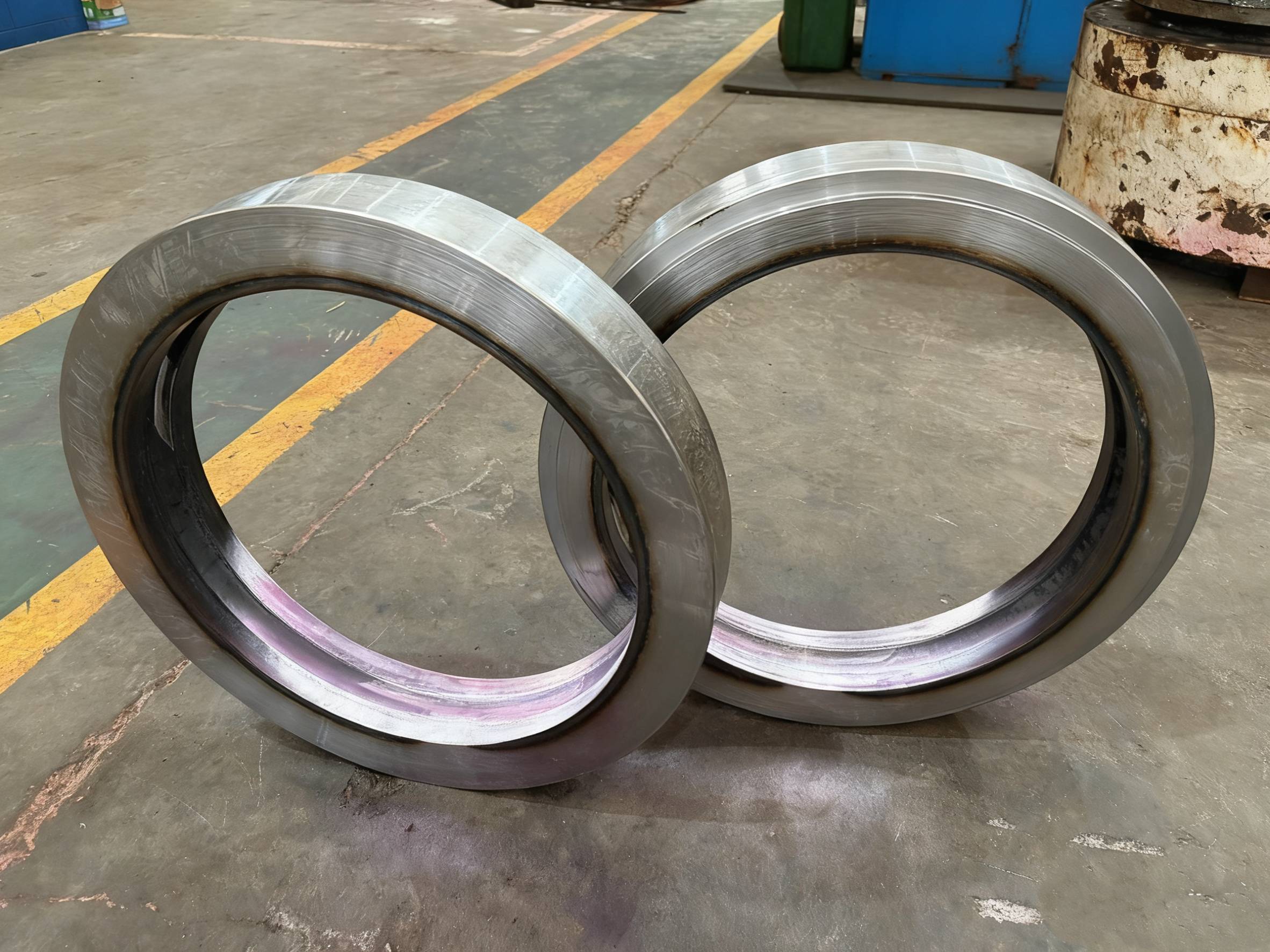
Specify the joints and support structure before ordering segmented slewing rings
Once segmentation is justified, the next decision is not simply how many sections to order. The design team must define how the sections are identified, supported, aligned, fastened, inspected, and serviced. Each joint becomes part of the functional bearing system.
Start with the mounting structure. The support faces must provide stable contact around the complete ring path. A segmented bearing mounted on an uneven frame can create local distortion at or near section interfaces. That can affect rotation quality and load distribution. The remedy is not excessive tightening. The remedy is proper support surface preparation and verification before final fastening.
Next, determine the assembly sequence. The supplier should know whether sections will be installed onto a fixed base, around a central shaft, inside a vessel, or beneath a rotating platform. This information affects handling provisions and the order in which alignment can be checked.
Use a documented procedure that includes the following items:
Confirm the final mounting surface condition before the first section is placed.
Identify every section according to the approved assembly drawing.
Install sections in the specified order without mixing matched components.
Position the sections using the defined reference locations on the base structure.
Check joint fit and circular alignment before final tightening.
Apply the approved fastening sequence for the complete ring rather than fully tightening one area first.
Verify free rotation and inspect for interference before connecting the drive.
Check gear engagement after the ring is fully secured if an external or internal gear is used.
Record final inspection results for future maintenance reference.
These steps suit projects where field assembly is unavoidable. They do not replace the supplier’s approved installation documentation. For a smaller bearing that can be mounted as one unit, the added site controls of a segmented system may not be justified. LTZC can provide a bearing installation reference for teams planning mounting and maintenance work.
Gear design requires separate attention. Where the bearing incorporates a gear, the joint locations and tooth engagement must be considered with the drive arrangement. A separate slewing ring gear may be evaluated when the machine layout calls for a distinct gear component rather than an integrated bearing gear. Do not assume that a gear split can be placed anywhere without reviewing drive position and assembly access.
Prevent the common mistakes that make segmented designs difficult
Choosing segments after the base frame is complete. This creates a mismatch between joint requirements and available support. Decide before finalizing the mounting structure. This warning does not apply where the existing frame has already been checked and can be adapted under an approved engineering plan.
Checking only the final opening. The ring must pass through the entire route, not only the last door or hatch. Review unloading, internal movement, lifting, turning, and placement points.
Ignoring future removal access. A ring may be installable during initial construction but impossible to remove after surrounding equipment is added. Consider planned maintenance access where replacement downtime matters.
Using a generic bolt tightening approach. Segmented rings need an approved sequence that keeps assembly loading balanced. Do not create a site procedure from assumptions.
Separating bearing and drive decisions. Gear alignment, motor position, guarding, and service access are linked. Review the bearing and drive as one installation package.
Sending an incomplete RFQ. A diameter request alone is insufficient. Provide loads, operating conditions, mounting arrangement, gear needs, transport route, access limits, and installation sequence.
A practical RFQ package should also state whether the equipment rotates continuously, indexes between positions, or holds position under load. It should identify the direction of major loads and any moments created by an elevated structure. These details help the supplier assess whether the proposed arrangement suits the operating condition.
Use an early design checklist before selecting the ring configuration
The following checklist gives engineers a decision path before drawings are released for procurement. It is intended for early design work, where changes are still manageable.
Can the complete bearing leave the manufacturing location in its planned shipment condition?
Can the complete bearing travel through the approved logistics route without unplanned restrictions?
Can site equipment lift, rotate, and lower the complete ring safely?
Can the ring pass through every installation opening and around fixed structure?
Can the machine be assembled around a one piece ring before access is closed?
Does the mounting frame provide consistent support around the entire bearing path?
Can the installation team complete section alignment and fastening under site conditions?
Does the drive arrangement allow controlled gear engagement at all required positions?
Can the bearing be removed later without dismantling unrelated major equipment?
Have transport and installation responsibilities been assigned between engineering, procurement, logistics, and site teams?
If the first five answers are positive, a one piece ring remains a strong option. If any answer is negative because of a fixed physical restriction, investigate segmentation before committing to the machine frame. If the issue is uncertain rather than negative, pause the bearing selection until route and access data are verified.
LTZC Bearings Co.,Ltd. supports customized designs for slewing bearings, gear rings, slewing drives, flanges, and related nonstandard components. Our ISO9001:2015, ISO14001:2015, and ISO45001:2018 certifications support controlled quality and management practices. We are also certified by CCS and ABS. For projects that need design flexibility, LTZC offers no MOQ and stated delivery planning of 30 to 90 days, subject to the order requirements and confirmed specifications.
For early technical comparison, use our bearing selection guide alongside your layout drawings. Submit your ring drawing, transport restrictions, and installation sequence to LTZC for segmented bearing selection advice.