WhatsApp
 jessica.chai@ltzzc.com
 0086-379-69950051

Heavy Duty Slewing Ring Capacity Pays When Downtime Costs More Than Margin
A low initial quotation can become the expensive option if the selected bearing has too little reserve for actual loads, duty cycles, mounting conditions, or operating shocks. Before issuing a purchase order, maintenance managers and sourcing leaders should test whether a Heavy Duty Slewing Ring with higher capacity will reduce the total five-year cost of ownership.
The decision is rarely about buying the largest bearing available. It is about selecting a ring that matches the real load spectrum, installation arrangement, drive torque, and downtime exposure of the equipment. A compact machine with stable loads may not need a premium configuration. A crane, mining machine, large turntable, or fixed lifting system with high overturning moment often does.
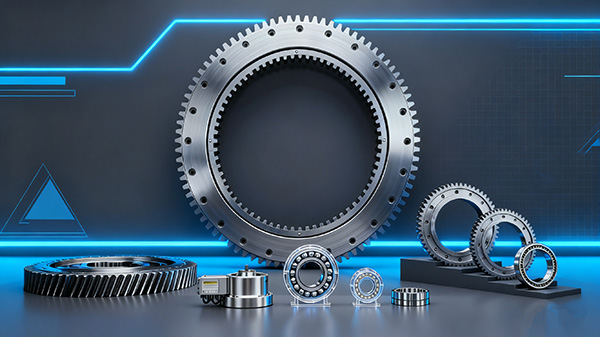
LTZC Bearings Co., Ltd. supplies slewing bearings, non-standard precision bearings, gear rings, racks, bearing unit assemblies, Slewing Drives, gear parts, and non-standard bearing parts. Buyers comparing ring designs can review our bearing selection guide before requesting a technical quotation. For applications where axial force, radial force, and overturning moment must be considered together, the bearing arrangement should be assessed as part of the machine assembly rather than as an isolated purchased component.
Start With the Operating Conditions That Determine Capacity Margin
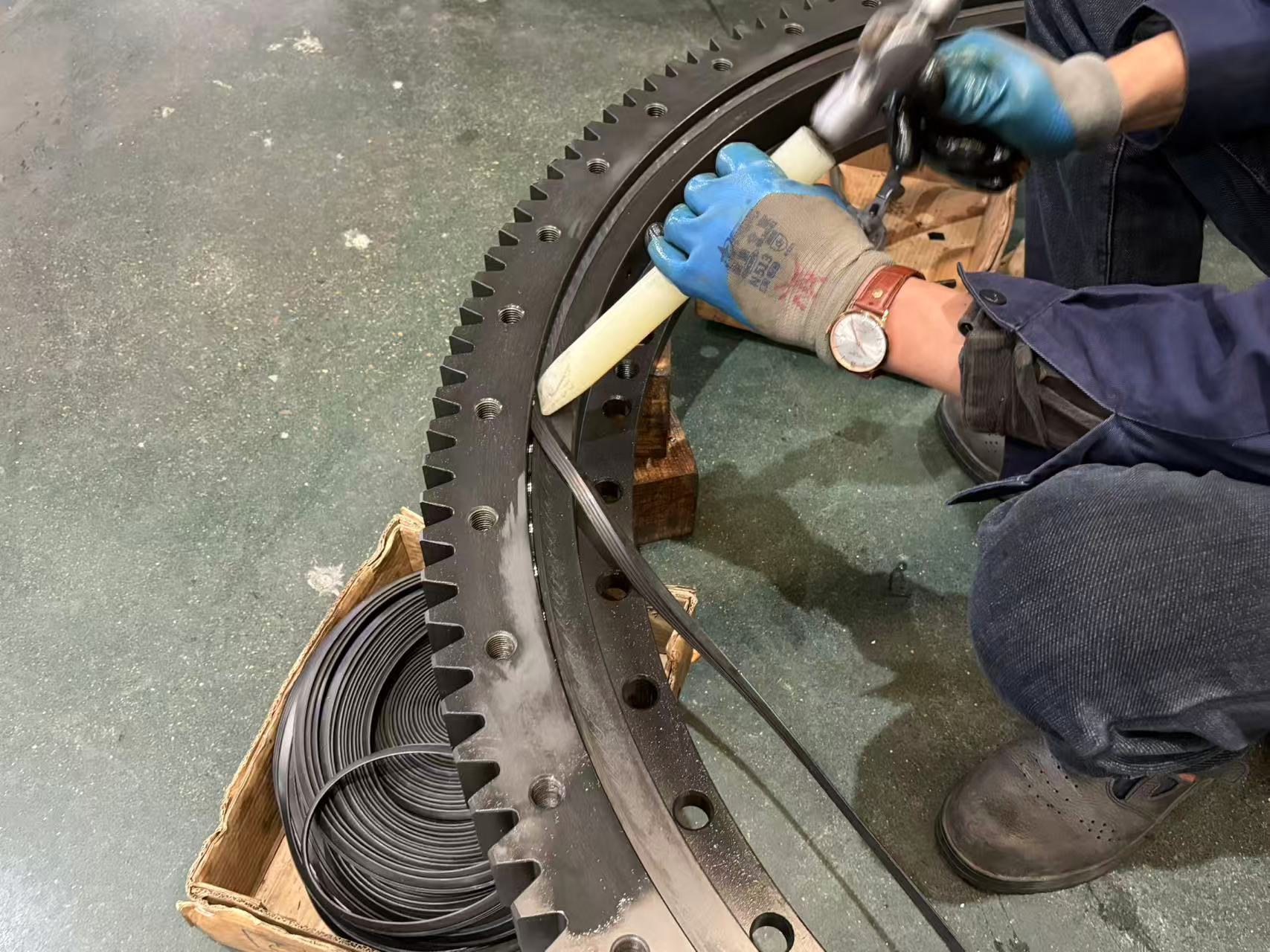
Recommendation: Specify the working condition before comparing prices. A lower-cost ring may fit the drawing dimensions but still be unsuitable if the quoted design does not account for load direction, load frequency, shock events, gear drive forces, and mounting stiffness.
Capacity margin matters most when nominal calculations do not represent field operation. For example, an equipment duty cycle may include repeated starts, uneven loading, wind-induced overturning moment, off-center lifting, or gear torque peaks. These conditions can increase contact stress and raceway loading beyond what a static load figure alone suggests.
Use the following input list when preparing an RFQ. Each item helps a supplier distinguish between an economical standard arrangement and a higher-capacity design.
- Load components: State axial load, radial load, and overturning moment, including the direction of each load where known.
- Duty pattern: Describe operating hours, rotation frequency, start-stop frequency, and whether loads are constant, alternating, or intermittent.
- Peak events: Identify shock loading, emergency stops, impact, wind load, uneven material loading, and temporary overload conditions.
- Mounting arrangement: Provide ring support dimensions, bolt layout, flange stiffness information, and available installation space.
- Drive interface: Confirm whether the ring includes internal or external gearing and provide pinion data when a slewing ring gear is part of the requirement.
- Service consequences: Explain the planned maintenance window, replacement access, lifting restrictions, and estimated production loss if the bearing must be changed.
- Environment: State exposure to moisture, corrosion, dust, high temperature, or other operating conditions that may affect material selection and protection.
This approach fits buyers evaluating a new design, a replacement for a failed ring, or a change in machine duty. It does not replace a full engineering review where the machine structure itself has been altered, where mounting faces are damaged, or where load information is unavailable. In those cases, the buyer should first establish the missing machine data rather than assume a larger bearing alone will solve the problem.
Choose the Bearing Structure Around the Load Path Rather Than Purchase Price Alone
Recommendation: Pay for a higher-capacity arrangement when the machine experiences substantial combined loads and the cost of unplanned replacement is high. The reason is straightforward: bearing structure affects how load is distributed through rolling elements and raceways.
| Design option | Best-fit operating condition | Buyer benefit | Limit or condition |
|---|---|---|---|
| Single-row ball arrangement | Moderate loads, compact equipment, and applications where installation space is limited | Can provide a practical solution for less severe duty requirements | May not be the right choice where repeated high overturning moments or heavy combined loads dominate |
| Double-row ball arrangement | Equipment requiring greater load support than a single-row solution | Offers an alternative structure when design conditions call for added capacity | Selection still depends on the actual load combination and mounting design |
| Cross-roller arrangement | Applications requiring controlled rotational performance under combined loading | Suitable for applications where precision and load direction require closer review | Not automatically the best option for every heavy-load machine |
| Three-row roller arrangement | Heavy lifting, large equipment, and conditions with demanding axial, radial, and moment loads | Separates load paths across roller rows for demanding duty | Requires correct structural support, bolt design, and installation practice |
| Segmented or split arrangement | Very large diameters or equipment where transport and installation constraints affect design | Can support large-ring project requirements where a one-piece ring is impractical | Joint design, alignment, and assembly responsibility require project-specific agreement |
For high-load lifting equipment, buyers should compare Three Row Roller Slewing Bearings with lower-capacity arrangements before locking the design. LTZC delivered an integral three-row roller slewing ring with an outer diameter of 10.87 meters in 2024 for 2,000-ton fixed lifting equipment. This was the largest slewing ring delivered by LTZC at that time. It demonstrates relevant scope for large, high-load projects, but it should not be treated as a universal specification for smaller machines.
Likewise, LTZC produced an integrated bearing with an outer diameter of 8.445 meters in 2024 for a crane industry client in South Korea. The practical message for crane buyers is not that every crane needs a ring of that size. It is that crane duty should be assessed with actual loads and structural conditions before selecting a ring based only on a lower purchase price.
Cost a Five-Year Downtime-and-Replacement Model Before Approving the Lower Quote
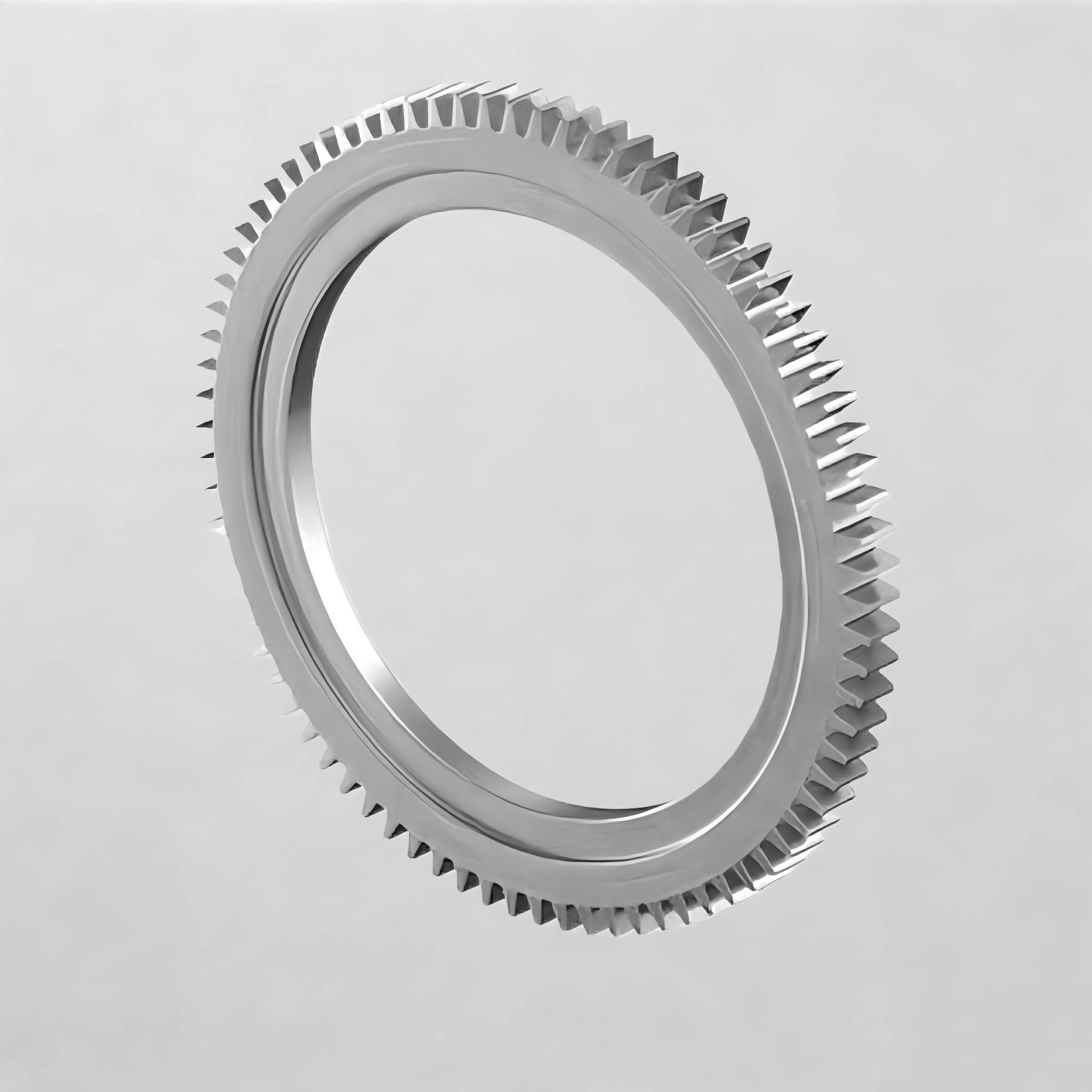
Recommendation: Compare the full five-year exposure of a higher-capacity ring with an undersized lower-cost alternative. Choose the premium option when the avoided probability-weighted replacement and downtime cost exceeds the price difference.
The higher-capacity ring does not always pay. If the application has low utilization, stable loading, easy access for replacement, and little consequence from downtime, the lower-cost design may be commercially reasonable. The premium option becomes more attractive when replacement requires shutdown planning, crane access, production interruption, field labor, realignment, and recommissioning.
| Five-year cost item | Higher-capacity ring | Undersized lower-cost alternative | How to evaluate it |
|---|---|---|---|
| Initial supply price | Higher initial quotation | Lower initial quotation | Record the actual quoted price, including gearing, accessories, and delivery terms |
| Installation cost | Planned installation cost | Planned installation cost, plus possible earlier replacement installation | Include labor, lifting equipment, fasteners, alignment work, and commissioning |
| Preventive maintenance cost | Scheduled inspection and lubrication activity | Scheduled activity plus increased inspection attention if the design operates near its limit | Use the maintenance plan already applied to the equipment |
| Probability-weighted replacement cost | Expected cost based on the buyer's risk assessment | Expected cost based on greater exposure to under-capacity operation | Multiply replacement cost by the internal estimated probability of replacement within five years |
| Unplanned downtime cost | Lower expected exposure if capacity margin fits the duty | Potentially higher exposure if early replacement interrupts production | Multiply outage hours by the internal cost per hour of lost production or equipment availability |
| Operating risk allowance | Assess only documented project risks | Assess risks associated with load exceedance, poor access, or missed maintenance windows | Use a project-approved risk value rather than an assumed percentage |
A usable decision equation is:
Five-year ownership cost = initial supply price + planned installation + planned maintenance + probability-weighted replacement + probability-weighted downtime + approved operating risk allowance.
For a worked internal example, a sourcing team can build two columns using supplier quotations. In Column A, enter the price of the higher-capacity ring and one planned installation. In Column B, enter the lower purchase price, then add the expected cost of an earlier replacement event: replacement bearing, removal labor, lifting equipment, bearing installation, lost operating time, and recommissioning. If the expected replacement and downtime exposure in Column B is larger than the initial saving, the lower quotation is not the lower-cost decision.
Do not manipulate this model to justify a preferred supplier. Its purpose is to expose costs that the component price does not show. The model is limited by the quality of the buyer’s operating data and risk assumptions. If failure probability cannot be estimated credibly, present a sensitivity range instead of a single confident result.
Use Evidence That Matches the Scale and Service Risk of Your Project
Recommendation: Match supplier evidence to the physical scale, configuration, and support needs of the requirement. Certifications, documented large-ring projects, and after-sales scope are useful because they help buyers assess fit beyond a quoted drawing.
LTZC was established in 1992 and operates from a 20,000 m² facility. The company holds ISO9001:2015, ISO14001:2015, and ISO45001:2018 certifications and is certified by ISO, CCS, and ABS. For buyers evaluating controlled quality management and formal environmental and occupational health and safety systems, these are concrete qualification points to include in supplier comparison.
Project evidence should also be relevant to the requested product type. LTZC supplied 8-meter high-precision segmented gear rings for Wuhan Heavy Industry for a vertical friction stir welding system in a key national project. LTZC also developed and delivered segmented bearings with a diameter of 24 meters to Jiangsu Nantong Rainbow Heavy Machinery. These examples are relevant when a buyer needs to discuss segmented structures, large diameters, or gear-related interfaces. They do not remove the need to confirm the exact load, assembly, and acceptance requirements of a new project.
Material selection is another point where “premium” should have a clear purpose. LTZC can provide customized bearing solutions based on working conditions, existing designs, and technical specifications. Available materials stated for relevant bearing applications include GCr15, AISI 440C, 20CrMo, 42CrMo, CuSn6, SUJ2, and Ti-6Al-4V. AISI 440C may be considered where corrosion resistance and oxidation resistance are required, while 20CrMo or 42CrMo may suit applications requiring improved strength, hardness, and wear resistance under heavy loads. Material choice must remain tied to the actual environment and design requirement; a more expensive material is not automatically a better bearing solution.
Set Cooperation Terms Before Capacity Margin Becomes a Dispute
Recommendation: Confirm scope, delivery expectation, technical responsibilities, and support boundaries before release. This reduces the risk of comparing quotations that appear similar but include different levels of engineering input, gearing, documentation, or after-sales support.
LTZC states a delivery range of 30 to 90 days and no minimum order quantity. These terms can be useful for replacement projects, prototype equipment, and low-volume specialized requirements. They are not a fixed delivery promise for every design, especially where a custom large ring, segmented arrangement, or special material requirement is involved. Confirm the applicable delivery date against the final technical scope.
LTZC provides full after-sales support that includes bearing installation guidance, preventive maintenance training, fault diagnosis, FAQ answers, and on-site technical assistance. For customer quality objections, LTZC states a response within 24 hours and on-site service starts within 48 hours in China. International buyers should clarify remote support methods, site location, travel arrangements, service responsibility, and response expectations because the stated on-site timing is specifically for China.
Buyer checklist before issuing the purchase order
- Confirm whether the quotation covers a complete ring, a geared ring, a segmented assembly, or another specified component.
- Compare axial, radial, and overturning load assumptions between suppliers rather than comparing only outside diameter and price.
- Confirm the bearing configuration and whether a higher-capacity structure has been evaluated for the actual duty cycle.
- Provide mounting and bolt information so the supplier can assess the interface rather than only the bearing envelope.
- Agree on gear requirements, including internal or external gear arrangement and mating pinion information where applicable.
- Agree on acceptance documentation, inspection scope, packaging requirements, and delivery terms.
- Clarify installation responsibility and consult the available bearing installation information before scheduling field work.
- Record the five-year cost assumptions approved by maintenance, operations, and procurement.
A higher-capacity ring is the right commercial decision when its added price is smaller than the expected cost of avoidable replacement, production loss, and service disruption. It is not the right decision when the actual duty is modest and the premium does not produce a measurable reduction in project risk. The best quotation is therefore the one that fits the verified operating condition and makes the five-year cost visible.
Submit your load data, duty cycle, mounting details, and drawings to LTZC for a capacity-margin quotation review.