WhatsApp
 jessica.chai@ltzzc.com
 0086-379-69950051

A High-Speed Slewing Bearing Requires a Five-Year Lubrication TCO
A lower purchase price can look attractive until lubricant use, maintenance labor, seal service, production interruption, and replacement exposure are added to the budget. For a maintenance manager, the choice between bearing specifications is not only about initial cost. It is about whether the selected High-speed slewing bearing and lubrication arrangement can be maintained predictably over its planned operating period.
This article sets a five-year cost boundary for comparing bearing quotations. It does not present invented lubricant prices, labor rates, failure probabilities, or replacement prices. Those values vary by site, equipment duty, maintenance policy, local labor cost, and supplier scope. Instead, it provides a usable calculation model so procurement and maintenance teams can insert their own confirmed values and compare bids on the same basis.
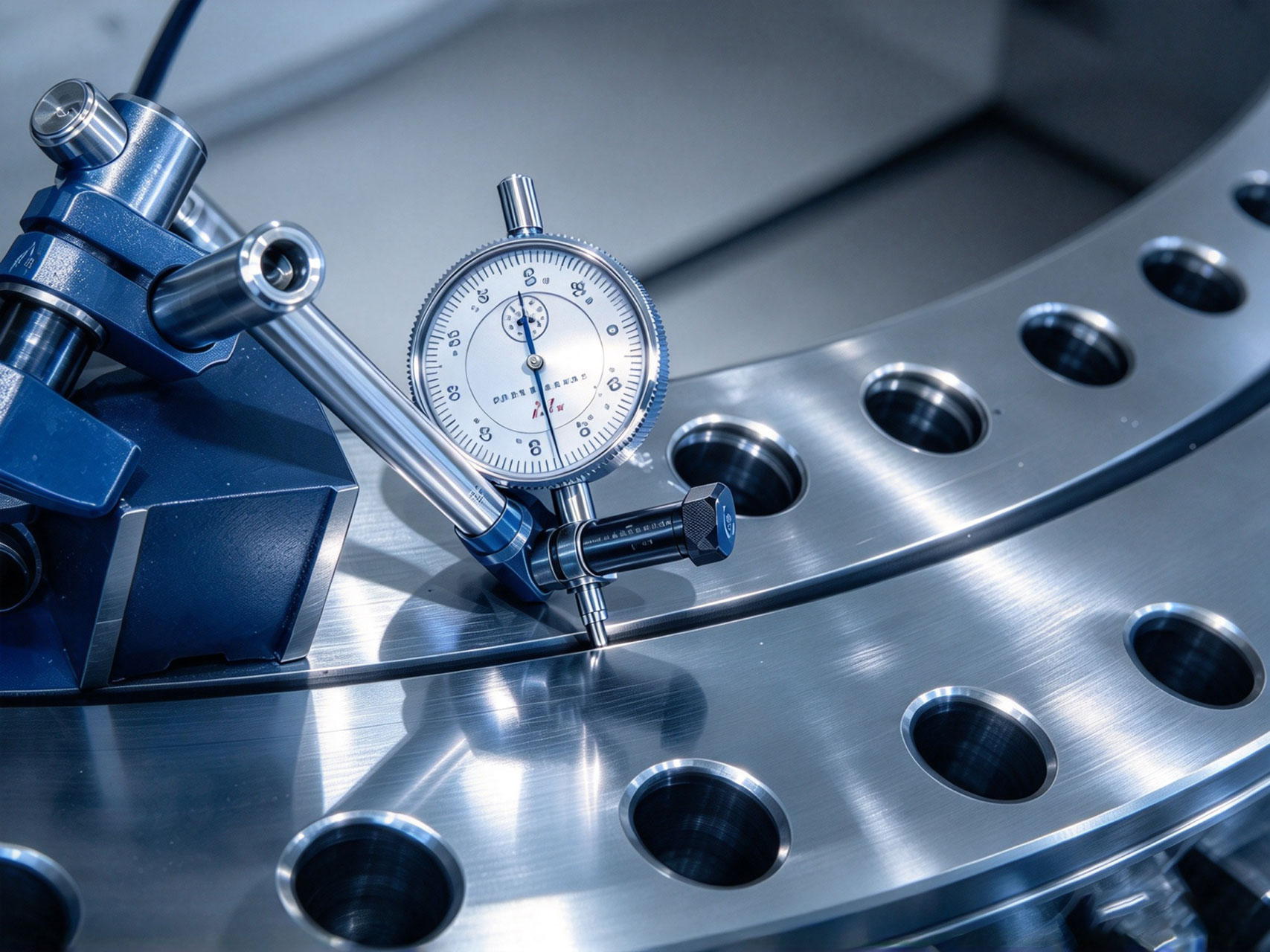
Before setting the cost model, confirm the bearing architecture. A precision slewing bearing quotation should identify the load case, rotational speed, mounting arrangement, lubricant method, sealing approach, gear requirement, and expected inspection access. If the rotating system includes an external or internal gear, include the mating slewing ring gear and its lubrication needs in the same project scope. Installation quality also affects operating cost, so the planned procedure should follow documented bearing installation guidance.
Set the cost boundary before comparing supplier quotations
Conclusion: Compare five-year ownership cost only after defining exactly what is included in the bearing system. A unit price alone is suitable for a spare-part purchase. It is not enough for equipment where access, lubrication frequency, and unplanned stoppage have material cost consequences.
Why this matters: Two quotations may both describe a slewing bearing, yet one may cover only the bearing ring while another includes a selected material, gear teeth, seals, lubrication holes, inspection requirements, or a support arrangement. Combining their prices without aligning scope produces a misleading TCO result.
Best fit: Use a five-year model for high-duty turntables, positioning equipment, automation assemblies, lifting equipment, and other machinery where bearing service can affect availability. It also fits procurement teams choosing between a basic design and a higher-spec lubrication or sealing arrangement.
Limit: Do not force a five-year model onto a short-term prototype, a low-use manual positioner, or equipment scheduled for replacement before the five-year period. In those cases, compare purchase, installation, and expected short-term service costs instead.
| Cost boundary item | Include in the five-year model | Exclude unless the project requires it | Why the distinction matters |
|---|---|---|---|
| Bearing supply | Bearing, raceway arrangement, requested material, seals, gear teeth if quoted | Unrelated machine structure or motor package | Prevents a bearing quote from being compared with a full subsystem quote |
| Lubrication system | Grease, automatic lubricator if specified, fittings, lines, installation labor | Plant-wide lubrication program not dedicated to the bearing | Separates direct bearing cost from general maintenance overhead |
| Maintenance labor | Planned relubrication, inspection, cleaning, seal replacement work | Labor that would occur regardless of bearing condition | Shows the labor effect of access and service intervals |
| Downtime exposure | Production loss or standby-equipment cost caused by bearing-related service | Unrelated production stoppages | Avoids assigning all plant downtime to one component |
| Replacement event | Replacement bearing, removal, installation, alignment, commissioning | Future redesign outside the original duty scope | Allows comparison of replacement risk without treating it as a certainty |
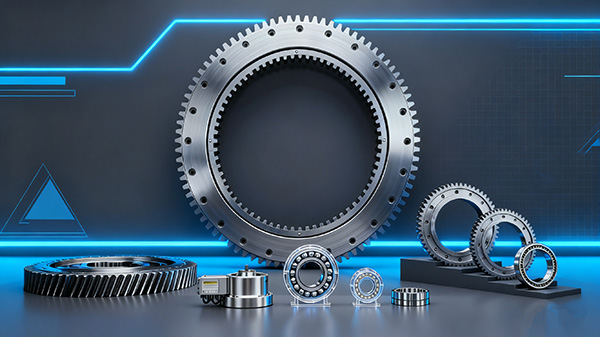
LTZC Bearings Co., Ltd. can support custom bearing solutions based on working conditions, existing designs, and technical specifications. This is relevant at the budgeting stage because lubricant ports, sealing choices, material selection, mounting interfaces, and gear requirements should be stated before quotes are compared. The company manufactures products from OD Φ200 mm to Φ20 m, including slewing bearings, gear rings, racks, bearing unit assemblies, slew drives, and non-standard bearing parts.
Identify the design choices that change lubrication cost
Conclusion: The lowest lubricant consumption is not automatically the best commercial outcome. The preferred arrangement is the one that supplies lubricant where needed, permits practical inspection, and matches contamination, speed, load, and access conditions.
Reasoning: Lubrication cost has two parts: lubricant volume and the work required to deliver, inspect, clean, and document it. A design that uses a modest amount of grease but requires difficult manual access can cost more over five years than a system with a higher lubricant budget but lower labor exposure.
When it fits: This analysis is most useful where maintenance teams need to access a bearing at height, inside guards, near process contamination, or during restricted production windows.
When it does not apply: Do not assume that an automatic lubrication device removes the need for inspection. If seals are damaged, lubricant channels are blocked, or mounting conditions have changed, automated delivery alone does not resolve the root cause.
- Raceway configuration: Ball and roller arrangements have different load behavior and lubrication needs. Select the raceway design from verified loads, moments, rotation conditions, and installation geometry rather than from price alone. For mixed load requirements, review Ball Roller Combined Slewing Bearings as one possible construction.
- Seal arrangement: Seals can help retain lubricant and limit ingress. Their value is highest where dust, water, process debris, or washdown exposure is known. In a clean, accessible indoor application, a more demanding seal arrangement may not produce a justified cost benefit.
- Lubrication access: Confirm the number and position of lubrication points, available maintenance clearance, fitting type, and whether the equipment can be safely rotated during service. Poor access converts a small grease task into a labor-intensive shutdown task.
- Lubricant compatibility: The grease type, relubrication quantity, and interval must be defined by the application requirements and supplier guidance. Do not mix products simply because they are available on site without checking compatibility and the equipment specification.
- Gear lubrication: Where gear teeth are part of the assembly, budget their inspection and lubrication separately. Raceway grease and gear lubricant should not be treated as one unmeasured maintenance line.
- Material and environment: LTZC works with materials including GCr15, AISI 440C, 20CrMo, 42CrMo, CuSn6, SUJ2, and Ti-6Al-4V for applicable bearing requirements. Material selection must be tied to the actual load, corrosion, wear, temperature, and weight conditions. A corrosion-resistant material is not automatically necessary for a dry, protected installation.
Five-year TCO model that quantifies lubricant consumption, relubrication labor, seal replacement, downtime risk, and bearing replacement cost
Conclusion: Use one common currency, one five-year period, and clearly labeled inputs. The model below quantifies each cost category without pretending that unconfirmed site values are known.
Reasoning: A cost model becomes useful when every bidder is assessed with the same operating hours, labor rate, lubricant unit cost, access assumption, downtime basis, and replacement scenario. If those assumptions differ, the apparent lowest TCO may simply be the least complete calculation.
Best fit: Apply this model to competing bearing and lubrication quotations for the same machine position. It is especially useful when maintenance and procurement must jointly justify a higher specification.
Limit: A risk estimate is not a confirmed expense. Keep expected downtime and expected replacement costs separate from confirmed purchase and planned maintenance costs.
| Five-year cost category | Calculation method | Cost status | Required evidence or assumption |
|---|---|---|---|
| Initial bearing system cost | Bearing quote + specified seals + gear features + lubrication hardware + installation scope | Confirmed only when quotation scope is fixed | Supplier quotation, Incoterms, currency, validity date, included accessories |
| Lubricant consumption | Grease quantity per service × planned services over five years × grease price per unit | Estimate until service quantity and unit price are confirmed | Lubrication plan, operating schedule, approved grease price |
| Relubrication labor | Labor hours per service × planned services × loaded labor rate | Estimate | Observed access time, safety preparation, labor cost, maintenance procedure |
| Seal replacement | Number of planned seal replacements × parts cost + replacement labor + planned outage cost | Estimate or confirmed planned cost | Seal service plan, spare price, work instruction, outage window |
| Downtime risk | Probability of bearing-related event × expected outage hours × verified cost per outage hour | Risk estimate, not a booked cost | Site reliability records, production loss basis, standby capacity |
| Bearing replacement cost | Probability of replacement within five years × total replacement event cost | Risk estimate unless replacement is scheduled | Replacement quote, lifting plan, labor, alignment, commissioning, outage basis |
The five-year calculation can be written as:
Five-year TCO = Initial bearing system cost + lubricant consumption + relubrication labor + seal replacement cost + expected downtime cost + expected bearing replacement cost.
For the two risk lines, calculate expected cost rather than entering the entire loss as if failure were certain:
- Expected downtime cost = event probability × outage hours × downtime cost per hour.
- Expected replacement cost = replacement probability × bearing replacement event cost.
For example, a procurement team can compare Option A and Option B using identical five-year operating hours. If Option B has a higher acquisition quote but requires fewer planned service interventions, calculate the difference in lubricant quantity and labor hours first. Then assess whether the seal arrangement, operating environment, and maintenance history support a different downtime-risk assumption. Do not assign a lower probability merely because a quotation is more expensive.
Separate confirmed costs from estimates and unknown costs
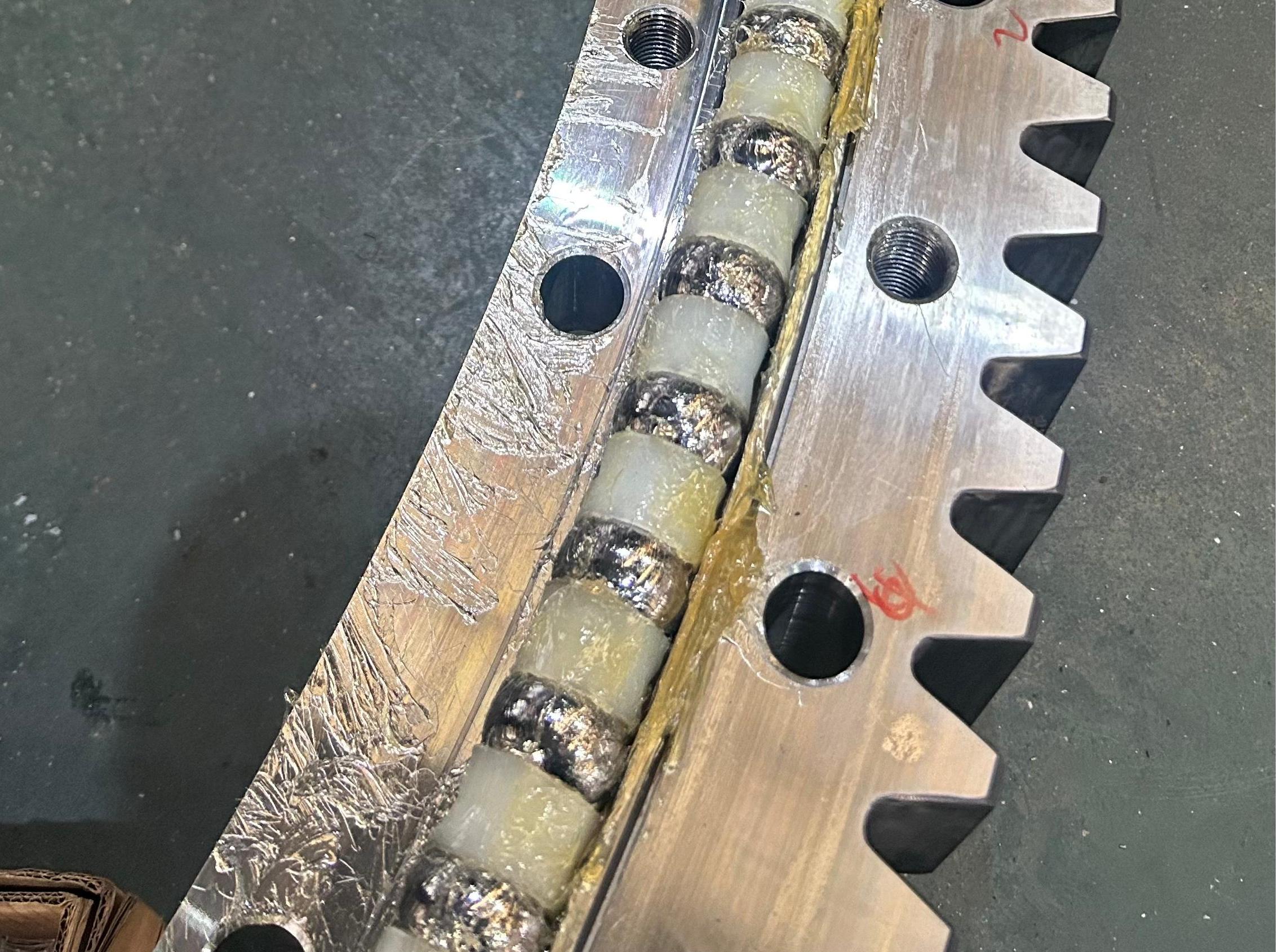
Conclusion: A budget should show three columns: confirmed, estimated, and unresolved. This makes supplier comparison more defensible and prevents an estimate from being presented as a contractual price.
| Cost type | Examples | How to handle it in a quote comparison |
|---|---|---|
| Confirmed cost | Quoted bearing price, stated accessories, agreed delivery term, approved lubricant purchase price | Use the documented amount and record the quote date, currency, and commercial term |
| Estimated cost | Technician time per lubrication round, planned seal service labor, expected downtime exposure | Use a stated site assumption and test the result with a higher and lower assumption |
| Unknown cost | Actual contamination level, final operating speed, access restrictions after installation, future outage value | Do not force a number. List the missing input and request clarification before award |
LTZC has operated since 1992 and has a 20,000 m² facility. Its management systems are certified to ISO9001:2015, ISO14001:2015, and ISO45001:2018, with ISO, CCS, and ABS certifications stated by the company. These are supplier-assessment signals, not proof of a specific service life or a guaranteed TCO outcome. They should be considered alongside the actual drawing review, quality documentation requirement, inspection scope, and lubrication plan for the order.
For scale context, LTZC delivered an integral three-row roller slewing ring with an OD of 10.87 m in 2024 for 2,000-ton fixed lifting equipment. The company also produced an integrated bearing with an OD of 8.445 m for a crane-industry client in South Korea in 2024. These cases demonstrate experience with large bearing projects, but they should not be used to infer identical speed, lubrication interval, or cost performance for a different machine.
Use sensitivity checks to decide whether a higher specification pays back
Conclusion: Test the assumptions that move the budget most. In most cases, labor access, downtime exposure, and replacement-event cost can have a larger effect than the grease unit price.
Reasoning: Lubricant price is usually visible and easy to compare. The greater commercial difference may come from how often people need to stop equipment, access the bearing, clean fittings, inspect seals, or arrange lifting equipment for a replacement event.
When it fits: Use sensitivity checks when procurement is considering a higher-spec seal arrangement, automatic lubrication, different raceway construction, or an alternative supplier quotation.
Limit: Sensitivity analysis does not justify unnecessary specification. If a bearing operates in a clean, low-duty, easily accessible location, a more elaborate service arrangement may not recover its added initial cost.
- Set a base case. Enter the planned service quantity, service frequency, labor time, labor rate, and downtime value accepted by the maintenance team.
- Create a higher-access-cost case. Increase labor time and outage preparation time if guards, height access, permits, or rotating equipment isolation are required.
- Create a contamination case. Assess whether dust, moisture, or process debris could increase seal inspection and service needs. Keep this as an assumption unless site evidence supports it.
- Create a replacement-event case. Price the total replacement event, including removal, lifting, installation, alignment, commissioning, and outage. Do not use only the bearing unit price.
- Compare options on the same assumptions. Change only the features that differ between quotations. This shows whether the higher initial specification reduces planned labor or risk enough to justify itself.
- Record exclusions. State whether gear lubrication, machine structural repair, travel, taxes, and production-loss valuation are included or excluded.
Build a comparable RFQ and maintenance decision file
Conclusion: The strongest quotation request links the bearing design to its operating and maintenance conditions. A supplier can then offer a scope that procurement can compare without hidden gaps.
- Machine type and application function
- Required bearing dimensions, mounting drawing, and available envelope
- Axial load, radial load, overturning moment, and rotation conditions
- Duty cycle and target operating period for the TCO comparison
- Environmental exposure, including dust, moisture, corrosion, washdown, or process debris
- Required raceway type, gear form, seal requirements, and lubrication-point locations
- Manual or automatic lubrication preference and maintenance access restrictions
- Required documentation, inspection requirements, and shipment terms
- Whether spare seals, a spare bearing, or on-site support should be quoted separately
- Site labor rate and downtime-cost method if the supplier is asked to support a TCO comparison
LTZC offers no MOQ and states a 30–90 day delivery range. These points can help when a project needs a custom solution or a separately quoted spare strategy, but final lead time should be confirmed against the drawing, specification, production schedule, and order conditions. After-sales support includes installation and commissioning guidance, preventive maintenance training, fault diagnosis, and on-site technical assistance. The company states that quality objections receive a response within 24 hours and that on-site service in China starts within 48 hours.
Submit your drawing, duty cycle, lubrication method, and five-year cost assumptions to request a comparable bearing quotation and selection review.