WhatsApp
 jessica.chai@ltzzc.com
 0086-379-69950051

How to Compare High-Speed Slewing Bearing Designs for Fast Duty Applications
Choosing the right slewing bearing for a fast-duty application involves a critical trade-off between speed, load capacity, and operational stability. A design optimized for heavy loads might generate excessive heat and fail prematurely at high rotational velocities. Conversely, a bearing designed for speed may lack the necessary stiffness to maintain precision under moment loads. This decision directly impacts your equipment's performance, maintenance intervals, and overall reliability. Selecting the wrong architecture for a high-speed slewing bearing can lead to lubrication breakdown, accelerated wear, and costly operational downtime.
As a slewing bearing engineer with over a decade of experience, I've seen firsthand how a well-matched design ensures long-term performance. This guide compares the primary design architectures—ball, roller, and cross-roller—to help you identify the optimal solution for your specific high-velocity requirements.
Key Performance Metrics for High-Speed Operation
Before comparing specific designs, it's essential to understand the factors that govern a bearing's suitability for high-speed use. These four metrics are interconnected and must be balanced to achieve a successful design.
- Limiting Speed (DN Value): This is the maximum permissible rotational speed, often expressed as a DN value (bore diameter in mm × speed in RPM). It is determined by the bearing's size, internal geometry, rolling element type, cage material, and lubrication method. Exceeding this limit causes a rapid increase in operating temperature.
- Heat Generation: All bearings generate heat from friction. In high-speed scenarios, this heat can degrade the lubricant, alter material properties, and reduce internal clearance, potentially leading to seizure. The goal is to select a design with low frictional torque.
- Moment Stiffness: Stiffness refers to a bearing's ability to resist deflection under axial, radial, and moment loads. In applications like robotics and precision indexing tables, high stiffness is necessary for accuracy. However, designs with higher stiffness often have more contact area, which can increase friction and limit speed.
- Lubrication Demand: At higher speeds, the lubricant is thrown outward by centrifugal force. The bearing design and lubrication system (grease type, oil bath, etc.) must ensure a consistent film is maintained between rolling elements and raceways. Inadequate lubrication is a primary cause of failure in fast applications. Our team can help you develop a complete lubrication and bearing installation strategy.
Ball vs. Roller vs. Cross-Roller: A High-Speed Performance Comparison
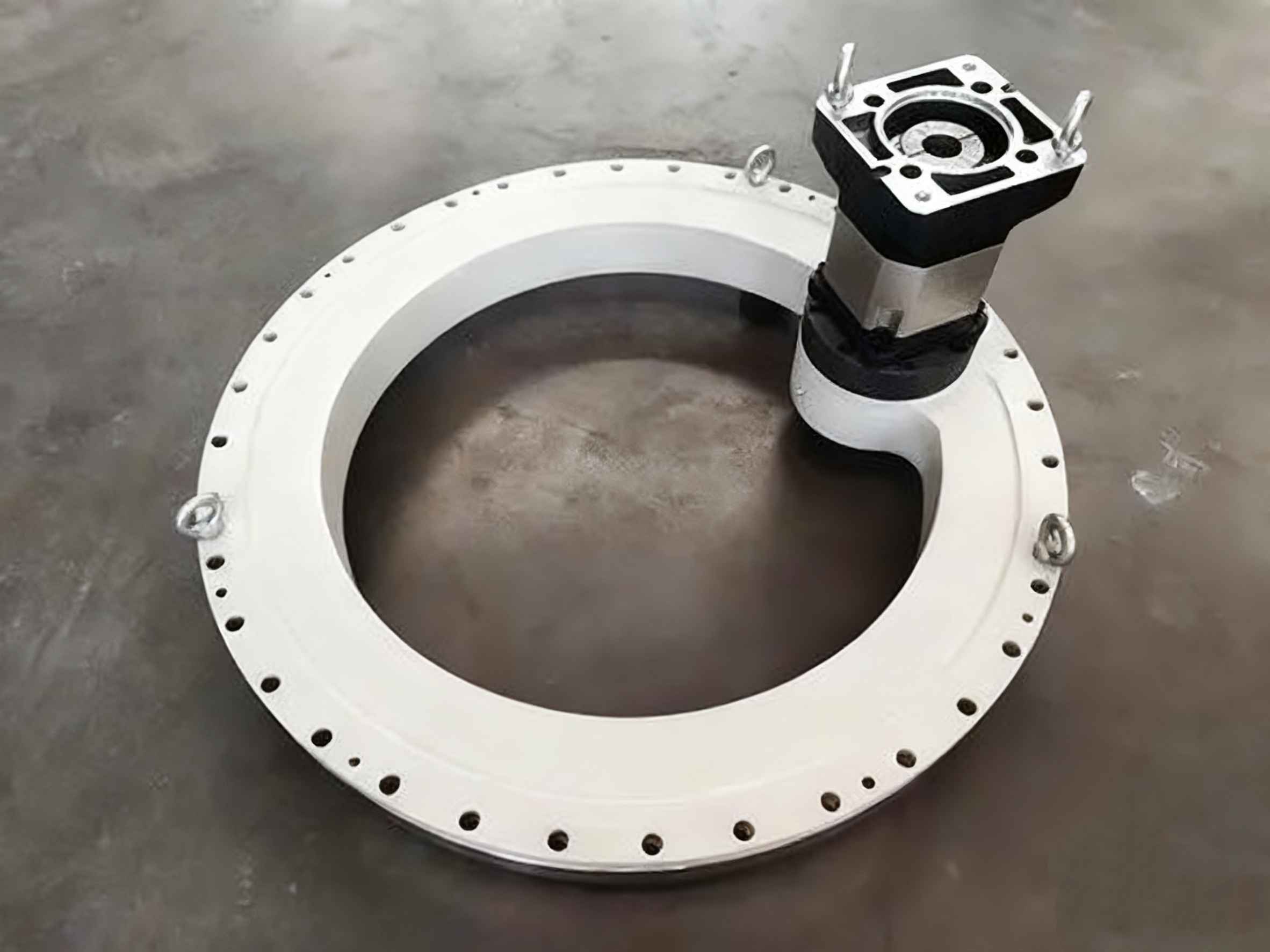
The choice between ball, roller, and cross-roller slewing bearings is fundamental. Each design offers a different balance of performance characteristics. Ball bearings typically provide the highest speed capabilities due to their point-contact geometry, which minimizes friction. In contrast, roller bearings offer superior load capacity and stiffness through line contact but generate more friction, limiting their speed. Cross Roller Slewing Bearings provide a balanced solution, delivering good stiffness in a compact profile.
The following table breaks down how each design performs against key high-speed metrics.
| Performance Metric | Ball Bearings (e.g., Four-Point Contact) | Cylindrical Roller Bearings | Cross-Roller Bearings |
|---|---|---|---|
| Raceway Velocity Potential | High. Point contact results in low rolling friction, making them ideal for the highest speeds. Heat generation is the primary limiting factor. | Low to Medium. Line contact creates higher friction and sliding at the roller ends, limiting maximum speed. | Medium to High. Orthogonal roller arrangement provides more rolling elements for a given diameter, but pure rolling motion is maintained, offering better speed than standard roller bearings. |
| Moment Stiffness | Low to Medium. The point contact deforms more under load, resulting in lower stiffness compared to rollers. Best for applications where speed is prioritized over rigidity. | Very High. Line contact distributes the load over a larger area, minimizing deflection and providing excellent stiffness for heavy moment loads. | High. Effectively acts like two angular contact bearings in one, offering significant stiffness against tilting moments in a very compact space. |
| Heat Generation | Low. Lower friction means less heat is generated, allowing for higher continuous operating speeds before thermal issues arise. | High. The increased friction from line contact and roller-end sliding generates substantial heat, requiring careful thermal management. | Medium. Friction is higher than a ball bearing but generally lower than a traditional cylindrical roller bearing, offering a good thermal balance for many applications. |
| Lubrication Demand | Moderate. Requires consistent lubrication, but the lower friction is less demanding on the lubricant film compared to roller bearings. | High. The high pressure and sliding contact at roller ends demand a robust lubrication film (often EP additives) to prevent metal-to-metal contact and wear. | High. Similar to cylindrical rollers, the line contact requires a high-quality lubricant and a well-planned relubrication schedule to manage pressure and prevent wear. |
Decision Rules:
- Choose a ball bearing when: Maximum rotational speed is the single most important factor, and loads are light to moderate. Examples include satellite tracking antennas and high-speed rotary inspection equipment.
- Choose a roller bearing when: The application involves very heavy moment loads and slow to moderate speeds. Think heavy-duty cranes or large machine tool tables.
- Choose a cross-roller bearing when: A combination of high rigidity, precision, and good speed is needed in a compact assembly. This is common in robotics, medical scanners, and precision indexing tables.
Material Selection for Speed and Durability
The material of the bearing rings and rolling elements is just as important as the design. Standard bearing steel (GCr15/SUJ2) is excellent for most applications, but high-speed or corrosive environments demand specialized alloys. At LTZC, we manufacture bearings from a range of certified materials to match specific operational challenges. Our ISO 9001:2015 certified processes ensure full material traceability and quality.
Here are some common material choices and their applications:
- GCr15 / SUJ2: The industry standard. This high-carbon chromium bearing steel offers an excellent balance of high hardness, wear resistance, and strength. It is suitable for the vast majority of industrial high-speed applications where environmental factors are controlled.
- AISI 440C: A stainless steel option perfect for applications requiring corrosion resistance, such as food processing machinery or marine equipment. It offers good hardness but may have slightly lower load capacity than GCr15.
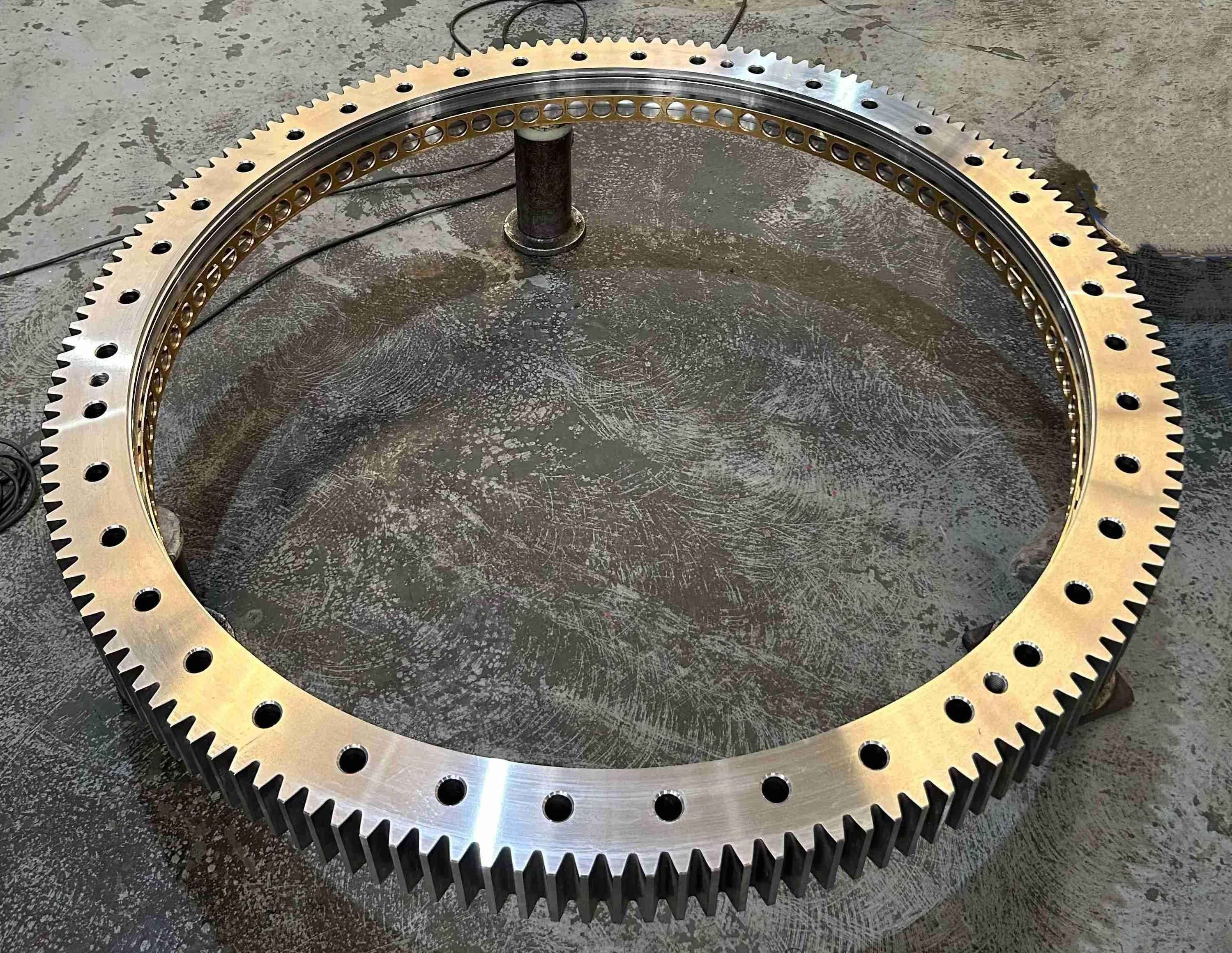
- 42CrMo: An alloy steel with enhanced strength, hardness, and toughness. We often specify this for large-diameter slewing rings or those subjected to high shock loads, ensuring structural integrity even under demanding dynamic conditions.
- Ti-6Al-4V: This titanium alloy is specified for extreme applications where lightweighting and high-temperature performance are critical, such as in aerospace and defense systems. Its low density helps reduce rotational inertia.
Common Mistakes in Specifying Fast-Duty Slewing Bearings
Specifying a bearing for high-speed use comes with unique challenges. Avoiding these common pitfalls during the design phase will prevent costly failures later.
- Ignoring Thermal Expansion: As the bearing heats up during operation, its components expand. If the initial internal clearance (preload or backlash) is too tight, this expansion can eliminate the clearance entirely, leading to catastrophic failure. Always calculate the expected operating temperature and specify clearance accordingly.
- Underestimating Lubrication Needs: Simply filling a bearing with standard grease is not enough. High speeds require a specific grease thickener (e.g., polyurea) and base oil viscosity that can withstand centrifugal forces and high temperatures without degrading. An automatic lubrication system is often recommended.
- Focusing Only on Static Load Capacity: A bearing's static load rating is irrelevant for a dynamic application. You must analyze the full dynamic load spectrum, including axial, radial, and moment loads, to calculate the bearing's L10 life.
- Overlooking the Cage/Separator Material: At high speeds, the cage is subjected to significant inertial forces. Standard steel cages may be too heavy. Lighter materials like brass, aluminum, or phenolic resin are often used to reduce mass and allow for higher speeds.
Verification and Customization for Your Application
While standard bearings fit many needs, high-speed applications often require a tailored approach. A standard Customized Bearings solution can optimize internal geometry, clearance, material selection, and sealing for your exact operating conditions. Our engineering team works directly with clients to analyze their technical specifications and develop a bearing that balances all performance requirements.
This collaborative process is how we've delivered solutions for some of the world's most demanding projects. For example, while developing a massive 10.87-meter three-row roller bearing for a 2,000-ton lifting system, the core principles of managing load, friction, and precision remained the same. We apply that same engineering discipline to high-speed challenges, ensuring every bearing we produce, regardless of size, is perfectly suited to its task. With no MOQ, we can support everything from a single prototype to full production runs.
Our commitment extends beyond delivery. We provide full after-sales support, including bearing installation guidance, preventive maintenance training, and fault diagnosis to ensure your equipment operates reliably for its entire service life. Our teams are ready to respond to quality concerns within 24 hours, with on-site service available in China within 48 hours.
If you are specifying a bearing for a fast-duty cycle and need to balance speed with load and precision, our engineering team can provide a detailed design review. Submit your working conditions and technical drawings to start the conversation.