WhatsApp
 jessica.chai@ltzzc.com
 0086-379-69950051

How Sealing Systems Protect Your Large Diameter Slewing Ring
The operational life of a heavy-duty slewing ring is not solely determined by load capacity and material strength. More often, its longevity hinges on how effectively it is protected from its operating environment. Contamination from dust, debris, and moisture is a primary cause of premature raceway and rolling element failure. This makes the selection of an appropriate sealing system and a well-planned lubrication strategy one of the most critical decisions an engineer can make during the design phase. A robust sealing configuration prevents ingress of harmful particles and retains essential grease, directly impacting maintenance intervals and overall equipment reliability.
As a slewing bearing engineer with a decade of experience, I've seen firsthand how a small oversight in seal specification can lead to significant downtime and costly replacements. For any Large Diameter Slewing Ring application, the sealing and lubrication access points are not afterthoughts; they are integral components of a durable design. Our manufacturing processes, certified under ISO 9001:2015, ISO 14001:2015, and ISO 45001:2018, ensure that every custom sealing solution is produced with the highest standards of quality and precision.
Understanding Seal Function and Material Selection
The primary function of a seal in a slewing bearing is twofold: to keep contaminants out and to keep lubricant in. Without an effective seal, abrasive particles can enter the raceway, creating indentations and accelerating wear. At the same time, moisture can corrode metal surfaces and degrade the lubricating grease. An effective slewing ring sealing system is the first line of defense against these threats.
The choice of seal material is dictated by the application's specific challenges, including temperature, chemical exposure, and rotational speed. Here are the most common materials and their typical use cases:
- Nitrile Butadiene Rubber (NBR): This is the most common and cost-effective seal material. NBR offers excellent resistance to petroleum-based oils, fuels, and greases. It performs well in a standard temperature range of -40°C to 100°C. It is the default choice for general industrial machinery, excavators, and cranes operating in moderate conditions.
- Viton (FKM/FPM): For applications involving high temperatures or exposure to aggressive chemicals, Viton is the superior choice. It can withstand temperatures up to 200°C and offers excellent resistance to a wide range of chemicals, acids, and solvents. This makes it ideal for chemical processing equipment, offshore applications, and high-temperature industrial ovens. While more expensive, its durability in harsh environments prevents frequent seal replacement.
- Hydrogenated Nitrile Butadiene Rubber (HNBR): HNBR provides a middle ground between NBR and Viton. It offers better thermal stability and chemical resistance than standard NBR, with a temperature range up to 150°C. It is often specified for automotive and heavy-duty applications where conditions are too demanding for NBR but do not require the full performance (and cost) of Viton.
The seal's physical design is also critical. Single-lip seals provide basic protection, while double-lip or triple-lip seals offer enhanced defense in highly contaminated environments like mining, forestry, or cement production. At LTZC, we provide non-standard bearings with customized seal profiles to match the precise level of protection your equipment demands.
Comparison: Custom Seals, Lube-Point Placement, and Contamination Control
Specifying the right protection involves balancing performance, cost, and maintenance accessibility. Answering the following common questions can help guide your decision-making process when configuring a bearing for a specific environment. This is a frequent topic of discussion I have with clients to ensure the final product meets their real-world operational needs.
Frequently Asked Questions on Sealing and Lubrication
| Question | Standard Approach | Custom Approach & Tradeoffs |
|---|---|---|
| What seal style should I choose? | Standard single-lip NBR seals are used for general-purpose applications with moderate exposure to dust and moisture. They offer a good balance of cost and performance. | For dusty environments (mining, agriculture), a double-lip or labyrinth seal provides superior protection but may slightly increase rotational torque. For high-temperature or chemical exposure (offshore, processing plants), Viton seals are necessary despite their higher cost. The tradeoff is upfront cost versus long-term reliability and reduced maintenance. |
| Where should lubrication points be placed? | Grease fittings are typically placed radially on the inner or outer ring, spaced evenly to facilitate grease distribution. This is suitable for most applications where access is not restricted. | If access is limited, axial grease fittings can be specified. For very large bearings, increasing the number of ports from the standard 4-6 to 8 or more ensures complete grease replenishment. The tradeoff is manufacturing complexity versus maintenance ease and lubrication effectiveness. We can position ports to align perfectly with your equipment's access panels, a key benefit of our custom solutions. |
| How do I balance contamination control and cost? | The standard NBR seal provides a baseline level of protection that is sufficient for over 80% of applications. It is the most economical option. | A more advanced industrial sealing solutions approach might involve a combination of Viton seals and protective shields (z-shields). This significantly increases protection in washdown or abrasive environments but also raises the unit cost. The key is to evaluate the cost of potential downtime against the cost of the enhanced sealing system. For critical equipment, the investment is almost always justified. |
Common Mistakes in Specifying Lubrication Ports
Even with the right grease and sealing material, poor lubrication strategy can undermine a bearing's performance. The placement, number, and type of grease fittings are critical for effective slewing bearing maintenance. Here are some common errors to avoid when specifying your bearing's lubrication access.
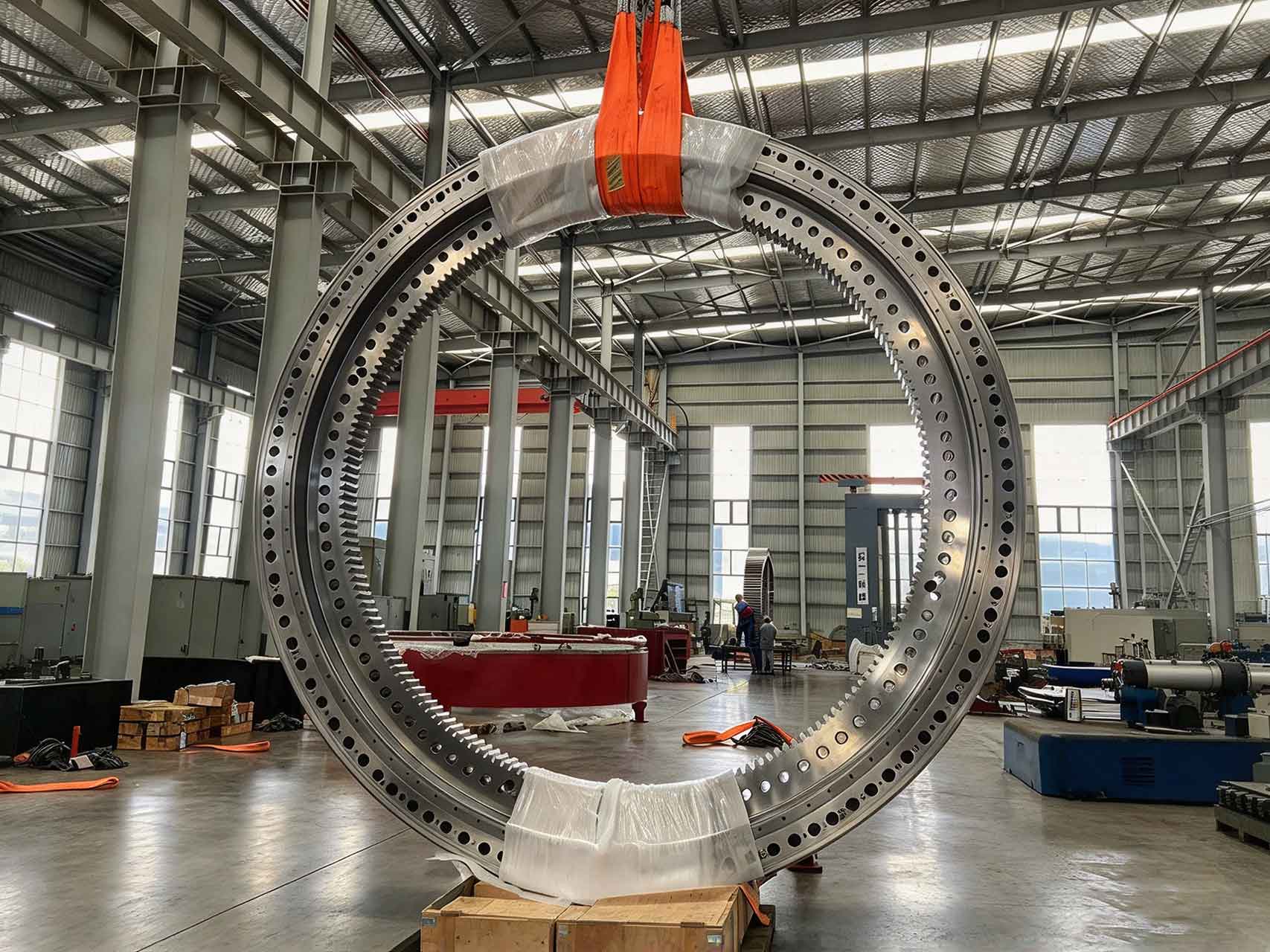
- Mistake 1: Too Few Grease Points. On a large diameter slewing ring, relying on only a few lubrication points can lead to dry spots in the raceway. The grease may not distribute evenly around the entire circumference, causing localized wear and eventual failure.
Recommendation: For bearings over 1.5 meters in diameter, specify at least 6-8 evenly spaced grease points. For extremely large or heavily loaded bearings, consult with our engineers to determine the optimal number. - Mistake 2: Inaccessible Fitting Locations. Placing grease fittings in locations that are blocked by other machine components makes routine maintenance difficult or impossible. Skipped lubrication intervals are a common result.
Recommendation: Provide a drawing of the mounting structure when you request a quote. We can position grease fitting locations axially or radially to ensure they are easily accessible for your maintenance team. There is no minimum order quantity (MOQ) for these customizations. - Mistake 3: Not Specifying Relubrication Holes in the Gear. For geared slewing rings, the gear teeth also require lubrication. Failing to specify a separate lubrication system for the gear can lead to rapid pinion and gear wear.
Recommendation: Specify separate lubrication points for the gear teeth, distinct from the raceway lubrication ports. This ensures both critical systems receive the correct type and amount of lubricant. Our expertise includes designing integrated solutions for both the slewing ring gear and the bearing itself. - Mistake 4: Using the Wrong Fitting Type. Standard grease fittings may not be suitable for automated lubrication systems or for high-pressure washdown environments.
Recommendation: Specify the type of fitting required (e.g., button head, standard Zerk, flush type) based on your maintenance equipment and operating conditions. We can accommodate various international standards.
A Buyer's Checklist for Specifying Your Sealing System
To ensure you receive a slewing bearing that is perfectly suited to your application, use this checklist to gather the necessary information before submitting your technical specifications or RFQ. Providing this detail upfront allows us to engineer a more reliable and cost-effective solution.
- ☐ Define the Operating Environment:
- What is the typical ambient temperature range? (e.g., -30°C to 80°C)
- Will the bearing be exposed to water, saltwater, high-pressure washdowns, or chemicals?
- What type of solid contaminants are present? (e.g., fine dust, sand, metal shavings, wood chips)
- ☐ Specify Rotational Parameters:
- Is the rotation continuous or intermittent/oscillating?
- What is the maximum rotational speed? High speeds can generate heat affecting seal performance.
- ☐ Outline Maintenance Access and Schedule:
- What are the planned maintenance intervals for relubrication?
- Provide drawings or sketches showing accessibility constraints for grease fittings.
- Will lubrication be manual or performed by an automated system?
- ☐ Identify Seal Material Requirements:
- Based on temperature and chemical exposure, is NBR sufficient, or is Viton/HNBR required?
- Are there any industry-specific certifications required for the sealing material (e.g., food-grade)?
- ☐ Consider External Protection:
- Is an external protective shield or housing part of the design? This can greatly reduce the burden on the primary seal.
By thoroughly considering these factors, you can collaborate with our engineering team to develop a precision slewing bearing with a protection system designed for maximum uptime. Our CCS and ABS certifications further demonstrate our capability to deliver reliable components for demanding marine and offshore environments, where sealing is paramount.
Protecting your investment in a large slewing ring starts with a robust sealing and lubrication plan. By addressing these details during the specification process, you can prevent the most common causes of bearing failure and ensure your equipment operates reliably for its full design life.
If you have specific questions about your application's environmental challenges, please submit your drawings and operating conditions. We can provide a custom solution with a 30-90 day delivery window.