WhatsApp
 jessica.chai@ltzzc.com
 0086-379-69950051

How Slewing Bearing Preload Prevents Robot Joint Drift
Your industrial robot is missing its programmed points. Positional accuracy has degraded, cycle times are inconsistent, and you’re seeing an increase in process failures. This "joint drift" is a common but frustrating issue for automation and maintenance engineers. While the root cause can be complex, the investigation often leads to the mechanical heart of the joint: the robotic slewing bearing.
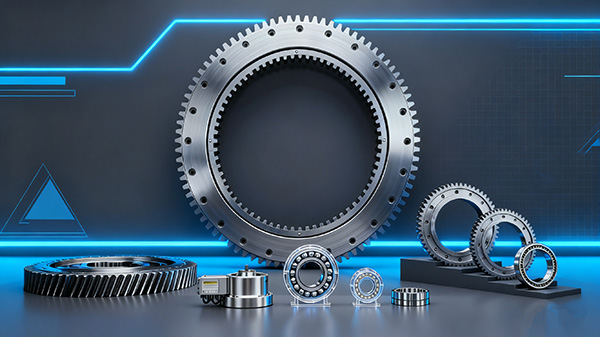
As an engineer with a decade of experience in this field, I’ve seen how overlooked details in the bearing system can compromise the performance of an entire robotic cell. Understanding the role of bearing preload is the first step in diagnosing and correcting these precision losses. For many applications, a properly specified bearing is the foundation for repeatable, accurate motion. Our work in Robotics and Automation Slewing Bearings focuses on achieving this foundation from the start.
The Function of Preload in Robotic Joint Stiffness
In simple terms, preload is a factory-set internal load applied to a bearing to eliminate clearance or "play" between the rolling elements and the raceways. For a robotic joint, this isn't just a minor adjustment; it is fundamental to its performance. A bearing with zero or inadequate preload will have a minute gap, which under load, allows for deflection. This deflection is the direct mechanical cause of joint drift and poor positioning accuracy.
A correctly preloaded bearing offers several advantages:
Increased Rigidity: Preload significantly increases the bearing's stiffness, reducing the amount the joint will deflect under operational loads from the robot arm's movement and payload.
Improved Rotational Accuracy: By forcing the rolling elements into constant contact with the raceway, preload minimizes runout and ensures a smoother, more predictable rotational path.
Enhanced Load Distribution: It ensures that more rolling elements are sharing the load at any given time, which can increase the bearing's operational life and moment-load capacity.
However, preload is a balance. Too much preload creates excessive friction, generating heat, increasing motor torque requirements, and leading to premature wear. The ideal preload is specific to the application's loads, speeds, and required stiffness. This is why our process often involves creating Customized Bearings based on detailed operational data.
Diagnosing Joint Drift: A Step-by-Step Troubleshooting Guide
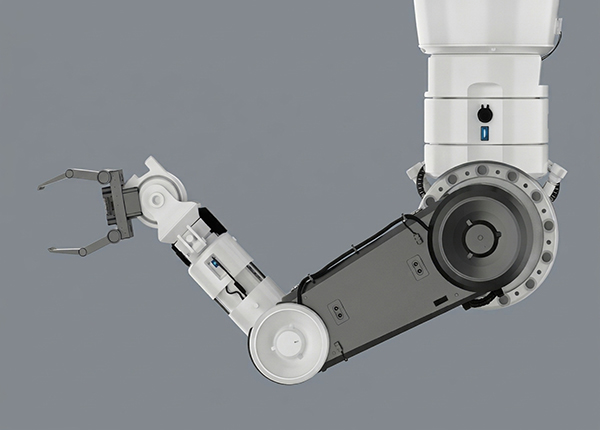
When a robot's accuracy begins to fail, a systematic approach to diagnosis can save significant downtime. Before assuming the bearing has failed internally, perform these external checks. This sequence is designed to identify the most common and easily correctable issues first.
Your goal is to distinguish between issues related to mounting, gearing, and the bearing itself. Start with non-invasive checks and only proceed to more involved measurements if the problem persists.
Troubleshooting Sequence for Robotic Joint Drift
Initial Sensory Checks:
Listen: Command the robot to move the affected joint through its range of motion at a low speed. Listen for any abnormal noises like grinding, popping, or clicking. These often indicate internal raceway damage or contamination.
Feel: If safe, place a hand on the stationary housing around the joint. Can you feel vibration or "chatter" during movement? This can suggest uneven rolling element movement.
Observe: Watch the joint closely. Is the movement jerky or does it appear to hesitate at certain points?
Mounting and Structural Integrity Check: This is the most common source of problems. An improperly secured bearing will mimic the symptoms of a failed one.
Action: Use a calibrated torque wrench to check every mounting bolt on both the inner and outer rings of the slewing bearing. Follow the manufacturer's recommended torque value and star-shaped tightening pattern.
Indication: If you find multiple loose bolts, this is a likely cause of the drift. After correctly torquing all bolts, re-run the robot's accuracy test. If the problem is resolved, implement a regular torque check into your preventive maintenance schedule.
Mounting Surface Flatness Verification: A distorted bearing cannot maintain its preload. This check looks for gaps between the bearing and its mounting structure.
Action: With bolts loosened (or removed if necessary), use a feeler gauge to measure for any gaps between the bearing ring and the mounting surface. Check at multiple points around the circumference.
Indication: Any significant gap indicates the mounting surface is not flat. This distortion transfers to the bearing, altering the raceway geometry and causing preload to be lost or to become excessively high in spots. This must be corrected by re-machining the surface; simply tightening the bolts will damage the bearing.
Gear Backlash Measurement: For geared slewing rings, excessive play between the drive pinion and the slewing ring gear directly translates to positioning error.
Action: Lock the bearing from rotating. Use a dial indicator with its tip on a tooth of the drive pinion to measure its rotational free play. Alternatively, use feeler gauges to measure the gap between engaged teeth.
Indication: Compare the measured backlash to the system's specification. If it exceeds the limit, the pinion's position may need adjustment. If the backlash varies significantly as you rotate the bearing, it could indicate gear wear or runout in the slewing ring.
If all these external checks pass yet the drift persists, the issue is likely internal to the bearing. This could be due to raceway wear, rolling element damage, or cage failure from long-term use or an overload event. At this point, further diagnosis requires disassembly and you should contact your bearing supplier's technical support.
Material Selection and Design for High-Precision Applications
Preventing joint drift starts long before maintenance is required. It begins with selecting the right bearing design and materials for the specific robotic application. The demands on a welding robot are different from a high-speed pick-and-place robot. At LTZC, our ISO9001:2015 certified facility uses a range of materials to match these demands.
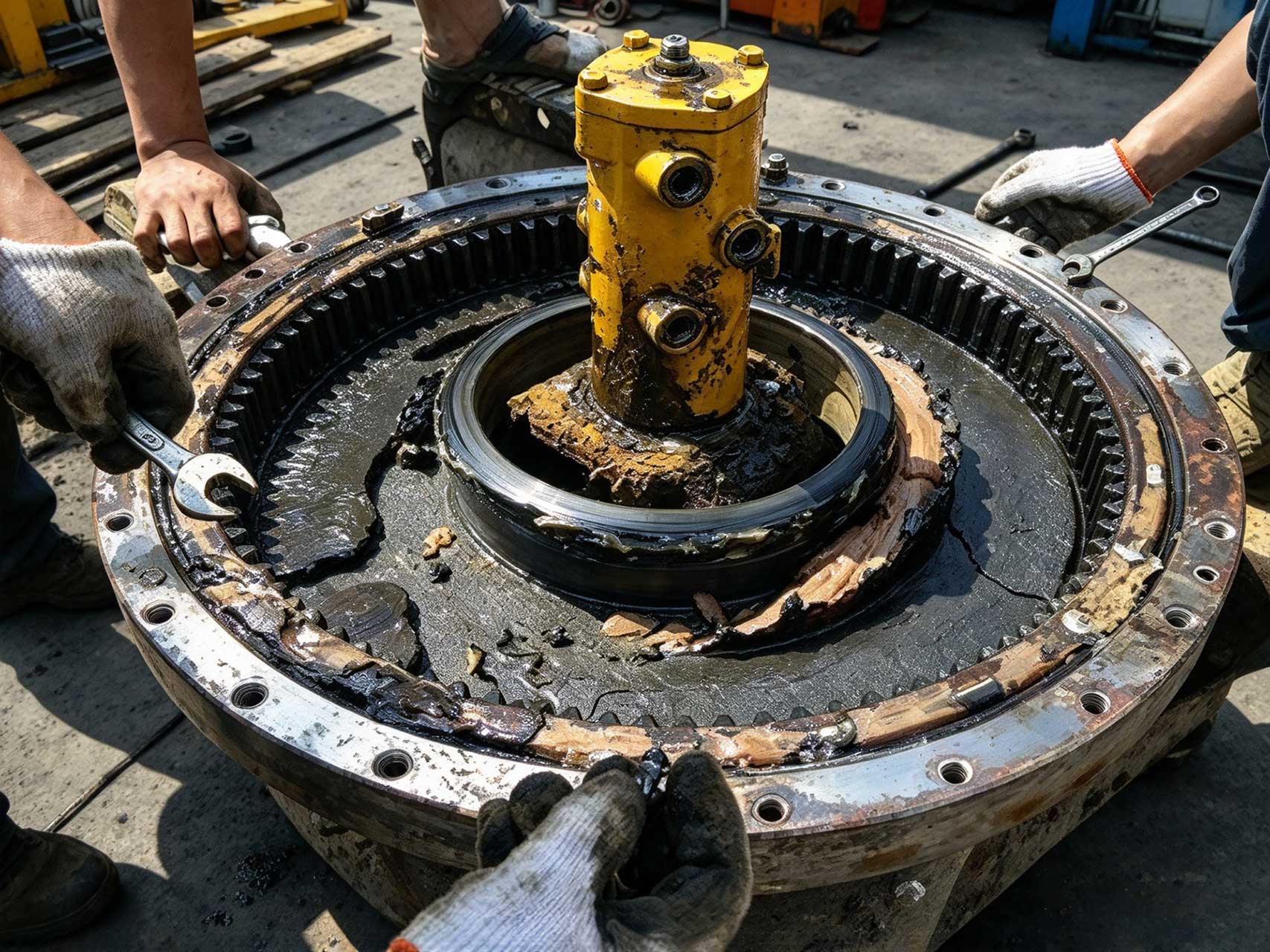
The choice of bearing type is also essential. For many robotic arms that handle significant moment loads, Cross Roller Slewing Bearings are an excellent choice. Their design, with cylindrical rollers arranged perpendicularly, provides high stiffness in a compact profile, resisting deflection from forces in any direction.
Material Properties for Robotic Bearings
The material's stability and hardness are directly related to the bearing's ability to hold its preload and resist deformation over millions of cycles. Here is a comparison of common materials we use in our production:
| Material | Key Characteristics | Ideal Robotic Application |
|---|---|---|
| SUJ2 | High strength and very high hardness after heat treatment. Excellent wear resistance. | High-precision joints requiring maximum stiffness and long life under heavy, continuous loads. |
| GCr15 | Standard high-carbon chromium bearing steel. Good balance of hardness, wear resistance, and strength. | General-purpose industrial robots where performance and cost-effectiveness are both important. |
| 42CrMo | Alloy steel with improved toughness and strength over standard carbon steels. Good for shock loads. | Heavy-payload robots or joints subjected to impacts and variable high loads. |
Our engineering capability extends to manufacturing components with extreme precision, a skill honed by challenging projects. For instance, we recently supplied Wuhan Heavy Industry with 8-meter high-precision segmented gear rings for a key national project. The expertise required to achieve the necessary tolerances on such a large scale is directly applied to the smaller, but equally demanding, precision slewing bearings used in robotics.
After-Sales Support for Long-Term Performance
Even the best-designed bearing requires proper handling and support. We provide full after-sales service to ensure the long-term, stable operation of your equipment. This is not just about replacing a part; it's about ensuring the entire system functions as intended. Our support includes:
Installation & Commissioning Guidance: Proper bearing installation is the single most important factor for a long service life. We provide detailed procedures and on-site assistance to prevent common errors like mounting surface distortion or incorrect bolt torquing.
Preventive Maintenance Training: We can train your maintenance teams on what to look for during routine inspections, including lubrication schedules, seal integrity checks, and early detection of wear.
Fault Diagnosis & On-Site Support: When issues like joint drift arise, our team is ready to assist. We offer a 24-hour response to quality objections and can provide on-site service within 48 hours in China to diagnose complex problems and get your operations back online quickly.
From producing a record-breaking 10.87-meter slewing ring for a 2,000-ton crane to the compact, high-stiffness bearings in a robotic arm, the principles of precision engineering remain the same. Maintaining preload and ensuring system accuracy is a challenge we solve daily.
If you are experiencing persistent joint drift or are designing a new robotic system that requires high positional accuracy, our engineering team can help. Submit your technical specifications or drawings for a detailed review and bearing recommendation.