WhatsApp
 jessica.chai@ltzzc.com
 0086-379-69950051

How to Choose a Slewing Ring Bearing Manufacturer
Before sending an RFQ, buyers should confirm whether a supplier can actually produce, inspect, and support the bearing they quote. Choosing the wrong Slewing Ring Bearing Manufacturer can create expensive problems: mismatched mounting holes, unsuitable raceway treatment, incomplete inspection records, delayed replacement parts, or no technical response when a bearing fails in service.
For OEM and maintenance procurement teams, the first question is not simply, “Can this supplier offer a low price?” The better question is, “Can this supplier prove control over the steps that determine bearing life, load capacity, installation fit, and service support?” This matters for standard products as well as Customized Bearings, where drawings and operating conditions often determine the final design.
A supplier that only forwards quotations may be suitable for simple replacement purchases with verified part numbers. It is usually not the best choice for new equipment, large diameters, unusual gear requirements, high load applications, or projects requiring engineering confirmation. For these cases, use this sourcing guide to examine factory evidence before comparing quotations.
Start the supplier review before requesting a quotation
Recommendation: Ask for manufacturing and inspection evidence before you release a detailed RFQ. This approach fits new OEM projects, replacement bearings without complete drawings, and equipment where downtime is costly. It may be unnecessary for a low-risk repeat order when the exact bearing model, supplier history, and quality records are already approved.
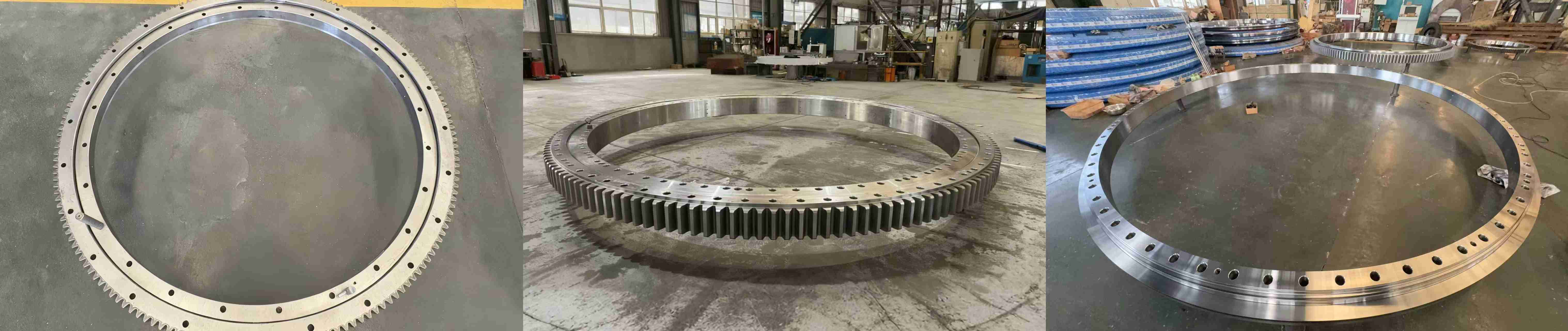
The reason is simple. A quotation alone does not show who controls the manufacturing process. Two suppliers can quote the same general bearing type while offering very different capability levels. One may manage machining, gear processing, and inspection directly. Another may rely on several outside workshops and have limited ability to investigate a defect.
Begin with a short supplier information request. Keep it practical. Ask for documents and examples that procurement, engineering, and quality teams can review together.
- Request the company registration profile, production site address, and main product scope.
- Ask which processes are performed at the supplier’s own facility and which processes are outsourced.
- Request current quality system certificates and confirm their stated scope.
- Ask for sample inspection reports relevant to the bearing type under consideration.
- Request photos or videos of raceway machining, gear processing, assembly, and final inspection.
- Provide operating conditions, installation drawings, load information, rotational requirements, and gear details.
- Ask the supplier to identify any missing technical information before issuing a final proposal.
This process helps distinguish a production source from a company that can only collect offers. It also exposes communication quality early. A technically capable manufacturer should ask relevant questions about axial load, radial load, overturning moment, mounting structure, lubrication, sealing, operating environment, and gear engagement where applicable.
For example, a buyer sourcing a crane bearing should not send only an outside diameter and bolt quantity. The application can require a different structure than a compact rotary table. Review the supplier’s applicable Crane Slewing Bearing capability and ask how the proposed design matches the loading arrangement. A simple dimensional match is not enough when the bearing supports lifting equipment.
Compare manufacturer qualification signals before shortlisting suppliers
Recommendation: Score each candidate against process ownership and documented verification, not only certificate claims. This is especially suitable when evaluating unfamiliar suppliers, custom designs, gear integrated bearings, or large industrial units. A basic catalogue bearing with a fully known part number may need a lighter review, but traceability and final inspection should still be checked.
The table below explains why each signal matters and what risk it reduces. A supplier does not need to claim that every process is completed internally to be considered; however, the buyer should know exactly who is responsible for each step and how the final product is controlled.
| Qualification signal | What to ask for | Why it matters | Risk if absent or unclear |
|---|---|---|---|
| In house raceway machining | Process photos, equipment list, machining records, and inspection examples | Raceway geometry directly affects rolling contact, load distribution, and running condition. | The supplier may have limited control over a defect, rework decision, or production schedule. |
| Gear cutting capacity | Gear processing method, tooth inspection records, and confirmation of internal or external gear design | Gear quality affects pinion engagement, positioning, noise, and wear in geared bearing applications. | Incorrect tooth form or poor gear matching can cause accelerated wear and difficult field adjustment. |
| Heat treatment control | Material identification, heat treatment records, and hardness inspection documentation | Heat treatment supports the hardness, wear resistance, and strength required for bearing components. | Unclear control can result in inconsistent performance between batches or limited defect investigation. |
| Load testing evidence | Testing scope, report format, acceptance criteria, and whether the proposed bearing can be tested | Testing evidence shows that the supplier has a defined method to validate relevant bearing performance. | A buyer may receive a product with no documented proof of the agreed inspection approach. |
| Bearing traceability records | Serial identification method, material records, inspection reports, and shipment documentation | Traceability supports root cause analysis, replacement control, and quality objection handling. | When a field issue occurs, it may be impossible to identify the production batch or inspection history. |
Certification is one useful signal, but it should not replace process evidence. LTZC Bearings Co., Ltd. operates under ISO9001:2015, ISO14001:2015, and ISO45001:2018 systems and is certified by ISO, CCS, and ABS. For a buyer, this information is relevant because it gives a documented starting point for quality review. The next step remains practical verification of the production and inspection controls relevant to the RFQ.
For bearing applications with an integrated gear, ask the supplier to confirm whether gear processing is included in its manufacturing responsibility. If the project also needs separate ring gears or drive components, review the supplier’s available slewing ring gear options rather than treating the bearing and gear as unrelated purchases.
Match bearing structure and material to the application risk
Recommendation: Select the bearing structure only after the supplier reviews real loading, installation, and motion conditions. This fits all new designs and replacement projects where the original equipment has changed. It does not apply when the buyer must purchase an identical, approved replacement with no permitted design changes.
Do not ask a supplier to choose solely from outside diameter. A slewing bearing carries a combination of load directions, and its structure should match the application. A compact positioning system may prioritize smooth rotation and installation space. A lifting or heavy equipment application may require a structure selected for higher load demand and operating conditions.
- Single row ball designs: Often considered where installation simplicity and moderate combined loads are the main requirement. They may not be the suitable choice where the load case calls for a higher capacity arrangement.
- Double row ball designs: Can be evaluated where a buyer needs a different load arrangement than a single row solution. Confirm the mounting and operating requirements before selection.
- Cross roller designs: Often reviewed for applications where rotational accuracy and stiffness are important. The final choice still depends on actual load and installation conditions.
- Three row roller designs: Commonly considered for demanding heavy load applications. They can be unsuitable where space, cost, or operating requirements favor a simpler design.
- Split bearing designs: May be considered when installation access or maintenance constraints make a one piece ring difficult to handle. They need careful evaluation of joint design and mounting conditions.
Buyers can compare available Three Row Roller Slewing Bearings with other structures during the engineering review. The conclusion should follow the load case, not a preference for the most expensive or heaviest bearing type.
Material choice also requires application context. GCr15 is commonly used for roller and ball bearing production because of its hardness, wear resistance, and strength. AISI 440C can be considered where corrosion and oxidation resistance are required. 20CrMo and 42CrMo can be selected for components requiring improved strength, hardness, and wear resistance under heavy loads. CuSn6 is used in bearing related applications needing wear resistance, thermal conductivity, and corrosion resistance. SUJ2 supports high precision and high load uses, while Ti-6Al-4V may suit aerospace or high strength applications where lower weight and high temperature resistance are required.
These material descriptions are not automatic selection rules. For example, corrosion resistance alone does not determine bearing suitability if the load, sealing, lubrication, or mounting stiffness is inadequate. Ask the manufacturer to explain the material choice against the working conditions stated in your RFQ.
Use real production references to assess project fit
Recommendation: Request examples that resemble your product risk, not generic customer lists. This is most useful for large diameter bearings, lifting equipment, segmented rings, special gearing, and non standard designs. It is less important for a routine replacement bearing where dimensional records and part approval are already complete.
A relevant reference shows that the supplier has handled a similar manufacturing challenge. It does not guarantee identical performance on a new project. Buyers should use case history as supporting evidence, then confirm their own drawing, load condition, inspection plan, and acceptance requirements.
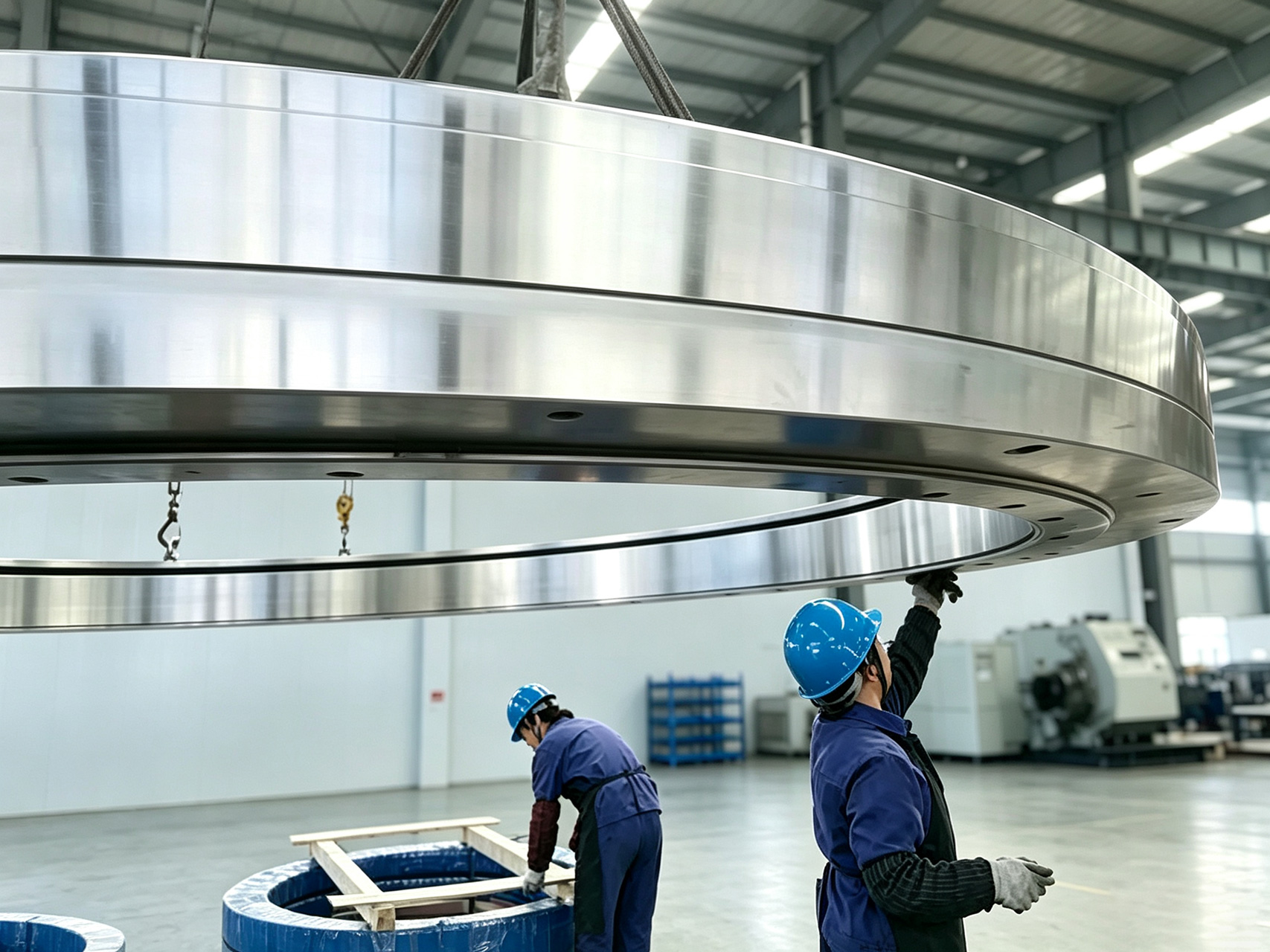
LTZC has documented several cases that demonstrate experience across large and specialized products. In 2024, the company delivered a slewing ring with an outer diameter of 10.87 meters using an integral three row rollers structure for 2,000 ton fixed lifting equipment. The same year, LTZC produced an integrated bearing with an outer diameter of 8.445 meters for a crane industry customer in South Korea.
Other recorded work includes 8 meter high precision segmented gear rings supplied for a vertical friction stir welding system in a key national project, and segmented bearings with a diameter of 24 meters delivered to Jiangsu Nantong Rainbow Heavy Machinery. LTZC has also developed a full set of shield machine main drive ring rolls for CRCC, covering 15 series and 90 pieces in total.
For procurement teams, these references support a reasonable conclusion: where a project involves large ring geometry, segmented components, or heavy equipment service, the supplier should be able to discuss manufacturing route, inspection scope, packaging, transport planning, and field support in detail. They do not mean that every project requires the same structure or that every buyer needs a bearing of similar scale.
Build an RFQ package that produces comparable offers
Recommendation: Send the same technical package to every shortlisted supplier. This fits competitive sourcing, supplier qualification, and replacement projects with uncertain original data. It may not be needed for a repeat purchase against an unchanged, fully approved drawing.
Incomplete RFQs create false price comparisons. One supplier may include gear processing, coating, inspection records, packaging, and technical support while another quotes only a basic ring. The lower quotation may later require additions that were not visible during the first comparison.
| RFQ item | What to provide or request | Why procurement needs it |
|---|---|---|
| Application details | Equipment type, operating environment, motion requirements, and installation location | Helps engineering judge whether the proposed design suits the actual service condition. |
| Load information | Axial, radial, and overturning load information where available | Prevents selection based only on dimensions. |
| Interface drawing | Mounting holes, installation surfaces, gear requirements, and space limits | Reduces the risk of assembly mismatch. |
| Material requirements | Required material, corrosion exposure, and any customer specification | Allows the supplier to confirm material suitability rather than assume it. |
| Inspection requirements | Required documents, test evidence, marking, and traceability expectations | Makes offers comparable beyond unit price. |
| Commercial requirements | Quantity, destination, delivery requirement, and packaging needs | Helps suppliers quote realistic lead time and shipment arrangements. |
LTZC provides custom bearing solutions based on working conditions, existing designs, and technical specifications. The company states no MOQ and a delivery range of 30 to 90 days, depending on the order requirements. These terms can be useful for buyers needing prototype support, replacement planning, or non standard parts, but they should be confirmed against the specific drawing, production scope, and delivery destination before purchase order release.
Do not omit after sales requirements from the RFQ. Bearing installation guidance, maintenance training, fault analysis, and on site technical assistance can affect equipment availability after delivery. LTZC states that it responds to customer quality objections within 24 hours and begins on site service within 48 hours in China. That timing applies to the stated China service condition and should not be treated as a universal on site commitment for overseas locations.
Avoid sourcing mistakes that increase bearing and downtime costs
Recommendation: Reject unclear scope before negotiating the final price. This is appropriate for nearly every industrial bearing purchase. The only exception is a controlled blanket agreement where specifications, inspection methods, and service terms have already been formally agreed.
- Choosing by outside diameter alone: This can lead to an unsuitable internal structure. Provide the load case and mounting conditions instead.
- Comparing prices without scope alignment: Confirm whether the price includes gearing, inspection documents, packaging, marking, and technical support.
- Accepting a certificate without process evidence: Ask how raceway machining, heat treatment, gear cutting, and final inspection are controlled.
- Sending incomplete drawings: Include mounting interfaces, gear data, installation space, and any mating part information available.
- Ignoring field support: Review installation guidance and fault response before the purchase order, especially for heavy equipment.
- Assuming a past case matches your project: Use references to assess capability, then require project specific technical confirmation.
A dependable Slewing Ring Bearing Manufacturer should help the buyer identify missing information before production starts. That early technical discussion is often more valuable than a fast quotation built on assumptions.
Submit your drawings and operating conditions to LTZC Bearings Co., Ltd. for a technical review and bearing selection guide support before requesting your final quotation.