WhatsApp
 jessica.chai@ltzzc.com
 0086-379-69950051

How to Source a Three Row Roller Slewing Ring Without Surprises at Quotation Stage
Most sourcing regrets with a Three Row Roller Slewing Ring come from a single gap: the RFQ went out without load-case data, so each supplier priced a different ring. The quotes look comparable until the unit arrives and the raceway, bolt pattern or gear does not match the machine. This guide lists the inputs to submit, the evidence to request, and the terms to settle before you compare prices.
If you are still deciding between row configurations, our bearing selection guide covers the trade-offs. The product page for Three Row Roller Slewing Bearings shows the configuration this article assumes: separate roller rows carrying axial load, reverse axial load and radial load.
Where this supplier fits, and where it does not
LTZC Bearings Co.,Ltd. supplies slewing bearings, non-standard precision bearings, gear rings, racks, bearing unit assemblies, slewing drives and gear parts. The company was established in 1992 and operates a 20,000 m² facility. Its quality system is certified to ISO9001:2015, ISO14001:2015 and ISO45001:2018, with certification by ISO, CCS and ABS.
That profile suits buyers who need a large-diameter or non-standard ring built to their drawing, such as crane, lifting, tunnelling or heavy-fabrication equipment. It suits a project with no fixed minimum quantity, since the brief states no MOQ. It is less suited to buyers who need an off-the-shelf catalogue ring shipped from stock tomorrow. Stated lead time is 30 to 90 days, so the schedule must allow for it.
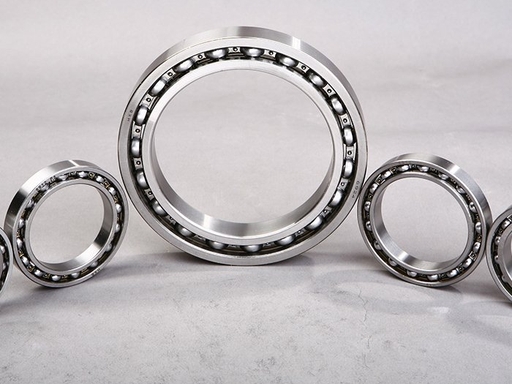
Sourcing checklist: load-case data, mounting dimensions, gear details and acceptance-test requirements
Supplier-to-supplier price gaps on a Three Row Roller Slewing Ring usually trace back to missing inputs. The table below is the minimum data set we would attach to an RFQ. Each row names the buyer risk it removes.
| Group | What to submit | Risk it removes |
|---|---|---|
| Load case | Axial load (static and working), overturning moment, radial load, and the combination that governs. State whether values are rated or extreme. | Supplier assumes a lighter duty and quotes a smaller raceway or fewer rollers. |
| Load case | Rotation speed, duty cycle, oscillation or continuous rotation, ambient temperature range. | Wrong lubrication, seal and material assumptions. |
| Mounting | Outer diameter, inner diameter, height, bolt circle diameters, hole count, hole size and thread, flange flatness requirement. | Ring does not seat on your structure; bolts do not line up. |
| Mounting | Stiffness of the supporting structure and whether the ring is bolted to a fabricated or machined seat. | Raceway deformation that no catalogue rating predicts. |
| Gear | Internal or external teeth, module, tooth count, pressure angle, profile shift, hardening and grinding requirement, mating pinion data. | Backlash and contact-pattern problems at commissioning. |
| Gear | Whether the slewing ring gear is integral or a separate part. | Two suppliers pricing different scopes. |
| Acceptance | Inspection items, tolerances you require, who witnesses, which documents travel with the ring, and the rejection criteria. | Disputes after delivery about what "passed" meant. |
| Commercial | Quantity, delivery site, required date, packaging and transport limits for the ring diameter. | Late discovery that a large ring cannot ship in one piece. |
One limit applies. If your load data is still a design estimate, say so in the RFQ. A supplier can then quote on a stated basis and flag a margin, rather than silently treating a placeholder as a final figure.
Segmented or integral?
Transport and site assembly drive this choice. An integral ring avoids joints but can exceed road or container limits. A segmented design eases shipping and assembly but needs agreed joint, alignment and assembly procedures. If your ring is large, ask each supplier to quote both options in writing so you compare like with like.
What evidence to ask for before you shortlist
A capability claim means little without a matching reference. These are the cases LTZC has documented, and what each tells a buyer:
- 10.87 m integral three-row roller ring, 2024. Delivered for 2,000 ton fixed lifting equipment, and the largest slewing ring LTZC has built. It shows work at the large end of the three-row range.
- 8.445 m integrated bearing, 2024. Produced for a crane-industry client in South Korea. Relevant if your application resembles a crane slewing bearing.
- 8 m segmented gear rings for Wuhan Heavy Industry. Used in the vertical friction stir welding system of a national project. Relevant when gear precision matters as much as the bearing.
- φ24 m segmented bearings for Jiangsu Nantong Rainbow Heavy Machinery. Shows segmented construction at very large diameters.
- 6 m segmented gear ring with ground teeth, supplied through Hengshui customers. Relevant if you need ground teeth on a segmented ring.
These cases show experience with large diameters and mixed scopes. They do not show that a ring of your exact size, load and gear specification has been built before. Ask the supplier to say which reference is closest to your RFQ and which parameters differ.
Certifications matter at a different level. ISO9001:2015, ISO14001:2015 and ISO45001:2018 describe the management system. They do not replace the project-specific inspection plan you agree in the RFQ. If your project needs classification-society approval for the end product, ask for it in writing and do not infer it from the general CCS and ABS certification.
How to compare quotations once they arrive
Use the same grid for every supplier. Differences in the answers are the useful part.
| Item | Ask each supplier | Red flag |
|---|---|---|
| Scope | Is the gear, heat treatment, seals and mounting-hole machining included? | Price is low because gear or hardening is excluded. |
| Material | Which steel grade is used for rings and rollers? LTZC's range includes 42CrMo and 20CrMo for heavy loads, plus GCr15 and SUJ2. | No grade named, or "equivalent" with no standard. |
| Capacity basis | Which load rating or calculation method supports the quoted size? | Rating given without stating load case or safety factor. |
| Lead time | Which date applies: drawing approval, material receipt or order? | A single delivery figure with no starting point. |
| Acceptance | Which inspection records are supplied, and what happens on rejection? | Silence on documents and remedies. |
On lead time, LTZC's stated range is 30 to 90 days. Where a ring sits in that range depends on diameter, material availability and the gear requirement, and should be confirmed per project. A single fast delivery on one case should not be read as the norm.
Common RFQ mistakes
- Sending only a catalogue size. Without loads, the supplier cannot check whether three rows are actually needed. A cross roller slewing bearing may suffice at lower moment loads, and it costs less.
- Leaving out the pinion. Gear data without the mating pinion hides backlash and contact issues until commissioning.
- Ignoring the supporting structure. A flexible seat shortens life regardless of the ring's rating.
- Treating "acceptance test" as a single line. Name the items, tolerances and witnesses.
- Comparing only unit price. A quote that excludes the gear or heat treatment is a different product.
- Forgetting site handling. Large rings need lifting points, packaging and an installation plan. See our notes on bearing installation for what to prepare.
Cooperation terms and what still needs agreement
The supplied terms are limited, so settle the rest in writing. Confirmed: no MOQ, a 30 to 90 day delivery range, and after-sales support covering installation and commissioning guidance, preventive maintenance training, and fault diagnosis. For post-sales, LTZC responds to quality objections within 24 hours and begins on-site service within 48 hours in China. That on-site timing applies to China, so projects elsewhere need their own support arrangement agreed in advance.
Items to agree per project, since no standard terms are documented here:
- Scope split between ring, gear, bolts and any customized bearings features.
- Inspection items, witness rights and rejection process.
- Warranty period and its conditions, which should be stated in the quotation.
- Responsibility for transport damage on oversized rings.
- Who supplies drawings approval and how revisions are tracked.
A practical RFQ sequence
- Fix the governing load case and mark which values are estimates.
- Prepare the mounting drawing and gear data sheet, including the pinion.
- Write the acceptance-test list with tolerances and witnesses.
- Send the same package to three suppliers, asking each to state assumptions.
- Compare scope, materials, lead-time start point and support terms before price.
- Ask the shortlisted supplier to name its closest reference case and the differences from yours.
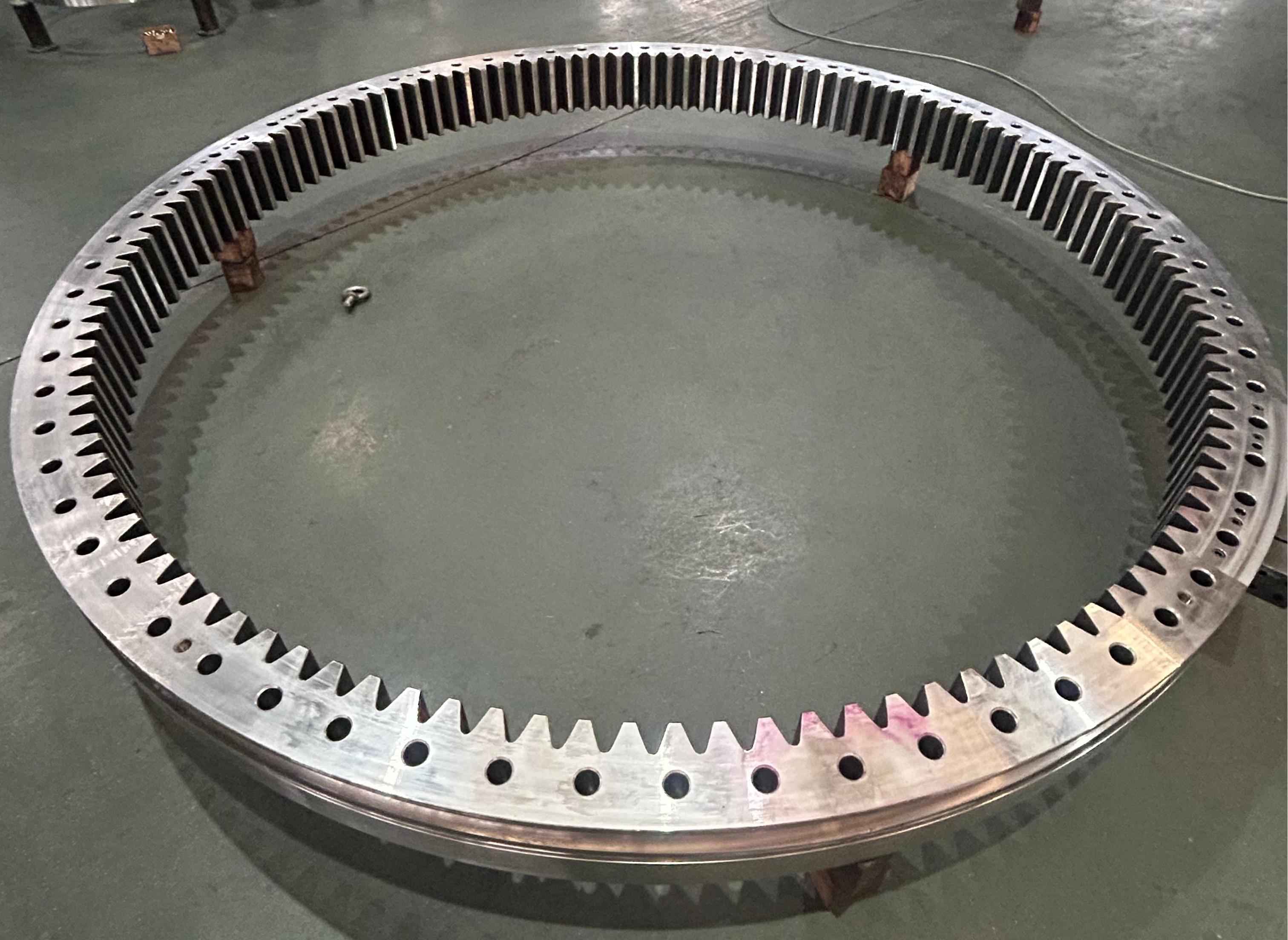
Send the data set for a fit check
If you have a load case, mounting drawing and gear details, send them to our engineering team. We will tell you whether your requirement matches our experience and list what is still missing for a quotation. For heavy-equipment projects, the Construction & Heavy Machinery page shows related applications. Request a quote or submit your drawings through the contact form, and mention the quantity and target delivery date.