WhatsApp
 jessica.chai@ltzzc.com
 0086-379-69950051

How to Source Amusement Ride Slewing Bearings
The costly mistake is not always choosing the wrong bearing size. It is placing an RFQ without confirming the actual load cases, mounting interface, gear requirements, inspection scope, and replacement constraints. For amusement ride operators, OEMs, and procurement teams, an Amusement Ride Slewing Bearing must be sourced as a documented mechanical interface rather than a catalogue item.
A ride turntable bearing may look similar to a bearing used in lifting, industrial handling, or other rotating equipment. However, its service conditions can be very different. Repeated start stop motion, reversing rotation, uneven passenger loading, vibration, outdoor exposure, drive pinion engagement, and restricted maintenance access all affect what should be specified and checked before production begins.
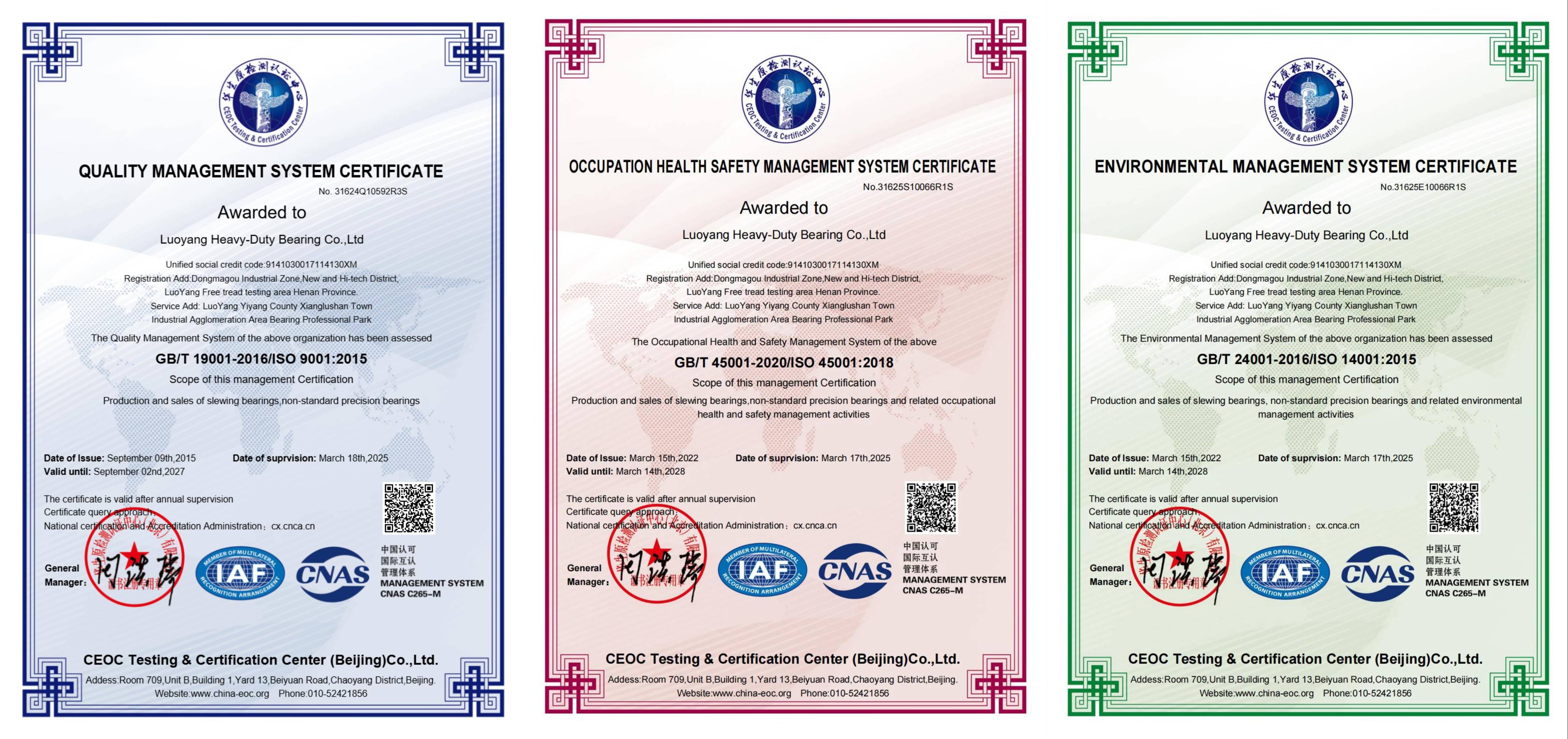
LTZC Bearings Co.,Ltd. supplies slewing bearings, gear rings, bearing unit assemblies, and non standard bearings from OD 200 mm to OD 20,000 mm. Our ISO9001:2015, ISO14001:2015, and ISO45001:2018 certified management systems provide a documented foundation for supplier review. Still, the buyer must define the application correctly. Certification does not replace load data, drawings, or acceptance requirements.
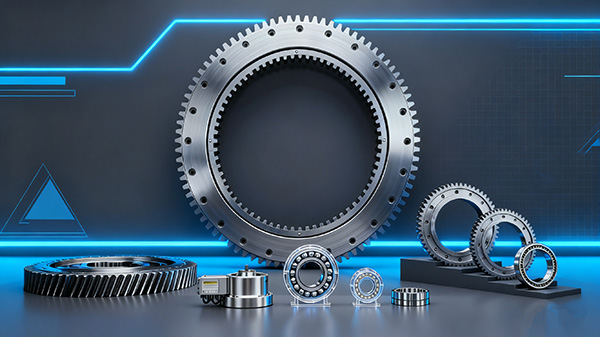
Start the RFQ with the operating conditions that determine bearing selection
Conclusion: Send the supplier a complete application data package before asking for a price. The reason is simple: the same outside diameter can support very different operating duties depending on axial load, radial load, overturning moment, speed, rotation pattern, and mounting stiffness. A dimensional quote without these inputs may only confirm that a bearing can fit physically, not that it can operate as intended.
This approach fits new ride designs, capacity upgrades, and replacements where operating conditions have changed. It does not apply when the buyer only needs a like for like spare and has a verified original drawing, complete bearing marking, and confirmed unchanged duty cycle. Even then, replacement interchangeability should be checked rather than assumed.
Information to include before requesting a quotation
- Assembly drawing: Show the bearing position, mounting plates, bolt pattern, central opening, drive location, gear engagement, and clearance envelope. This lets the supplier identify fitment conflicts before manufacturing.
- Bearing load data: State axial load, radial load, overturning moment, load direction, and the operating positions where each condition occurs. Include dead load, passenger related load, drive reaction, wind exposure if applicable, and any transport or maintenance condition that creates a separate load case.
- Motion profile: Identify continuous rotation, oscillation, reversing travel, indexing, acceleration, braking, emergency stopping, and the expected duty pattern. This matters because repeated reversal can change raceway and gear loading compared with steady one direction rotation.
- Mounting arrangement: Provide mounting surface dimensions, bolt grade requirements from the equipment design, tightening procedure, and available flange thickness. A suitable bearing cannot compensate for a flexible or distorted support structure.
- Environmental conditions: Identify indoor or outdoor service, water exposure, dust, temperature conditions, and corrosion concerns. These inputs influence material, sealing, lubrication, and surface protection decisions.
- Acceptance requirements: Specify what records must accompany the shipment, such as dimensional reports, material certificates, inspection records, gear checks, and packing requirements.
For a geared design, include pinion data and the required gear ring interface. Buyers should not provide only a tooth count or a photograph. The supplier needs the relevant gear drawing information, tooth form requirements, position relative to the mounting holes, and available adjustment range. This is especially relevant where the drive pinion cannot be repositioned after installation.
When the application requires an engineered solution outside a standard catalogue series, share the complete assembly model or existing design limitations. LTZC offers customized bearing solutions based on working conditions, existing designs, and technical specifications, so an early drawing review is more useful than requesting a generic price first.
Choose the bearing configuration from duty rather than appearance
Conclusion: Select the bearing structure only after the supplier reviews the loads, mounting envelope, rotation mode, and required service life. The reasoning is that single row, double row, crossed roller, and three row arrangements distribute forces differently. The best arrangement for a compact rotating platform may not suit a large structure with high overturning moment.
This recommendation fits any new design and any replacement where the ride has been modified. It does not mean that an existing bearing type must always be changed. If the original design has reliable service history, unchanged loads, and verified documentation, matching the existing configuration can be appropriate.
| Buying decision | What to confirm | Why it matters | When the check may be limited |
|---|---|---|---|
| Bearing structure | Rolling element arrangement, raceway arrangement, load directions, and rotation mode | The structure must suit combined axial, radial, and moment loading rather than only the available installation space. | A documented replacement can retain the original arrangement if the equipment duty remains unchanged. |
| Geared or ungeared ring | Internal gear, external gear, or no gear, plus pinion location and access | The gear choice affects drive packaging, guarding, lubrication access, and replacement work. | An ungeared ring is appropriate where the ride uses a separate drive interface. |
| Material selection | Corrosion exposure, load level, hardness needs, and equipment requirements | Material choice should match the specified operating environment and mechanical duty. | Material selection must follow the approved design; it should not be changed for price alone. |
| Seal and lubrication access | Seal design, grease points, access clearance, and maintenance schedule | Poor access can lead to missed maintenance, contamination, and shortened service life. | A protected indoor installation may have fewer environmental controls than exposed equipment. |
Material should be treated as an engineering decision, not a shorthand quality label. GCr15 and SUJ2 are commonly used for high hardness and high load bearing applications. AISI 440C offers corrosion and oxidation resistance for conditions requiring higher corrosion resistance. Alloy materials such as 20CrMo and 42CrMo are used where improved strength, hardness, and wear resistance are required. The correct choice depends on approved design requirements and service exposure; no single material is automatically best for every ride.
Buyers needing a compact or specialized arrangement can review thin section bearing options, but thin section designs are not a default substitute for a larger slewing ring. They fit applications with strong space constraints and appropriate load conditions. They do not fit every high moment or heavily loaded ride structure.
Use a supplier evaluation checklist before awarding the order
Conclusion: Evaluate suppliers against traceability documents, bearing load data, inspection records, and replacement interchangeability before comparing only quoted price. The reason is that an incomplete document package can leave the buyer unable to verify what was supplied, how it was checked, or whether it will fit the existing equipment.
This checklist is most useful for safety sensitive rotating equipment, first time suppliers, custom bearings, and replacement parts where downtime is expensive. For a low risk stocked component, some records may be less extensive, but the dimensional and identification checks should remain in place.
| Evaluation item | What the buyer should request | Why it matters | Risk if omitted |
|---|---|---|---|
| Material traceability | Material certificate reference, bearing identification, and linkage between supplied part and production records | Traceability supports investigation if a quality issue occurs and confirms that the agreed material route was followed. | The buyer may receive a part without a clear evidence trail for later fault analysis or approval review. |
| Bearing load data | Supplier design input list, stated load cases, operating conditions, and assumptions used for selection | Both parties can confirm that the quotation addresses the intended duty rather than an undefined application. | A bearing may be priced to dimensions alone, leaving disputed responsibility if operating demands differ. |
| Inspection records | Agreed dimensional inspection report, mounting hole checks, gear inspection where applicable, and final identification records | Inspection evidence allows receiving teams to compare the shipment with the purchase order and approved drawing. | Fitment errors may only be found during installation, when equipment downtime is already underway. |
| Replacement interchangeability | Original drawing or measurement sheet covering OD, ID, height, mounting holes, center opening, gear details, and orientation | A replacement must match the installed assembly, including interfaces that are not obvious from the outside diameter. | Incorrect holes, gear position, or mounting height can prevent installation or damage the drive system. |
| Quality system evidence | Applicable certification and documented inspection process | A formal quality management system supports controlled records and repeatable processes. | The buyer has less basis for reviewing how documents and quality controls are managed. |
LTZC holds ISO9001:2015, ISO14001:2015, and ISO45001:2018 certifications, as well as ISO, CCS, and ABS certification stated by the company. Ask the supplier to provide documentation relevant to the actual order. A certificate alone is not proof that a particular bearing meets your drawing; the purchase order, approved technical documents, and inspection records still control the supplied part.
For replacement orders, take measurements from the bearing and the machine interface. Do not rely only on a worn nameplate or an old purchasing description. A proper interchangeability review should compare the old bearing drawing, actual mounting holes, gear location, grease port location, height, sealing arrangement, and assembly orientation. If an old drawing is unavailable, provide clear photographs with measured reference dimensions and identify which ring is fixed and which ring rotates.

Compare quotations by total replacement risk rather than unit price
Conclusion: Compare each offer using the same technical and documentation scope. The lowest unit price can become the highest cost option if missing inspection records, incorrect gear details, or uncertain fitment delay installation. This applies particularly when the ride is already out of service and the replacement window is fixed.
It does not mean that a higher quotation is automatically better. A higher price should be justified by an approved design scope, agreed records, material requirements, machining needs, or service support. Ask every supplier to state exclusions in writing.
| Quotation element | Questions to ask | Cost impact if unclear |
|---|---|---|
| Bearing supply scope | Does the price include the bearing only, or also gear machining, coating, packing, and documents? | Unquoted work can appear later as additional cost or delivery delay. |
| Drawing approval | Will production begin only after the buyer approves the drawing? | Without an approval point, errors may be discovered after manufacturing. |
| Inspection scope | Which dimensions and gear features will be recorded and supplied with shipment? | Receiving inspection may lack the evidence needed to release the part quickly. |
| Delivery window | What is the stated lead time and what technical approval is required before it starts? | Maintenance planning can fail if the stated date excludes drawing confirmation or transport arrangements. |
| Technical support | Can the supplier support installation questions, maintenance training, and fault diagnosis? | Installation uncertainty can extend downtime and create avoidable handling errors. |
LTZC states a normal delivery range of 30 to 90 days and no MOQ. This can suit one off replacement requirements as well as planned OEM sourcing. However, the actual schedule should be confirmed against the approved drawing, bearing size, configuration, material requirements, inspection scope, and shipping destination. Do not convert a stated delivery range into a blanket promise for every custom order.
Large scale delivery experience can also be useful when evaluating manufacturing scope, provided it is not misrepresented as amusement ride experience. In 2024, LTZC delivered a 10.87 meter OD integral three row roller slewing ring for 2,000 ton fixed lifting equipment. LTZC also produced an integrated bearing with an 8.445 meter OD for a crane industry client in South Korea. These cases demonstrate experience with large customized bearing production; they do not replace ride specific design review or regulatory approval requirements.
Control installation and commissioning after the bearing arrives
Conclusion: Treat installation as part of the sourcing plan, not as a task that begins after delivery. The reason is that correct bearing selection can still be undermined by damaged mounting surfaces, wrong bolt procedures, poor gear engagement, contamination, or missed lubrication.
This applies to every new and replacement bearing. It is especially relevant where the old bearing failed, because the original cause may have been mounting distortion, drive misalignment, lubrication practice, or another system issue rather than the bearing itself. A bearing replacement alone does not correct an unresolved machine problem.
- Inspect the shipment: Confirm part identification, drawing revision, packing condition, documents, and visible condition before installation.
- Check the mounting interfaces: Clean the support surfaces and verify that the machine structure matches the approved mounting arrangement. Investigate distortion, damage, corrosion, or unwanted material before fitting the ring.
- Follow the approved bolt process: Use the equipment designer’s specified bolt type, tightening sequence, and torque procedure. Do not substitute hardware based on convenience.
- Set the drive engagement: For geared rings, verify the intended mesh across the rotation range. Check for position dependent tightness that may indicate mounting or alignment issues.
- Apply the planned lubrication and inspection routine: Record initial lubrication, installation date, and baseline observations for later maintenance comparison.
- Document commissioning: Retain installation photos, inspection results, and any adjustment record. These records help later fault diagnosis and future replacement sourcing.
LTZC provides after sales support that includes bearing installation guidance, preventive maintenance training, fault diagnosis, and on site technical assistance. For customers in China, the company states that quality objections receive a response within 24 hours and on site service starts within 48 hours. For projects outside China, agree the support method, communication route, and site service scope before purchase.
Use the supplier’s bearing installation guidance alongside the ride manufacturer’s approved procedures. Where the ring includes gearing, review the matching slewing ring gear requirements as part of the same installation plan, because the bearing and drive interface operate as one system.
Prepare a sourcing package that gives suppliers one clear basis for quotation
Conclusion: Issue one controlled RFQ package to every shortlisted supplier. This gives procurement a fair commercial comparison and gives engineering a consistent technical basis for review. It is suitable for both new ride projects and replacement purchases. It may be simplified only when a fully approved, unchanged spare part drawing is already available.
- Approved drawing or measured replacement data
- Operating load cases and motion profile
- Required bearing configuration and gear requirements
- Environmental and corrosion exposure details
- Material requirements where specified by the equipment design
- Required inspection records and traceability documents
- Packaging, marking, shipping destination, and requested delivery date
- Installation support and after sales requirements
- Acceptance process for drawing approval and final shipment release
For a custom ring or a replacement with uncertain dimensions, begin with a technical review rather than a price only request. LTZC can assess drawings and operating requirements for a precision slewing bearing solution, including customized sizes, materials, and performance requirements within the agreed design scope.
Submit your drawing, load information, and replacement photos to request a quotation review.