WhatsApp
 jessica.chai@ltzzc.com
 0086-379-69950051

How to Verify a Heavy Duty Slewing Ring Supplier for Heat Treatment
Placing an order for a large-scale slewing bearing without verifying the supplier's heat treatment process is a significant risk. A component failure in a 2,000-ton crane or a shield tunneling machine isn't just a part replacement; it's a catastrophic event leading to project delays, massive financial loss, and serious safety hazards. The difference between a durable, reliable component and a premature failure often lies in the metallurgical quality achieved through proper material selection and heat treatment. As an engineer with over a decade of experience in this field, I've seen firsthand how insufficient verification can undermine the most demanding applications.
At LTZC, our commitment to quality is proven not just by our ISO 9001:2015 certification, but by the performance of our products in the field. This includes the recent delivery of a 10.87-meter, integral three-row roller slewing ring for a 2,000-ton fixed lifting application. Success in projects of this scale starts with a deep understanding of material science and verifiable quality control. This guide will walk you through the essential documentation and questions you should ask to qualify any precision slewing bearing supplier.
Choosing the Right Material for Extreme Loads
The performance of any large bearing under intense load begins with its base material. The chemical composition and alloy elements dictate the component's potential for hardness, wear resistance, and toughness after heat treatment. A supplier that offers a range of specialized materials demonstrates an understanding of diverse operational demands, from corrosive marine environments to high-impact mining operations.
We work with clients to select the optimal material based on their specific technical requirements. Below is a comparison of common materials we use for high-load applications, highlighting their primary strengths.
| Material Grade | Key Characteristics & Best-Fit Scenarios |
|---|---|
| GCr15 / SUJ2 | Offers an excellent balance of high hardness, wear resistance, and fatigue strength. It's the standard for many ball and roller bearings in predictable, high-cycle industrial machinery. |
| 20CrMo / 42CrMo | These alloy steels provide superior strength, hardness, and toughness compared to standard bearing steel. They are ideal for applications with high shock loads and heavy torque, such as those found in Mining and metallurgy slewing bearings or large construction equipment. |
| AISI 440C | A stainless steel option offering good corrosion and oxidation resistance. It is specified for bearings operating in humid, wet, or mildly corrosive environments, such as marine deck cranes or food processing equipment. |
| CuSn6 | This bronze alloy is not typically for the main rings but is excellent for cages or separators within the bearing assembly due to its wear resistance, thermal conductivity, and self-lubricating properties. |
| Ti-6Al-4V | A high-performance titanium alloy used for specialized applications where light weight and high-temperature resistance are critical, such as in aerospace and defense systems. |
Selecting the right material is a foundational step, but it's meaningless if the subsequent heat treatment is flawed. The next section details the proof you should demand from any potential supplier.
How to Verify Quality with Supplier Documentation
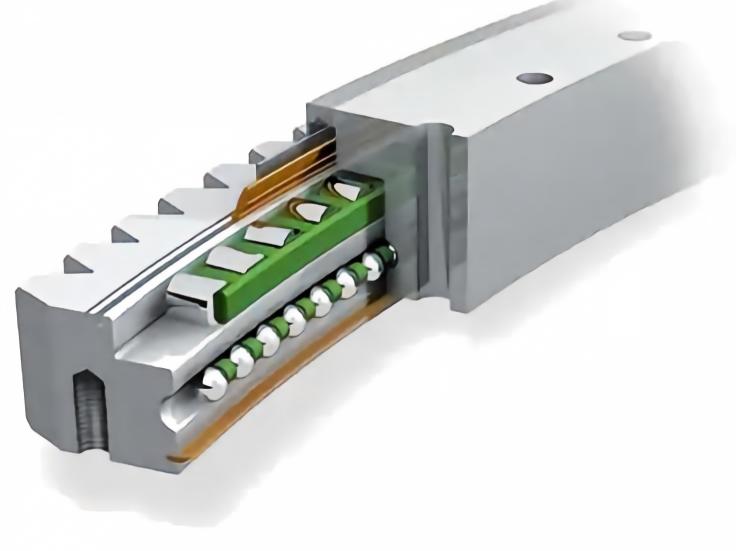
A reputable manufacturer will readily provide documentation that substantiates their quality claims. These records are not just formalities; they are objective proof of metallurgical integrity. When evaluating a supplier for a heavy duty slewing ring, requesting and analyzing the following three documents is non-negotiable. They reveal whether a supplier can truly support equipment operating under severe service conditions.
1. Material Certificates
- What It Is: A certificate of analysis (COA) or mill test report (MTR) from the raw material supplier. It details the precise chemical composition of the steel batch used for your bearing rings, including the percentages of carbon, chromium, molybdenum, and other alloying elements.
- Why It Matters: This document confirms that the base material meets the specified grade (e.g., 42CrMo). Deviations in chemistry can severely compromise the steel's ability to achieve the required hardness and case depth during heat treatment, leading to a brittle or soft raceway.
- What to Look For: Cross-reference the chemical composition on the certificate with the international standards for the specified material. Ensure the heat number on the certificate matches the markings on the bearing itself for full traceability.
2. Raceway Hardness Maps
- What It Is: A detailed report and diagram showing hardness measurements (typically in HRC) taken at multiple points along the bearing raceway and at various depths below the surface (case depth).
- Why It Matters: This is the most direct evidence of a successful heat treatment. For a large slewing ring, uniform hardness across the entire raceway is essential for even load distribution and predictable wear life. A "soft spot" will become a point of premature failure. The case depth measurement proves that the hardness isn't just superficial; it must be deep enough to support the subsurface stresses generated by rolling elements under heavy load.
- What to Look For: Check for consistent hardness values within the specified range (e.g., 55-62 HRC). The report should show measurements from multiple circumferential positions on both rings. The effective case depth should meet your design specification or industry standards for the application.
3. Gear Inspection Records
- What It Is: If the slewing ring has an integral gear, this report provides measurements for critical gear geometry parameters like profile, lead, pitch, and runout. For ground teeth, it will also include surface finish data.
- Why It Matters: Heat treatment can cause distortion. Without post-treatment inspection (and sometimes corrective grinding), gear tooth geometry can be compromised. This leads to improper meshing with the pinion, concentrated load points, high noise, vibration, and eventual tooth failure.
- What to Look For: The report should confirm that gear quality meets the specified standard (e.g., AGMA or ISO). Pay close attention to tooth contact patterns and total composite error. As an example of our capability, LTZC supplied Wuhan Heavy Industry with 8-meter high-precision segmented gear rings, where such verification was essential for a key national project.
A supplier unwilling or unable to provide this level of documentation should be a major red flag for any buyer sourcing components for critical, high-load machinery.
Evaluating a Manufacturer's Production and Service Capabilities
Documentation proves part-level quality, but a supplier's facility and processes indicate their ability to deliver consistently and support you long-term. At LTZC, we operate from a 20,000 m² facility established in 1992, with management systems certified to ISO 9001:2015, ISO 14001:2015, and ISO 45001:2018 standards.
When assessing a partner, consider the following:
- Proven Large-Scale Projects: A track record of success with large, complex components demonstrates true capability. In 2024, our team successfully produced an integrated bearing with an outer diameter of 8.445 meters for a major Crane Slewing Bearing client in South Korea. We have also delivered φ24m segmented bearings to Jiangsu Nantong Rainbow Heavy Machinery. These projects require not only advanced manufacturing but also rigorous project management and quality assurance.
- Customization Expertise: Heavy-duty applications rarely use off-the-shelf parts. Your supplier should function as an engineering partner. We specialize in providing Customized Bearings based on your working conditions, existing designs, and technical specifications, ensuring the final product meets your performance requirements precisely.
- Flexible Commercial Terms: For B2B projects, especially those involving prototypes or non-standard parts, commercial flexibility is important. We support our clients with a no MOQ (Minimum Order Quantity) policy and typical delivery times of 30-90 days, allowing for greater agility in your project planning.
Long-Term Reliability Through Comprehensive After-Sales Support
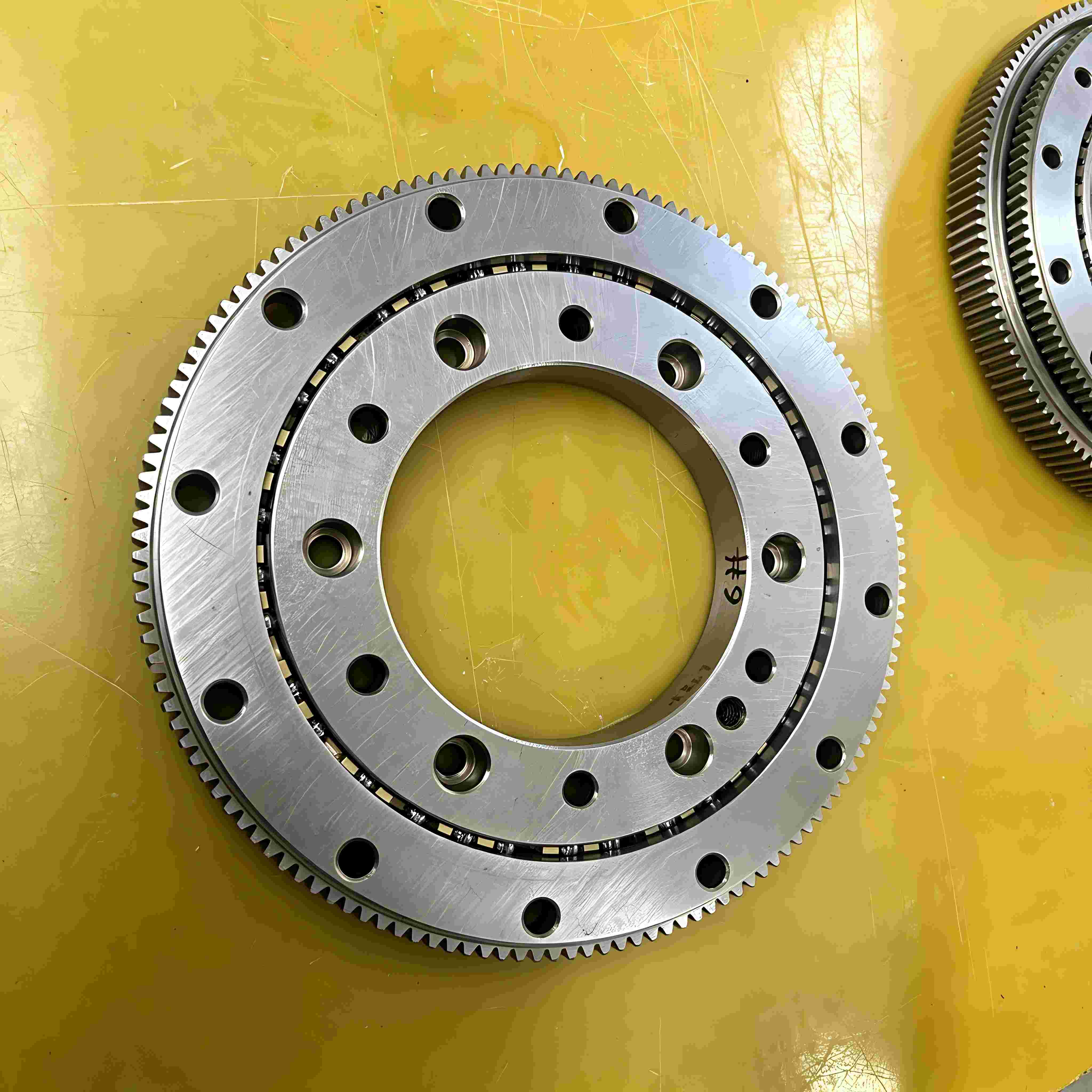
The supplier's responsibility does not end upon delivery. For complex machinery, the long-term, stable operation of your equipment depends on proper installation, maintenance, and expert support when issues arise. A supplier's after-sales service structure is a strong indicator of their commitment to partnership.
Our support system is designed to maximize your equipment's uptime and lifespan. We provide a full suite of services, including:
- Installation & Commissioning Guidance: Correct installation is critical for bearing life. Our teams provide guidance to ensure proper mounting, preloading, and lubrication from day one.
- Preventive Maintenance Training: We empower your on-site teams with the knowledge to perform routine checks and maintenance procedures, preventing common failures before they occur.
- Fault Diagnosis & On-Site Support: When problems do arise, a fast and effective response is necessary. We commit to responding to quality objections within 24 hours. For clients in China, on-site service can begin within 48 hours to analyze failures and implement solutions.
This level of support ensures that you are not just buying a component, but a fully supported engineering solution. It’s a partnership that protects your investment throughout the equipment's lifecycle.
Verifying a supplier's heat treatment and overall quality process is a critical due diligence step. By demanding the right documentation and evaluating their production and support capabilities, you can forge a partnership that ensures the safety, reliability, and performance of your heavy-duty equipment.
If you have technical specifications for a challenging application, submit your drawings to our engineering team for a detailed review and proposal.