WhatsApp
 jessica.chai@ltzzc.com
 0086-379-69950051

How Dust Contamination Destroys Mining Slewing Bearing Performance Over Time
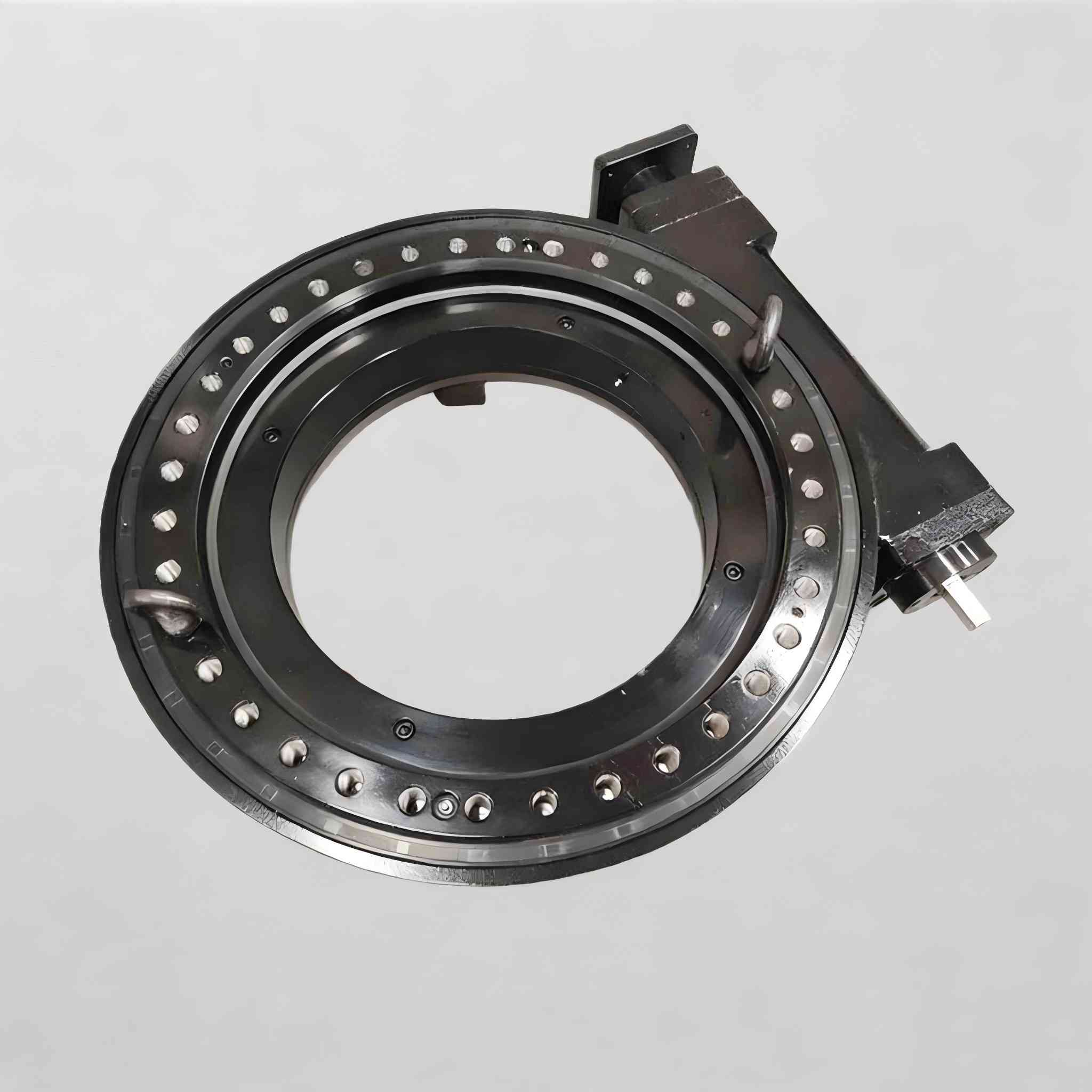
Why does a mining slewing bearing that's rated for 15-20 years of service sometimes fail in under three? That's the question most maintenance teams ask after pulling a bearing with pitted races, discolored grease, and a gear ring that's lost half its tooth profile. In open-pit and underground operations, the answer is almost always some combination of abrasive dust, moisture, and seal breakdown — but telling the difference between dust ingress and other failure modes matters, because the fix is completely different depending on the root cause. A mining slewing bearing exposed to silica dust wears in a distinct pattern compared to one suffering from grease starvation or vibration damage during transport. Getting the diagnosis wrong means you replace the bearing, make no process change, and watch the same failure happen again in 18 months.
Where Dust Actually Gets Into the Bearing
Most teams assume dust enters through a torn seal lip. That's one path, but not the only one, and sometimes not even the main one.
Seal lip wear from constant rotation — standard rubber seals lose contact pressure after repeated slewing cycles, especially on excavators and shovels that cycle every 20-30 seconds during a shift.
Bolt hole paths — if mounting bolts aren't torqued to spec or sealant isn't applied under the flange, dust migrates through the bolt threads into the raceway over months.
Grease fitting backflow — during relubrication, old grease and the dust trapped in it can get pushed back into the raceway instead of purging out, if the relief port is blocked.
Negative pressure during shutdown — as a hot bearing cools after shift-end, it can draw in ambient air (and the dust suspended in it) through any seal gap.
In practice, checking bolt torque and sealant condition first saves time, since it's a 10-minute inspection versus pulling the whole seal assembly.
Wear Pattern Diagnosis: Dust, Starvation, or False Brinelling
This is where most teardown reports go wrong. Three different root causes — abrasive dust contamination, lubrication starvation, and false brinelling from transport vibration — can all produce dented or pitted raceways. But the pattern, location, and grease condition tell three different stories. Use this order when inspecting a failed mining slewing bearing:
Step 1: Check the grease color and texture first
Pull a sample from the loaded zone (bottom of the bearing on most slewing applications) and from the unloaded zone. Compare them side by side.
Step 2: Examine raceway spacing and pattern
Dents from false brinelling appear at regular, evenly spaced intervals matching the ball or roller pitch. Pitting from dust contamination is irregular and scattered. Starvation wear shows as a polished, mirror-like band with no pitting at all — just metal loss.
Step 3: Inspect the seal lip condition
A hardened, cracked seal lip with no grease purge marks points to starvation. A seal lip that's abraded thin, with grit embedded in the rubber, points to dust ingress.
| Symptom | Abrasive Dust Contamination | Lubrication Starvation | False Brinelling |
|---|---|---|---|
| Raceway pattern | Irregular pitting, gray/black streaking | Smooth, mirrored metal loss | Evenly spaced dents at ball pitch |
| Grease condition | Gritty, dark, abrasive to touch | Dried out, hardened, low volume | Normal color, may show displacement marks |
| Seal lip | Thin, grit embedded, grooved | Cracked, hardened, no wear marks | Intact, no abrasion |
| Root cause | Seal failure or bolt hole ingress | Missed relube interval or blocked zerk | Vibration during idle/transport without rotation |
| Fix | Reseal, flush, improve ingress protection | Correct relube schedule, check grease volume | Rotate periodically during transport or storage |
If you only check the raceway and skip the grease sample, dust contamination and starvation can look similar at a glance — both leave surface damage. The grease sample is the fastest way to separate them, and it takes under five minutes.
Common Mistakes Teams Make During Inspection
Judging failure mode from photos alone — raceway pitting from dust and corrosion pitting from moisture ingress can look nearly identical in photos. Physical grease sampling is non-negotiable.
Replacing the seal without checking the bolt holes — if dust is entering through unsealed mounting bolts, a new seal won't solve the problem.
Over-greasing as a "fix" — pumping extra grease into a dust-contaminated bearing just pushes abrasive particles deeper into the raceway instead of flushing them out.
Ignoring gear ring wear as a diagnostic clue — if the slewing ring gear shows the same gritty wear pattern as the raceway, that confirms external contamination rather than internal lubrication failure.
Sealing Choices That Actually Reduce Dust Ingress
Standard single-lip seals are adequate for light-duty slewing applications, but mining environments with continuous silica or coal dust exposure usually need something more. When specifying a replacement precision slewing bearing, consider the sealing configuration before the bearing dimensions.
| Seal Type | Best For | Limitation |
|---|---|---|
| Single-lip rubber seal | Low-dust, indoor equipment | Wears fast under continuous abrasive exposure |
| Double-lip seal with dust lip | Open-pit mining, moderate dust | Needs more frequent relube to maintain purge flow |
| Labyrinth seal combined with lip seal | Heavy dust, shovels, draglines | Higher cost, requires tighter mounting tolerances |
If your current failure analysis points to dust ingress, upgrading seal type at the next overhaul is usually more cost-effective than shortening the relube interval indefinitely — more grease visits add labor cost without solving the entry point.
Repair, Reseal, or Full Replacement — A Decision Checklist
Is pitting limited to the unloaded zone only? → Often repairable with reseal and raceway polish.
Is pitting present across more than 30% of the loaded raceway? → Replacement is usually the safer call; polishing won't restore load capacity.
Has the slewing ring gear also shown gritty tooth wear? → Inspect gear mesh separately; it may need regrinding or replacement independent of the bearing body.
Is the equipment under 5 years old with a known seal defect? → Reseal and monitor; full replacement may not be justified yet.
Has the bearing already been resealed once for the same failure mode? → Replace. Recurring dust ingress after a reseal usually means the mounting interface itself needs redesign.
For teams dealing with non-standard flange dimensions or legacy equipment where stock bearings don't fit, custom tolerances and non-standard bearings are often the only practical path — rather than modifying the housing to fit a stock part.
What to Confirm Before Reordering a Mining Slewing Bearing
A worked example: a coal handling site replacing a stacker/reclaimer slewing bearing found grit embedded three millimeters deep into the inner race after only 14 months in service — well short of expected life. Teardown showed grease sampling from the loaded zone was dark and gritty, while the seal lip had visible grooving. That combination confirmed dust ingress through a worn single-lip seal, not starvation. The replacement spec was upgraded to a double-lip seal with a dust lip, and bolt holes were resealed with thread sealant during reinstallation — both changes targeted the actual entry point instead of just swapping the part.
When placing the replacement order, confirm these details with your supplier:
Seal configuration upgrade, not just a like-for-like replacement
Material and hardness spec matching your dust exposure level, not just your load rating
Mounting bolt hole sealing instructions included in the installation documentation
Lead time — LTZC typically works on a 30-90 day delivery window depending on size and seal configuration, with no minimum order quantity for single-unit replacements
Proper installation matters as much as the bearing spec itself. Review bearing installation guidance before reassembly, particularly bolt torque sequence and sealant application around the flange — these are the two points most often skipped during field replacement.
Working With a Supplier That Understands Mine-Site Conditions
LTZC Bearings operates under ISO9001:2015, ISO14001:2015, and ISO45001:2018 certification, with product certification from CCS and ABS. For mining applications where dust contamination is a known risk, we build seal configuration and material hardness into the design conversation from the start, rather than treating it as an afterthought. If you're working from an existing bearing that's failed, or starting from a new equipment spec, our engineering team can review your working conditions and recommend seal type, tolerances, and Slewing Drives compatibility where applicable. If you're unsure which configuration fits your site conditions, our bearing selection guide covers the basic decision points before you request a formal quote.
If you're currently investigating a premature failure, send us your teardown photos, grease samples description, and operating conditions — we'll help identify whether dust contamination, starvation, or another cause is driving the wear, and recommend a sealing spec for your next order.