WhatsApp
 jessica.chai@ltzzc.com
 0086-379-69950051

I. LTZC Cross Roller Slewing Bearing Face Runout Results
1.1 Actual Testing Baseline Conditions
This batch of tests strictly adhered to ISO and national testing standards, maintaining uniform testing conditions to ensure the impartiality and reliability of the data. Testing Environment: A constant temperature of 20±1°C, free from vibration. Inspection Equipment: A high-precision digital dial indicator with a resolution of 0.1μm, and a calibrated precision arbor.
1.2 Summary of Actual Test Data Across All Precision Grades
A total of 13 sets of mass-produced Cross Roller Slewing Bearings were sampled for this evaluation, covering the full spectrum of specifications—from small-scale precision models to medium-sized general-purpose models and large-scale heavy-duty models. The actual test results significantly outperformed industry standard tolerances, demonstrating exceptional precision consistency and an absence of batch-to-batch deviation issues.
| Accuracy Grade | Size Range | Standard Max Tolerance | LTZC Max Test Value | LTZC Min Test Value | Average Test Value | Pass Rate |
| P4 (Ultra-high Precision) | Φ50–Φ300mm | ≤2.5μm | 2.3μm | 0.8μm | 1.5μm | 100% |
| P5 (High Precision) | Φ100–Φ500mm | ≤5μm | 4.2μm | 1.2μm | 2.8μm | 100% |
| P6 (General Precision) | Φ300–Φ1000mm | ≤15μm | 10.6μm | 3.5μm | 6.2μm | 100% |
| P0 (Heavy-duty Industrial) | Φ1000mm and above | ≤40μm | 28.5μm | 12.3μm | 18.6μm | 100% |
1.3 Analysis of Key Advantages in Actual Test Data
First, Ample Precision Margin: The measured values for products across all precision grades were substantially lower than industry standard tolerances. There were no instances of products merely "scraping by" at the tolerance limit; instead, ample headroom was reserved to accommodate potential precision degradation over time. Consequently, the bearings are highly resistant to deformation during long-term use—ensuring face runout remains within acceptable limits—and their overall service life is significantly extended.
Second, Exceptional Batch Consistency: Data fluctuation among products within the same batch was minimal; for high-precision models, this fluctuation was ≤0.5μm. This resolves a common industry issue where individual units may pass inspection while the overall batch quality remains inconsistent, thereby guaranteeing uniform precision across a customer's entire equipment line.
Third, Stable Precision Across All Sizes: Whether involving small-scale precision bearings for robotics or large-scale heavy-duty slewing bearings, LTZC consistently maintains precise control over face runout accuracy—effectively resolving the industry pain point regarding poor precision and excessive deviation often associated with large-scale bearings.
Fourth, Extremely Low Retest Error: The discrepancy between data obtained from two independent testing sessions was ≤0.5μm. This validates the authenticity and reliability of the inspection data, confirming that it is free from interference caused by equipment, environmental factors, or human error, and is fully capable of passing third-party re-inspection and acceptance by customers.
II.Why is the Face Runout of Slewing Bearings a Critical Factor in Precision Bearing Selection?
2.1 Directly Determines Equipment Operational Precision and Stability
The crossed roller slewing bearing is a type of precision slewing bearing featuring a specialized internal structure; its rollers are arranged in a 90-degree cross pattern. This design endows it with exceptional load-bearing capacity—specifically regarding radial, axial, and overturning moment loads—while offering advantages such as a compact structure, agile rotation, and high positioning accuracy. For high-end equipment—such as industrial robots and precision machine tools—it is imperative that face runout be controlled within a tolerance of 5μm.
2.2 Impacts Installation Efficiency and Long-Term Maintenance Costs
Bearings with face runout exceeding specified limits are prone to issues following installation—such as seal wear, grease leakage, and bolt loosening. These issues necessitate frequent equipment shutdowns for maintenance, thereby disrupting production continuity and driving up long-term maintenance costs.
2.3 Affects Equipment Service Life and Operational Safety
As a core load-bearing component within equipment, a crossed roller slewing bearing with excessive face runout can trigger various anomalies—including accelerated bearing wear, intensified vibration, and increased bearing clearance. In severe cases, this can lead to equipment failure or even safety-related accidents.
2.4 Reflects the Supplier's Manufacturing and Quality Control Capabilities
The precise control of face runout serves as a comprehensive indicator of a bearing manufacturer's technical prowess, equipment precision, and quality control system. By verifying a supplier's face runout inspection reports, the precision of their testing equipment, and their mastery of production process controls, purchasers can rapidly identify suppliers possessing genuine expertise in precision bearing manufacturing, thereby effectively mitigating quality-related risks.
III. LTZC Bearings — A Chinese Manufacturer of Slewing Bearings
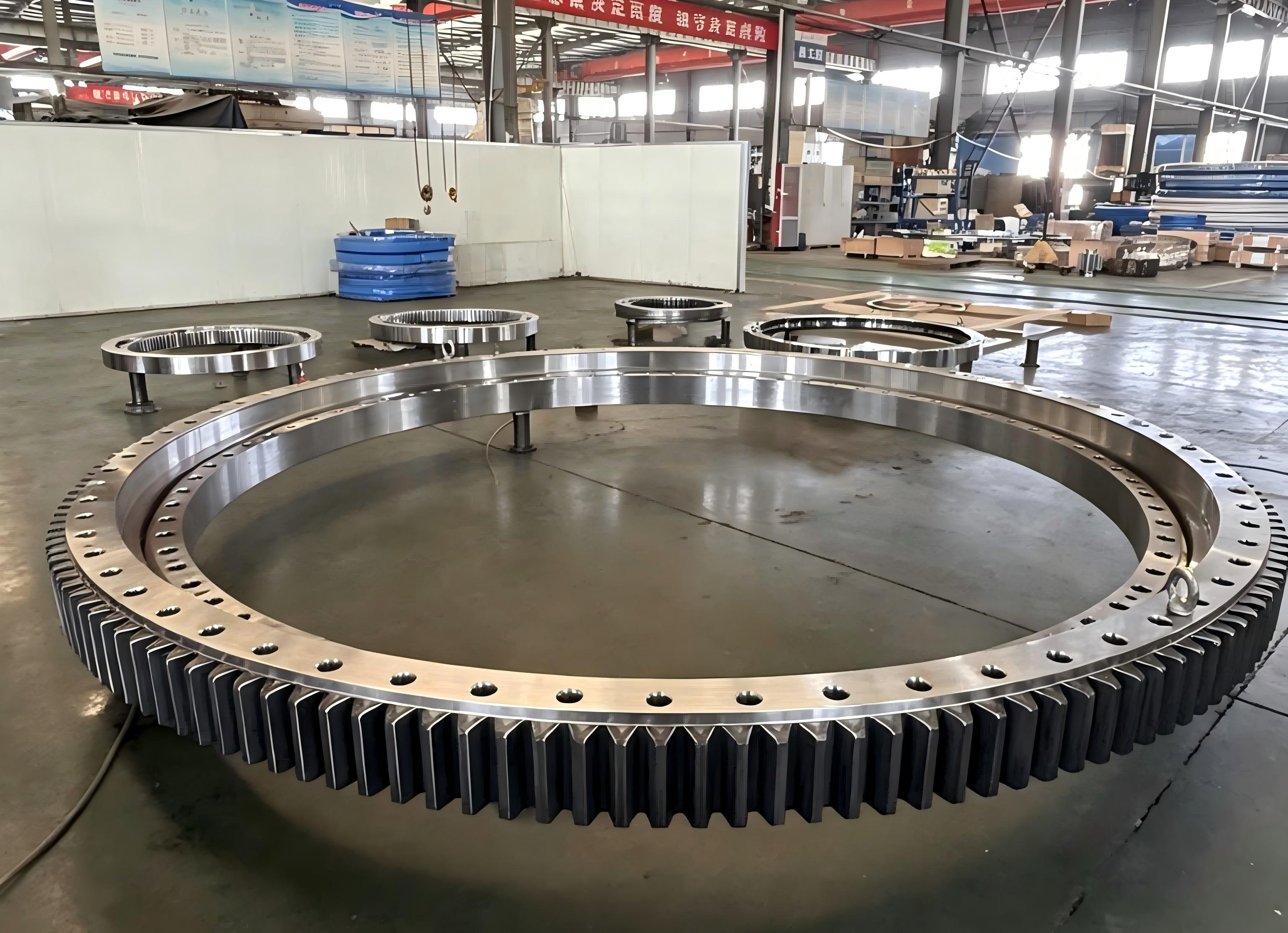
As a specialized, indigenous Chinese manufacturer of slewing bearings with over 30 years of deep industry experience, LTZC leverages the advantages of Luoyang’s high-end bearing industry cluster to provide customized bearing solutions, serving high-end equipment manufacturers worldwide. Unlike typical contract manufacturers in the industry, LTZC relies on rigorous internal control standards and mature capabilities in technological iteration, making it the preferred and reliable Chinese supplier of precision slewing bearings for global buyers.
Learn more about LTZC bearings
3.1 Customizable Bearing Solutions
The company is equipped with a comprehensive suite of high-end, intelligent manufacturing equipment—including large-scale 6-meter CNC vertical lathes and 2.5-meter high-precision floor-type grinding machines—enabling the production of bearings ranging in size from Φ200mm to Φ13,000mm. Furthermore, LTZC can independently optimize raceway structures, heat treatment processes, and assembly schemes based on a client's specific equipment operating conditions, required precision grades, and load requirements. This capability effectively resolves common pain points associated with imported bearings, such as high costs, long lead times, and poor compatibility.
3.2 Rigorous Control of Bearing Quality Standards
As a Chinese brand dedicated to the manufacture of precision slewing bearings, LTZC fully recognizes that bearing testing and in-process quality control constitute the core competencies of precision bearing manufacturing. Consequently, LTZC has established an internal quality control system that exceeds the requirements of national standards (GB/T, JB/T) and international standards (ISO).
3.3 Serving Global Clients
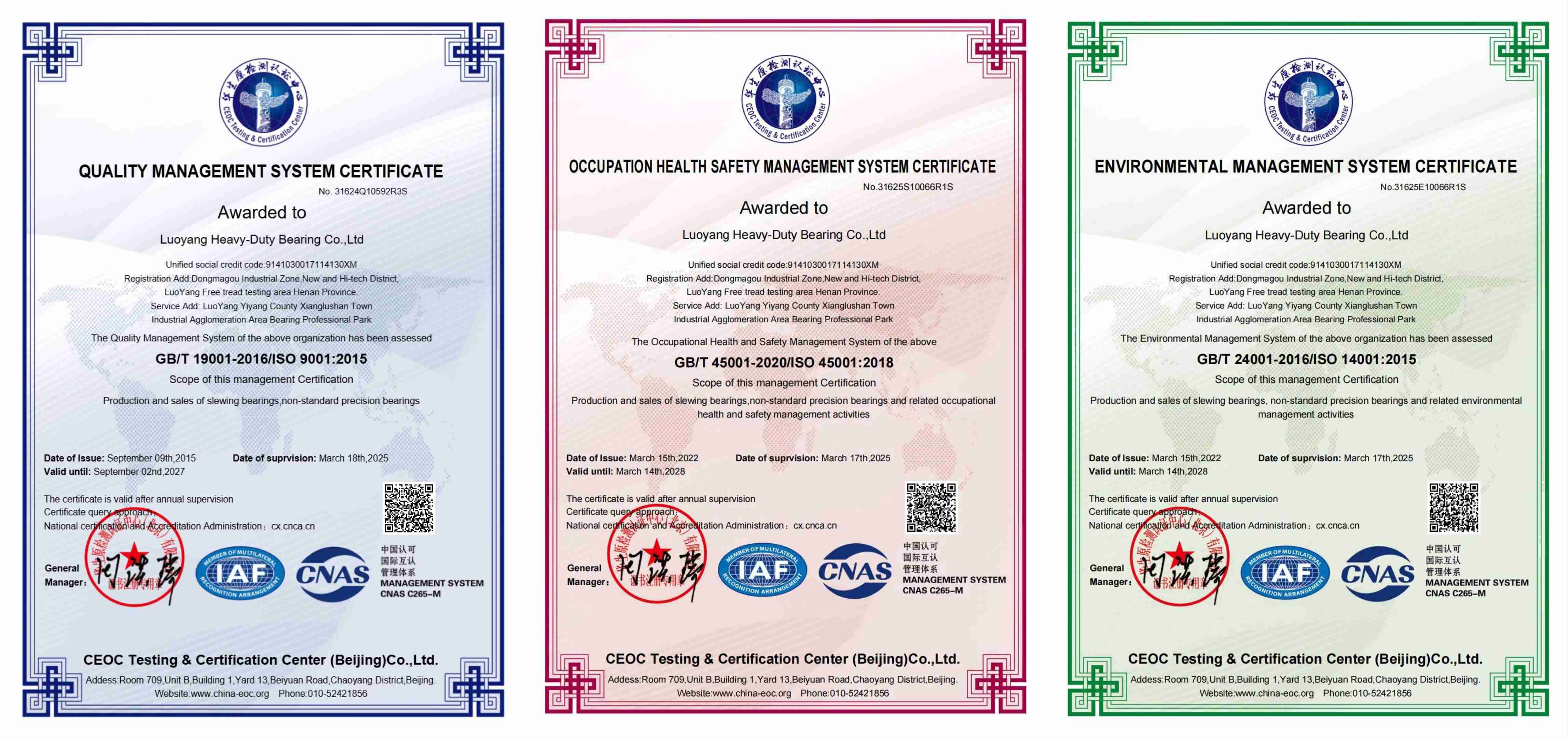
As a mature, integrated manufacturing and trading enterprise specializing in Chinese slewing bearings, LTZC has cultivated the market for many years. We possess an intimate understanding of the import standards and acceptance criteria of various countries worldwide, and we have successfully obtained numerous international certifications, including the ISO 9001 Quality Management System and the ISO 14001 Environmental Management System. We support customization for non-standard dimensions, specialized precision requirements, and unique operating conditions, while offering 24-hour technical support to rapidly resolve client challenges related to product selection, installation, operation, and maintenance.
Send a Slewing Bearing Inquiry Now