WhatsApp
 jessica.chai@ltzzc.com
 0086-379-69950051

What Is a Four-Point Contact Slewing Bearing?
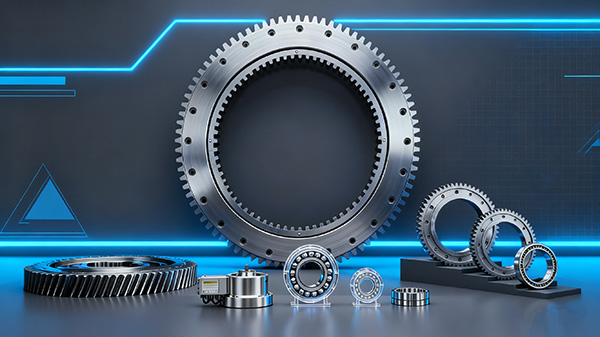
A four-point contact slewing bearing is a lightweight bearing capable of 360-degree rotation. It utilizes balls as rolling elements that make contact with the raceway at four distinct points, hence the name "four-point contact ball slewing bearing."
Structure of a four-point contact ball slewing bearing:
Inner ring
Outer ring
Rolling elements
Cage or spacers
Sealing system
Lubrication system
Types of four-point contact ball slewing bearings:
Internal gear type
External gear type
Gearless type
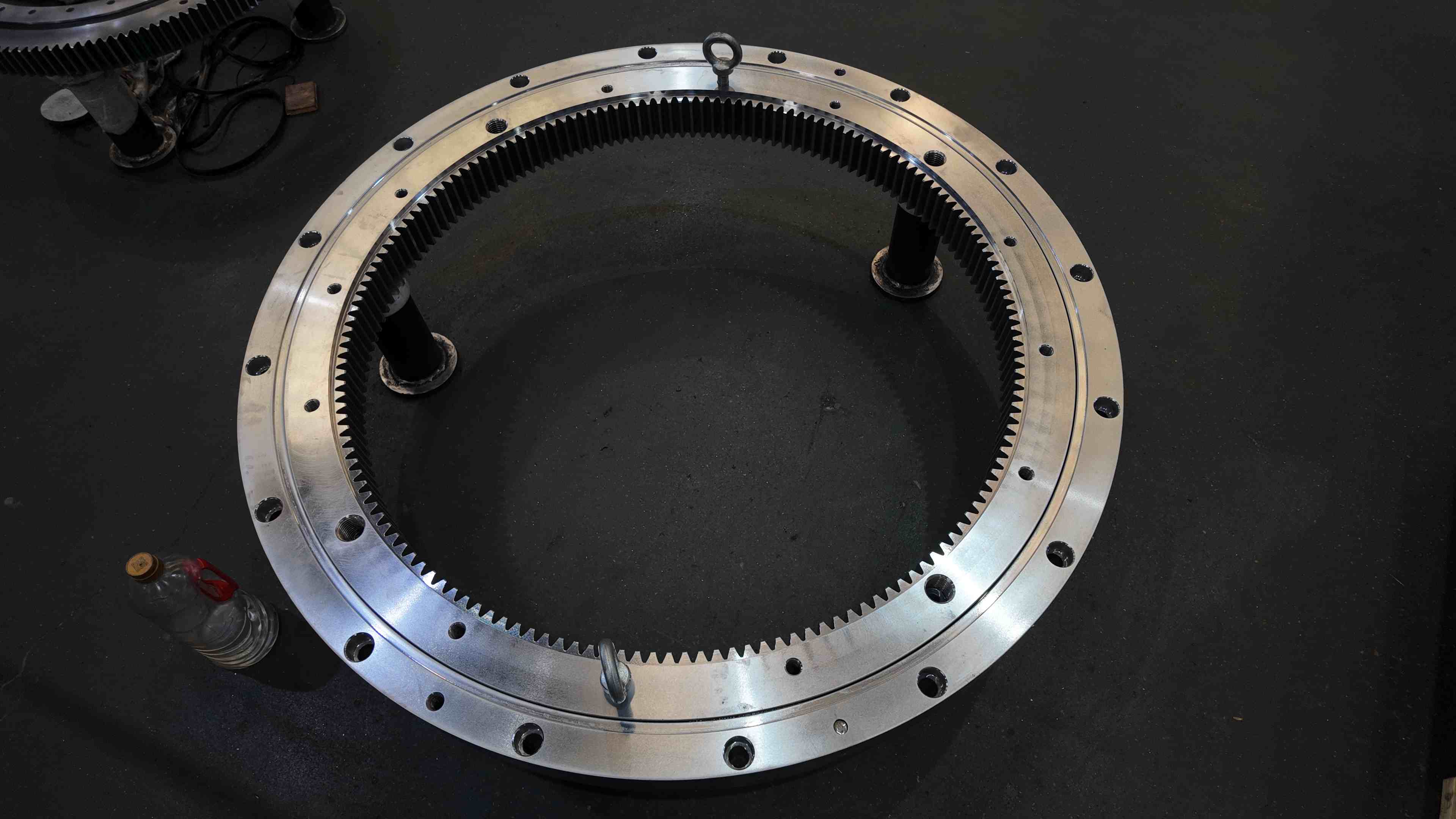
In an external gear configuration, the gear ring is typically positioned on the outer ring, allowing it to mesh with an external pinion or drive system; conversely, an internal gear configuration places the gear ring on the inner ring, making it better suited for certain compact transmission layouts.
Compared to standard rolling bearings, slewing bearings typically feature a larger diameter and can be mounted directly between the upper and lower structures of a machine. They not only facilitate rotation but also support axial loads, radial loads, and tilting moments.
Industrial Applications of four-point contact ball slewing bearings:
Construction machinery: Compact excavators, mini-excavator slewing platforms, truck-mounted cranes, loader cranes
AGV automation: Stackers, steering chassis slewing joints
Mining equipment: Tunnel boring machines, bucket-wheel stacker-reclaimers, rotary feeders
Port equipment: Small marine cranes, slewing assemblies for shipboard cranes
Slewing Bearing Selection: Key Factors to Consider
Clearly defining operating conditions is the foundation for selecting the right slewing bearing. LTZC Bearings offers complimentary selection services to customers, including CAD drawings, 3D models, bearing life calculations, and load analysis.
1. Determine the Actual Load
Load is one of the most critical technical factors in slewing bearing selection. It is essential to analyze the equipment's actual operating conditions to systematically define the magnitude, direction, point of application, and variation patterns of axial loads, radial loads, and tilting moments. Furthermore, the impact of static loads, dynamic loads, impact loads, and eccentric loads on bearing load-carrying capacity, raceway contact stress, and service life must be evaluated.
2. Consider Static and Dynamic Conditions
Loads on industrial equipment are rarely constant. Operating conditions such as frequent start-stops, continuous operation, impact loads, eccentric loads, and acceleration/deceleration all affect the slewing bearing's actual stress state and service life.
It is recommended to clarify the following information with the supplier:
How many operations per hour?
Rotation angle per operation?
Duration of maximum load?
Presence of impact or sudden loading?
Continuous long-term operation?
Frequent start-stops or reversals?
Significant load eccentricity or cyclical load variations?
These operational data points help the supplier accurately assess the bearing's actual working conditions and determine its load capacity, structural configuration, and service life. Comprehensive information regarding the duty cycle is generally more valuable than simply providing a "maximum load" figure.
3. Check Rotational Speed and Duty Cycle
Slewing bearings are typically used in low-speed rotation or oscillation applications; however, factors such as actual rotational speed, start-stop frequency, operating time, and duty cycle directly influence the lubrication strategy, seal design, and service life.
Therefore, the following should be specified during selection:
Maximum rotational speed
Average rotational speed
Continuous rotation?
Frequent start-stops?
Oscillating (reciprocating) rotation?
Rotation angle per duty cycle
Daily operating hours
4. Evaluate Mounting Dimensions
Bearing dimensions encompass more than just the outer and inner diameters. When procuring industrial equipment, it is usually necessary to confirm the following:
Bearing outside diameter
Bearing inside diameter
Bearing height
Mounting hole diameter
Bolt circle diameter
Number of mounting holes
Gear dimensions
Gear module
Tooth count
Installation clearance
If the bearing is to be mounted directly onto the equipment structure, the dimensions and configuration of the mounting surface must also be confirmed.
Key Factors in Slewing Bearing Procurement
Procuring slewing bearings involves more than just comparing prices. A sound procurement approach should take the following factors into account:
1. Technical Compatibility
First, verify that the bearing’s load capacity, dimensions, mounting holes, gearing, and service life meet the equipment's requirements. When necessary, request load and service life calculations from the supplier to ensure the bearing is fully compatible with the equipment.
2. Manufacturing Capability
Buyers should verify the supplier's actual production capabilities—specifically their capacity for both mass production and custom manufacturing. It is also crucial to assess whether the supplier can provide appropriate solutions when project designs change; this is a key benchmark for determining whether a four-point contact slewing bearing manufacturer possesses genuine engineering expertise.
LTZC Bearings has a monthly production capacity of 800 slewing bearings. We are capable of mass production and offer customized bearing solutions, including bearing selection, service life calculations, and load analysis.
View LTZC's manufacturing capabilities
3. Quality Documentation
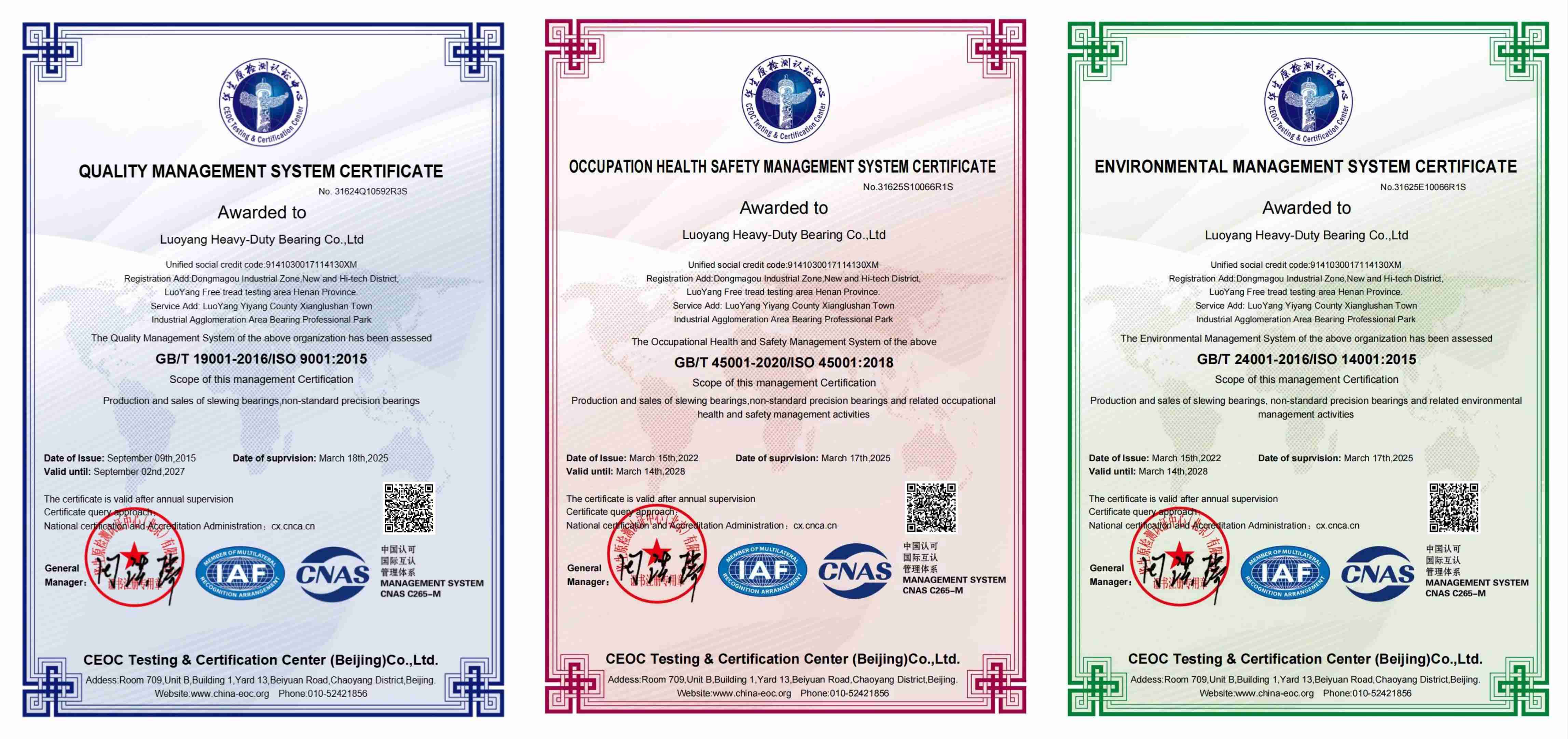
In industrial procurement, beyond technical specifications, it is essential to review inspection reports, quality documentation, and the supplier's quality management capabilities. LTZC Bearings holds certifications such as ISO 9001, ISO 45001, CCS, and BV, and accommodates third-party factory inspections. We provide raw material reports, dimensional inspection reports, heat treatment records, and other quality traceability data as required by the project, enabling buyers to comprehensively evaluate product quality and batch consistency.
Four-Point Contact Slewing Bearing FAQ
1. What is a Four-Point Contact Slewing Bearing?
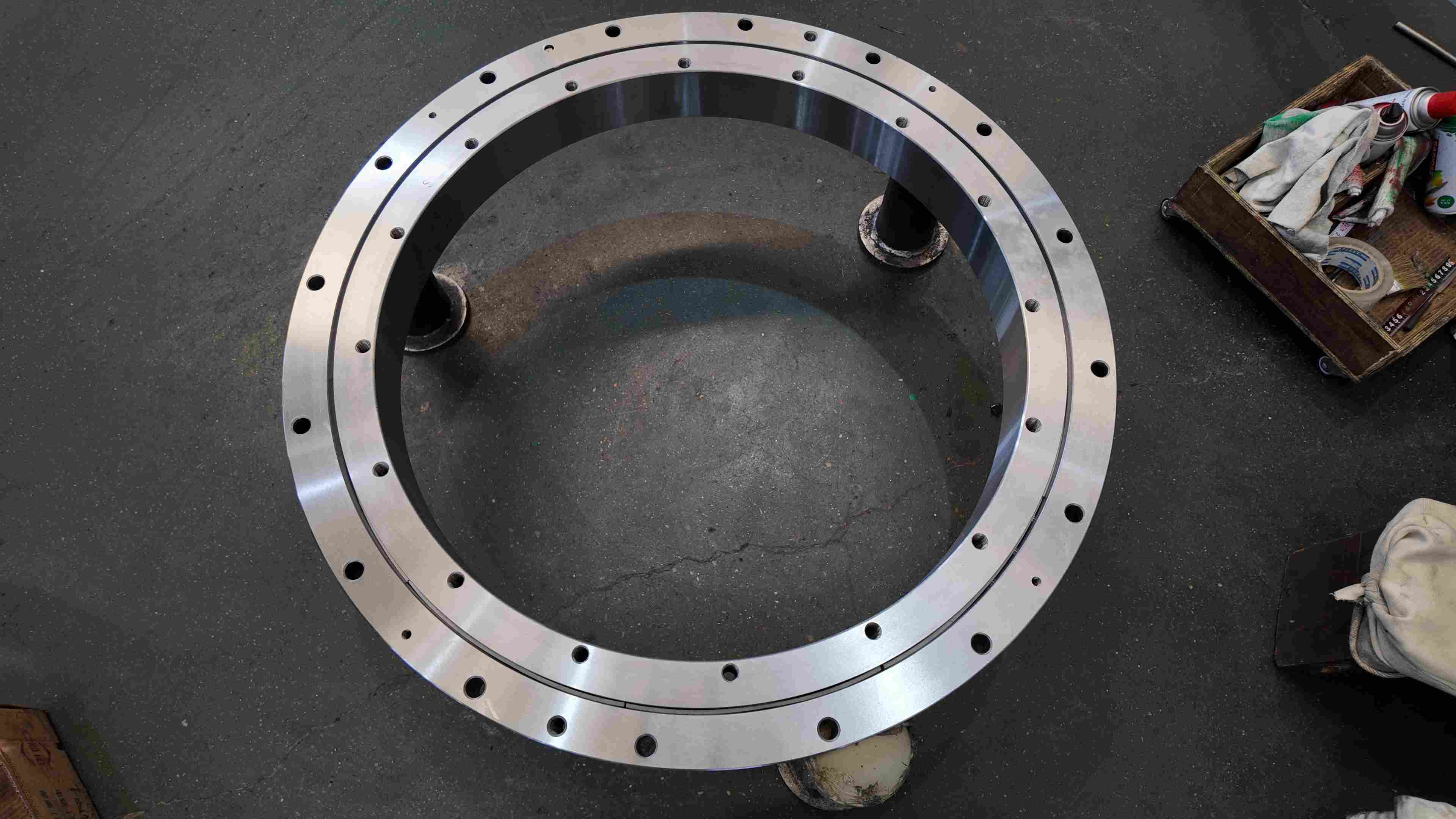
A four-point contact slewing bearing is a lightweight slewing bearing that uses steel balls as rolling elements. It can simultaneously withstand axial loads, radial loads, and tilting moments, making it widely applicable in industrial equipment such as construction machinery, lifting equipment, and rotating platforms.
2. How do I select the right Four-Point Contact Slewing Bearing?
Selection should be based on a comprehensive assessment of factors such as axial load, radial load, tilting moment, rotational speed, mounting dimensions, gear requirements, and the operating environment.
3. What information is needed for slewing bearing selection?
Typically, information regarding equipment type, bearing dimensions, loads, rotational speed, duty cycle, mounting dimensions, gear parameters, and the operating environment is required. Providing CAD drawings of the equipment can help the supplier make a more accurate selection.
4. What should I consider when purchasing an Industrial Slewing Bearing?
In addition to price, key considerations include bearing performance, manufacturing capabilities, product quality, batch consistency, delivery lead times, technical support, and long-term supply reliability.
5. Can Four-Point Contact Slewing Bearings be customized?
Yes. LTZC Bearings can customize bearing dimensions, mounting holes, gear configurations, sealing methods, materials, and other specifications to meet specific equipment requirements.
6. How long does a Four-Point Contact Slewing Bearing last?
Service life depends on factors such as load, rotational speed, duty cycle, lubrication, installation precision, operating environment, and maintenance. An accurate service life estimate requires calculation based on actual operating conditions.
7. How can I get the right slewing bearing for my equipment?
Contact the LTZC team and provide details such as equipment type, loads, rotational speed, mounting dimensions, gear requirements, and the operating environment to receive assistance with slewing bearing selection.
Contact the LTZC team to request a quote.