WhatsApp
 jessica.chai@ltzzc.com
 0086-379-69950051

How to Prevent Saltwater Damage to Your Marine Slewing Bearings
As a slewing bearing engineer, one of the most persistent issues I help clients with is premature failure in marine environments. You might notice unusual grinding noises, increased rotational resistance, or rusty streaks appearing on your deck crane or offshore platform. These are often the first signs that saltwater has breached the bearing's defenses, initiating a corrosive process that can seize a multi-ton piece of equipment. Understanding how to diagnose and prevent this damage is essential for any operator of Marine & Defense Slewing Bearings.
The core challenge is that saltwater doesn't just cause simple rust; it compromises the lubricant, accelerates metal fatigue, and attacks the raceway surfaces. This guide provides a systematic approach to identifying the root cause of water ingress and establishing a maintenance routine to protect your marine slewing bearing from the harsh effects of its operating environment.
Initial Inspection: Identifying the First Signs of Water Ingress
Before any disassembly, a thorough external inspection can reveal critical clues about the bearing's condition. Catching these early signs allows for corrective action before catastrophic failure occurs. Use this checklist for your initial walk-around inspection.
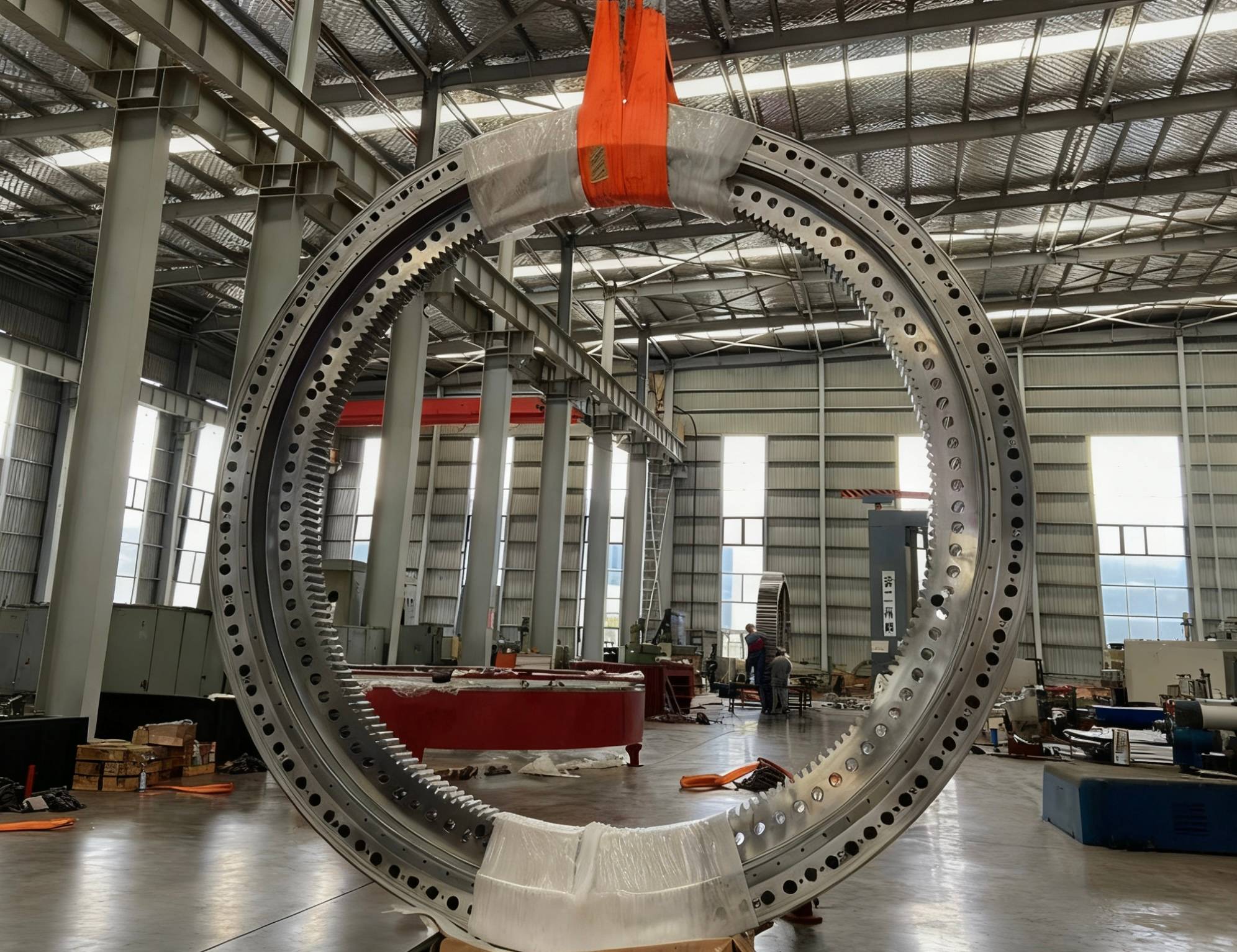
Visual and Auditory Inspection Checklist
Grease Expulsion Analysis:
What to look for: Check the grease being purged from the seals during operation or relubrication. Is it milky, cloudy, or a rusty brown/orange color? Healthy grease should maintain its specified color and consistency.
What it indicates: Milky or cloudy grease is a clear sign of water emulsification. Rusty-colored grease suggests that internal corrosion is already occurring, and metal particles are mixing with the lubricant.
Seal Condition Check:
What to look for: Visually inspect the full circumference of the upper and lower seals. Look for cracks, brittleness, visible gaps, or sections that are detached from the bearing rings.
What it indicates: Damaged seals are the most common entry point for contaminants. Constant UV exposure, temperature fluctuations, and physical abrasion can degrade seal material over time.
Corrosion Trails:
What to look for: Scan the mounting surfaces and the area directly below the bearing for rust-colored streaks or water trails.
What it indicates: This points to a direct path where water is running over and into the bearing assembly, overwhelming the seals. It suggests a problem with drainage on the surrounding structure.
Rotational Resistance and Noise:
What to look for: During slow, controlled rotation, listen for grinding, popping, or rumbling sounds. Note if the torque required to rotate the structure has noticeably increased.
What it indicates: Uneven noise or high resistance suggests that rolling elements are moving over corrosion pits or debris inside the raceway. This is a serious symptom that requires immediate attention.
If you observe significant grease contamination or hear loud grinding, you should pause operations and escalate the investigation. Continuing to run a heavily contaminated bearing can lead to rapid deterioration of the raceway.
Diagnosing Corrosion Pathways: Seals, Grease, and Drainage
Once you've identified symptoms of water ingress, the next step is to pinpoint the failure mechanism. The problem almost always traces back to one of four areas: seal integrity, grease selection and condition, drainage, or the relubrication procedure. Preventing corrosion-driven raceway damage depends on addressing these interconnected factors.
Troubleshooting Water Ingress Points
Use the following points to diagnose the specific pathway of contamination and determine the correct course of action.
Seal Failure Analysis:
Observation: Seals are cracked, hardened, or physically damaged. You may see a visible gap between the seal lip and the bearing ring.
Indication: The primary physical barrier has failed. This can be due to age, UV degradation, chemical exposure, or improper installation. A compromised seal offers little to no resistance to water, especially under high-pressure spray.
Action: Seal replacement is necessary. When sourcing a replacement, ensure the material is rated for marine environments (e.g., NBR, Viton) and compatible with the lubricant used.
Grease Incompatibility or Depletion:
Observation: The grease purged from the bearing is thin, watery, or has separated into oil and a thickener.
Indication: The wrong type of grease is being used, or it has exceeded its service life. Marine applications require a grease with excellent water washout resistance and corrosion inhibitors (typically a lithium complex or calcium sulfonate base). Using a standard EP-2 grease may not be sufficient.
Action: Purge the old lubricant by pumping in new, compatible marine-grade grease until the expelled grease runs clean. Consult your bearing manufacturer for a recommended grease specification.
Blocked Drainage Systems:
Observation: Puddles of water are sitting on or around the bearing housing after rainfall or deck washing. Debris is collected around the bearing's base.
Indication: The surrounding structure is not shedding water effectively, allowing it to pool and submerge the seals. No seal is designed for permanent submersion.
Action: Clear all drainage holes and channels on the mounting structure. If design is the issue, consider adding drainage solutions to redirect water flow away from the bearing seals.
Incorrect Relubrication Intervals:
Observation: Records show infrequent lubrication, or the purged grease is very dirty and stiff.
Indication: The grease's additives are depleted, and it can no longer repel water or protect surfaces. Infrequent relubrication allows contaminants that do get past the seal to remain inside, grinding away at the raceways.
Action: Implement a stricter relubrication schedule. In harsh marine environments, this may be as frequent as weekly or even daily, depending on the intensity of use and exposure to spray. The goal is to purge old grease and any accumulated moisture regularly.
Material Selection and Protective Coatings for Harsh Environments
While maintenance is key, the foundation of a durable marine slewing bearing lies in its initial design and material specification. For equipment operating in saltwater spray or high humidity, specifying corrosion-resistant materials and coatings from the start is the most effective long-term strategy. At LTZC, our engineering process for Customized Bearings always begins with an analysis of the operating conditions.
Our facilities are certified by marine classification societies including CCS and ABS, ensuring our manufacturing processes meet the stringent requirements for offshore and shipboard applications.
Material and Coating Options Comparison
| Material / Coating | Primary Benefit | Best-Fit Scenario | Limitations |
|---|---|---|---|
| 42CrMo Steel + Surface Coating | Good balance of strength and corrosion protection. | Most general marine cranes, winches, and davits where a protective coating (e.g., zinc-based paint) is maintained. | Relies on the integrity of the coating. Scratches or damage can create a site for localized corrosion. |
| AISI 440C Stainless Steel | Inherent corrosion resistance throughout the material. | Applications with constant exposure, high-pressure washdowns, or where coatings are difficult to maintain. | Higher material cost and may have different load capacity characteristics compared to standard bearing steels like GCr15. |
| Geomet / Dacromet Coating | Thin-film, sacrificial protection that doesn't affect tolerances. | Gears, fasteners, and non-contact surfaces of the bearing rings. Provides an excellent barrier against salt spray. | Not suitable for raceway surfaces. It is a surface treatment, not a material property. |
| Nitriding / QPQ Treatment | Improves surface hardness and wear resistance with moderate corrosion resistance. | Integrated slewing ring gear teeth to resist both wear and surface corrosion. | Provides less corrosion resistance than stainless steel or heavy-duty coatings. |
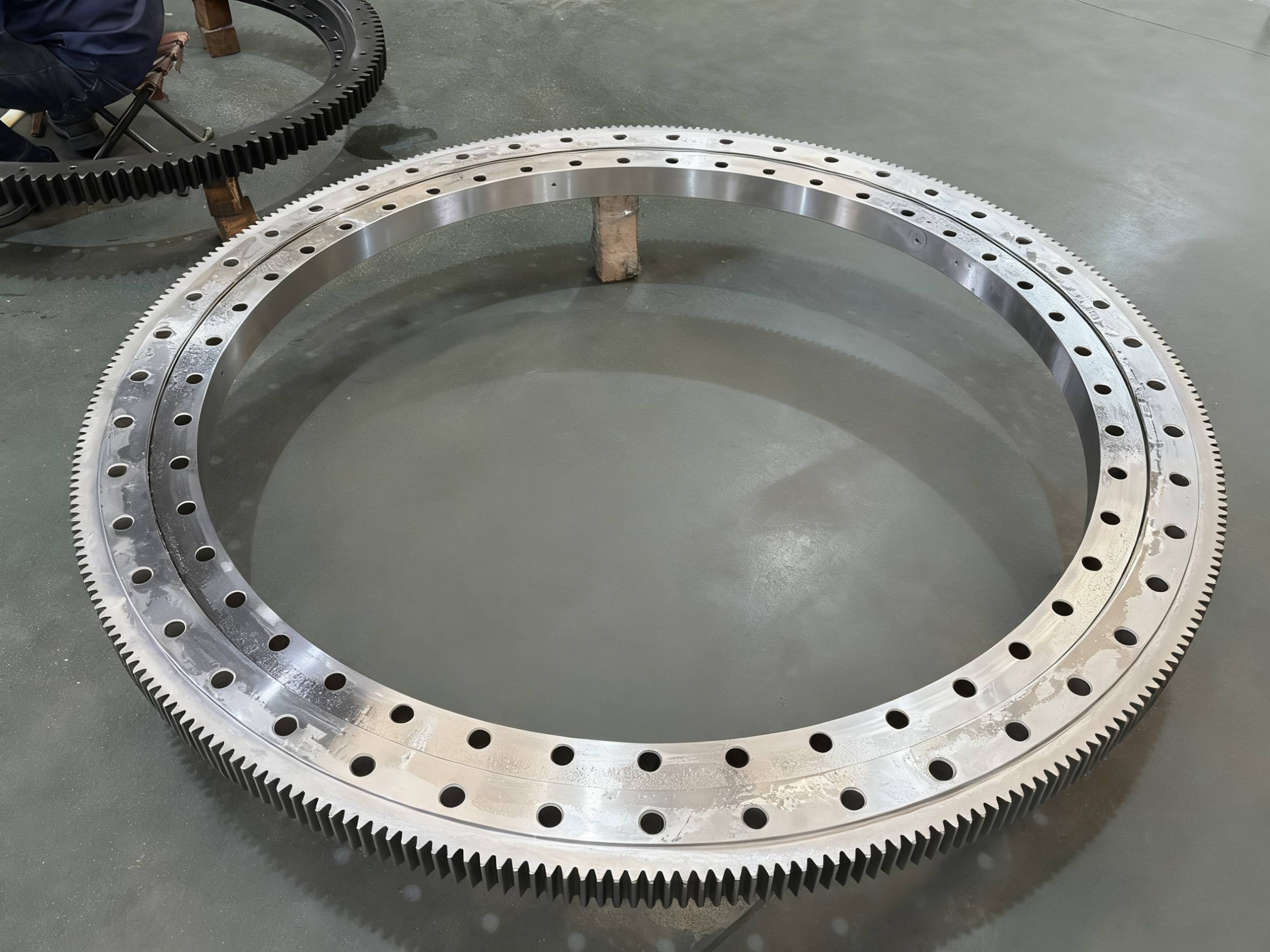
The choice depends on a balance of load, environmental severity, and budget. For a critical 2,000-ton fixed lifting application, we recently delivered a 10.87-meter OD three-row roller bearing where a multi-layer marine-grade paint system was specified to protect the massive 42CrMo structure. For smaller, more exposed components, specifying AISI 440C stainless steel may be a more practical solution.
Proactive Maintenance to Ensure Long-Term Operation
Effective maintenance for a marine slewing bearing is about being proactive, not reactive. A disciplined lubrication and inspection schedule is the most cost-effective method for maximizing service life. Waiting for a problem to appear is often too late to avoid internal damage.
Our after-sales support team frequently provides on-site services, including bearing installation guidance and preventive maintenance training, to help clients protect their investments. The core of this training is a simple, repeatable procedure.
Recommended Marine Relubrication Procedure
Prepare the Area: Clean all grease fittings (zerks) to prevent forcing dirt into the bearing. Identify all lubrication points as specified in the equipment manual.
Select the Right Lubricant: Confirm you are using the manufacturer-specified marine-grade grease. Do not mix incompatible grease types (e.g., a lithium base with a calcium sulfonate base) as this can degrade performance.
Apply Grease While Rotating: Slowly pump grease into each fitting while the bearing is being rotated. This is critical. Rotation ensures the new grease is evenly distributed throughout the raceway and completely fills the space between rolling elements. If you lubricate a static bearing, you will only create channels of new grease, leaving old, contaminated grease in place.
Purge Until Clean: Continue adding grease until you see fresh, clean grease purging from the entire circumference of the seal. This visual confirmation tells you that the old grease and any trapped moisture or contaminants have been flushed out.
Wipe Excess Grease: Clean away all the purged grease from the bearing's exterior. Leaving a collar of old grease can attract dirt and debris, which can damage the seal over time.
Inspect Purged Grease: Before discarding the old grease, inspect it for metal flakes. Small, shiny particles can be an early indicator of internal spalling or raceway damage, giving you a warning before complete failure.
Log the Activity: Record the date, amount of grease used, and any observations in your maintenance log. This history is invaluable for troubleshooting future issues and optimizing your lubrication intervals.
By transforming maintenance from a periodic task into a diagnostic routine, you can significantly extend the operational life of your equipment and avoid costly, unplanned downtime.
If you are facing persistent corrosion issues or need to specify a bearing for a new marine application, our engineering team can provide a customized solution based on your specific working conditions. Contact us with your technical specifications to begin the conversation.