WhatsApp
 jessica.chai@ltzzc.com
 0086-379-69950051

How to Verify a Custom Slewing Bearing Solution Supplier
Selecting a partner for a custom slewing bearing solution involves more than comparing quotes. A misstep in supplier selection can lead to catastrophic failures, project delays, and significant budget overruns, especially when dealing with non-standard, large-diameter, or high-precision components. The supplier’s ability to translate your technical specifications into a reliable, long-lasting bearing is the most critical factor, yet it’s often the hardest to verify from a sales brochure or website.
Many buyers rely on certifications and past project lists, which are important but incomplete indicators of capability. True verification requires a deeper, action-based audit of a potential partner’s engineering depth, manufacturing control, and quality systems. As an engineer with a decade of experience in this field, I've seen firsthand how a thorough vetting process separates capable manufacturers from those who simply assemble parts. This guide outlines a practical method for auditing a potential Customized Bearings supplier before you commit to an order.
Beyond Brochures: An Action-Based Supplier Verification Method
Certificates like ISO 9001:2015 are a good starting point, confirming a supplier has a quality management system. However, they don't confirm engineering competence or the ability to produce your specific part. To truly understand a supplier's capabilities, you need to test their processes. Here is a four-step verification method you can use to audit any potential turntable bearing manufacturer.
This checklist provides tangible actions to assess a supplier beyond their marketing materials.
| Verification Area | Action to Take | What a Strong Supplier Provides | Red Flags |
|---|---|---|---|
| 1. Engineering Review Response | Submit your initial drawings or technical specifications and ask for a preliminary design review (not just a quote). Ask specific questions about material selection, load calculations, and potential manufacturing challenges. | A detailed response within a reasonable timeframe that includes thoughtful questions, suggestions for optimization (e.g., material changes, geometry adjustments for manufacturability), and preliminary FEA if applicable. They challenge your assumptions constructively. | A simple quote with no technical feedback. Vague answers to specific engineering questions. An unwillingness to discuss or debate design choices. |
| 2. Traceability Records | Request a sample material test certificate (MTC) and a heat treatment report from a recent, similar project. Ask about their process for tracking raw materials from procurement to final product. | They can immediately provide anonymized but complete documents. The documents clearly show material composition, mechanical properties, and heat treatment curves, all tied to a specific production batch or part number. | Hesitation or inability to provide sample documents. Incomplete or generic reports that cannot be tied to a specific part. Claims that "this is internal information." |
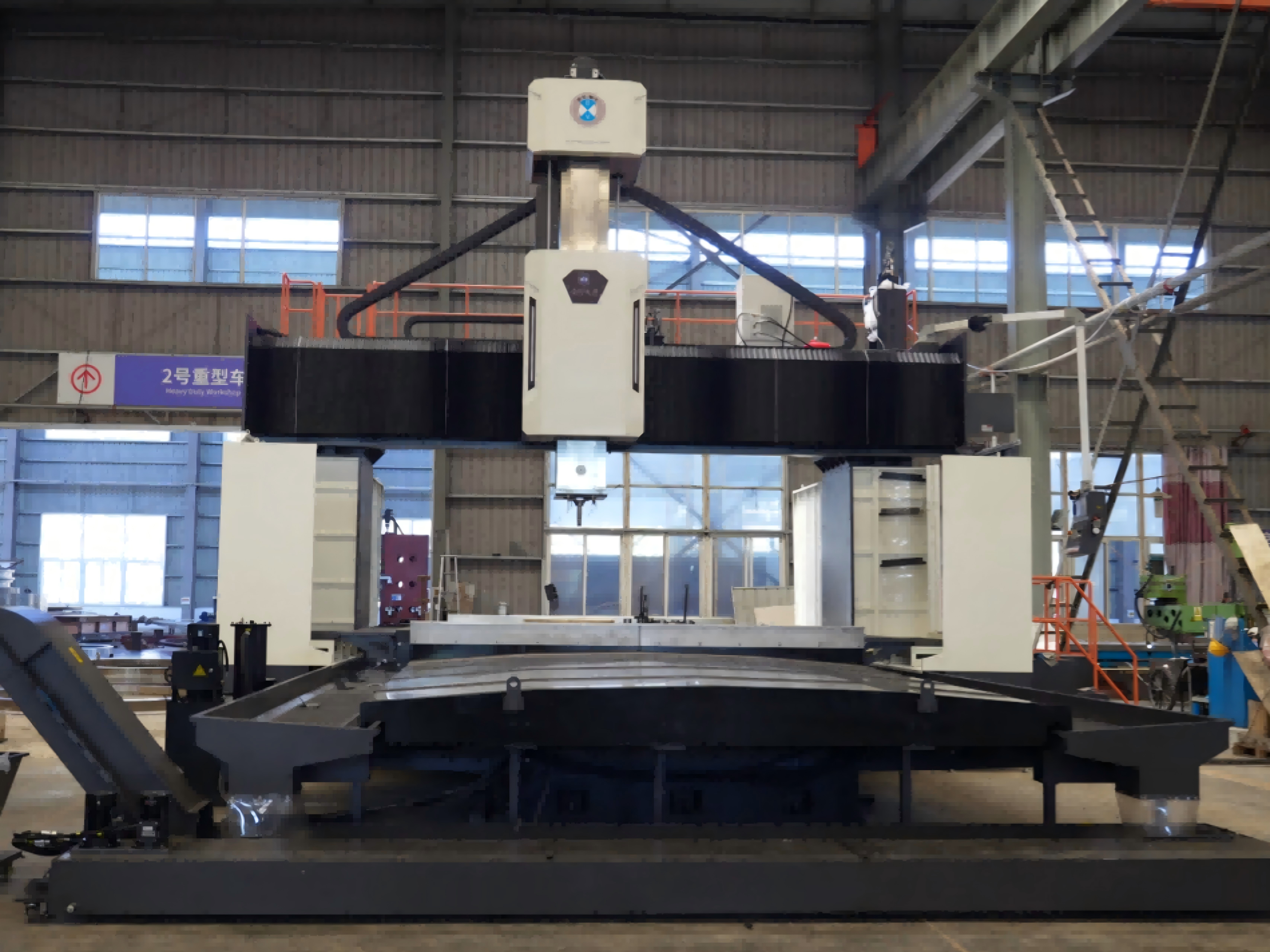
| 3. Machining & Production Capability | Inquire about their key equipment for your project's scale (e.g., gear hobbing/grinding machines, vertical lathes). Ask for the maximum diameter and precision they can achieve. Cross-reference this with their project history. | They provide a list of key equipment with specifications. Their stated capabilities align with proven projects, such as our recent delivery of a 10.87-meter, three-row roller bearing for a 2,000-ton crane. | Vague descriptions like "advanced machinery." Capabilities that seem disconnected from their documented project experience. Evasive answers about machine capacity or precision tolerances. |
| 4. Test Evidence & Quality Documents | Ask for a sample final inspection report, including dimensional checks, NDT (Non-Destructive Testing) reports (e.g., UT, MT), and gear precision reports (if applicable). | A comprehensive report showing all critical dimensions measured against the drawing tolerances. Clear NDT results with interpretation. Gear-checking reports from a dedicated machine showing profile, lead, and pitch accuracy. | A simple "pass/fail" checklist with no measurement data. Inability to provide NDT reports for critical components. Claims that final inspection is "visual only." |
Matching Material to Application: Key Considerations
The performance of your bespoke slew bearing production is fundamentally tied to the material it's made from. A supplier’s expertise is often revealed in how they guide you through material selection based on your specific operating conditions. While GCr15 (similar to 52100) is a common and effective choice for many applications, it is not a universal solution. Factors like corrosive environments, extreme loads, or high-temperature operation demand specialized alloys. At LTZC, we work with a range of certified materials to ensure performance and longevity.
Here is a comparison of common materials used in custom slewing bearings and their ideal applications:
| Material | Key Characteristics | Best-Fit Applications | When to Avoid |
|---|---|---|---|
| GCr15 / SUJ2 | High hardness, excellent wear resistance, and high fatigue strength. The industry standard. | General industrial machinery, Construction & Heavy Machinery, robotics, precision turntables. | Highly corrosive environments (e.g., marine) or temperatures exceeding 120°C without special heat treatment. |
| AISI 440C | Good corrosion and oxidation resistance. Can be hardened to high levels. | Food processing equipment, medical devices, marine applications where stainless properties are needed. | Applications requiring extreme impact toughness, as it can be more brittle than alloy steels. |
| 20CrMo / 42CrMo | Alloyed for increased strength, hardness, and wear resistance. Excellent for heavy loads. | Large-diameter gears, Mining and metallurgy slewing bearings, wind turbine pitch/yaw bearings, heavy-duty cranes. | When cost is the primary driver and loads are moderate, as the alloying elements increase material cost. |
| CuSn6 (Bronze) | Good wear resistance and thermal conductivity. Often used for cages or separators. | Used for roller/ball separators within a bearing assembly, especially in high-speed or poor lubrication conditions. | Not suitable for raceways or rolling elements due to its lower hardness and load-carrying capacity compared to steel. |
| Ti-6Al-4V (Titanium Alloy) | Lightweight, high strength-to-weight ratio, excellent corrosion resistance, high-temperature performance. | Aerospace, defense systems, and applications where weight reduction is a primary design goal. | Cost-sensitive projects. Titanium is significantly more expensive and difficult to machine than steel alloys. |
Assessing Production Scale and Precision
Your design is only as good as the manufacturer's ability to execute it. When evaluating a custom slewing bearing supplier, you must confirm their physical capacity matches your project's scale and precision requirements. Look for tangible proof of their capabilities.
Our 20,000 m² facility, certified to ISO 9001:2015, ISO 14001:2015, and ISO 45001:2018 standards, is equipped to handle a wide range of dimensions and complexities. We don't have a minimum order quantity (MOQ), allowing us to support everything from one-off prototypes to full production runs. But claims are not enough; evidence is what matters. Our track record includes:
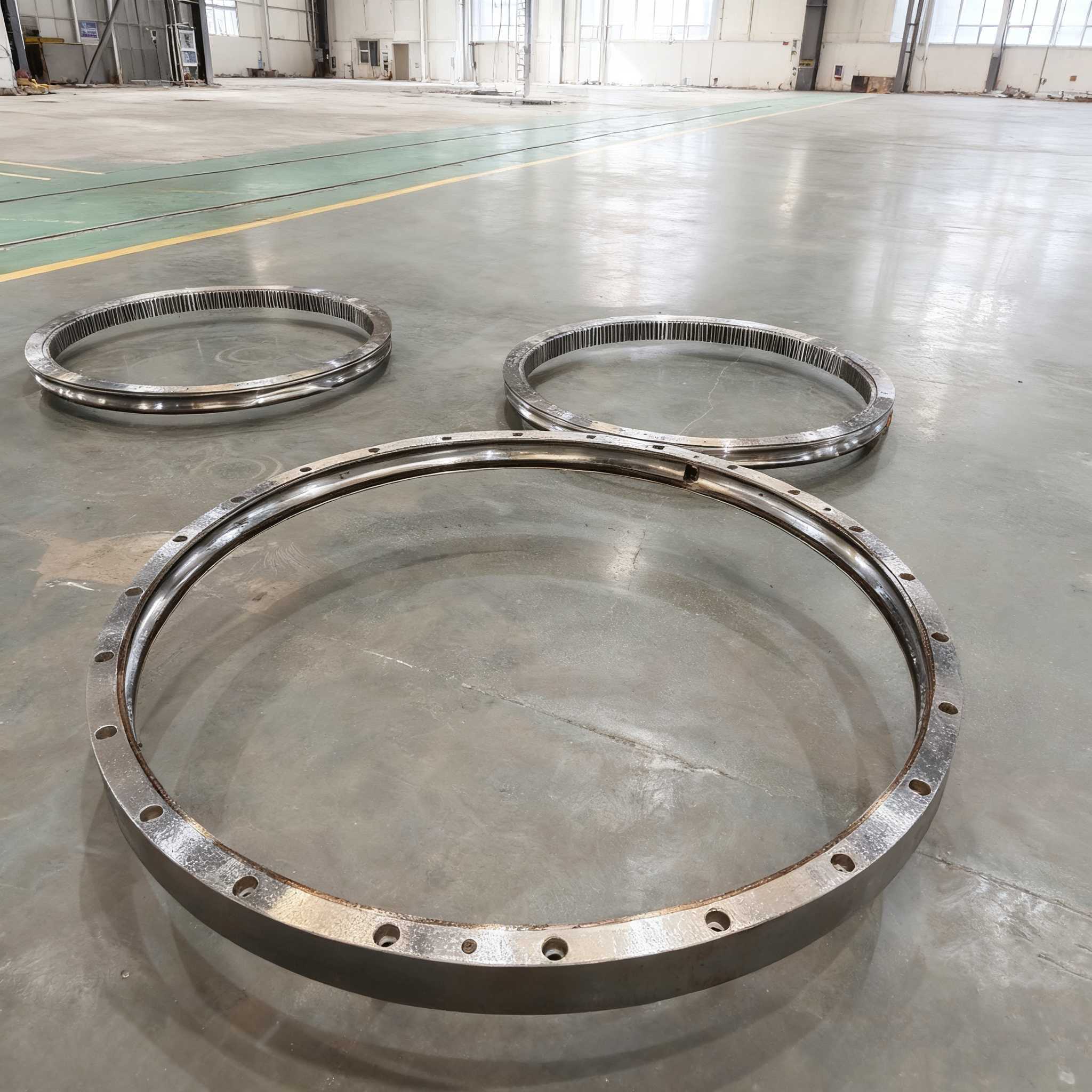
- Record-Breaking Scale: In 2024, we delivered an integral Three Row Roller Slewing Bearings with an outer diameter of 10.87 meters for 2,000-ton fixed lifting equipment.
- International Heavy Industry: We produced an integrated bearing with an OD of 8.445 meters for a major crane client in South Korea.
- Segmented Bearing Expertise: We developed and delivered φ24m segmented bearings for Rainbow Heavy Machinery and 8-meter high-precision segmented gear rings for Wuhan Heavy Industry's national projects.
- High-Precision Gearing: We supplied a 6-meter outer diameter segmented gear ring with ground teeth to our Hengshui customers for their end clients.
This history of successfully delivering large, complex, and high-precision bearings demonstrates a proven manufacturing process. When you speak with a potential supplier, ask for specific, comparable examples. A capable partner will be able to share case studies that align with the scale and complexity of your project.
The Importance of Post-Delivery Support
The relationship with your bearing supplier shouldn't end upon delivery. For heavy-duty and critical equipment, proper installation and maintenance are essential for achieving the designed operational life. A supplier who invests in after-sales support demonstrates a commitment to your long-term success.
Our support extends far beyond the factory gate. We provide a full suite of after-sales services to ensure the stable, long-term operation of your equipment. This includes:
- Installation & Commissioning Guidance: Incorrect installation is a leading cause of premature bearing failure. We offer on-site or remote guidance to ensure your team follows the correct procedures for mounting, preloading, and lubrication. For more details on best practices, see our bearing installation guide.
- Preventive Maintenance Training: We can train your maintenance teams on proper lubrication schedules, bolt-tightening checks, and early-stage fault detection to maximize the bearing's service life.
- Fault Diagnosis & On-Site Support: If an issue arises, our technical team is prepared to assist. We offer fault analysis and can provide on-site technical assistance to diagnose problems and implement solutions. For our customers in China, we guarantee a response to quality objections within 24 hours and on-site service within 48 hours.
When shortlisting suppliers, inquire about the structure and availability of their after-sales support team. A partner who provides comprehensive technical assistance is investing in a long-term relationship, not just a one-time sale.
By applying this evidence-based verification method, you can move beyond superficial claims and build a partnership with a supplier technically equipped to deliver a reliable custom slewing bearing solution that meets your exact specifications.
If you are ready to discuss your project, submit your drawings and technical specifications. Our engineering team will provide a detailed review and proposal.