WhatsApp
 jessica.chai@ltzzc.com
 0086-379-69950051

Large Slewing Bearings Integral vs Segmented Rings
Should a large-diameter rotating structure use one continuous ring, or should it be built from transportable segments? This question needs an answer before the equipment frame, machining plan, lifting route, and installation method are fixed. A Large Slewing Bearing may be technically suitable in either construction, but the wrong ring format can create avoidable costs during transport or commissioning.
The direct answer is simple. Choose an integral ring when one-piece transport, lifting, machining, and installation are practical and when the application places a high priority on continuous raceway geometry. Choose a segmented ring when transport restrictions, installation access, or future replacement access make a one-piece component impractical. The segmented solution needs more attention to joint design, support structure, alignment, and assembly control.
LTZC Bearings Co., Ltd. supports custom bearing solutions based on working conditions, existing designs, and technical specifications. Our ISO9001:2015, ISO14001:2015, and ISO45001:2018 certified management systems support controlled manufacturing for project-based bearing requirements. For oversized projects, the design review should begin before a procurement drawing is released.
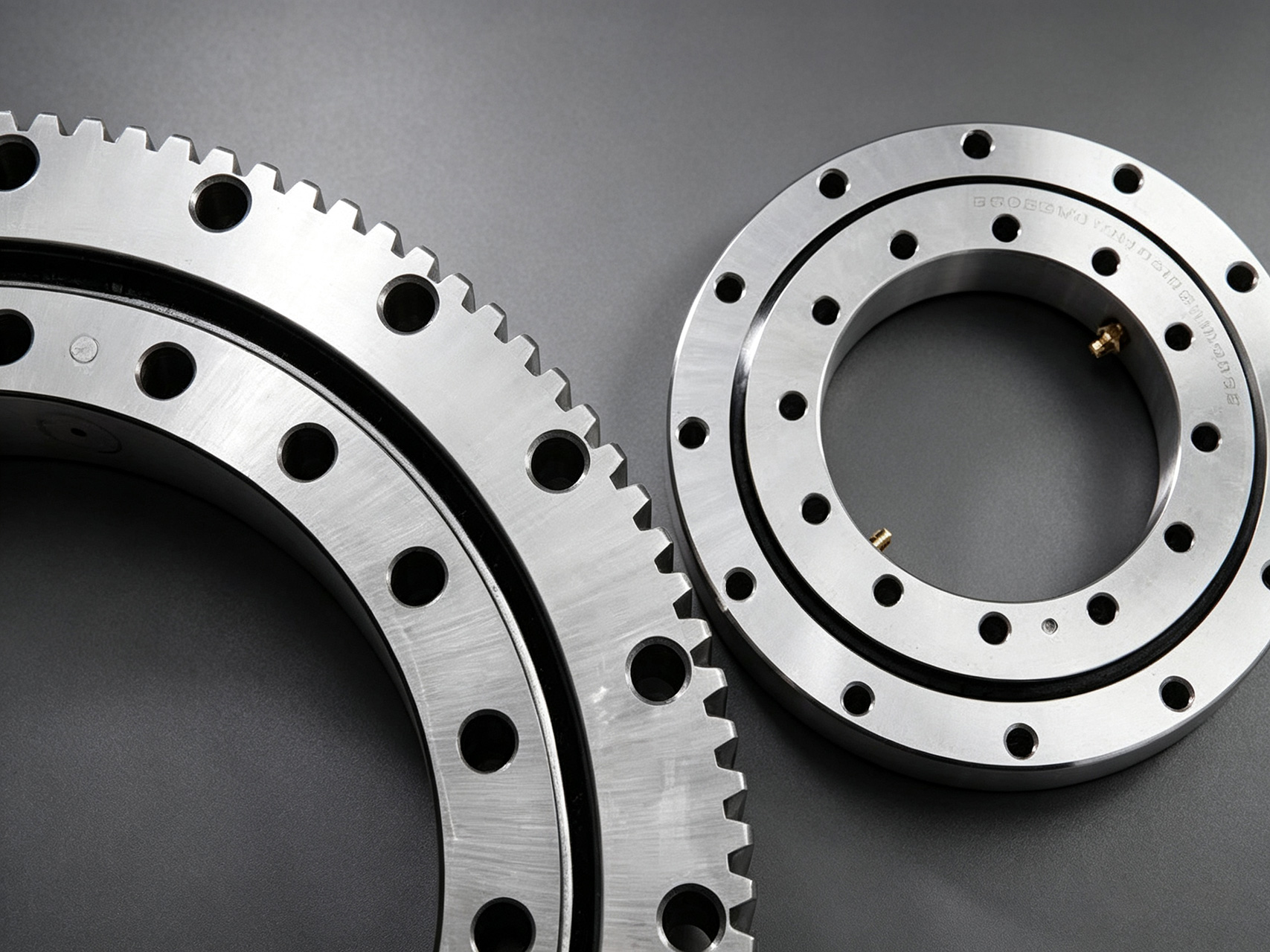
Which ring construction should be considered first?
Start with an integral ring if the complete bearing can pass through the transport envelope and reach the final mounting location without unreasonable lifting or handling risk. A one-piece construction removes circumferential segment joints from the ring structure. This is often preferred for equipment where continuous raceway behavior, geometric consistency, and a simplified field installation sequence are primary concerns.
An integral design does not automatically fit every large machine. It becomes a poor starting point when the ring cannot pass through a factory gate, road route, ship hold, turbine tower opening, underground access route, or site lifting path. It may also be unsuitable when the final installation location cannot accept the required lifting radius or crane capacity. In these cases, a segmented configuration should be assessed early rather than treated as an emergency change after equipment layout is frozen.
Choose a segmented design when logistics are the governing constraint. Individual segments can be planned around transport and access limitations, then assembled on the prepared mounting structure. This approach is relevant to large turntables, heavy welding systems, mining equipment, marine structures, and fixed lifting equipment where the overall ring diameter can exceed practical one-piece handling conditions.
Segmented construction is not a shortcut for a weak support frame. The mounting structure must provide stable, controlled interfaces at every segment position. Joint alignment, local support stiffness, bolt pattern coordination, raceway continuity, and gear engagement all require review. If the project cannot control these conditions during installation, an integral ring may remain the lower-risk solution even if logistics are inconvenient.
For applications carrying high overturning moments and combined loads, the rolling-element arrangement also matters. A Three Row Roller Slewing Bearings design may be evaluated when the load case calls for separate raceways for axial and radial load directions. The correct bearing structure must still be matched to the ring construction, mounting frame, drive layout, and service plan.
Comparison: provides a decision table for integral versus segmented rings based on transport envelope, machining capability, installation access, runout, and serviceability.
The table below is a practical screening tool rather than a substitute for bearing calculations and drawing review. Select the option that removes the largest project constraint without creating an unmanageable installation requirement.
| Decision factor | Integral ring | Segmented ring | What the project team should verify |
|---|---|---|---|
| Transport envelope | Best when the completed ring can travel legally and safely through the full route. | Best when the complete diameter exceeds route, container, vessel, road, or site-access limits. | Map every restriction from factory dispatch to final mounting position, not only the public road route. |
| Machining capability | Requires access to suitable equipment for one-piece ring processing and inspection. | Allows segment-level processing, but joint interfaces require controlled matching and verification. | Confirm who machines each mating face, how interfaces are referenced, and how inspection records are managed. |
| Installation access | Needs enough lifting space and handling access for the complete ring. | Allows sections to be moved through narrower or more restricted access paths. | Review lifting points, crane reach, temporary supports, assembly order, and access for fastening tools. |
| Runout control | Generally provides a more direct path to continuous ring geometry because there are no circumferential segment interfaces. | Can meet project needs when support surfaces and joint alignment are controlled, but field assembly introduces more variables. | Define the permitted rotational accuracy from the driven equipment, then establish a measurement plan before installation. |
| Serviceability | Replacement normally requires removal and handling of the whole ring. | May offer an advantage where the machine design permits access to individual sections for planned work. | Check whether surrounding structures, gear guards, drives, and bolted connections permit practical access. |
| Project risk | Lower field-assembly complexity, but potentially higher transport and lifting exposure. | Lower transport exposure for oversized equipment, but higher dependence on installation discipline. | Assign responsibility for transport planning, foundation preparation, assembly inspection, and commissioning. |
Decision rule: if the ring can be transported and installed as one piece without forcing an unsuitable equipment layout, an integral design is usually the cleaner engineering route. If physical access makes one-piece handling unrealistic, use segments only after confirming that the equipment structure and field process can control the interfaces. Do not select segments solely because they appear easier to ship.
How do transport and installation constraints change the bearing design?
Transport is part of the bearing specification. A design that fits a CAD assembly can still fail at the loading bay, during route clearance, or at the final lifting point. Project engineers should examine the entire movement path before choosing the construction method.
Use this pre-layout procedure
- Define the finished ring envelope. Identify outside diameter, overall height, mass, gear position, lifting arrangement, and any temporary transport fixtures required by the project.
- Trace the logistics route. Review factory exit, road restrictions, port or vessel handling where applicable, site gate dimensions, internal roads, and the final installation opening.
- Review the lifting plan at the destination. Confirm available lifting equipment, rigging access, lift radius, headroom, and the position where the ring must be set down.
- Assess the mounting structure. Determine whether the support frame can be manufactured and installed as a continuous interface or whether it contains segment joints that require coordinated alignment.
- Set the rotational accuracy requirement. The required runout depends on the function above the bearing, such as a welding system, crane structure, rotating platform, or gear-driven turntable.
- Choose the ring format. Select the integral option if the physical route and lifting plan are workable; select segmentation if it removes a genuine access barrier and the joint-control plan is defined.
- Release drawings only after cross-functional approval. Engineering, logistics, site installation, and procurement should agree on the same configuration.
This sequence fits equipment manufacturers and EPC teams alike. It is especially useful when a bearing must integrate with a slewing ring gear, because drive pinion position, backlash setting, gear guarding, and access for inspection may be affected by the selected construction.
LTZC has delivered large custom bearing projects where scale and construction planning were central. In 2024, LTZC delivered an integral three-row roller slewing ring with an outer diameter of 10.87 meters for 2,000-ton fixed lifting equipment. In the same year, LTZC produced an integrated bearing with an outer diameter of 8.445 meters for a crane industry client in South Korea. These cases show that integral construction can be suitable at large diameters when the total project conditions support it; they do not mean that every oversized installation should use a one-piece ring.
What affects runout and rotational behavior after installation?
The mounting structure often decides whether the installed bearing performs as intended. A well-made ring can be affected by an uneven support surface, local frame deflection, incorrect tightening practice, contamination, or drive misalignment. With segments, the sensitivity to interface preparation is greater because each section must contribute to the final circular geometry.
For an integral ring, the main installation focus is continuous support, correct bolt-hole alignment, clean mounting interfaces, and a controlled tightening sequence. The ring itself is continuous, but the machine frame may not be. If the base structure has local high points, gaps, or deformation under operating load, the bearing can be forced out of its intended geometry.
For a segmented ring, add joint-by-joint control. The assembly team should establish a repeatable reference system, inspect each interface before fastening, and measure the installed condition during the sequence rather than waiting until all segments are locked in place. A late discovery can require partial disassembly.
Common mistakes that should be prevented
- Choosing segments after the frame is complete. This can leave no practical reference surfaces or access for joint assembly. Decide the ring format while the frame drawing can still change.
- Using transport size as the only selection criterion. Smaller pieces are easier to move, but the project must also accommodate more interfaces and a more demanding assembly process.
- Ignoring the drive arrangement. Internal, external, or unguided gear choices affect space, guarding, pinion access, and maintenance. Confirm the gear concept before the bearing envelope is finalized.
- Assuming bolt tightening corrects a poor mounting surface. Fasteners retain the bearing; they do not make an unsuitable support frame geometrically correct.
- Leaving inspection responsibility undefined. The contract documents should state who checks support surfaces, alignment, fastening sequence, and final rotational condition.
- Planning service access too late. Gear guards, motors, hydraulic lines, and structural covers can block the future work required around the ring.
For field work, follow the supplier-approved bearing installation process for the selected product. LTZC provides installation and commissioning guidance, preventive maintenance training, fault diagnosis, and on-site technical assistance. For quality objections, LTZC states a response within 24 hours, with on-site service beginning within 48 hours in China.

When is a segmented ring the better long-term service choice?
A segmented configuration can be the better service choice when future removal of a complete ring would be physically impossible or excessively disruptive, provided the equipment is designed to permit controlled section access. This can suit installations enclosed by permanent structures, restricted internal plant routes, or equipment assembled in locations where one-piece replacement cannot be repeated.
However, serviceability is not automatic. A segmented ring will not be easier to maintain if the machine has no removable covers, insufficient jacking or lifting points, inaccessible fasteners, or no way to support the rotating structure during work. The equipment designer must create service access as part of the original layout.
Use an integral ring instead when planned maintenance involves lubrication, bolt inspection, gear checks, and operational monitoring rather than anticipated section replacement. A continuous ring can simplify the installed assembly where a full-ring lift remains feasible. The best option depends on the likely service event, not on an assumption that segmented always means repairable.
LTZC’s product scope includes slewing bearings, non-standard precision bearings, gear rings, racks, bearing unit assemblies, Slewing Drives, gear parts, and non-standard bearing parts. There is no MOQ stated for custom requirements, and normal delivery is stated as 30 to 90 days. Actual lead time should be confirmed against the drawing, material selection, processing route, inspection requirements, and transport plan for the individual project.
What information should be ready before requesting a design review?
A useful request does more than provide an outside diameter. The bearing supplier needs enough project information to compare a continuous ring against a segmented alternative without relying on assumptions.
| Information to provide | Why it matters | Impact if missing |
|---|---|---|
| Equipment arrangement drawing | Shows mounting interfaces, surrounding obstructions, drive position, and access routes. | The selected ring may conflict with structures, covers, motors, or lifting paths. |
| Load cases and operating condition | Supports selection of raceway arrangement and bearing structure. | A supplier cannot reliably assess whether the ring configuration suits axial, radial, and overturning loads. |
| Required rotational accuracy | Defines the importance of runout control and installation inspection. | The project may over-specify an unnecessary feature or under-plan a sensitive application. |
| Transport and site access limits | Determines whether a one-piece component is physically feasible. | Late logistics changes can force a redesign after engineering work is complete. |
| Gear arrangement and drive details | Helps coordinate internal or external gearing, pinion position, and maintenance access. | Drive interference or difficult gear adjustment can appear during assembly. |
| Installation and service concept | Clarifies lifting method, fastening access, inspection points, and future replacement strategy. | The machine may be difficult to commission or maintain safely. |
Material selection should also reflect the operating environment and loading requirement. LTZC works with materials including GCr15, AISI 440C, 20CrMo, 42CrMo, CuSn6, SUJ2, and Ti-6Al-4V for applicable bearing-related requirements. The correct material cannot be selected from diameter alone. Corrosion exposure, wear conditions, strength needs, temperature, weight considerations, and the specific part function must be reviewed together.
If the design remains undecided, submit the equipment drawing, load information, access limits, and preferred gear arrangement to LTZC for selection advice on an integral or segmented ring configuration.