WhatsApp
 jessica.chai@ltzzc.com
 0086-379-69950051

Precision Slewing Bearing Accuracy and Cost Drivers
Before placing an RFQ, buyers often focus on outside diameter, load and gear type, then add “high precision” as a general requirement. That can create two problems: an unnecessary cost increase, or a quotation that does not protect the machine’s real accuracy requirement. A Precision Slewing Bearing should be specified around the rotation function it must perform, the mounting structure, and the acceptance evidence required at delivery.
LTZC Bearings Co., Ltd. supplies slewing bearings, non-standard precision bearings, gear rings, racks, bearing unit assemblies, Slewing Drives, gear parts, and non-standard bearing parts. For a buyer comparing quotations, the useful question is not simply whether a supplier can offer a tight requirement. It is which accuracy controls affect the finished machine, and which ones add cost without producing a practical return.
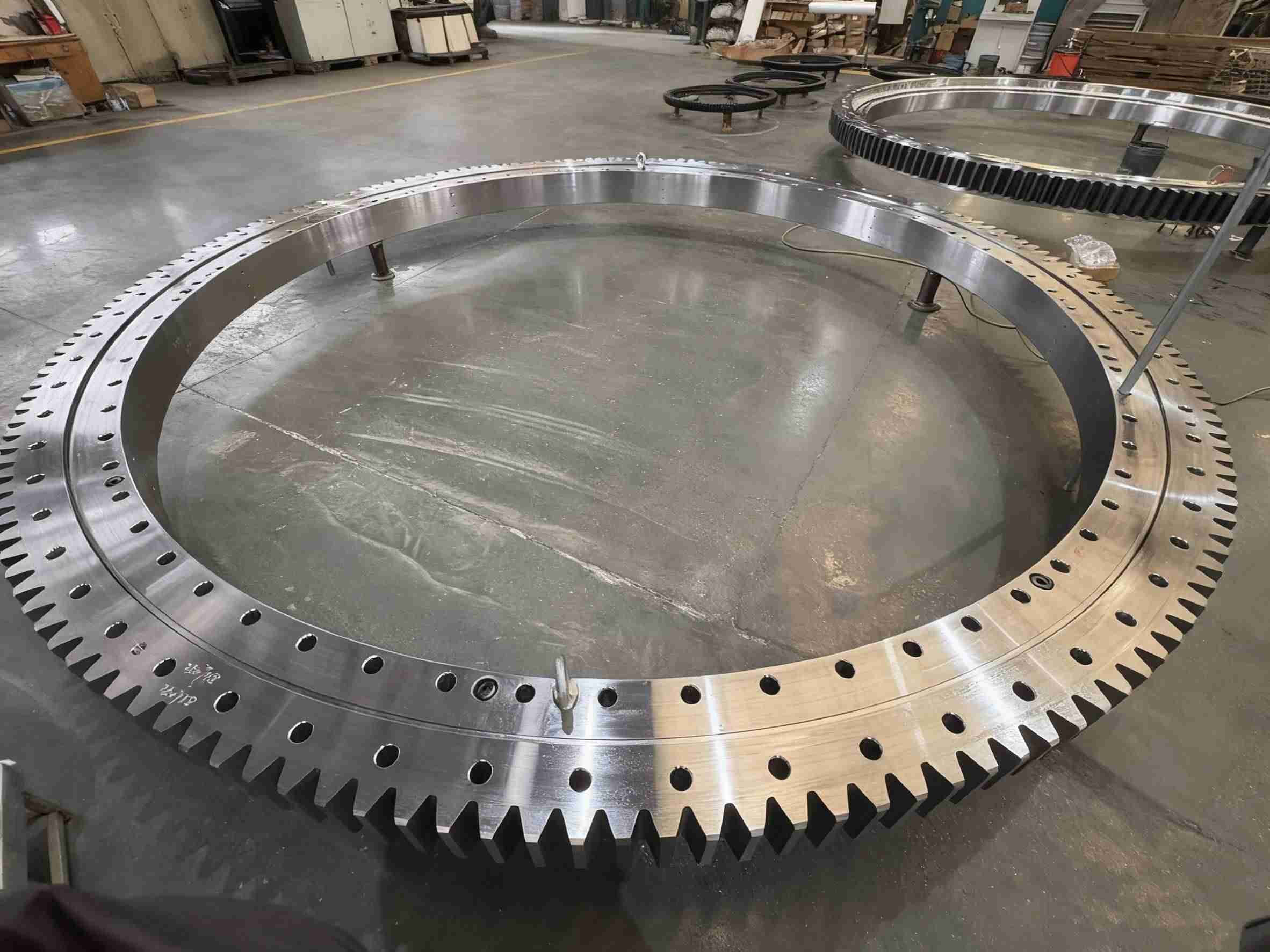
Start by reviewing the intended bearing form and mounting concept. Our precision slewing bearing range can be considered alongside the mating gear, pinion arrangement, support frame, and installation method. If the ring is part of a powered rotating assembly, the choice of Slewing Drives may also affect the accuracy discussion because bearing movement, gear engagement, drive stiffness, and mounting all interact.
Set the accuracy requirement around the machine function
Conclusion: Specify tighter rotational accuracy only when the application has a defined functional reason for it. The reason may be positioning repeatability, uniform motion, gear engagement, a controlled weld path, a sensor reference, or a visible rotating structure. This approach fits engineering buyers who need to defend a bearing budget internally. It does not apply when the ring is being sourced as a direct replacement and all original design and acceptance requirements are already known.
“Accuracy” may refer to several different characteristics. Treating them as one line item makes supplier quotations difficult to compare. Separate the required characteristics before sending your inquiry.
| Requirement to define | Why it matters in service | Application where it often matters | When a tighter request may not add value |
|---|---|---|---|
| Axial and radial runout | Affects movement of the supported structure during rotation. | Positioning tables, welding systems, measurement-related equipment, and controlled rotation equipment. | Slow, non-positioning equipment where frame deflection is larger than bearing-related movement. |
| Raceway geometry and raceway grinding requirement | Influences rolling contact consistency and the amount of finishing work included in the order. | Applications with controlled motion, high load concentration, or a stated rotation quality target. | Where the operating duty and mounting structure do not justify a special finishing requirement. |
| Gear backlash control | Influences rotational response between the pinion and a geared ring. | Powered slew systems, index positioning, and equipment where lost motion affects operation. | Non-geared rings or systems in which backlash is set primarily by the final pinion installation. |
| Mounting-face condition and bolt-hole relationship | Determines how well the ring can be located and supported on the actual machine. | Large rings, high-load installations, and assemblies with a defined datum structure. | Where a replacement uses proven existing mounting parts and no change is being made. |
| Inspection documentation | Creates an agreed basis for receiving inspection and quality release. | Projects with formal incoming inspection or customer documentation requirements. | Where a standard acceptance arrangement is already agreed and additional records are not needed. |
A useful RFQ statement identifies the performance consequence. For example, write that the ring supports a controlled rotating weld fixture and that runout, face condition, gear engagement, and the measurement basis must be agreed. Do not write only “high precision.” The first statement tells a supplier what must be evaluated; the second leaves too much open to interpretation.
Machine-level accuracy cannot be assigned to the bearing alone. A ring can be well made yet show poor installed rotation if the mounting surfaces are distorted, the support is insufficient, bolts are not managed correctly, or the pinion mesh is incorrectly adjusted. For this reason, include drawings or dimensional information for the bearing seat, adjacent structure, and pinion arrangement when they affect the requested result.
Use this quote-cost model before requesting tighter controls
Conclusion: A higher unit price is normally justified only when a stated accuracy control changes the required finishing, verification, handling, or allocation of fixed work across the order quantity. This model is suited to quotation comparison before tolerance requirements are finalized. It is not a published LTZC price list, and it does not replace a product-specific quotation.
The table below gives buyers a practical way to identify why two offers may differ. Ask each supplier to confirm which controls are included, rather than comparing one total price against another.
| Cost driver | What a tighter request can change | Likely effect on unit price | Buyer action for a comparable quote |
|---|---|---|---|
| Rotational runout | May require more controlled finishing, setup attention, and verification against an agreed datum. | Increases as the requested limit becomes tighter and the evidence requirement becomes more detailed. | State whether radial, axial, or both runout characteristics are required, where they are measured, and what structure supports the ring. |
| Raceway grinding | A stated raceway grinding requirement can add manufacturing and inspection scope beyond a basic requirement. | Usually increases because it adds defined finishing work. | Specify the functional reason and avoid requesting it as a default phrase when the application does not need it. |
| Gear backlash control | Can require added attention to gear-related requirements and how backlash will be assessed. | Increases when the gear requirement is more tightly controlled or requires added reporting. | Provide pinion details, expected gear arrangement, and whether backlash is to be checked on the loose ring or after installation. |
| Inspection scope | Additional dimensional records, agreed measurement points, and project-specific inspection evidence add work. | Ranges from limited impact for simple confirmation to a higher impact for detailed reporting. | List the exact records needed at delivery. Do not ask for “full inspection” without defining the records. |
| Batch size | Engineering clarification, setup, and inspection preparation must be distributed across the ordered quantity. | Single units and very small quantities can carry more fixed cost per ring than repeat quantities. | Quote the anticipated quantity honestly and ask for pricing by quantity break if future demand is likely. |
The decision rule is straightforward. If a tighter limit prevents a documented machine problem, supports contractual acceptance, or protects a positioning function, request it and define it clearly. If it has no direct effect on the machine outcome, leave it open for the supplier’s standard proposal. This avoids paying for a control that the final assembly cannot retain.
Gear backlash deserves special care. Backlash is not determined by the ring alone because the installed pinion, center distance, support stiffness, and assembly adjustment contribute to the final result. A request for a slewing ring gear should therefore distinguish between ring gear requirements and installed-system acceptance. That distinction prevents an unfair rejection of either supplier when the final assembly is not yet available.
Build an RFQ that suppliers can assess without assumptions
Conclusion: An RFQ should contain the operating condition, interface details, accuracy target, and acceptance method in separate sections. This gives the supplier a basis to identify what is required and what remains to be agreed. It fits new designs, redesigned equipment, and custom rings. For an exact replacement with an available approved drawing, the existing drawing remains the first reference, although its condition should still be confirmed.
- Identify the bearing arrangement. State whether the design uses a ball, roller, cross-roller, combined, or segmented arrangement; identify internal gear, external gear, or no gear where applicable.
- Provide the load and motion context. Describe whether the ring carries overturning load, axial load, radial load, intermittent indexing, continuous rotation, or a fixed lifting duty. Include the application rather than only a product name.
- Define the mounting interface. Submit the bearing envelope, bolt arrangement, locating features, mating-ring details, and available mounting surface information.
- List accuracy controls separately. Separate runout, raceway finishing, gear requirement, mounting-face requirement, and documentation. Tie each one to an agreed measurement basis.
- State the quantity and required delivery timing. LTZC publishes a delivery range of 30–90 days. Confirm the actual timing during quotation because design, size, specification, and order conditions affect the schedule.
- Define acceptance responsibility. Clarify who measures the ring, which datum is used, whether a loose-ring or installed-system result is expected, and what documents accompany the order.
A common sourcing error is to request a very tight bearing requirement while leaving the mounting ring unspecified. Another is to require a backlash value but provide no pinion information. A third is to compare a quotation with inspection records against one that does not state its inspection scope. These quotations are not equivalent.
- Do not treat a bearing drawing as the whole system. Include the support structure when installed rotation matters.
- Do not use one term for several requirements. “Precision” should be broken into measurable items.
- Do not assume a geared ring guarantees final backlash. The installed drive arrangement remains relevant.
- Do not omit the quantity. Quantity changes the unit-cost logic, particularly for custom work.
- Do not approve a price before reviewing exclusions. Ask what inspection, documentation, and gear-related controls are included.
Installation should be addressed before production release, not after delivery. LTZC provides bearing installation guidance, preventive maintenance training, fault diagnosis, and on-site technical assistance as part of its stated after-sales support. These services are especially relevant when the final accuracy result depends on the mounting structure and commissioning practice.
Choose the ring architecture before paying for extra accuracy
Conclusion: Select the bearing structure for load direction, space, motion, and service duty first; then refine accuracy requirements. This fits both custom and standard configuration reviews. It does not replace detailed engineering assessment where unusual loading, safety requirements, or regulated equipment rules apply.
A single-row ball arrangement may be appropriate where the application and loading suit that design, while a roller-based structure can be considered where load direction and load magnitude require a different arrangement. For example, buyers evaluating high-load fixed lifting equipment can review Three Row Roller Slewing Bearings before placing emphasis on additional rotational controls. The intended structure affects the realistic accuracy discussion because stiffness, loading, gear form, and mounting all change the operational result.
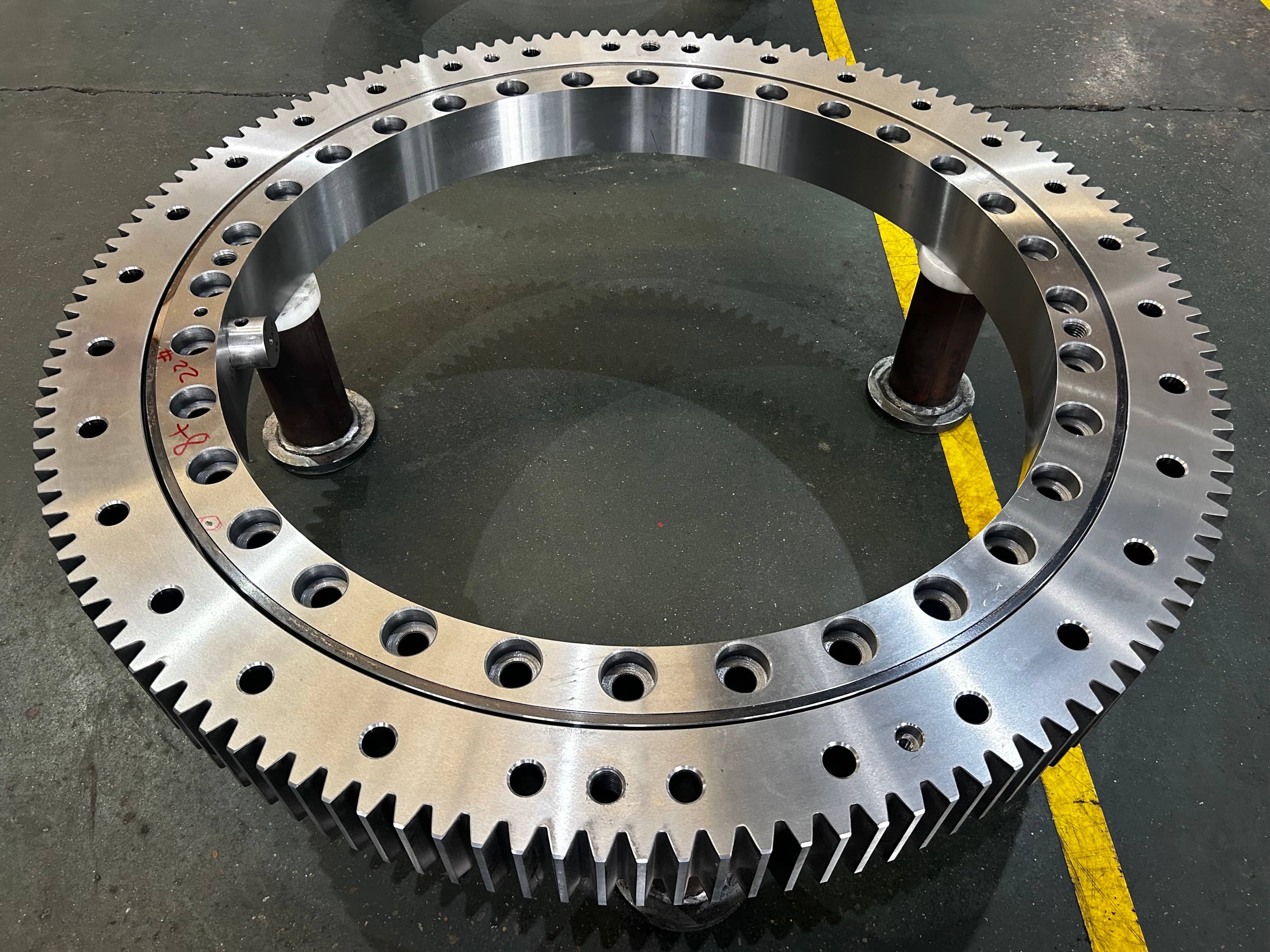
LTZC’s documented project record shows the scale of work it can support. In 2024, LTZC delivered an integral three-row roller slewing ring with a 10.87-meter outside diameter for 2,000-ton fixed lifting equipment. In the same year, the company produced an integrated bearing with an 8.445-meter outside diameter for a crane industry client in South Korea. These examples demonstrate experience with large, application-specific bearing work; they should not be interpreted as a stated accuracy specification or a universal delivery promise for other projects.
For segmented applications, LTZC has also supplied 8-meter high-precision segmented gear rings to Wuhan Heavy Industry for the vertical friction stir welding system of a key national project, and developed and delivered 24-meter segmented bearings to Jiangsu Nantong Rainbow Heavy Machinery. A buyer with a segmented ring requirement should state the segment arrangement, joint locations, assembly method, and the required result after assembly. A loose segment measurement alone may not answer the functional question for the completed ring.
Assess LTZC fit, evidence, and ordering boundaries
Conclusion: LTZC is a practical candidate when the buyer needs a custom slewing ring, non-standard bearing, gear-related component, or bearing unit assembly and can provide enough application detail to define the scope. This is most relevant where a standard catalog item does not settle the mounting, size, material, or performance requirement. It is less suitable for buyers who need an immediate off-the-shelf item without technical clarification.
LTZC was established in 1992 and lists a 20,000 m² facility. The company holds ISO9001:2015, ISO14001:2015, and ISO45001:2018 certifications and is certified by ISO, CCS, and ABS. These are useful qualification points for a buyer assessing quality-management and organizational requirements, but they do not remove the need to agree the ring-specific acceptance criteria.
There is no MOQ stated for LTZC orders, which can suit one-off custom equipment and qualification-stage projects. Buyers should still confirm the exact commercial scope, packing, required documents, delivery timing, acceptance standard, and responsibility for commissioning before issuing a purchase order. No warranty terms are provided in the available information, so warranty coverage should be agreed in the commercial quotation rather than assumed.
Material selection also needs to follow the working condition. LTZC lists GCr15 for hardness, wear resistance, and strength in roller and ball bearing use; AISI 440C for corrosion and oxidation resistance; 20CrMo and 42CrMo for improved strength, hardness, and wear resistance under heavy loads; CuSn6 for wear resistance, thermal conductivity, and corrosion resistance; SUJ2 for high-precision and high-load applications; and Ti-6Al-4V for lightweight, high-temperature, and aerospace-related needs. Material choice should be confirmed against the actual load, environment, corrosion exposure, and design interface rather than selected only for a general accuracy request.
Submit your drawing, application conditions, target accuracy controls, required inspection records, and quantity to request a focused quotation review from LTZC.