WhatsApp
 jessica.chai@ltzzc.com
 0086-379-69950051

How to Source Customized Slewing Bearings for OEM Equipment
A bearing RFQ can look complete while still omitting the details that create late design changes, unsuitable interfaces, or unclear supplier quotations. Buyers often send a drawing with an outside diameter and mounting holes, then discover that the actual operating load, gear arrangement, seal exposure, or lubrication access was never defined.
Customized Slewing Bearings should be sourced as an engineered assembly rather than as a ring with a requested size. Before contacting a manufacturer, an OEM engineering or procurement team should establish the load case, mounting arrangement, rotation duty, gear needs, environmental exposure, and service access. This gives suppliers enough information to assess feasibility and quote against the same technical basis.
LTZC Bearings Co.,Ltd. supplies slewing bearings, thin-section bearings, gear rings, slewing drives, and flanges for custom applications. We provide customized bearing solutions based on working conditions, existing designs, and technical specifications. LTZC also states no MOQ and a delivery range of 30–90 days, which can be useful where an OEM is evaluating a first article, replacement design, or limited equipment program. Final timing should still be confirmed against the drawing, material needs, inspection scope, and production schedule for the actual inquiry.
Jessica.chai, Slewing Bearing Engineer, has ten years of sales and after-sales service experience for slewing bearings, slew drives, and thin-section bearings. That perspective matters during RFQ preparation: the best time to resolve installation and maintenance questions is before a purchase order is placed.
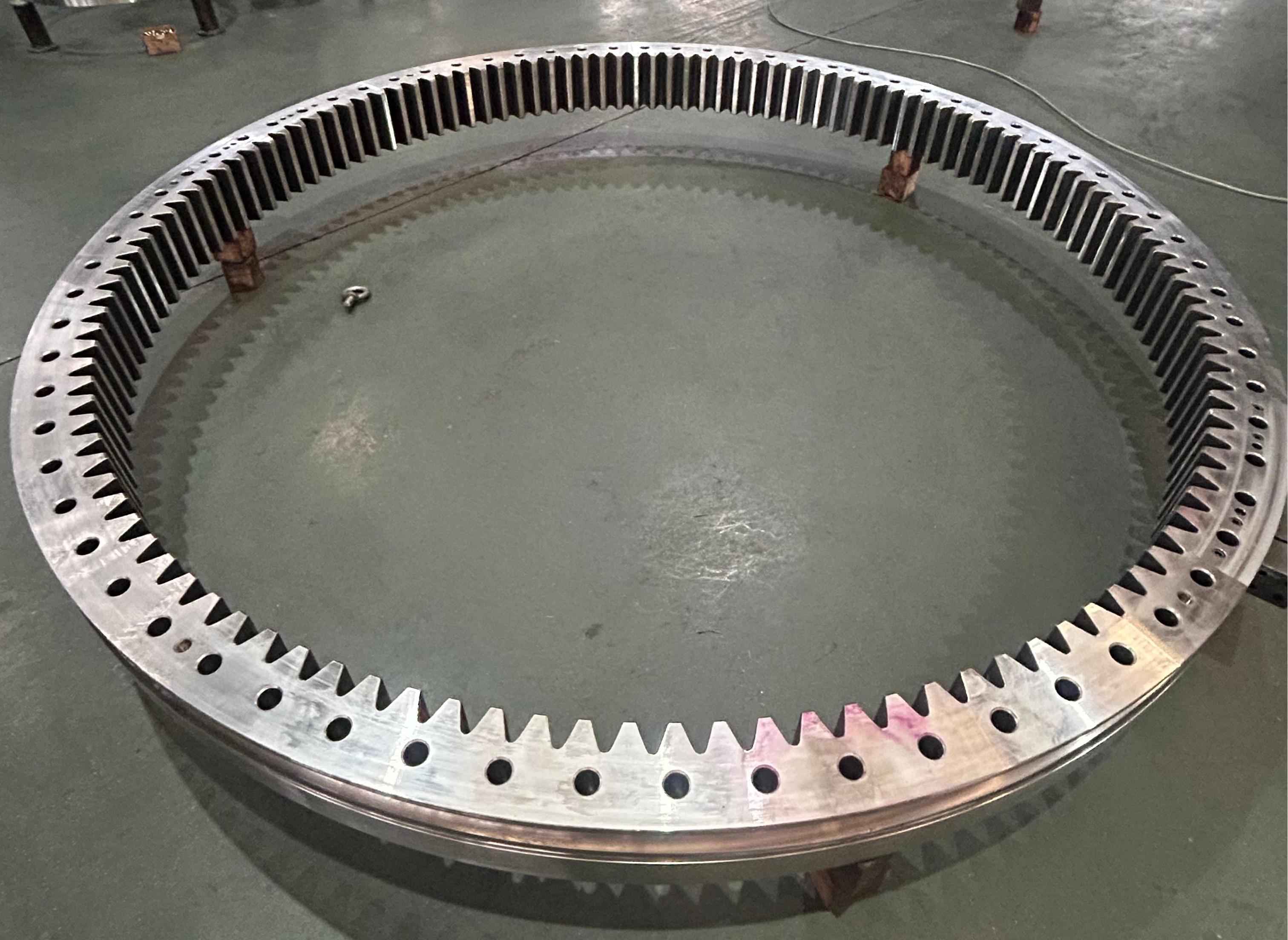
Start supplier shortlisting with application fit rather than ring size
Conclusion: Shortlist a supplier based on its ability to review your operating conditions and interfaces, not solely on whether it lists a similar bearing diameter. A catalog dimension may be a useful reference, but it cannot confirm suitability for a new machine.
The reason is simple. A slewing bearing transfers axial load, radial load, overturning moment, and gear force through a mounted structure. The bearing raceways, rolling elements, mounting rings, bolts, gear teeth, seals, and lubrication points are all affected by how the machine is used. Two rings with similar envelope dimensions can require different internal arrangements or gear solutions when their duty and mounting stiffness differ.
This approach fits OEM machinery, positioners, handling equipment, rotating platforms, automation assemblies, and retrofit projects where the surrounding structure already exists. It does not replace a formal engineering verification when the application has safety-related, regulated, or highly variable operating conditions. In those cases, provide the supplier with the applicable design criteria and retain responsibility for system-level validation.
| Shortlisting question | Why it matters | Evidence to request | When the question has limits |
|---|---|---|---|
| Can the supplier work from drawings and operating data? | A custom request needs more than a nominal diameter to define the raceway, gear, and interface. | Ask how the supplier reviews custom bearing drawings and what missing information it will flag. | A drawing review does not remove the OEM's need to verify the complete machine structure. |
| Can the supplier support related interfaces? | Gear rings, flanges, and slewing drives may affect mounting, drive alignment, and procurement scope. | Request a clear statement of supplied components and excluded components. | Do not bundle parts automatically if your existing drive or flange is already fixed. |
| Does the supplier state its quality credentials? | Documented management systems support a more controlled sourcing review. | Confirm current certification documents and the scope relevant to the quotation. | Certification does not by itself prove that a bearing fits a particular duty cycle. |
| Can the supplier quote small development quantities? | Prototype and replacement programs may not justify a large initial order. | Confirm whether a no MOQ policy applies to the requested design and order conditions. | No MOQ does not mean every custom design has the same cost or lead time. |
LTZC holds ISO9001:2015, ISO14001:2015, and ISO45001:2018 certifications and is certified by ISO, CCS, and ABS as stated in its company information. During supplier qualification, ask for the documentation needed by your internal vendor approval process rather than assuming that a general certification statement satisfies every project requirement.
Where a standard arrangement may be suitable, review the supplier’s precision slewing bearing range before requesting a fully new design. This can help your team identify whether the project needs a modified existing concept or a purpose-built ring. The limit is that appearance alone is not a selection method; load, structure, gearing, and maintenance access still need review.
Map load cases and interfaces into an RFQ ready specification
Conclusion: Build one RFQ document that links the actual load case to the mounting dimensions, gear requirements, seals, and lubrication ports. This prevents each supplier from making different assumptions, which makes quotation comparisons unreliable.
A useful RFQ package does not need to reveal unrelated proprietary machine details. It does need to show what the bearing must support, how it mounts, how it is driven, what contamination it faces, and how it will be maintained. If any item is unknown, label it as an open engineering point instead of leaving it blank.
| RFQ check item | What to provide | Risk if omitted | Why the supplier needs it |
|---|---|---|---|
| Load cases | Describe axial load, radial load, overturning moment, direction changes, shock events, operating positions, and duty pattern. | A supplier may assess a different use condition than the machine will experience. | The load combination affects bearing selection and the required support from the surrounding structure. |
| Bearing mounting dimensions | Provide the interface drawing, bolt-hole pattern, locating features, available installation space, and mating flange information. | Parts may not assemble correctly or the mounting surface may not support the intended arrangement. | The supplier must understand how forces pass between the bearing and machine frame. |
| Ring gear requirements | State whether gearing is internal, external, or absent; identify the mating drive component and any tooth-related requirements. | Drive engagement, access, or gear orientation may conflict with the machine layout. | Gear details affect the bearing ring design and the interface with the drive system. |
| Bearing sealing options | Describe dust, water, process debris, temperature exposure, cleaning method, and any restrictions on seal materials. | Contaminant entry or unsuitable sealing can shorten service life and increase maintenance demand. | The supplier needs the actual exposure conditions, not only the indoor or outdoor location label. |
| Bearing lubrication ports | Show accessible grease fitting positions, preferred orientation, lubrication lines, and service clearance. | Maintenance personnel may be unable to lubricate the bearing after installation. | Port location must work with the final machine envelope and planned service method. |
For a rotating boom base, for example, do not simply state “slewing bearing required.” Provide the boom operating positions, the direction of the applied force, the support frame drawing, the drive pinion relationship, and the side where technicians can reach the lubrication fittings. That allows the supplier to identify conflicts early. This example is a specification method, not a claim that one arrangement fits every boom application.
Use the following procedure before releasing an RFQ:
Collect the latest assembly drawing and identify the bearing’s stationary ring and rotating ring.
List all meaningful operating conditions, including normal motion, stopped position, transient loading, and unusual operating events known to the design team.
Mark the available mounting surfaces, bolt locations, clearance zones, drive location, and service access on the drawing.
Define whether the request includes only the bearing or also a gear ring, flange, or slewing drive interface.
Record environmental exposure and the required maintenance approach, including the intended lubrication access.
Send the same controlled document set to every shortlisted supplier and identify revision status for each file.
Ask suppliers to list assumptions, exclusions, requested clarifications, drawing revisions, inspection documents, and estimated delivery conditions in their replies.
This workflow is especially useful when procurement receives information from separate mechanical, electrical, service, and manufacturing teams. It is less useful as a substitute for design responsibility. The OEM should still approve the final drawing and ensure that the bearing arrangement works with the complete machine.
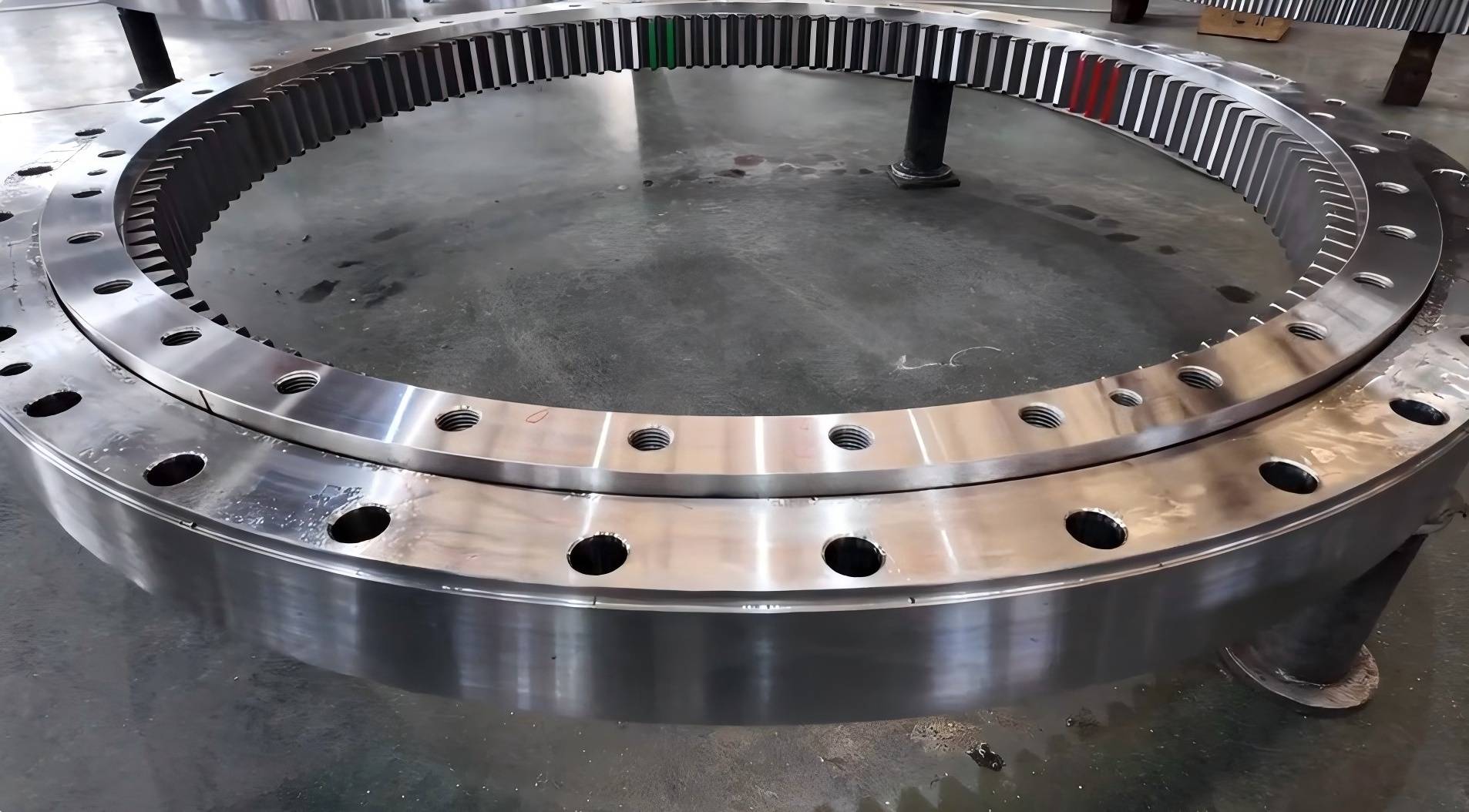
Define the bearing arrangement and drive boundary before requesting a price
Conclusion: Request a quotation against a clearly stated supply boundary. State whether you need a bearing only, a bearing with gear teeth, a separate gear ring, a flange interface, or a slew drive arrangement.
The reasoning is that a quote can be technically correct yet commercially unsuitable if the buyer assumes included components that the supplier considers outside supply. A bearing with an integrated gear arrangement is not the same purchasing scope as a separate slewing ring gear. Likewise, a bearing may need to interface with an existing motor, gearbox, pinion, or structural flange that is not part of the supplier’s delivery.
This recommendation fits projects with a new drive layout, a redesigned platform, or a machine where multiple suppliers provide connected components. It may not apply when an approved standard assembly already fixes every interface and only a direct replacement is needed. Even then, confirm revisions, dimensions, gear form, and mounting details rather than ordering from an old part description alone.
Bearing only: Use this scope when the OEM already owns the mating gear and structural design. Provide enough interface information for fit assessment.
Bearing with geared ring: Use this scope when the bearing and drive engagement must be coordinated. Identify the mating pinion or drive arrangement.
Separate gear component: Use this scope when the gear is not integrated with the bearing. Clarify how the component locates and transfers torque.
Slew drive interface: Use this scope when the purchase decision includes drive housing, bearing, worm or other drive elements, and output connection requirements. Review available Slewing Drives only after confirming the machine-side interfaces.
Replacement assembly: Use this scope when matching an installed unit. Supply photographs, drawings, marking information if available, and changes from the original operating conditions.
Ask each supplier to separate engineering, product, testing, packing, transport terms, and any optional documentation in its commercial response. The purpose is not to force a universal price format. It is to make differences visible when procurement compares proposals.
Prevent common RFQ errors that create quotation gaps
Conclusion: Treat missing data as a managed risk. If a value or condition is still being studied, disclose that status and ask the supplier what decision it affects.
Buyers sometimes avoid sharing incomplete information because they want a fast preliminary quote. That can be reasonable for budget planning, but the quotation should then be marked as preliminary and tied to stated assumptions. A budget estimate should not be converted directly into a production purchase order without resolving open technical points.
Using only an outside diameter: This may help identify a general size range, but it does not define load capability, mounting stiffness, gearing, or seal exposure.
Sending an unrevised drawing: An outdated hole pattern or drive position can cause a design mismatch. Put a revision identifier and release date on every supplied drawing.
Ignoring the support structure: A bearing can be selected while the adjacent frame remains undefined. Include mating ring and flange information where it affects the interface.
Leaving maintenance access unspecified: Lubrication points that are hidden after assembly can create avoidable service problems. Show technician access and nearby obstructions.
Assuming seals solve all contamination issues: Seals are part of the solution, not the full machine protection plan. Describe washdown, debris, outdoor exposure, and process contaminants.
Comparing quotes without assumptions: A lower price may reflect a narrower supply scope or unresolved engineering items. Compare drawings, inclusions, exclusions, and delivery basis line by line.
Installation planning should be part of the RFQ discussion, particularly for heavy or restricted-access assemblies. The supplier’s bearing installation guidance can help your team identify the information needed for mounting and service planning. However, general guidance does not override your approved machine assembly process or site safety requirements.
Use supplier responses to select a technically comparable offer
Conclusion: Select an offer only after technical response quality and commercial scope are compared together. The lowest number is useful only when it covers the same design basis as the other proposals.
A practical evaluation sheet should include the supplier’s drawing response, stated assumptions, requested clarifications, certification documentation, delivery indication, supply scope, and after-sales contact route. LTZC’s stated 30–90 day delivery range provides an initial planning reference, but procurement should request a project-specific confirmation because custom design details and order requirements can affect timing.
For projects that are still defining the machine concept, use a bearing selection guide alongside the RFQ package. For applications that require unusual rings, interfaces, or connected components, ask whether non standard bearings can be reviewed against the supplied technical information. The limit is clear: an online guide or product page supports initial communication, but the issued drawing and confirmed operating conditions govern the final request.
When the design is ready, submit your drawings, load description, mounting details, gear requirements, seal exposure, and lubrication access requirements to LTZC for a quotation review.