WhatsApp
 Eric.wang@ltzzc.com
 0086-379-69950051

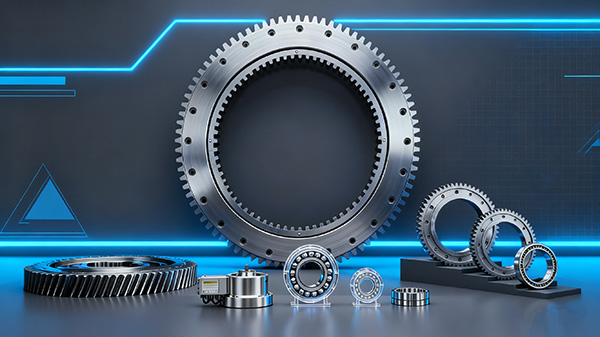
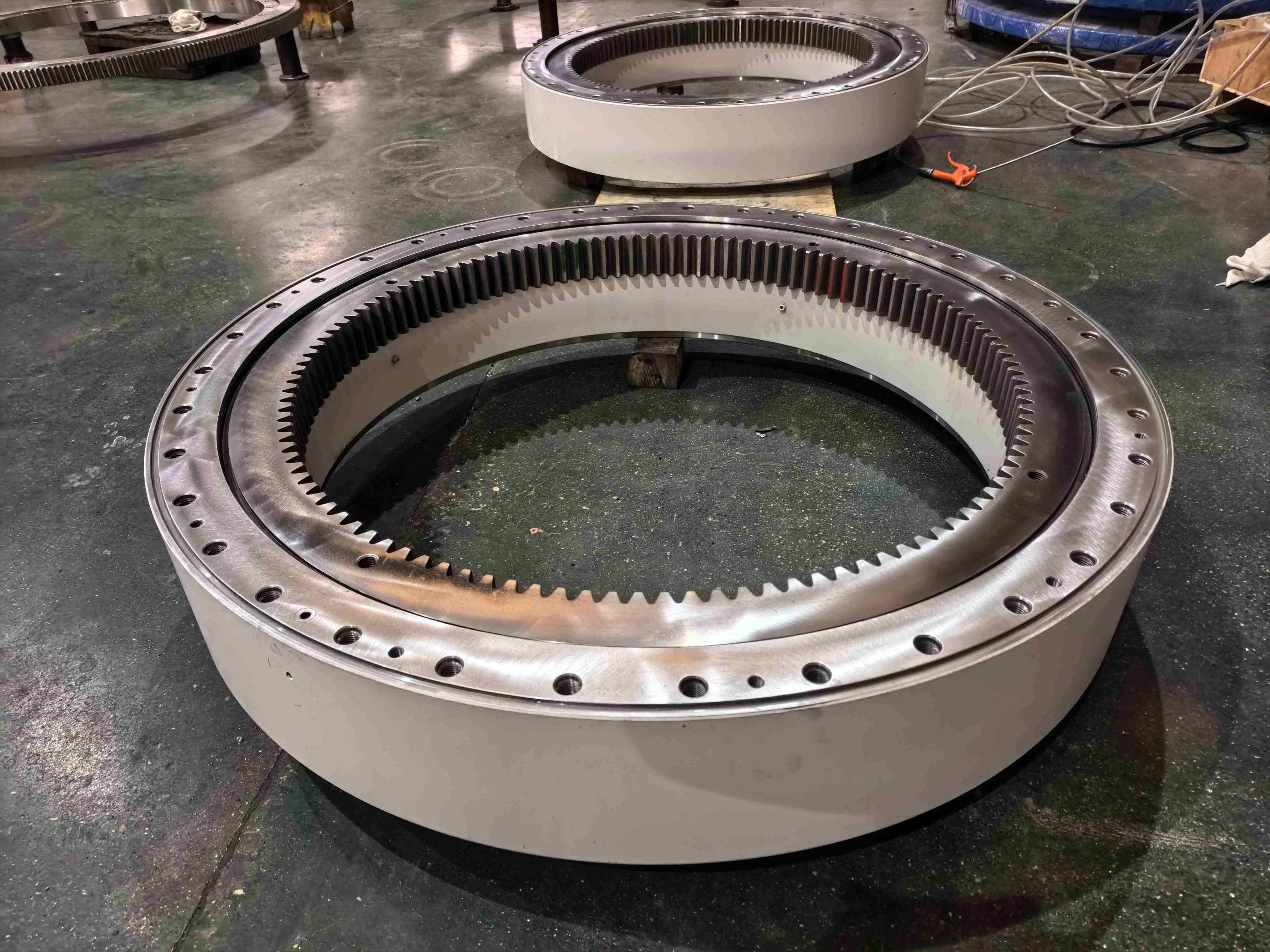
LTZC manufactures slewing bearings dedicated to rudder propellers for customers.
I. The Core Role of Slewing Bearings in Rudder-Propeller Systems
The lower section of a rudder-propeller unit constitutes a rotating propulsion system. The slewing bearing installed here is essential for enabling rotation to generate thrust, while also withstanding axial thrust, radial loads, and massive overturning moments caused by propeller operation. Standard slewing bearings used in general construction machinery cannot directly replace specialized marine slewing rings designed for rudder-propeller systems.
1.1 Operating Conditions for Slewing Bearings in Rudder-Propeller Systems
Highly Corrosive Environments
Operating in near-shore marine environments involves intense seawater corrosion and significant diurnal temperature fluctuations. Condensation easily penetrates the bearing interior, exacerbating pitting and wear on raceways and gear teeth, thereby placing high demands on the bearing's sealing performance.
Continuously Varying Loads
During navigation, the bearing is subjected to constantly changing loads resulting from interaction with seawater and wave impacts. Prolonged stress can lead to raceway fatigue and cracks at the gear tooth roots.
Low-Speed Oscillation and Intermittent Rotation
Rudder-propeller slewing bearings rarely undergo high-speed continuous rotation; instead, they primarily operate under conditions of low-speed reciprocating oscillation and intermittent positioning. These conditions easily lead to boundary lubrication states. If lubrication channels or raceway profiles are poorly designed, localized dry friction can occur, accelerating wear.
Compact Spaces and Maintenance Challenges
Rudder-propeller units have compact installation footprints, making subsequent inspection and lubrication difficult. Customers typically require marine slewing bearings to offer long-lasting sealing and corrosion resistance to reduce the frequency of dry-dock maintenance and minimize downtime losses.
Given these operating characteristics, purchasers of maritime equipment prioritize the following when selecting slewing bearing suppliers: whether the manufacturer possesses specialized design experience for marine bearings; the ability to accurately verify loads based on vessel tonnage and rudder-propeller power; whether anti-corrosion solutions have been validated against salt spray testing; and the availability of classification society inspection documentation. LTZC’s specialized marine slewing rings for rudder-propeller systems are developed specifically for marine operating conditions. Distinct from slewing bearings used in land-based construction machinery, they feature a fully optimized system covering everything from raw material selection and structural design to surface protection.
II. LTZC Targeted Solutions for Marine Rudder-Propeller Slewing Bearings
Pain Point 1: Poor sealing structure accelerates slewing bearing wear
Many marine slewing bearings utilize standard single-layer sealing structures. After prolonged maritime operation, the sealing lips age and deform, allowing salt spray and moisture to penetrate the raceway. This causes grease emulsification and failure, leading to rust and pitting on the raceway and premature bearing retirement.
LTZC Solution: A multi-layer composite sealing system specifically designed for marine rudder-propeller slewing bearings. To address high-humidity environments, grease injection ports are included to allow for the periodic flushing of contaminants from the seal cavity, effectively blocking seawater and salt spray intrusion. For deep-water applications, a high-pressure sealing structure is available to meet the requirements of semi-submerged rudder-propeller units.
Pain Point 2: Inadequate anti-corrosion processes make bearings prone to corrosion
Standard painting protection often fails to account for specific environmental factors like temperature and humidity; many suppliers simply apply surface treatment solutions intended for construction machinery without adapting them for the marine environment.
LTZC Solution: LTZC rudder-propeller slewing bearings utilize a graded anti-corrosion system. Tailored solutions are provided based on the customer's operational waters (inland river, coastal, or deep-sea), accompanied by rigorous anti-corrosion testing.
Pain Point 3: Lack of classification society certification documentation
Maritime projects in Europe, the Americas, Southeast Asia, and the Middle East generally require marine slewing bearings to have factory approval and product test reports; some projects even require witnessed inspections by classification societies such as BV, CCS, or DNV. Smaller slewing bearing manufacturers often cannot provide the full set of compliance documents, hindering customers' project bidding efforts.
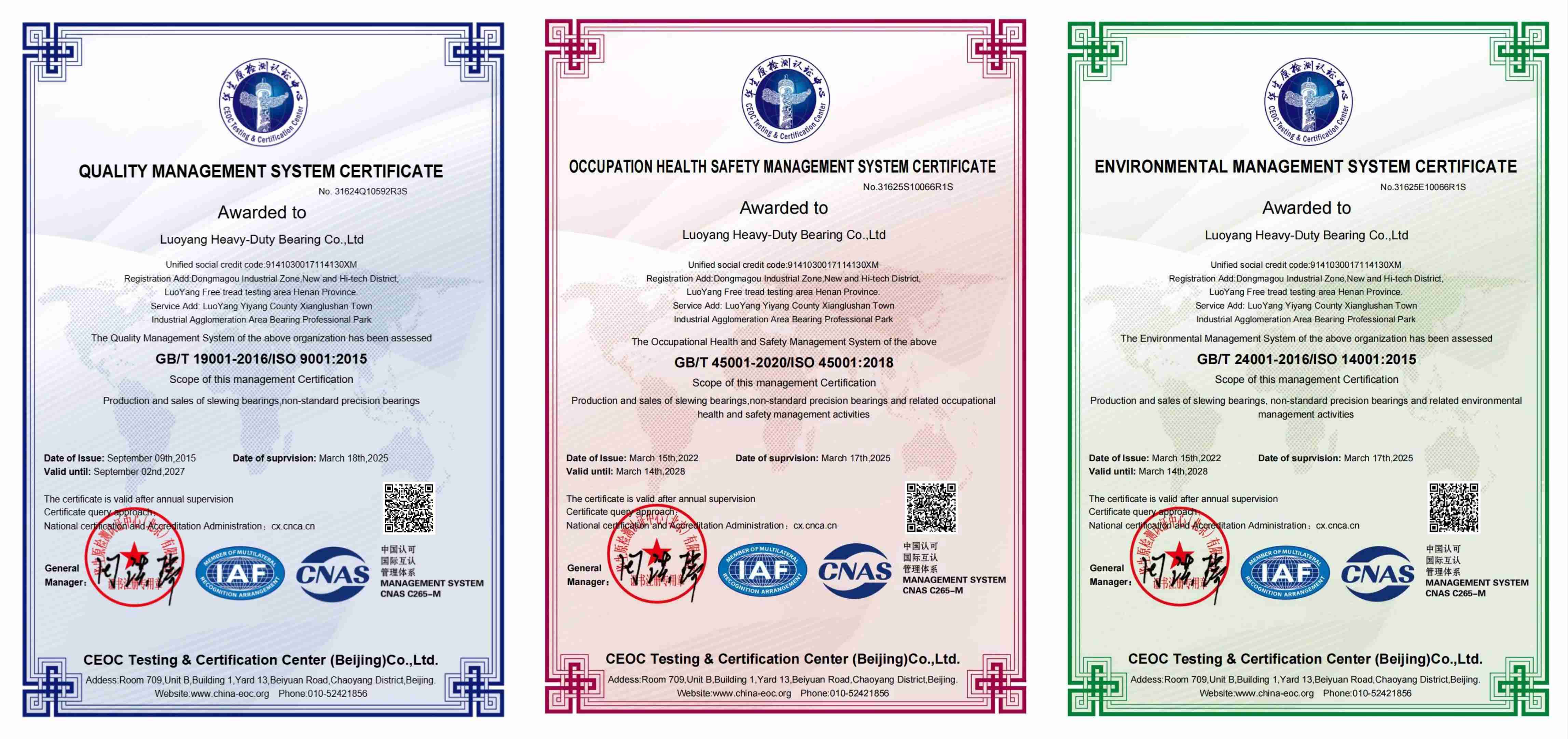
LTZC Solution: LTZC holds ISO9001 quality management system certification. Products support third-party inspections by bodies such as CCS (China Classification Society) and BV (Bureau Veritas). We provide—upon request—material certificates, non-destructive testing (UT/MT) reports, heat treatment reports, salt spray test reports, and dimensional inspection reports. This complete documentation package can be used directly for equipment inspection and approval, meeting the specifications for global maritime project tenders.
III. Key Advantages of LTZC Rudder-Propeller Slewing Bearings
3.1. Controllable Quality and Reliable Delivery
We provide comprehensive documentation, including forging and heat treatment reports, and maintain strict process control throughout production. LTZC can flexibly adjust production capacity to meet the concentrated delivery schedules typical of shipbuilding projects.
3.2. Certification and Documentation
We provide a complete set of documentation upon request—including material certificates, NDT reports, heat treatment reports, dimensional inspection reports, and salt spray test records—and support witness inspections by classification societies such as CCS and BV.
3.3. Customized Solutions
We offer rapid reverse engineering, design, and custom manufacturing services—whether for newly designed rudder-propellers or for domestic replacements of imported products—to flexibly meet diverse customer requirements.
3.4. Thirty Years of Bearing Manufacturing Experience
Should issues such as abnormal wear, unusual noise, or corrosion arise, the LTZC team responds within 24 hours to provide technical support, thereby minimizing downtime and enhancing operational efficiency for our customers.
Need technical support? Contact LTZC today.