WhatsApp
 jessica.chai@ltzzc.com
 0086-379-69950051

Shipped to Spain: Large Diameter Slewing Bearing for TBM Cutterhead Drive
At a Glance
| Item | Detail |
|---|---|
| Model | 132.60.5000.03K |
| Quantity | 1 set |
| Bearing type | Large diameter slewing bearing (for TBM cutterhead drive) |
| Destination | Spain |
| Application | Tunnel Boring Machine (TBM / Shield Machine) |
| Key Challenge | Heavy loads, insufficient rigidity, rapid gear wear from frequent reversing |
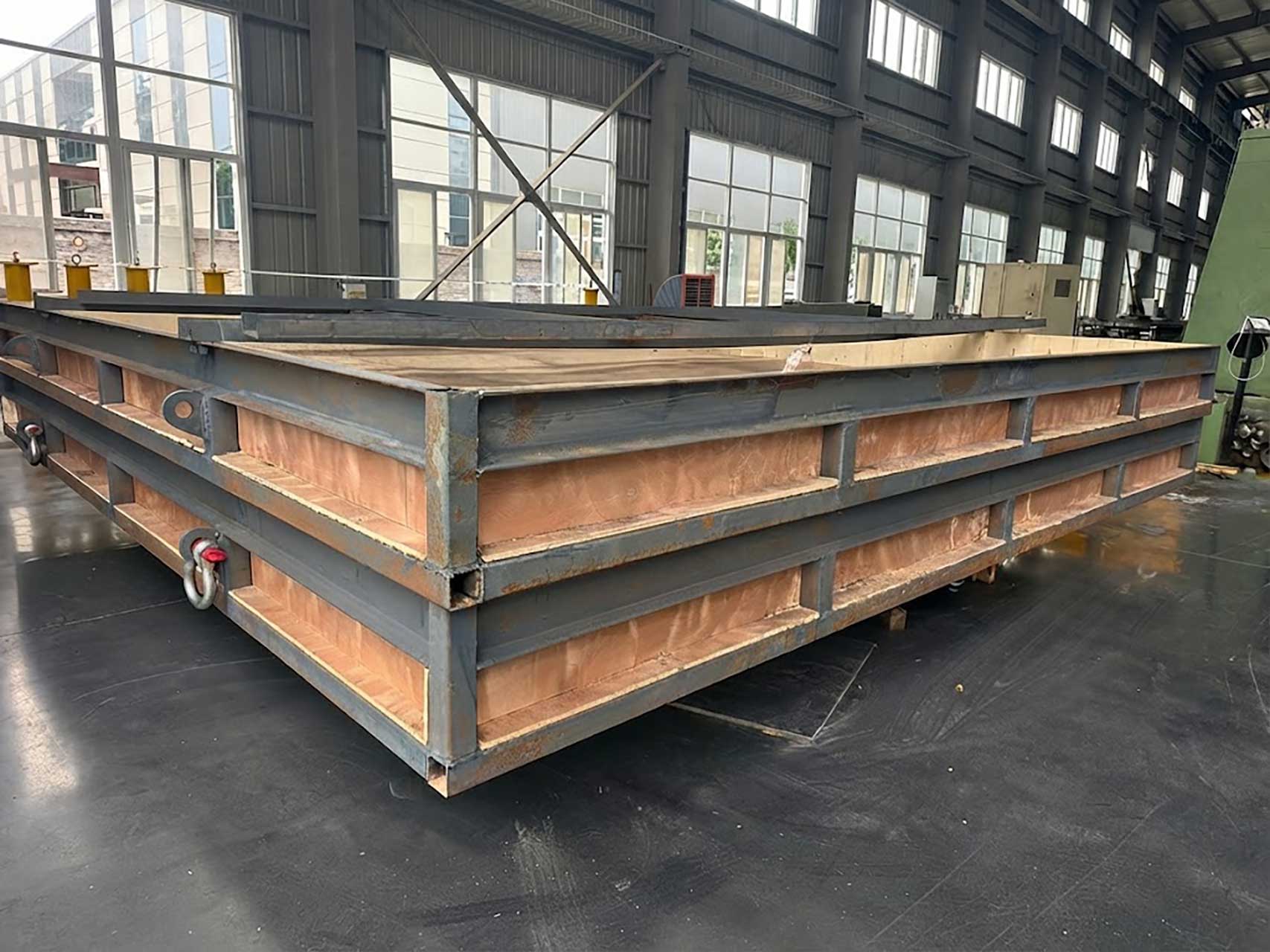
| Packaging | Wooden case, internally secured with a custom steel frame |
| Customer Feedback | Approved the rigidity design and tooth surface hardening solution |
An Urgent Inquiry from Spain: Three Core Concerns from a TBM Manufacturer
The LTZC sales team still remembers the inquiry from Spain. The customer, a TBM manufacturer involved in European underground tunneling projects, was direct in their email: the slewing bearing on their existing cutterhead drive was suffering from insufficient rigidity. When the machine frequently reversed direction in mixed-face ground conditions, the gear wear rate far exceeded expectations. With highly limited maintenance windows, the cost of replacing a bearing inside a tunnel goes far beyond the price of the bearing itself.
The working environment of a TBM slewing bearing is among the most demanding in the bearing industry. As the cutterhead cuts through rock and soil, the bearing simultaneously bears massive axial loads, radial loads, and tilting moments, with severe load fluctuations and impact vibrations throughout the excavation cycle. What makes it even more challenging is that TBMs must frequently reverse rotation to adjust cutterhead posture or clear jams. Every directional change subjects the gear teeth to an impact load. The customer's previous solution struggled precisely here.
"We don't need another standard product. We need a gear that can withstand reversing impact and a raceway with sufficient rigidity." This was how the customer summarized their requirements during the technical review meeting.
LTZC's Response: Engineering Rigidity into the Structure, Wear Resistance into the Gear
Addressing the customer's three core concerns, the LTZC engineering team did not simply pull an off-the-shelf model from the catalog. They first reviewed the operating conditions, then proposed a set of targeted design adjustments.
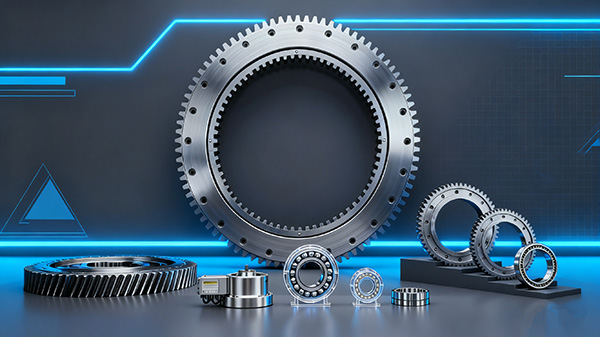
The root cause of insufficient rigidity often lies in the interaction between the raceway and the rolling elements. The mainstream structure for TBM slewing bearings is the three-row roller type, where three rows of rollers separately carry axial, radial, and tilting loads, offering the highest load capacity among all slewing bearing types. Building on this structure, LTZC optimized the raceway curvature and roller parameters to achieve a more uniform load distribution and reduce localized contact stress concentration — which directly affects the deformation of the bearing under eccentric loads. The "insufficient rigidity" the customer experienced was essentially excessive local raceway deformation under eccentric load, which altered the gear meshing center distance and accelerated tooth surface wear.
Gear wear from frequent reversing must be addressed at both the material and tooth surface levels. LTZC applied a deep surface hardening process to the gear ring, controlling tooth surface hardness within the HRC 58–62 range while maintaining core toughness to prevent tooth root fracture under heavy impact loads. The large-module tooth profile design, combined with precision machining, enhanced the gear's resistance to pitting and bending fatigue. During the acceptance communication, the customer specifically checked the consistency of tooth surface hardness and hardening depth — this was exactly where they had encountered problems before.
Sealing cannot be compromised either. Inside a tunnel, mud, sand, and groundwater are pervasive. If they infiltrate the raceway, even the best rigidity design will quickly fail. This bearing is equipped with a multi-layer protective sealing structure, adapted for the high mud pressure conditions of TBM operations.
Packaging: "Steel Bones" Inside the Wooden Case
This bearing has an outer diameter approaching 5.5 meters and weighs several tons. For a precision component of this size, packaging itself is an engineering challenge.
The LTZC shipping team did not simply place the bearing into a wooden box. The bearing was first secured onto a custom steel frame, with protective material applied at the contact surfaces to prevent damage to the raceway or gear during transit. The frame and bearing were then loaded into a reinforced wooden case, with the internal voids filled with support material to ensure no movement during long-haul sea freight and inland transport across Europe.
Before shipment, the customer received photos of the packaging plan and securing details. The customer's reply was brief: "This is how it should be done." In LTZC's case files, such confirmation often carries more weight than a lengthy thank-you note.
From Problem-Solving to Trust-Building
This bearing is now on its way to Spain. But the significance of this collaboration goes beyond a single order.
In the TBM bearing sector, LTZC has previously hosted European customers for factory acceptance testing of TBM core bearings, where customer engineers conducted item-by-item verification of dimensional accuracy and material integrity before releasing the bearings for shipment. The Spain project follows the same logic: the customer arrives with a specific problem, and LTZC responds with verifiable design and manufacturing details.
For engineering teams currently selecting or replacing TBM slewing bearings, LTZC's advice is practical: send us your cutterhead axial load curves, tilting moments, reversing frequency, and gear torque parameters, and let our engineering team perform an operating condition matching analysis. There is no "close enough" option for TBM bearings — the right choice is insurance; the wrong choice is an incident.
Contact LTZC
For TBM slewing bearing selection support, drawing review, or replacement solutions, send your operating parameters to our engineering team: contact our engineering team