WhatsApp
 jessica.chai@ltzzc.com
 0086-379-69950051

Tailored Turntable Bearings and a Custom Slewing Bearing Solution Over Five Years
Before approving a turntable bearing purchase, buyers should look beyond the quoted unit price. The costly regret is often not paying too much for the bearing. It is approving a lower-priced standard unit that later requires a heavier support structure, adapter components, mounting changes, unplanned service work, or an earlier replacement.
A Custom Slewing Bearing Solution is justified when the bearing can remove cost elsewhere in the machine or reduce a known operating risk. It is not automatically the right choice for every project. For a proven machine with stable loads, standard interfaces, and readily available replacement space, adapting an existing unit may be the more sensible procurement decision.
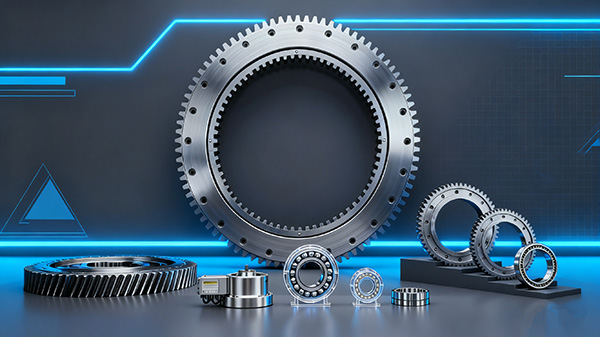
LTZC Bearings Co., Ltd. supports customized slewing bearings, non-standard precision bearings, gear rings, racks, bearing unit assemblies, slewing drives, and non-standard bearing parts. Product dimensions range from OD Φ200 mm to Φ20 m. Buyers assessing a tailored design can start by comparing the intended arrangement with a precision slewing bearing range, then identify which interfaces, loads, materials, or gear requirements require a departure from a standard configuration.
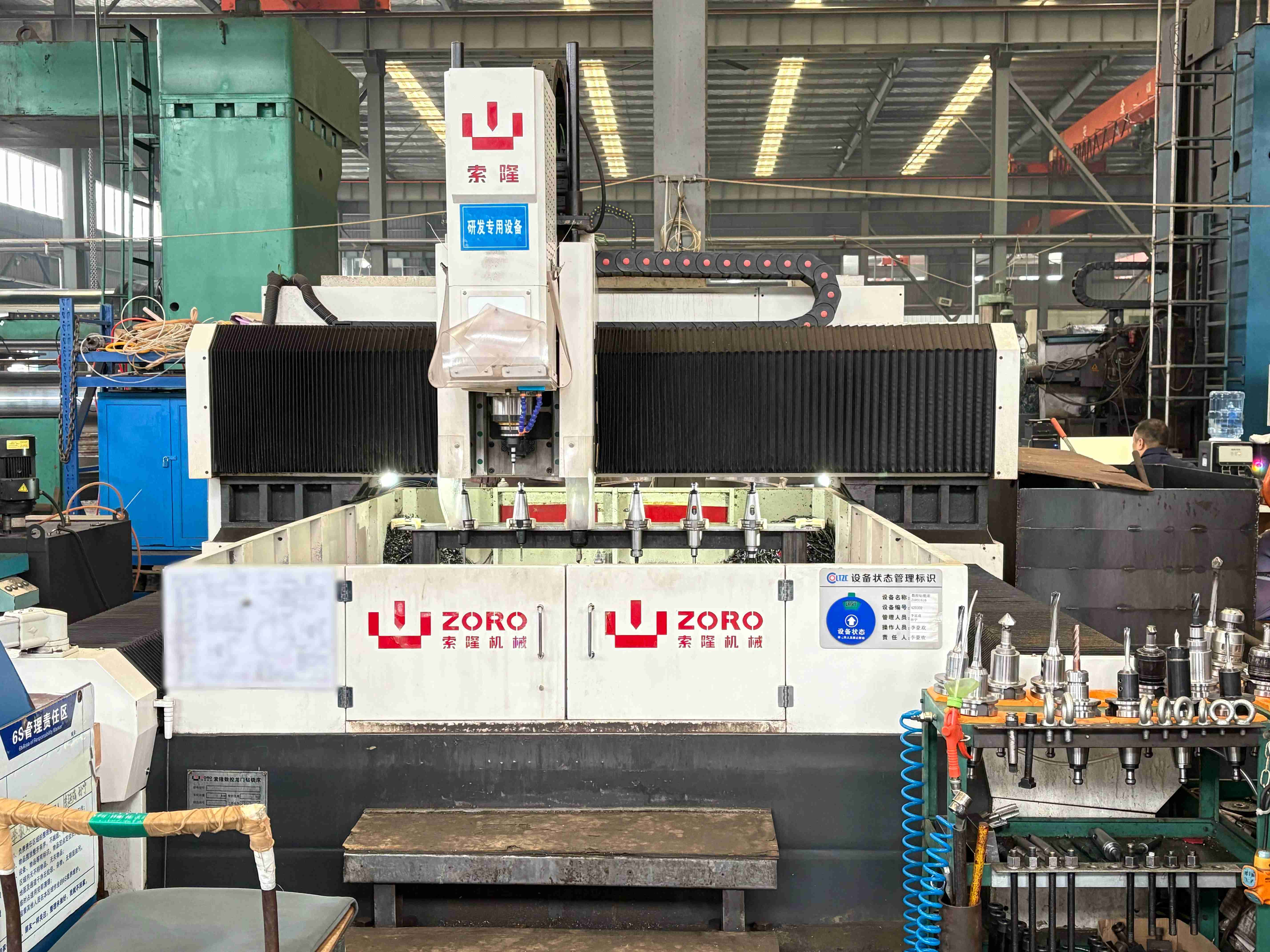
Decide whether the machine problem is bearing-related or interface-related
The first decision is simple: identify what the standard unit fails to achieve. A custom bearing should solve a documented constraint, not merely follow a preference for a special design. The decision fits project managers who have a defined machine envelope, mounting arrangement, load case, or gear interface that does not match available catalog dimensions.
The main reasons for a tailored unit usually fall into four groups. Each has a different commercial consequence.
| Buyer constraint | What a tailored bearing may change | When the change can support a premium | When it may not apply |
|---|---|---|---|
| Limited mounting envelope | Ring dimensions, flange arrangement, bolt-circle position, or bearing section | When avoiding an adapter plate or structural redesign has measurable value | When adequate installation space already exists for a standard bearing |
| Combined axial, radial, and overturning loads | Rolling-element arrangement selected for the operating condition | When the machine duty cannot be safely or efficiently handled by a basic catalog choice | When actual loads are modest and a standard series is already suitable |
| Integrated drive interface | Internal or external gear details coordinated with the pinion and drive layout | When separate gear adaptations create alignment or assembly concerns | When the machine already uses a compatible standard gear arrangement |
| Special material or operating environment | Material selection aligned with corrosion, wear, strength, or temperature needs | When the environment is documented and material choice changes service risk | When the operating environment does not impose unusual requirements |
For example, GCr15 is commonly used for roller and ball bearings because of its hardness, wear resistance, and strength. AISI 440C is suitable where corrosion and oxidation resistance are required. 20CrMo and 42CrMo improve strength, hardness, and wear resistance for heavy-load applications. CuSn6 offers wear resistance, thermal conductivity, and corrosion resistance. SUJ2 is used for high-precision and high-load applications, while Ti-6Al-4V is lightweight and suitable for aerospace and high-strength applications.
Material selection alone does not prove that a bespoke design is necessary. The buyer should state the environment, duty cycle, loading direction, speed, lubrication method, and mounting structure before asking for a material recommendation. Without those inputs, a material request can become an unnecessary source of cost.
Choose the bearing arrangement from the load path, not from the outline drawing alone
A ring that fits the available diameter may still be wrong for the working load path. Buyers should ask which rolling arrangement is being considered and why. A Three Row Roller Slewing Bearing is relevant where separate load paths and heavy-duty duty conditions drive the selection. A Four Point Contact Ball Slewing Bearing may fit applications requiring a compact bearing arrangement for combined loads.
The limit is equally important. No bearing arrangement should be selected from a product name alone. The supplier still needs the actual loads, mounting information, operating conditions, and drive requirements to determine whether the intended configuration is appropriate.
Build the RFQ around the information that controls custom bearing cost
The custom slewing bearing cost is not governed by outside diameter alone. It depends on the level of design departure from an existing series, material needs, gear requirements, machining details, and the technical information available at the start. A short RFQ that omits operating data may appear faster, but it can delay a usable quotation because the supplier must identify the missing engineering basis.
For sourcing leaders, the practical target is an RFQ that enables a like-for-like comparison between a tailored design and a standard adaptation. Include the following items.
- Application and machine function: State whether the ring supports a crane, turntable, welding system, mining machine, automation unit, or another rotating assembly.
- Envelope dimensions: Provide the available diameter, mounting height, clearance restrictions, and preferred gear location where applicable.
- Load cases: Identify axial load, radial load, overturning moment, shock conditions, and the direction of each load.
- Rotation details: State rotation speed, duty pattern, positioning accuracy expectations, and whether rotation is continuous or intermittent.
- Mounting interfaces: Provide drawings for the upper and lower support structures, bolt pattern, pilot locations, and any required flange arrangement.
- Drive interface: For geared rings, provide pinion details, module or tooth requirements where known, gear position, and available center distance.
- Operating environment: Identify corrosion exposure, dust, moisture, temperature considerations, access for maintenance, and lubrication method.
- Commercial requirements: State the project quantity, required delivery point, desired delivery date, inspection expectations, and documentation required for acceptance.
This procedure fits both new equipment programs and replacement projects. It does not eliminate technical review, but it prevents a common sourcing mistake: comparing a fully defined standard bearing quotation against an undefined bespoke slew ring price.
LTZC offers customized bearing solutions based on working conditions, existing designs, and technical specifications. The company states a delivery range of 30–90 days and no MOQ. These terms can be useful when a buyer needs a low-quantity engineered part rather than a high-volume standard purchase. They are not a blanket commitment for every drawing, material, or destination, so confirm the applicable schedule during quotation.
Common RFQ mistakes that distort the apparent savings
- Comparing only bearing prices: This misses structural modification, machining, adapters, drive changes, installation work, and later service exposure.
- Providing an outline drawing without loads: The result may fit geometrically but remain unsuitable for the actual duty.
- Leaving gear responsibility unclear: A bearing ring and a pinion must work as a set. Confirm who supplies or verifies each interface. LTZC also supplies slewing ring gear products where a coordinated gear requirement is part of the project.
- Assuming standard mounting surfaces will accept a custom ring: Flatness, stiffness, bolt-circle geometry, and access should be checked before release.
- Treating lead time as a single number: Ask what information and approvals are needed before the stated production period can begin.
- Ignoring replacement access: A low initial price can lose its advantage if later removal requires major machine disassembly.
A five-year TCO model comparing the upfront premium against saved structure weight, installation changes, downtime risk, and replacement frequency
The right question is not simply “Are custom slew rings worth the cost?” The better question is whether the additional purchase amount is lower than the avoidable costs over the planned operating period. The following five-year model is application-neutral. It uses buyer-entered values rather than invented price claims, so procurement, engineering, and finance can adjust the assumptions together.
| TCO element | Standard-unit adaptation | Tailored bearing option | Buyer calculation over five years |
|---|---|---|---|
| Initial bearing purchase | Quoted standard bearing price | Quoted bespoke slew ring price | Tailored premium = tailored bearing price minus standard bearing price |
| Support structure weight | Added steel, reinforcement, or support needed to accommodate the adapted unit | Structure designed around the bearing interface where weight reduction is feasible | Weight-related saving = standard support cost minus tailored support cost |
| Installation changes | Adapter plates, new machining, extra fasteners, altered guards, or rework | Mounting details matched to the intended structure where agreed | Installation saving = standard adaptation labor and material minus tailored installation labor and material |
| Downtime risk | Expected cost of intervention if fit, alignment, access, or duty mismatch causes disruption | Expected cost after addressing identified application constraints in the design | Risk cost = probability of each event × consequence of each event; calculate each option separately |
| Replacement frequency | Expected replacement count and removal cost within the five-year operating plan | Expected replacement count and removal cost within the same period | Replacement saving = standard replacement cost minus tailored replacement cost |
| Five-year total | Initial purchase + structure + installation + risk cost + replacement cost | Initial purchase + structure + installation + risk cost + replacement cost | Choose the lower total only after confirming that assumptions are technically defensible |
The decision rule is direct. Approve the tailored design when:
Saved structure cost + saved installation cost + avoided downtime risk + avoided replacement cost > upfront bearing premium.
Do not count speculative benefits as savings. If the project team cannot identify a structural change, installation change, or credible reliability exposure, then the premium remains a cost rather than an investment. This is the limit of every TCO model: its result is only as sound as the engineering and financial assumptions entered into it.
A worked decision scenario can make the model easier to apply. Consider a turntable project in which a catalog ring physically fits only after the frame is redesigned and a separate adapter arrangement is added. The sourcing team should request two complete cost views: one for the standard ring plus all frame, adapter, machining, and installation changes; another for the tailored ring plus its intended mounting arrangement. Next, the operations team should identify the cost consequence of a replacement event and the access needed to remove either design. If the tailored option removes enough of those defined costs to exceed its quoted premium, its five-year case is positive. If the standard option uses the existing structure without modifications and has acceptable service access, the tailored option may not earn approval.
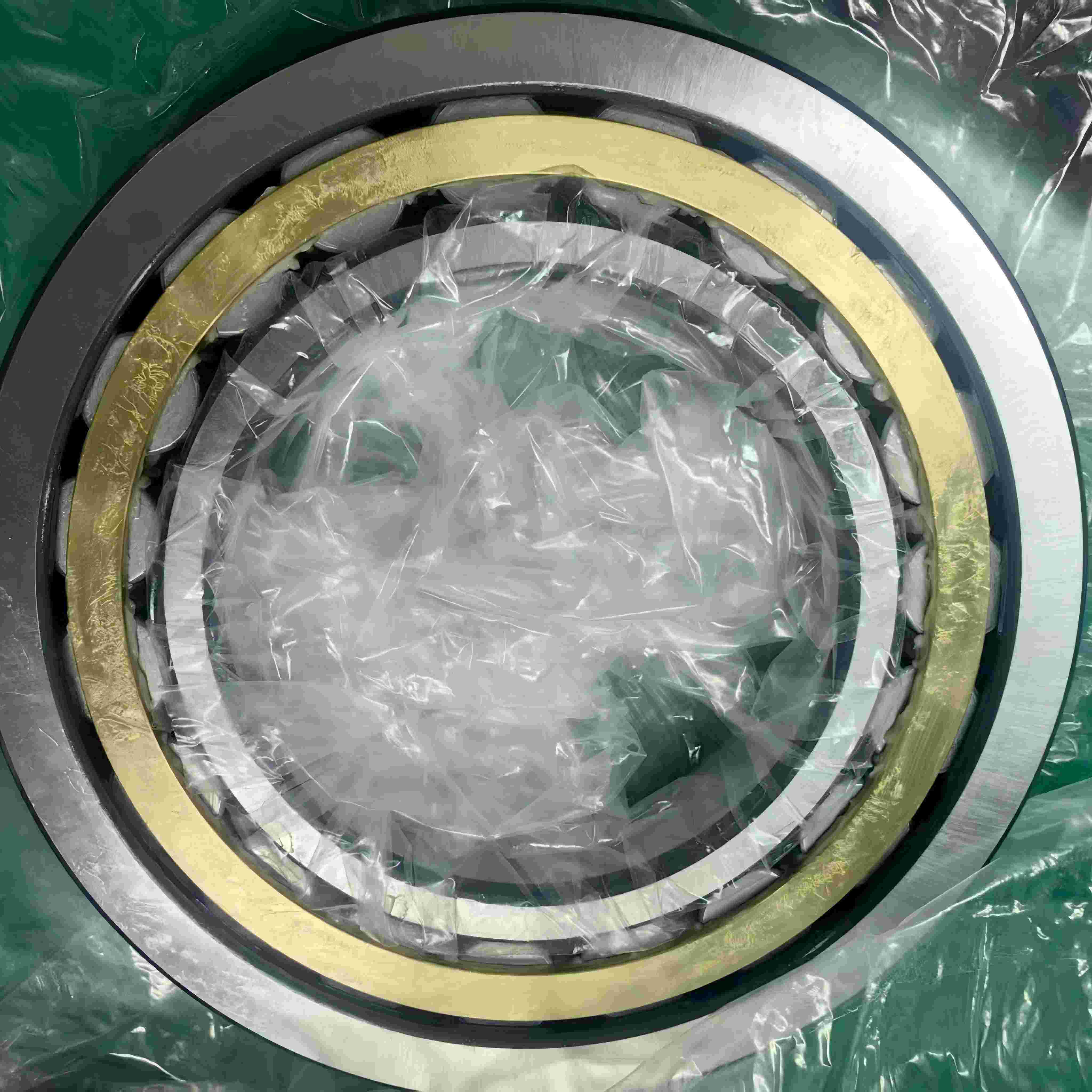
Use verified supplier evidence to assess technical fit and project scale
For high-load, large-diameter, or non-standard work, the supplier’s documented references matter because they show the scale of applications previously supported. They do not prove that a proposed bearing will fit a new project, but they help a buyer decide whether technical discussions are worth pursuing.
LTZC was established in 1992 and operates a 20,000 m² facility. Its management system certifications include ISO9001:2015, ISO14001:2015, and ISO45001:2018, with certification by ISO, CCS, and ABS stated in the company information. For a buyer, these facts are relevant when supplier qualification requires documented management credentials. They do not replace project-specific acceptance criteria, drawing approval, or inspection requirements.
The company’s supplied project references include an integral three-row roller slewing ring with an OD of 10.87 m delivered in 2024 for 2,000 ton fixed lifting equipment. LTZC also reported successful production in 2024 of an integrated bearing with an OD of 8.445 m for a crane industry client in South Korea. These examples support discussion of large bearing requirements. They should not be treated as a promise that every project can use the same arrangement, delivery pattern, or performance outcome.
Other documented work includes 8 m high-precision segmented gear rings supplied for a vertical friction stir welding system in a key national project, φ24 m segmented bearings delivered to Jiangsu Nantong Rainbow Heavy Machinery, and a full set of ring rolls for shield machine main drives developed for CRCC, covering 15 series and 90 pieces in total. These references are useful where a project involves segmented construction, large ring geometry, or drive-related bearing components.
For buyers considering a large ring, a Large Slewing Bearing inquiry should clearly distinguish between a one-piece and segmented requirement. Segmented construction can address transport, handling, or installation constraints, but it also creates additional interface questions. Confirm assembly responsibilities, gear continuity needs, mounting alignment, and acceptance conditions before approval.
Set cooperation terms before the purchase order is released
A sound technical selection can still create commercial difficulty if the project boundaries are not agreed. For a tailored turntable bearing, the purchase order should identify what the quoted scope includes and what remains with the buyer, machine builder, installer, or drive supplier.
| Item to confirm | Why it affects the project | Practical buyer action |
|---|---|---|
| Design input responsibility | Loads and mounting details directly affect suitability | Issue controlled drawings and identify the source of load data |
| Supply boundary | The bearing, gear, drive, fasteners, and installation tools may be separate items | List included items and exclusions in the RFQ and order |
| Acceptance basis | A tailored part needs agreed dimensions, documents, and inspection requirements | Attach acceptance criteria before production release |
| Delivery timing | Custom bearing lead time affects machine assembly planning | Confirm the applicable lead time against approved technical information and order conditions |
| Installation support | Incorrect mounting can undermine a suitable bearing selection | Plan installation responsibilities and use documented guidance |
| After-sales contact | Service response must be clear if a quality concern arises | Record escalation contacts and site-support requirements before shipment |
LTZC provides installation and commissioning guidance, preventive maintenance training, fault diagnosis, and on-site technical assistance. The company states that quality objections receive a response within 24 hours and on-site service starts within 48 hours in China. For projects outside China, buyers should confirm applicable support arrangements rather than assuming the same on-site timing.
Installation remains a shared project responsibility. The buyer should confirm mounting stiffness, support surface condition, bolt installation, gear mesh, lubrication access, and commissioning checks. LTZC’s bearing installation information can help project teams prepare the installation scope, but it should be used alongside the requirements for the specific bearing and machine.
Make the approval decision with a short buyer checklist
A tailored option is often a good fit when it solves a measurable machine-level cost or risk. It is less suitable when the project only has a preference for a non-standard part without a defined technical or financial reason.
- Can the standard option be installed without structural or interface changes?
- Has the project priced adapters, frame changes, machining, labor, and access requirements separately from the bearing?
- Are the loads, duty cycle, environment, and drive arrangement available in a controlled RFQ package?
- Does the five-year model show a defined saving that exceeds the custom premium?
- Have the bearing arrangement, material need, and gear responsibilities been technically reviewed?
- Are delivery timing, acceptance requirements, and installation responsibilities agreed?
- Is a segmented, geared, or integrated arrangement needed because of real transport, assembly, or operating constraints?
If the answer to several questions is “no,” start with a standard bearing comparison and a bearing selection guide review. If the answers show defined structural savings, reduced installation changes, or meaningful exposure to downtime and replacement cost, a tailored design deserves a formal quotation and five-year approval case.
Submit your application drawings, load cases, mounting details, and delivery requirement to request a tailored bearing quotation from LTZC.