WhatsApp
 jessica.chai@ltzzc.com
 0086-379-69950051

Customized Slewing Rings Tooling Cost Break-Even
Before issuing an RFQ, sourcing managers should identify one cost that is often missed: the point where repeatedly modifying a standard design costs more than funding tooling for a purpose-built ring. A Customized Slewing Ring can reduce recurring adaptation work, but dedicated tooling may add a meaningful up-front charge. The better option depends on forecast volume, design stability, technical fit, and the commercial value of shorter repeat-order preparation.
LTZC Bearings Co., Ltd. supplies slewing bearings, non-standard precision bearings, gear rings, racks, bearing unit assemblies, Slewing Drives, Gear Parts, and non-standard bearing parts. Buyers comparing an adapted catalog configuration with a custom program can first review the available precision slewing bearing range, then define which requirements cannot be met without changes to the ring, raceway arrangement, gear interface, mounting pattern, or material selection.
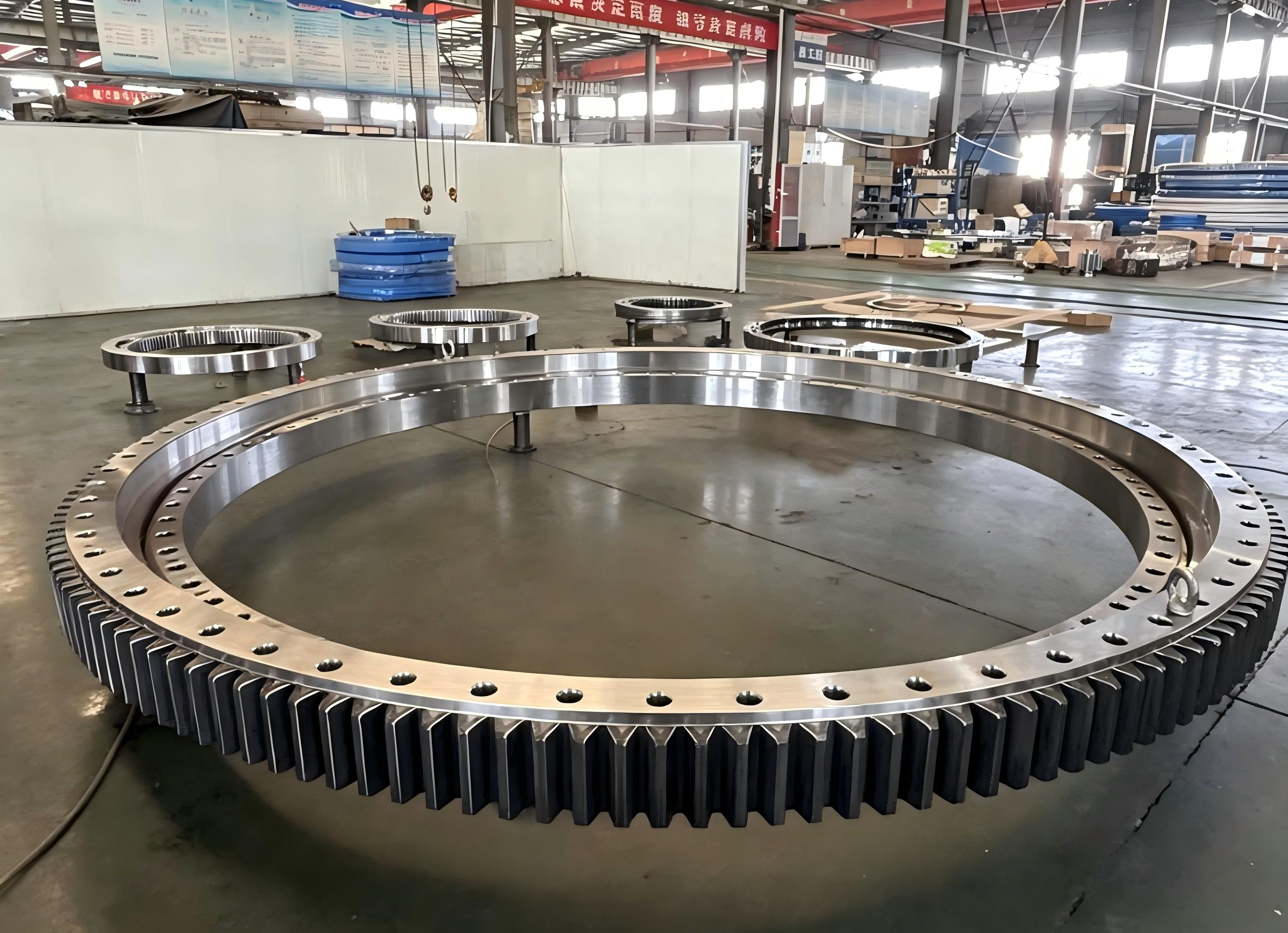
Determine whether modification or dedicated tooling fits the purchase plan
Choose modification of a standard ring when the requirement is still changing or demand is limited. This approach is generally more suitable for a prototype, a field replacement with an uncertain annual forecast, or equipment that may receive a revised interface after testing. The buyer avoids committing to tooling before the drawing and operating conditions are settled. Its limit is recurring cost: each unit may retain added machining, special component, inspection, or handling charges.
Choose a dedicated design and tooling path when the geometry is stable and repeat volume is credible. The initial charge can be distributed over planned production quantity, and the per-unit quotation may become more favorable than repeated modifications. This path does not fit a program where the OEM has not frozen mounting dimensions, duty cycle, load information, or gear requirements. Tooling should not be approved solely because the annual quantity appears high; the design must also be unlikely to change.
| Buying situation | More suitable commercial route | Reason for the choice | When the choice may not apply |
|---|---|---|---|
| Prototype or engineering validation | Modify a standard ring where technically feasible | Protects the buyer from tooling cost while requirements remain open. | Not suitable if the application already requires a raceway, gear, or mounting arrangement unavailable from a standard platform. |
| Low-volume replacement demand | Modify a standard ring | Spreads fewer non-recurring costs across a small purchase quantity. | Not suitable when repeated modifications create unacceptable unit cost or delivery complexity. |
| Stable OEM repeat production | Dedicated tooling for a custom design | Creates a basis to compare a one-time cost against lower recurring unit cost. | Not suitable until forecast quantity and drawing revision control are agreed. |
| Large, highly loaded equipment | Technical review before either route | Ring architecture may be more important than the apparent tooling saving. | Do not treat a commercial break-even calculation as a substitute for load and interface evaluation. |
For applications requiring a compact axial arrangement or a particular rolling-element structure, the initial comparison should start with engineering fit, not only price. For example, a buyer considering Three Row Roller Slewing Bearings should first establish whether the loading arrangement requires separated load paths. A less expensive modified ring is not a saving if it does not suit the operating condition.
Calculate the production-volume break-even before approving custom tooling
The decision rule is simple: fund dedicated tooling only when the forecast quantity exceeds the calculated break-even volume and the design is frozen. The calculation compares the extra one-time charge for the custom route with the recurring unit-cost difference between both routes. This gives procurement, engineering, and finance one shared decision point.
Use the following formula:
Break-even quantity = (Dedicated tooling cost − Standard modification setup cost) ÷ (Modified standard ring unit cost − Custom ring unit cost)
Round the result up to the next whole purchased unit. The formula is valid only when the modified standard ring has a higher unit cost than the dedicated custom version. If the custom unit price is equal to or higher than the modified unit price, dedicated tooling does not produce a direct unit-cost break-even. It may still be considered for technical reasons, but that is a separate approval decision.
| Quote input | What to request from each option | Why it changes the break-even result | Buyer check |
|---|---|---|---|
| One-time tooling cost | State the dedicated tooling charge separately from unit price. | This is the investment to be recovered through repeat quantity. | Confirm whether the charge covers one drawing revision or whether revisions require a new quotation. |
| Standard modification setup cost | Separate any initial programming, fixture, or engineering charge. | A setup charge reduces the cost gap between the two routes. | Do not hide this amount inside the first-unit price when comparing options. |
| Modified ring unit price | Quote the recurring price after any initial setup. | This is the baseline cost avoided by moving to dedicated tooling. | Check whether recurring special machining or non-standard purchased parts remain included. |
| Custom ring unit price | Quote the recurring price after tooling is funded. | This determines the saving per unit after the up-front investment. | Compare the same material, gear condition, delivery term, and inspection scope. |
| Forecast quantity | Use the approved production forecast, not an aspirational estimate. | The forecast determines whether the break-even quantity is realistically reached. | Use a staged purchase plan if the forecast is uncertain. |
A quote-ready calculation can be prepared without guessing at market prices. Label the modified route as Option M and the tooling route as Option T. Obtain a separated quotation for each cost item, place the values into the formula, and compare the resulting break-even quantity with the quantity expected before the next major equipment redesign. If forecast demand is below that quantity, Option M is usually the lower cash commitment. If demand is above it, Option T deserves technical and commercial review.
Do not add unrelated costs selectively. Freight, taxes, packaging, payment terms, acceptance requirements, and design-change exposure should either be included in both options or kept outside both options. Otherwise, the arithmetic may look precise while comparing unlike commercial terms.
Build an RFQ that makes the cost comparison usable
Request two matched quotations from the same technical input package. The reason is straightforward: a tooling comparison fails if the standard-ring option and custom option are based on different materials, gear specifications, acceptance conditions, or delivery assumptions. This procedure fits OEM buyers who need an approval record. It is less useful for an emergency replacement where availability is the overriding requirement.
Provide the current drawing, including ring dimensions, mounting arrangement, gear requirement if applicable, and any interfaces that cannot change.
State the application, operating environment, load information available to the buyer, rotational duty, and expected service conditions.
Identify whether the request is a prototype, a one-off replacement, a low-volume series, or a repeat-production program.
Give the expected quantity for the first order and the forecast quantity used for the break-even calculation.
Ask for Option M and Option T on the same commercial basis, with one-time charges shown separately.
Ask the supplier to identify any assumptions that prevent a direct comparison, rather than treating omissions as included.
Record the drawing revision used for pricing and identify who must approve changes before tooling proceeds.
Material requirements should also be stated rather than inferred. LTZC lists bearing-related material options including GCr15, AISI 440C, 20CrMo, 42CrMo, CuSn6, SUJ2, and Ti-6Al-4V. The appropriate choice depends on the purchaser’s service requirements. For example, corrosion resistance may lead the discussion in one application, while load-related strength and wear resistance may lead it in another. A material name alone is not a complete purchasing specification; it does not replace the required geometry, operating condition, or acceptance requirements.
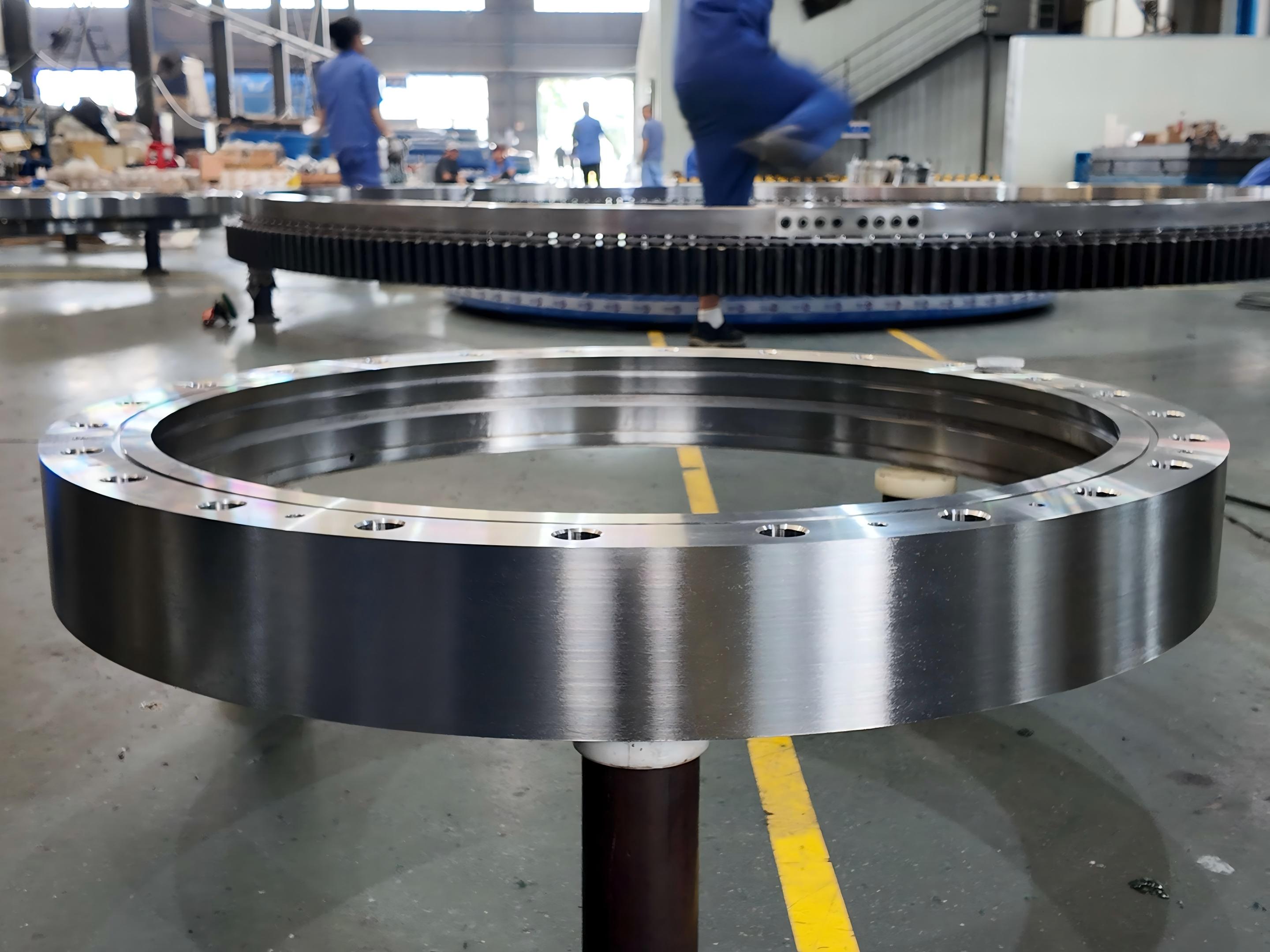
Use supplier evidence to screen technical fit before price approval
For large or demanding ring requirements, evaluate evidence of comparable scope before relying on a low-cost quotation. Price matters, but a ring program should be assessed against the supplier’s stated product scope, quality credentials, and documented project record. This is especially relevant when the requested design moves beyond a routine replacement ring.
LTZC was established in 1992 and operates from a 20,000 m² facility. Its quality management system is certified to ISO9001:2015, and the company also lists ISO14001:2015 and ISO45001:2018 certifications, along with certification by ISO, CCS, and ABS. These facts provide buyers with stated qualification points to include in supplier screening. They do not, by themselves, establish that every proposed bearing design meets a particular application requirement; the buyer must still agree the technical specification and acceptance basis for the order.
Documented large-ring work offers useful scope evidence. In 2024, LTZC delivered an integral three-row roller slewing ring with an outer diameter of 10.87 meters for 2,000-ton fixed lifting equipment. Also in 2024, LTZC reported successful production of an integrated bearing with an outer diameter of 8.445 meters for a crane-industry customer in South Korea. These cases support a discussion of large bearing requirements. They should not be read as universal performance guarantees for another application with different loads, environment, interfaces, or duty cycle.
Other supplied examples include 8-meter high-precision segmented gear rings for Wuhan Heavy Industry’s vertical friction stir welding system, segmented bearings of 24 meters delivered to Jiangsu Nantong Rainbow Heavy Machinery, and a 6-meter ground-tooth segmented gear ring supplied for Hengshui customers. Where the sourcing package includes a geared interface, buyers can also identify the required relationship between the bearing and the slewing ring gear rather than pricing those items as disconnected components.
Set cooperation terms that protect the break-even case
Keep commercial flexibility for uncertain demand, but document the conditions that could alter the calculation. LTZC states that it has no MOQ, which can suit prototype, replacement, and low-volume requirements where the buyer does not want to commit to a large initial quantity. LTZC also states a delivery range of 30 to 90 days. That range should be treated as a stated planning range, not as a fixed promise for every configuration, drawing status, material choice, or tooling requirement.
The following checklist identifies items to agree before a tooling purchase order is released. It is a buyer-side control list, not a claimed standard ordering procedure.
Tooling ownership and use: confirm the commercial terms governing the tooling and its permitted use. Do not assume ownership terms from the quotation heading alone.
Drawing control: identify the approved revision. A later change can invalidate the break-even calculation if it requires a different tool or process.
Quantity commitment: distinguish a forecast from a binding purchase quantity. The calculation should state which figure is being used.
Acceptance requirements: state dimensional, material, gear, and documentation expectations that apply to both options.
Delivery planning: align purchase timing with LTZC’s stated 30-to-90-day delivery range and clarify how tooling affects the requested schedule.
Installation responsibility: define the equipment-side installation conditions and required support before shipment.
LTZC provides after-sales support that includes bearing installation guidance, preventive maintenance training, fault diagnosis, and on-site technical assistance. The company states that quality objections receive a response within 24 hours and that on-site service starts within 48 hours in China. Buyers outside China should request the applicable support arrangement rather than assuming the domestic on-site timing applies internationally. For installation planning, refer to the available bearing installation information and include the equipment mounting conditions in the inquiry.
Recognize the mistakes that distort tooling decisions
The most common error is treating the lowest first-order price as the lowest program cost. That approach fits only a confirmed one-off requirement. It does not fit a stable OEM platform with repeat demand, because it ignores recurring modification cost and future purchasing quantity.
Using an unapproved forecast: A high forecast can make tooling appear attractive. Use a quantity approved by the buyer’s commercial and engineering teams, or calculate several forecast cases.
Comparing different technical scopes: A custom option and a modified option must be quoted against the same operating requirements. Otherwise, unit-price differences have little meaning.
Ignoring drawing-change risk: Tooling is difficult to justify when the mounting interface, gear arrangement, or load case is still moving.
Omitting non-recurring charges: Setup, special machining, and engineering-related charges must be visible. Hidden first-order costs prevent valid break-even math.
Assuming a large-ring case is directly comparable: The 10.87-meter three-row roller project demonstrates delivered scope, not a template for every lifting or rotating application.
Separating bearing and gear decisions too late: Where a geared ring is required, interface details can affect both technical fit and total cost.
A sourcing manager should approve dedicated tooling when three conditions are met: the design is controlled, the calculated break-even quantity is supported by a realistic production plan, and the supplier has been qualified against the actual application scope. When any one of these conditions remains open, a modified standard option or a staged procurement decision may carry less commercial risk.
Submit your drawing, expected quantity, and operating requirements to request a matched modification-versus-tooling quotation.