WhatsApp
 jessica.chai@ltzzc.com
 0086-379-69950051

How to Specify a Customized Slewing Ring for an RFQ Without Quote Revisions
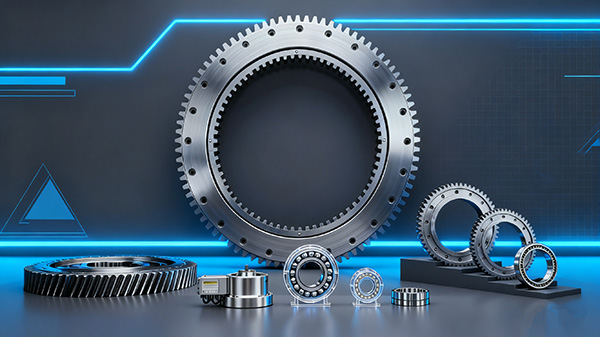
The most expensive RFQ is the one you send twice. A missing load case or an unstated gear module forces the supplier to guess, and the guess shows up later as a price change, a redesign or a ring that does not fit your structure. A Customized Slewing Ring has no catalogue page to fall back on, so every quotable detail has to come from you. This guide shows what to put in the inquiry, in what order, and how to judge whether a supplier can handle it. If your part is a one-off design, our Customized Bearings page shows the scope we work in.
What a Factory Needs Before It Can Price a Custom Ring
LTZC Bearings Co.,Ltd. supplies slewing bearings, non-standard precision bearings, gear rings, racks and bearing unit assemblies. Customization starts from your working conditions, your existing design and your technical specification. That is a useful starting point, but it also means the quality of the quote depends on the quality of what you send.
A factory needs answers to four questions, in this order:
What loads does the ring carry? This decides the raceway type, the ring section and the material.
How much space is available? Outer diameter, inner diameter and height are fixed by your structure, not by the supplier.
How does it turn? Gear type, drive method and rotation speed set the tooth specification and heat treatment.
How is it mounted and sealed? Bolt pattern, flatness of the mating surface and the operating environment set the final geometry.
If your design is still open, a bearing selection guide can help you narrow the raceway type before you write the RFQ.
Turning Load Cases, Envelope Limits, Gear Requirements and Mounting Data Into an RFQ a Factory Can Quote
This is the core of the inquiry. Treat the RFQ as four data blocks, and fill each one with numbers rather than descriptions such as "heavy duty" or "high precision".
| Data block | What to provide | Why the factory needs it | Typical gap |
|---|---|---|---|
| Load cases | Axial force, radial force and tilting moment, each for working and for extreme or out-of-service conditions. Add shock factors and duty cycle. | Sizes the raceway and rolling elements and sets the static safety factor. | Only one "rated load" is given, with no moment value. |
| Envelope limits | Maximum OD, minimum ID, maximum height, and any clearance to nearby structure. | Fixes the section the factory can work within. | Dimensions are copied from an old bearing that was itself a compromise. |
| Gear requirements | Internal, external or no gear; module, tooth count, pressure angle, tooth hardness, accuracy grade, and whether teeth are ground. | Sets machining route, heat treatment and cost. | "Gear needed" with no module or hardness stated. |
| Mounting data | Bolt circle diameter, hole count, hole size or thread, mating-surface flatness, flange or plain ring design. | Confirms the ring fits your frame and that bolt loads are acceptable. | The bolt pattern is stated but the structure stiffness is not. |
Two additions make the quote more reliable. First, add your existing drawing or the bearing it replaces, if there is one. Second, state the operating environment: temperature range, dust, water, salt or chemical exposure. This tells the factory which seals and which material to price.
A step-by-step way to assemble the package
Collect the calculated load cases from your structural or crane design. Mark which are static and which are dynamic.
Draw the envelope on your layout and confirm the ring cannot grow beyond it.
Decide the drive: external gear, internal gear or gearless with a separate drive. For the gear specification, point the supplier to your slewing ring gear requirements, including module and hardness.
List the bolt pattern and the surfaces the ring will sit on.
Add quantity, target delivery date and the inspection documents you expect.
Mark every value as "fixed" or "open to supplier proposal". This single step removes most back-and-forth.
Choosing the Raceway Type and Material to Name in the RFQ
You do not have to pick the final design. You should, however, state a preferred direction and say whether the supplier may propose alternatives. The table below gives a starting point based on common practice; the final choice depends on your load calculation.
| Type | Fits | Limits |
|---|---|---|
| Four Point Contact Ball Slewing Bearing | Compact designs with moderate combined loads. | Less suited to very high moments or shock loads. |
| Cross Roller Slewing Bearings | Equipment needing rigidity and rotational accuracy. | Needs a stiff, flat mounting structure. |
| Three Row Roller Slewing Bearings | Heavy lifting equipment with high axial load and moment. | Larger section and higher cost; unnecessary for light duty. |
| Split Slewing Bearing | Installations where a one-piece ring cannot be fitted or replaced. | Joint design and bolting need to be agreed up front. |
For materials, LTZC works with GCr15 and SUJ2 for high hardness and wear resistance, 20CrMo and 42CrMo for heavy-load alloy steel rings, AISI 440C where corrosion resistance matters, CuSn6 for wear and corrosion resistance, and Ti-6Al-4V where low weight and high temperature resistance are needed. If you do not have a material preference, state the environment and the load and ask for a proposal. If you do have one, say whether a change would be acceptable.
Evidence to Ask For When Comparing Suppliers
A quote tells you a price. It does not tell you whether the supplier has built something similar. Ask for evidence that matches your ring size and type. These are the cases and documents we can point to:
Very large rings: In 2024 LTZC delivered an integral three-row roller slewing ring with a 10.87 m outer diameter for 2,000-ton fixed lifting equipment, the largest in our history. We also produced an 8.445 m integrated bearing for a crane client in South Korea. See our Large Slewing Bearing range for related products.
Segmented designs: We delivered φ24 m segmented bearings to Jiangsu Nantong Rainbow Heavy Machinery, 8 m high-precision segmented gear rings to Wuhan Heavy Industry for a vertical friction stir welding system, and a 6 m segmented gear ring with ground teeth to a Hengshui customer.
Series production: We developed the full set of shield machine main drive ring rolls for CRCC, 15 series and 90 pieces in total.
Precision on display: A 3 m turntable bearing supported the main torch tower at the World Military Olympic Games opening ceremony.
These cases show the range of sizes and structures we have produced. They do not mean every ring is quoted at the same lead time or price. Ask any supplier, us included, how closely a past project matches your design, and which drawings and inspection records can be shared.
On quality systems, our facility holds ISO9001:2015, ISO14001:2015 and ISO45001:2018 certification, and we are certified by ISO, CCS and ABS. If your project needs a particular classification society or document set, put it in the RFQ so it can be confirmed against the certificate scope before you order.
Cooperation Terms to Confirm Before You Place the Order
Some terms are fixed by what we can state. Others need to be agreed in writing for each project.
| Item | What we can say | What to agree in the RFQ stage |
|---|---|---|
| Minimum order | No MOQ. | Quantity for this order and any expected repeat volume. |
| Delivery | Delivery runs from 30 to 90 days. | The date for your specific ring, which depends on size, material and gear specification. |
| Company base | Established in 1992; 20,000 m² facility. | Which documents you want to review, and whether you plan a visit. |
| After-sales | Installation guidance, maintenance training, fault diagnosis and on-site support. Quality objections get a response within 24 hours, and on-site service in China starts within 48 hours. | Support scope outside China, and who handles bearing installation on your site. |
| Acceptance | Not a fixed term. | Inspection items, tolerances, material certificates and who witnesses them. |
Common RFQ Mistakes That Cause Quote Revisions
Stating one load figure. A single "rated load" hides the tilting moment, which usually decides the ring size.
Copying an old part's dimensions. If that part failed early, you are specifying the failure.
Leaving the gear open. Without module, hardness and accuracy, the quote is a placeholder.
Omitting the mating structure. Flatness and stiffness of the mounting surface can change the recommended section.
Not marking what is flexible. If the supplier cannot tell what is negotiable, it will price the safest and most expensive option.
Skipping the environment. Cold, salt, dust and temperature change seal and material choices.
Buyer Checklist Before You Send the Inquiry
Load cases for working and extreme conditions, including moment.
OD, ID, height and clearance limits on a drawing.
Gear type, module, tooth count, hardness and accuracy grade, or "no gear".
Bolt circle, hole count, hole size and mounting surface details.
Operating environment and expected service life.
Quantity, target delivery and required inspection documents.
A note on which values are fixed and which the supplier may propose.
If you have most of this, send it. We can work from an existing drawing, a replaced part or a technical specification, and we will tell you which gaps change the price. You can send your drawings and load data to our engineering team through the precision slewing bearing page, and we will respond with the questions we need answered to quote.