WhatsApp
 jessica.chai@ltzzc.com
 0086-379-69950051

Double Row Ball Slewing Ring Bearing Quote Cost Drivers Explained
A purchasing team can regret treating two similar-looking slew ring quotations as equivalent. The drawings may show the same general ring diameter and a similar bolt pattern, yet the quoted total can differ because one supplier has included gear machining, corrosion protection, inspection scope, export packaging, or freight while another has not.
For a Double Row Ball Slewing Ring Bearing, buyers should compare the technical scope behind the price before choosing the lowest offer. This matters after basic feasibility is confirmed, when the remaining question is whether the quoted design, documentation, delivery terms, and support match the equipment requirement.
LTZC Bearings Co.,Ltd. supplies slewing bearings, gear rings, racks, bearing unit assemblies, slew drives, and non-standard bearing parts. Buyers assessing a new ring can compare the product configuration with our Double Row Ball Slewing Bearing range, then review adjacent options such as Single Row Ball Slewing Bearings where the load case does not require two ball rows.
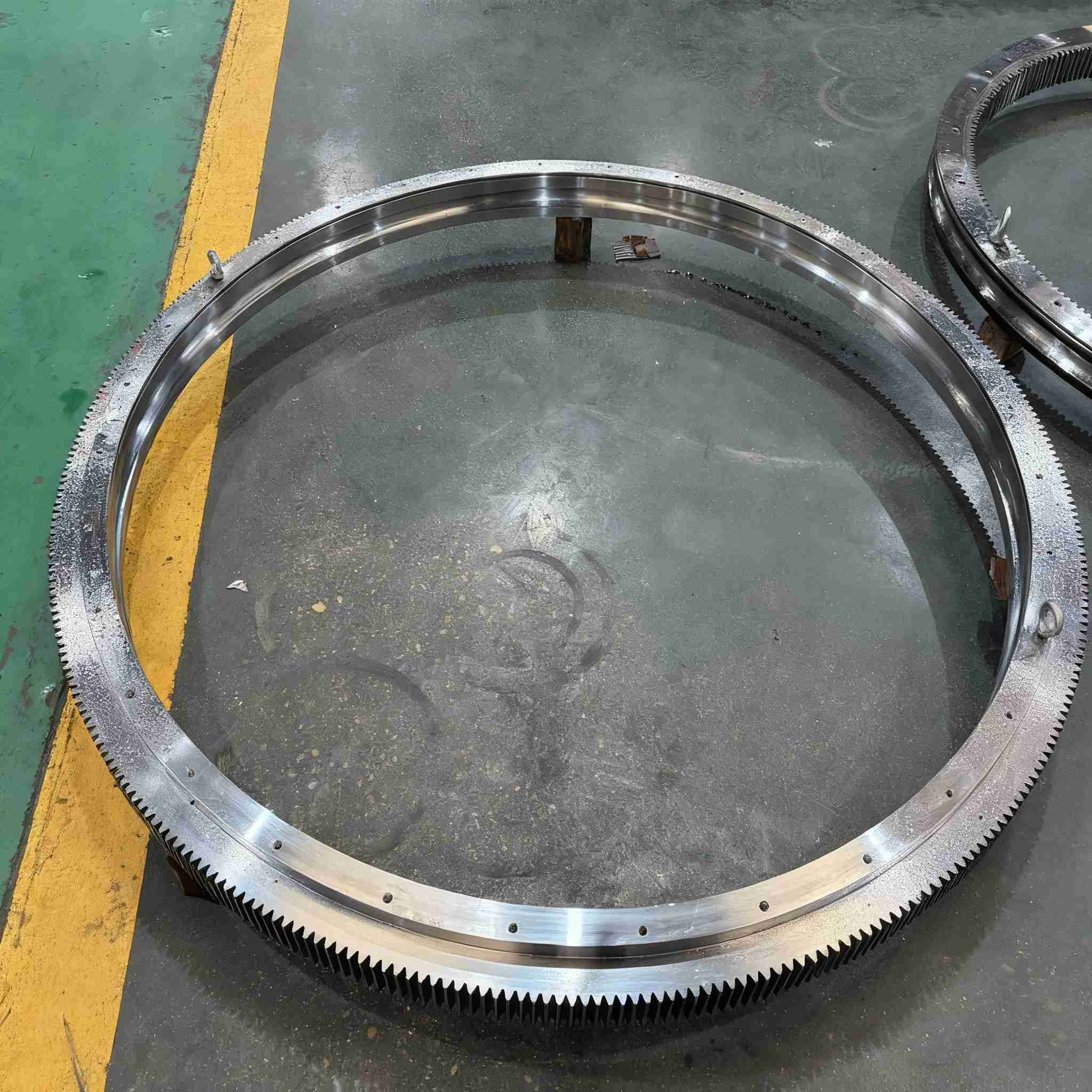
Check whether a double-row ball arrangement is the right commercial choice
Conclusion: select a two-row ball arrangement when the equipment needs the design benefits of separated ball rows and the confirmed load case supports that selection. Do not choose it merely because it appears stronger than a single-row option. An oversized or unnecessarily complex design can increase machining, material, inspection, and freight costs without producing a useful purchasing benefit.
The practical reason for reviewing the arrangement first is simple. A double-row design can involve different ball diameters or row geometry, more raceway detail, and a larger ring section than a simpler alternative. Those choices influence more than the bearing price. They can also affect the mating structure, gear choice, installation space, mounting bolts, and transport plan.
This option is commonly evaluated for equipment that needs controlled support of combined loading and tilting effects. It may fit turntables, lifting equipment, industrial positioning systems, and other rotating assemblies, subject to the actual operating conditions. It does not automatically fit applications where compact section height, very high precision, or a different load path is the governing requirement. In those situations, compare alternatives such as Cross Roller Slewing Bearings or a suitable Four Point Contact Ball Slewing Bearing.
Ask suppliers to quote against the same technical baseline
A fair price comparison requires a common requirement sheet. If one supplier prices a bare ring with an unfinished gear and another prices a finished geared assembly for outdoor service, the quotations are not comparable.
State the application: identify the machine type, rotating component, duty pattern, expected operating environment, and whether the bearing is part of a new build or replacement project.
Define the load input: provide the available axial, radial, and overturning-moment information, including normal and exceptional conditions where applicable.
Confirm the envelope: include ring outside diameter, bore, height limit, mounting interfaces, bolt-circle requirements, and gear location.
Specify rotation requirements: identify speed range, indexing or continuous rotation, backlash expectation if a gear is included, and drive arrangement.
Describe exposure: clarify indoor, outdoor, humid, corrosive, dusty, or marine-related conditions. This prevents a supplier from making different assumptions about protection requirements.
List acceptance documents: say which drawings, material records, inspection records, marking requirements, and packing requirements are needed before shipment.
Limit: a drawing alone may not communicate the actual duty or environmental exposure. Conversely, a detailed load statement without mounting dimensions may not let a supplier confirm fit. Submit both. LTZC can provide customized bearing solutions based on working conditions, existing designs, and technical specifications rather than limiting the discussion to a catalogue configuration.
Total quoted-cost breakdown for ring diameter, geometry, machining, protection, testing, packaging, and freight
Conclusion: compare the total quoted scope line by line, not just the unit price. The table below separates the cost drivers that should appear in a commercial and technical review. It does not assign fixed percentages because actual cost depends on the approved drawing, duty requirements, and delivery destination.
| Quoted-cost driver | What changes the quoted amount | What the buyer should confirm | When a lower-cost option may not apply |
|---|---|---|---|
| Ring diameter | Larger rings generally require more material, larger machining capacity, handling, and transport consideration. Ring height and wall section also affect the manufacturing scope. | Confirm outside diameter, bore, section dimensions, mounting interfaces, and whether the design is integral or segmented. | A smaller diameter should not be selected if it changes bolt spacing, load distribution, or required machine interface. |
| Ball-row geometry | Ball sizes, row arrangement, raceway form, separators, and internal clearances can change the ring design and machining work. | Ask whether both quotations use the same ball-row design, raceway arrangement, clearance target, and load assumptions. | A simpler geometry does not apply where the confirmed operating case needs the performance characteristics of two rows. |
| Gear machining | Internal, external, or gearless ring designs have different processing requirements. Tooth finishing and gear accuracy requirements also affect cost. | Confirm gear location, tooth form, module or pitch information, tooth treatment requirements, and whether gear inspection is included. | An unfinished or lower-scope gear quote is not comparable to a finished gear prepared for direct assembly. |
| Material and heat treatment | Material selection and required hardness or treatment scope affect the ring and rolling-element cost. Different applications may require different material choices. | Specify any mandated material, traceability, treatment records, or application-related restrictions. | Do not request a lower-cost material if corrosion exposure, load duty, or customer specification requires another option. |
| Corrosion protection | Surface preparation, coating type, masking areas, and protection of exposed surfaces add work and packing considerations. | State the storage period, operating exposure, coating standard if specified, and whether the gear or mounting faces need special treatment. | Basic protection may not be enough for outdoor, humid, or corrosive service conditions. |
| Testing and inspection | Requested dimensional checks, gear checks, document packages, witness arrangements, or special acceptance requirements add quoted scope. | List the exact records and acceptance criteria required. Ask whether the quotation includes them or treats them as an option. | Reducing inspection scope is unsuitable when the end user, project contract, or quality plan requires defined documentation. |
| Packaging | Ring size, protection needs, export packing method, blocking, and handling requirements influence packaging cost. | Confirm whether the quote includes export-ready packing, preservation, lifting instructions, and package marking. | Minimal packing may not apply to long-distance transport, extended storage, or rings requiring protected machined surfaces. |
| Freight | Package dimensions, gross weight, route, delivery term, destination, and handling needs can materially change the delivered cost. | Compare the same delivery term, destination, freight validity period, and inclusion or exclusion of local charges. | A low ex-works amount is not the lowest landed cost when heavy or oversized transport is required. |
Ring diameter is often the most visible cost factor, but it should not be the only one a buyer reviews. A gearless ring can appear less expensive than a geared ring because machining scope is different. A quote excluding coating and export packing can also appear favorable until the purchasing team adds required services. Request an itemized quotation that identifies included and excluded work.
Use supplier evidence to assess whether the quoted scope is credible
Conclusion: a quote should be assessed against evidence of relevant delivery scope, not against presentation alone. For larger, custom, or project-sensitive rings, ask how the supplier’s documented experience relates to your size, structure, and application requirements.
LTZC was established in 1992 and operates from a 20,000 m² facility. Its management systems include ISO9001:2015, ISO14001:2015, and ISO45001:2018 certifications, with certification also listed from ISO, CCS, and ABS. For a purchasing team, these facts do not replace application-specific qualification or agreed acceptance requirements. They do provide identifiable information to include in supplier screening.
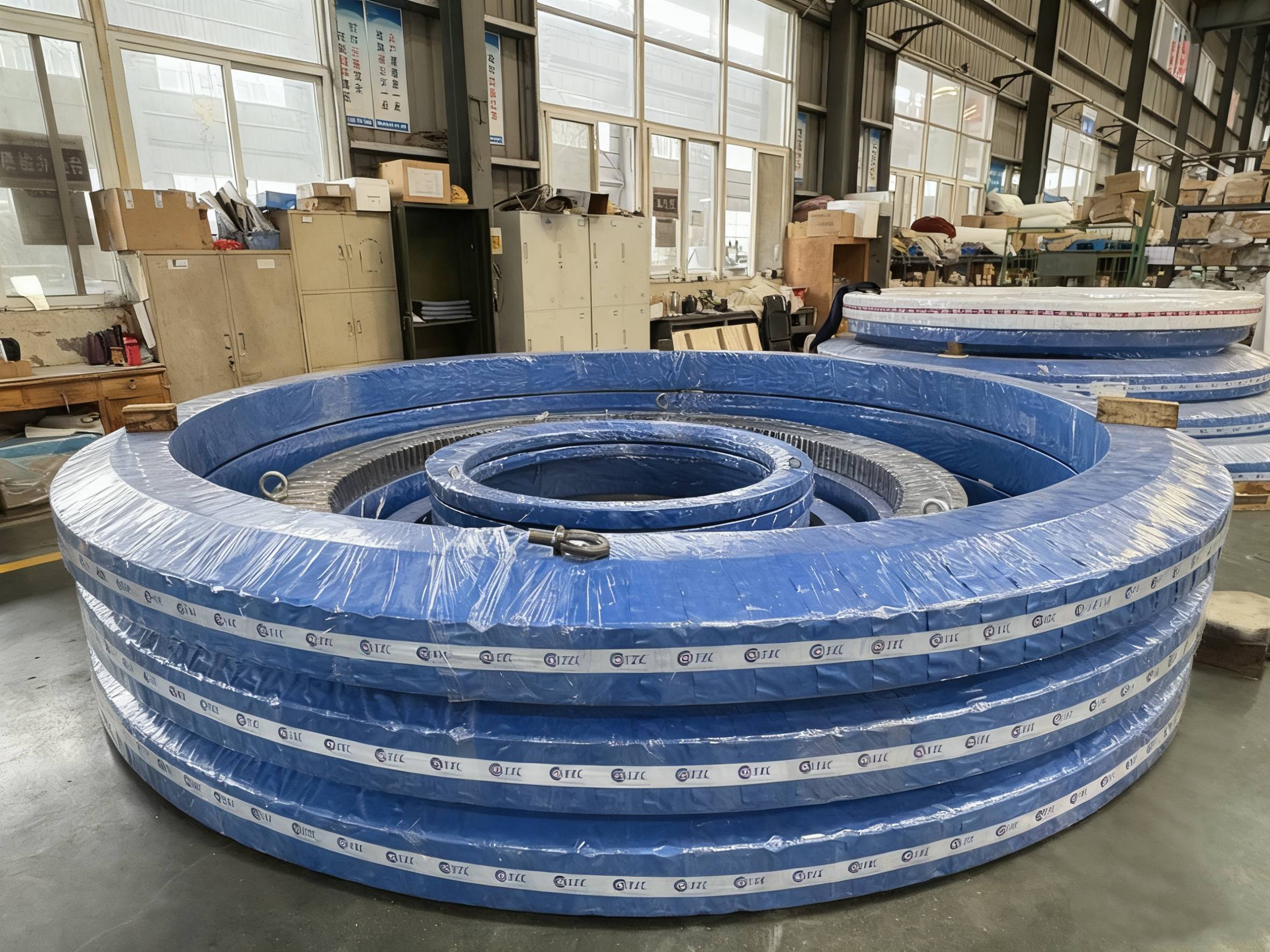
Relevant delivered examples should be read carefully and kept within their actual scope. In 2024, LTZC delivered an integral three-row roller slewing ring with an outer diameter of 10.87 meters for 2,000-ton fixed lifting equipment. The same year, LTZC produced an integrated bearing with an outer diameter of 8.445 meters for a crane-industry client in South Korea. These are not double-row ball ring examples, and they should not be presented as such. They do show experience with large bearing projects and crane-related work.
Other documented work includes 8-meter high-precision segmented gear rings supplied for a vertical friction stir welding system in a key national project, as well as a 6-meter segmented ground-tooth gear ring supplied to customers in Hengshui. If your proposed ring includes an external or internal gear, review the slewing ring gear requirements as a separate quote element instead of assuming it is included with the bearing ring.
Questions that expose non-comparable quotations
Does the offered design match the approved ring dimensions and mounting interface, or is it a substitute configuration?
Is the gear included, and if so, are tooth machining and any requested finishing included?
Which material and heat-treatment requirements are stated in the quote, and which are still to be agreed?
What inspection records are included with shipment?
What corrosion protection and preservation are included before packaging?
Does the delivery price include export packaging, freight, insurance, or destination charges?
What delivery term applies, and does it match the other supplier quotations?
Which requirements are assumptions rather than confirmed specifications?
Limit: a previous large-ring delivery is relevant evidence of project scope, but it does not prove that every new design will have the same lead time, inspection plan, or freight arrangement. Each project still requires its own technical and commercial confirmation.
Evaluate delivery, order flexibility, and technical support before issuing a purchase order
Conclusion: include cooperation conditions in the commercial comparison. A technically acceptable ring is only useful if order quantity, delivery planning, installation responsibilities, and after-sales requirements align with the project schedule.
LTZC states a delivery range of 30 to 90 days and no minimum order quantity. This can be relevant for replacement rings, prototype equipment, and low-volume industrial projects where a buyer does not need a bulk purchase commitment. The stated range is not a fixed promise for every design. A custom ring with special gear work, approval changes, or transport constraints should be reviewed against its own schedule.
Before placing an order, agree the following points in writing:
Approved technical basis: confirm the final drawing, operating conditions, materials where specified, gear arrangement, and mounting requirements.
Quoted scope: identify exactly what is included for machining, treatment, corrosion protection, records, packaging, and freight.
Acceptance basis: define dimensional requirements, required documentation, inspection responsibilities, and handling of deviations.
Delivery basis: confirm the delivery term, destination, package requirements, and any schedule dependencies.
Installation responsibility: identify who will install the ring, prepare the mounting surfaces, tighten fasteners, and confirm gear meshing.
Support route: record the technical contact and the information needed if an issue occurs after delivery.
LTZC offers bearing installation guidance, preventive maintenance training, fault diagnosis, and on-site technical assistance. For quality objections, the company states a response within 24 hours, with on-site service starting within 48 hours in China. Buyers outside China should clarify the applicable support arrangement before ordering rather than assuming identical on-site timing. Installation instructions should also be aligned with the equipment maker’s requirements; see our guidance on bearing installation when defining responsibilities.
Avoid quote-review mistakes that create later cost increases
Conclusion: the most expensive errors usually begin with an incomplete RFQ or an unexamined exclusion. Purchasing teams can prevent many of them through a structured review before commercial approval.
| Common mistake | Likely result | Immediate corrective action |
|---|---|---|
| Comparing only unit prices | Later charges for gear work, coating, packing, records, or transport. | Build a line-by-line scope matrix using the cost categories above. |
| Using an old drawing without duty information | A quoted ring may fit dimensionally but not reflect the current application conditions. | Submit the drawing together with the current load, speed, environment, and duty details. |
| Assuming “gear included” means finished gear included | Disagreement over tooth machining and inspection scope. | State gear location, tooth requirement, finishing requirement, and inspection expectation. |
| Ignoring preservation and packaging | Damage risk or unplanned export-packing expense. | Specify transport route, storage expectation, protection requirements, and delivery destination. |
| Accepting an unqualified delivery statement | Schedule planning based on a date that did not include approval, production, or freight assumptions. | Ask what the stated delivery range covers and what information is needed to confirm it. |
A disciplined comparison does not mean choosing the highest-priced quote. It means selecting the quotation that clearly covers the required bearing design, associated gear scope, accepted quality records, packaging, delivery basis, and support expectations. Where requirements are still open, mark them as open rather than allowing suppliers to make different assumptions.
Submit your drawing, operating conditions, gear requirement, inspection needs, and destination to LTZC for a quote review matched to your required scope.