WhatsApp
 jessica.chai@ltzzc.com
 0086-379-69950051

How to Source a Crossed Roller Slewing Bearing for Turret Applications
The most expensive mistake in turret sourcing happens before the purchase order. A buyer sends an outer diameter and a catalog number, three suppliers quote three different products, and nobody can compare them. A Crossed Roller Slewing Bearing carries axial, radial and tilting-moment loads in one compact ring, so a quote is only as reliable as the load, preload and mounting data behind it. This guide shows what to send, how to compare replies, and where our capabilities at LTZC fit. For the product family itself, see our Cross Roller Slewing Bearings page.
The sections below are for engineers and purchasing teams working on gun turrets, radar turret bearing positions, robotic bases and rotary tables. They assume you are at the first inquiry stage and your drawings may still be incomplete.
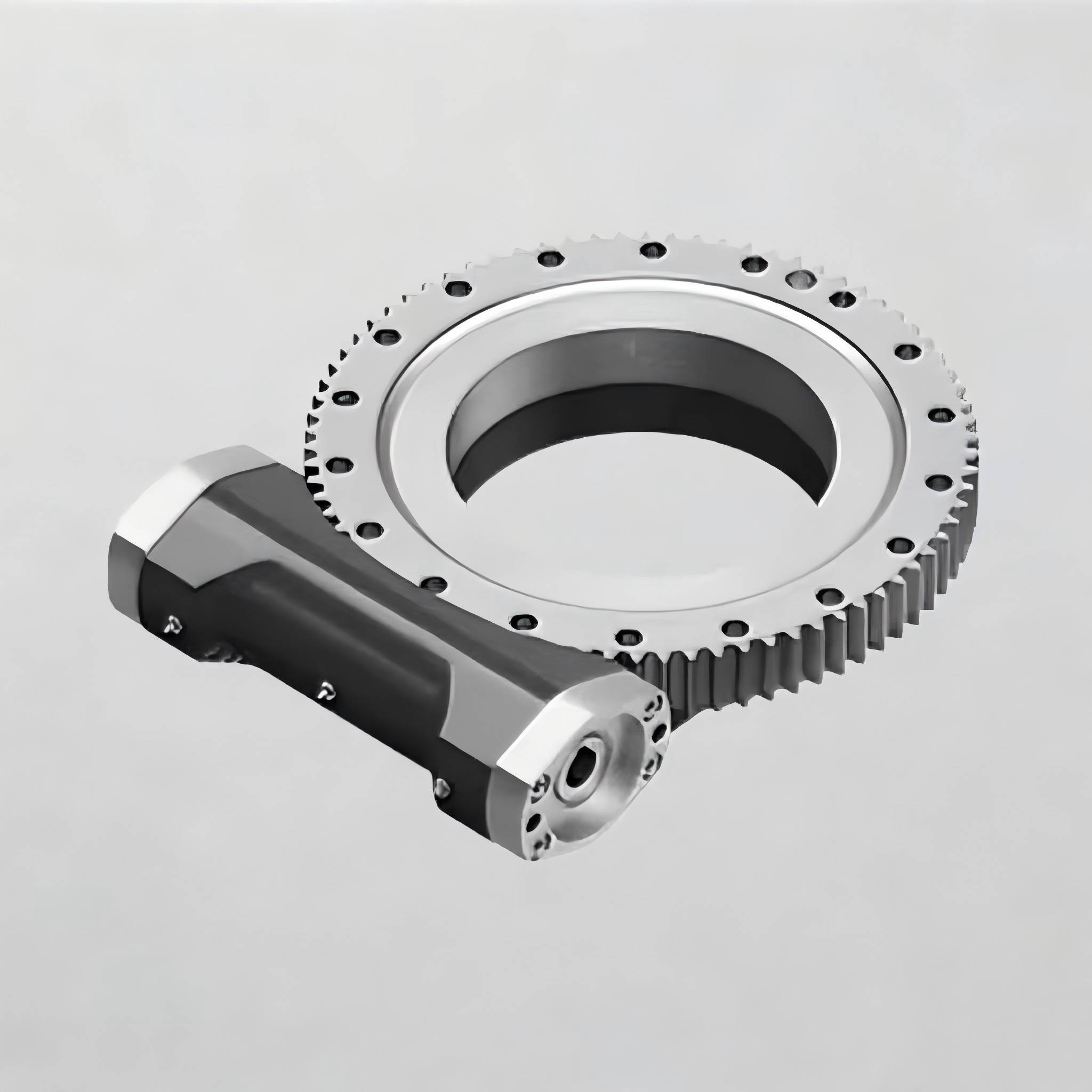
Where LTZC Fits in a Turret Sourcing Project
LTZC Bearings Co.,Ltd. was established in 1992 and operates a 20,000 m² facility. Our scope covers slewing bearings, non-standard precision bearings, gear rings, racks, bearing unit assemblies and slewing drives. For a turret project that usually means one of three requests:
A new ring built to your drawing. Send the envelope, mounting pattern and loads. We quote against your specification through our Customized Bearings service.
A replacement for an existing design. Send the old part's drawing or measured dimensions plus the failure history.
A ring with an integral gear or a matching drive. We can quote the slewing ring gear and the Slewing Drives as part of the same inquiry.
Our order terms are simple. There is no MOQ, so a single prototype ring is a valid request. The quoted delivery window is 30 to 90 days, and the exact figure depends on size, material and gear requirements, so we confirm it in the quotation. We work in GCr15, 42CrMo, 20CrMo, SUJ2, AISI 440C and other materials, and the choice affects hardness, load capacity and corrosion behavior.
If your application sits in defense, radar or aerospace, the relevant sector pages are Marine & Defense Slewing Bearings and Communication & Aerospace Slewing Bearings.
RFQ Data Pack Checklist for a Crossed Roller Slew Ring
People often ask what data is needed for a bearing RFQ. For a turret ring, seven groups of data decide whether a supplier can quote accurately. Missing any one of them forces assumptions, and assumptions are why quotes cannot be compared.
| Data group | What to provide | Why it matters |
|---|---|---|
| Envelope dimensions | Outer diameter, bore, ring height, and any radial or axial space limit | Sets the ring size and section. A tight bore may rule out a gear on one side. |
| Mounting holes | Hole count, pitch circle diameter, thread or through-hole size, counterbores, and whether holes are on the inner ring, the outer ring or both | Mismatched patterns are the most common reason a ring does not fit on first trial. |
| Runout | Required axial and radial runout at the mounting faces, and how it will be measured | Drives machining and grinding scope. Radar and optical pointing need tighter figures than a utility turntable. |
| Preload | Zero clearance, light preload or defined preload, and the reason | Preload raises stiffness but also raises rotating torque. State which matters more. |
| Torque | Maximum allowed starting and running torque, plus the motor or drive torque available | Prevents a ring that is stiff enough but too tight for the drive. |
| Sealing | Seal type preference, dust, water, salt or sand exposure, temperature range, grease requirements | Sealing affects both service life and friction torque. |
| Operating loads | Axial load, radial load, tilting moment, shock load, speed, oscillation angle, duty cycle | The core input for sizing. Static-only numbers hide fatigue risk in oscillating turrets. |
Add the gear specification if one is needed: module, tooth count, internal or external, hardening and accuracy grade. Add the material you expect, or tell us the environment and we will suggest options.
A worked example of a clean inquiry line
The figures below are illustrative inputs, not product data. They show the level of detail that lets a supplier quote without calling you back three times:
Application: radar pedestal, continuous slow rotation plus 20-degree oscillation
Envelope: OD 600 mm, bore 420 mm, height limit 45 mm
Mounting: 24 through-holes on the outer ring, 24 tapped holes on the inner ring, drawing attached
Loads: axial, radial and moment values from your structural calculation, with wind or shock case marked
Preload: light preload, drive torque limit given
Environment: outdoor, salt mist, seal and grease requirements stated
How to Specify Crossed Roller Bearings and Know When Not To
Knowing how to specify crossed roller bearings starts with deciding whether the type suits the job. Rollers sit at 90 degrees to each other in a single raceway, so one row handles combined loads in a compact section. That is why the type is common in turrets, rotary tables and robotic joints. It has limits, and the table below shows where other types take over.
| Option | Best fit | Limit |
|---|---|---|
| Crossed roller ring | Compact turrets, radar mounts, rotary tables needing stiffness and smooth rotation | Very heavy moment loads may need more roller rows |
| Four Point Contact Ball Slewing Bearing | Moderate loads where lower cost and lower friction matter | Less stiffness under high moment |
| Three Row Roller Slewing Bearings | Heavy-duty, large-diameter structures with high axial and moment loads | Larger section and cost than the application may need |
| Thin section bearing | Tight radial space, light structures | Lower load capacity |
Three decisions come first:
Load case. If the tilting moment dominates, confirm it with a calculation before you pick the section. Our bearing selection guide covers the basics.
Preload versus torque. A tracking turret may want near-zero play, while a manually driven one cannot tolerate high friction. Pick one priority and say so in the RFQ.
Mounting stiffness. A precise ring bolted to a flexible structure will not perform to its specification. Tell us flatness and rigidity of the mating surfaces if you know them.
Mistakes That Stall a Turret Bearing Quotation
Sending only a part number from a competitor. Without the loads and tolerances behind it, nobody can confirm equivalence.
Listing static load only. Oscillating turrets and recoil or wind shocks need dynamic and shock data.
Leaving out the gear. Adding it later changes ring dimensions, material and price.
Specifying runout without a measuring method. Two suppliers can read the same number differently.
Asking for quotes on unequal scopes. One quote includes the seal and grease, another does not. Write the scope into the RFQ.
Skipping installation context. Bolt grade, tightening sequence and flatness affect performance. See our notes on bearing installation.
Evidence You Can Check Before Choosing a Turret Bearing Supplier
A turret bearing supplier should show verifiable evidence, not just a product list. Here is what we can point to.
Certifications: ISO9001:2015 quality management, ISO14001:2015 environmental management and ISO45001:2018 occupational health and safety, with certification by ISO, CCS and ABS.
A turntable bearing in a public event: our 3-meter-diameter turntable bearing held up the main torch tower at the opening ceremony of the World Military Olympic Games.
Precision gear work: we supplied Wuhan Heavy Industry with 8-meter high-precision segmented gear rings for the vertical friction stir welding system of a key national project.
Large-diameter capability: in 2024 we produced an integrated bearing with an 8.445-meter OD for a crane industry client in South Korea, and delivered a 10.87-meter three-row roller slewing ring for 2,000-ton fixed lifting equipment, our largest to date.
Be clear about what these cases show. They demonstrate our experience with large, accuracy-sensitive rings and gear work. They are not crossed roller radar projects, and we do not present them as such. Your turret ring is judged on its own drawing and acceptance criteria, which is why we ask for the data pack above.
Cooperation Terms and What Still Needs Agreement
The terms we can state are these: no MOQ, a 30 to 90 day delivery window confirmed per quotation, and customized design based on your working conditions, existing designs and technical specifications. After delivery we respond to quality objections within 24 hours, and on-site service in China starts within 48 hours. Support covers installation guidance, maintenance training and fault diagnosis.
Several points are not fixed by a general policy and must be agreed for each project:
Acceptance criteria, such as which dimensions and runout readings are checked, and by whom
Whether the drawing is yours or jointly developed, and who approves changes
Material and heat-treatment choice for the environment
Packaging and shipping method for the destination
Whether you need a prototype first or a full quantity
Target markets such as Italy, Germany, Canada, South Korea and Japan do not change these steps. Export documents and any end-user approval requirements should be raised at the start.
A Practical Sequence From First Inquiry to Comparable Quotes
Fill in the seven-group data pack. Mark unknown items as unknown rather than guessing.
Decide the bearing type with the comparison table. If unsure, ask for selection advice.
Send the same pack to every supplier you shortlist, with the same scope and acceptance wording.
Compare quotes line by line: material, preload, seal, gear, runout, delivery window.
Clarify gaps by drawing markup, not by phone, so the answer is on record.
Confirm acceptance and packaging in writing before the purchase order.
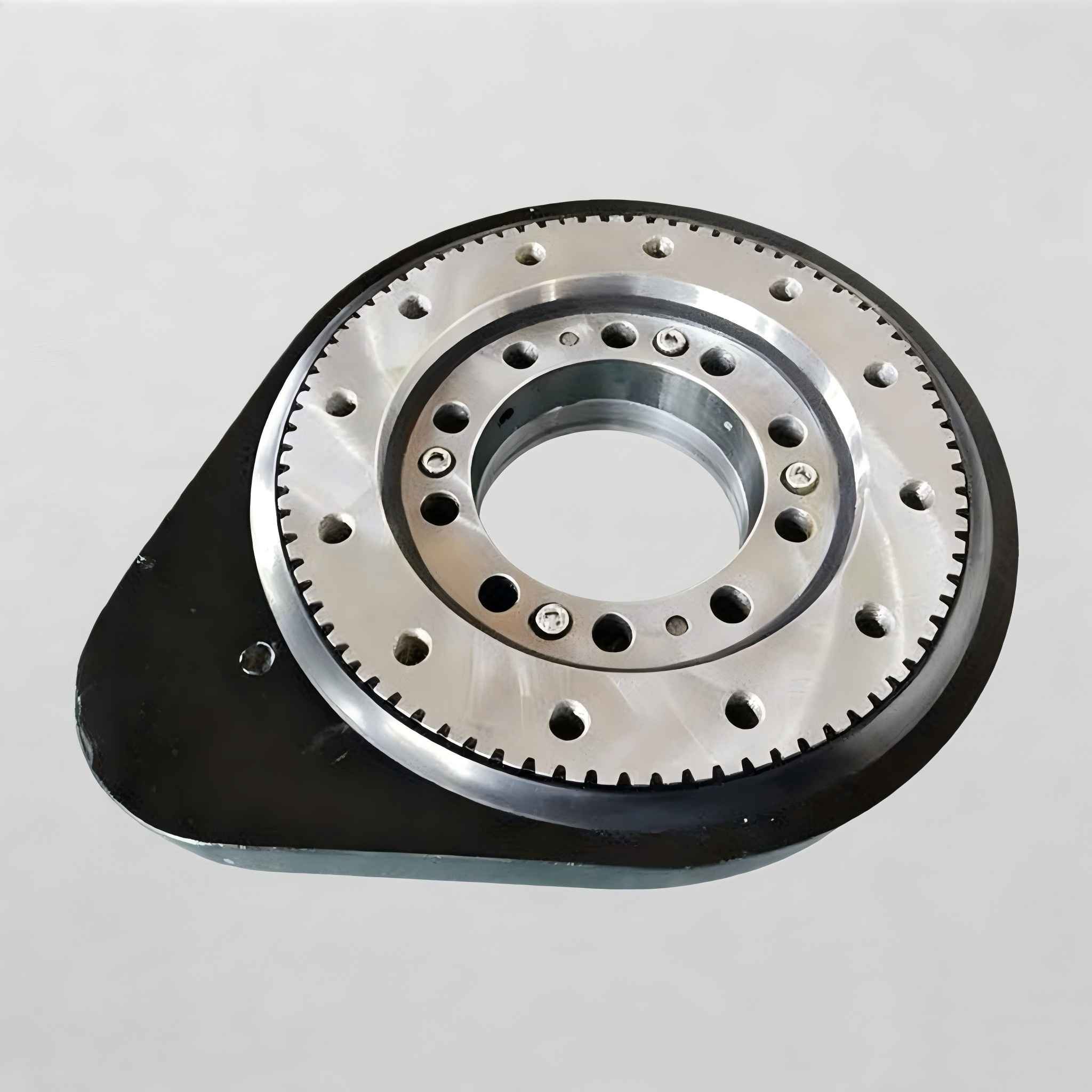
If you are at the early stage with partial drawings, send what you have. Share your turret drawing, loads and environment with LTZC, and our engineering team will tell you which items are still missing before we quote.