WhatsApp
 jessica.chai@ltzzc.com
 0086-379-69950051

I. Introduction: The Core Requirements of Solar Tracking Systems
As the global energy landscape accelerates its transition toward green, clean, and low-carbon sources—and as individuals increasingly opt for public transportation or new energy vehicles in their daily lives—solar power generation systems, onshore and offshore wind farms, and new energy charging stations are currently experiencing rapid growth. Within this context, Solar Tracking Systems—serving as a pivotal technology for enhancing photovoltaic (PV) power generation efficiency—have emerged as an indispensable component of large-scale PV power plants.
Traditional fixed-mount PV panels are unable to adjust their angle and orientation in response to the sun's changing altitude, resulting in low power generation efficiency. However, the majority of modern solar power systems have undergone significant improvement and optimization. By incorporating a "slewing drive for solar tracking systems," these systems can adjust the angle of the PV panels in real time, ensuring they remain directly aligned with the sun. This capability leads to a substantial increase in power generation efficiency—ranging from 15% to 35%—making the slewing drive an essential element of contemporary solar power systems.
Within the overall solar tracking system architecture, the slewing drive serves as the core actuating component; its performance directly dictates the system's stability, precision, and operational lifespan. In particular, the "dual-axis slewing drive" and the "worm gear slew drive" have become the industry's dominant solutions. As a specialized manufacturer of slewing drives, LTZC leverages advanced manufacturing processes and extensive engineering expertise to provide highly reliable slewing drive solutions to PV clients worldwide. These solutions are widely deployed in large-scale ground-mounted power stations, distributed PV installations, and projects situated in extreme environments—such as deserts and coastal regions.
II. What is the Function of a Dual-Axis Slewing Drive?
1. What is a Dual-Axis Slewing Drive?
A dual-axis slewing drive is an integrated assembly comprising a dual-axis worm gear transmission and a slewing bearing. It constitutes a precision drive system capable of simultaneously executing rotational movements in two directions: horizontal rotation (azimuth) and vertical tilting (elevation). Consequently, the precision and power generation efficiency of a dual-axis slewing drive are superior to those of a single-axis system. The core structure of a dual-axis slewing drive consists of a slewing bearing, a dual-axis drive mechanism, a motor and reduction unit, and a control system. Among these components, the slewing bearing is primarily responsible for supporting various loads and facilitating rotational motion; the reduction unit serves as the power source for the integrated assembly, supplying rotational kinetic energy to the slewing bearing and drive mechanism; and the dual-axis slewing drive itself governs both the horizontal azimuth angle and the vertical elevation angle.
LTZC dual-axis slewing drives typically incorporate high-precision slewing bearings and optimized gear designs to ensure that the system maintains stable output throughout long-term operation.
2. Core Functions of the Dual-Axis Slewing Drive
(1) Enabling Precise, All-Weather Tracking
The dual-axis slewing drive automatically adjusts the position of photovoltaic modules based on the real-time position of the sun, ensuring that the modules consistently maintain the optimal angle of incidence, thereby significantly boosting power generation efficiency.
(2) Enhancing System Power Generation Yields
By precisely tracking the sun's trajectory, a dual-axis system can increase power generation output by approximately 25% to 35% compared to fixed-mount systems; this advantage is particularly pronounced in high-latitude regions.
(3) Adapting to Complex Terrain
The dual-axis structure offers the flexibility to accommodate complex installation environments—such as mountainous or sloped terrain—thereby enhancing the project's adaptability to diverse site conditions.
(4) Improving Wind Resistance
When designing its dual-axis slewing drives, LTZC places special emphasis on optimizing structural rigidity and locking capabilities. Furthermore, the units feature a durable sealing system that provides superior water resistance and corrosion protection, ensuring stable and reliable operation even in strong-wind environments.
III. What is the Function of a Worm Gear Slew Drive?
1. What is a Worm Gear Slew Drive?
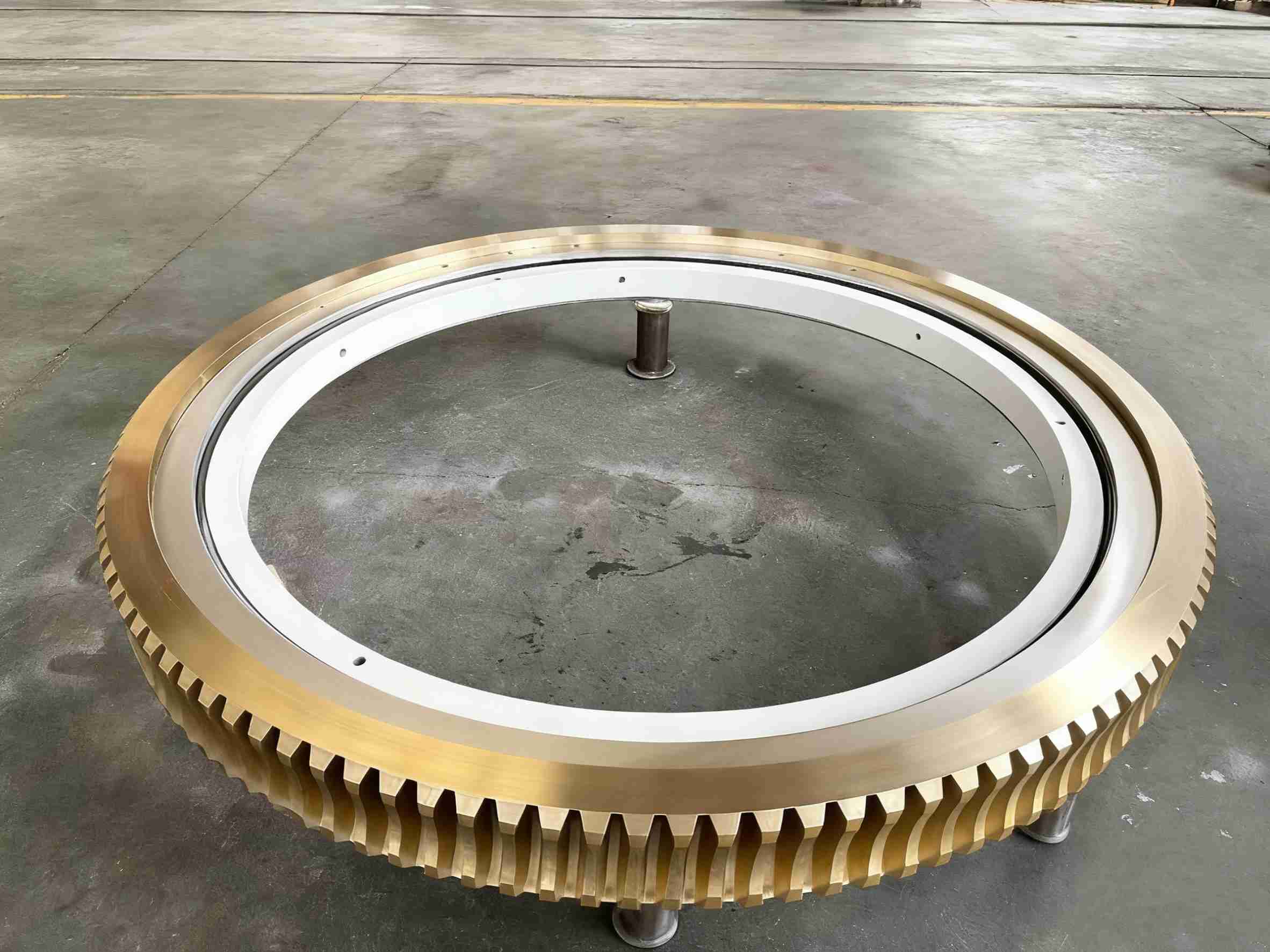
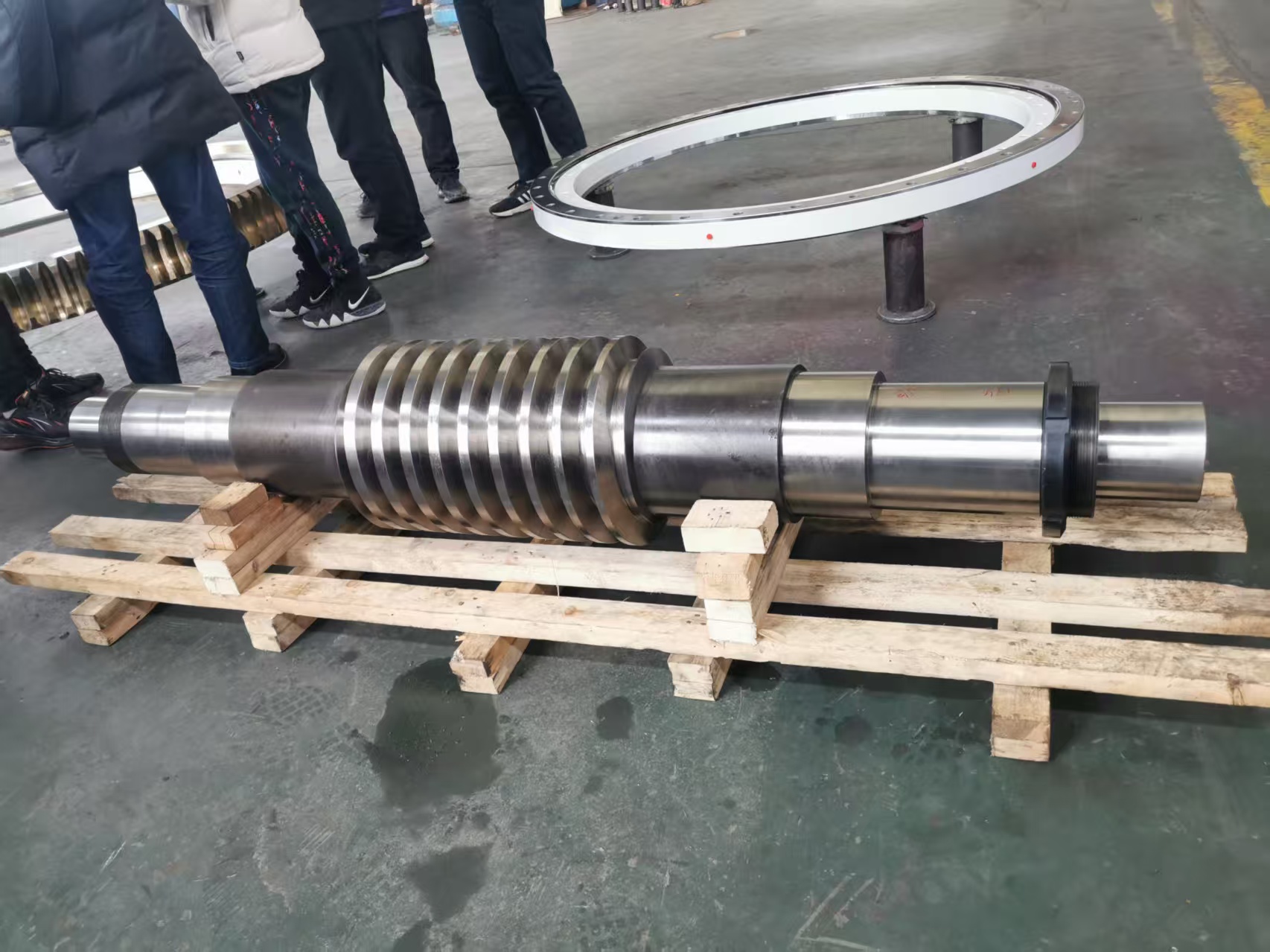
A worm gear slew drive is an integrated rotary drive unit that combines a worm and worm wheel transmission, a slewing bearing, and a sealed housing. It is a device that generates rotational motion through the meshing of a worm screw and a worm wheel, and it is widely utilized in single-axis solar tracking systems. Featuring a sealed housing, the worm gear slew drive is well-suited for operation in complex and demanding environments. LTZC’s worm gear slew drives employ precision-machined worm screws and high-strength gear rings to ensure both high operational efficiency and minimal wear.
2. The Core Functions of a Worm Gear Slew Drive
(1) Stable Rotation of PV Modules
The worm gear slew drive provides smooth and continuous rotational power for photovoltaic (PV) modules, serving as the core drive unit within single-axis tracking systems.
(2) Enhanced Safety via Self-Locking Function
The worm gear structure possesses inherent self-locking characteristics; this feature prevents accidental rotation of the PV panels in the event of a power failure or during extreme weather conditions, thereby significantly enhancing overall system safety.
(3) Reduced Energy Consumption
Thanks to optimized transmission efficiency, LTZC’s slew drives consume less energy during operation. This efficiency contributes to lower system operating costs, particularly during prolonged periods of continuous operation.
(4) Simplified System Structure
Compared to dual-axis systems, the worm gear slew drive features a simpler structural design and entails lower maintenance costs, making it an ideal solution for large-scale deployment.
IV. Differences Between Dual-Axis and Worm Gear Slewing Drives
When selecting a slewing drive for a solar tracking system, it is essential to choose the appropriate type based on the specific project requirements.
| Comparison Criteria | dual axis slewing drive | worm gear slew drive |
| Motion Type | Dual-axis | Single-axis |
| Tracking Accuracy | High | Moderate |
| Power Generation Efficiency | Higher | High |
| System Complexity | High | Low |
| Cost | Higher | Lower |
| Maintenance Difficulty | More Complex | Simple |
| Applicable Scenarios | High-end power plants, complex terrain | Large-scale ground-mounted power plants |
V. Practical Case Studies: Dual-Axis Slewing Drives vs. Worm Gear Slewing Drives
Case Study 1: Middle East Desert PV Project (Dual-Axis Slewing Drive)
Project Background:
Located in the desert region of the Middle East, this project subjects the slewing drives to extreme environmental conditions—including high temperatures, intense wind and sand, and strong UV radiation—thereby placing exceptional demands on the overall performance of the equipment.
Solution:
LTZC provided the client with customized dual-axis slewing drives featuring:
A high-sealing design to prevent the ingress of sand and dust
A specialized lubrication system adapted for high-temperature environments
A reinforced structural design to enhance wind resistance
Project Outcomes:
Power generation efficiency increased by approximately 32%
Equipment has operated stably for over 5 years
Maintenance costs reduced by 20%
Case Study 2: Large-Scale Ground-Mounted Power Station in Southeast Asia (Worm Gear Slew Drive)
Project Background:
Located in Southeast Asia, this project is situated in a region characterized by a hot, humid, and rainy climate.
Solution:
LTZC supplied worm gear slew drives featuring:
Anti-corrosion coatings to enhance resistance to humidity
An optimized drainage design
A self-locking mechanism to enhance safety
Project Outcomes:
Stable system operation
Fault rate reduced by 30%
Significant reduction in operation and maintenance costs
VI. Conclusion
As the photovoltaic industry continues to evolve, the importance of slewing drives for solar tracking systems is becoming increasingly evident. Whether it is a high-precision dual-axis slewing drive or a stable and efficient worm gear slew drive, these components play a pivotal role in boosting the efficiency of solar power generation.
As a specialized manufacturer of slewing drives, LTZC delivers high-performance, long-lifespan solutions to customers worldwide through continuous technological innovation and rigorous quality control.
Summary of Core Values:
Enhancing power generation efficiency
Reducing operation and maintenance costs
Improving system stability
Adapting to diverse and complex environments
Looking ahead, with the convergence of intelligent and automated technologies, slewing drives will play an even more critical role within solar tracking systems. LTZC will continue to deepen its expertise in this field, providing reliable core component support for the global green energy sector.