WhatsApp
 jessica.chai@ltzzc.com
 0086-379-69950051

What are the advantages of LTZC large slewing bearings?
What are LTZC Large Slewing Bearings?
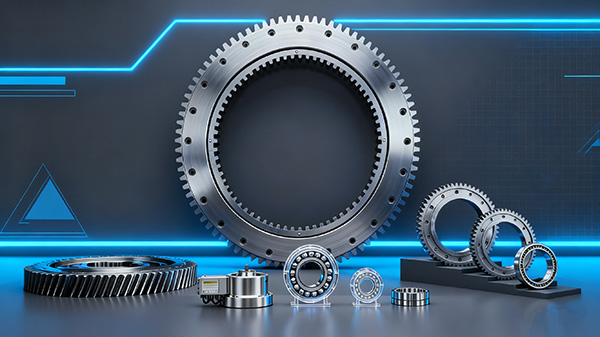
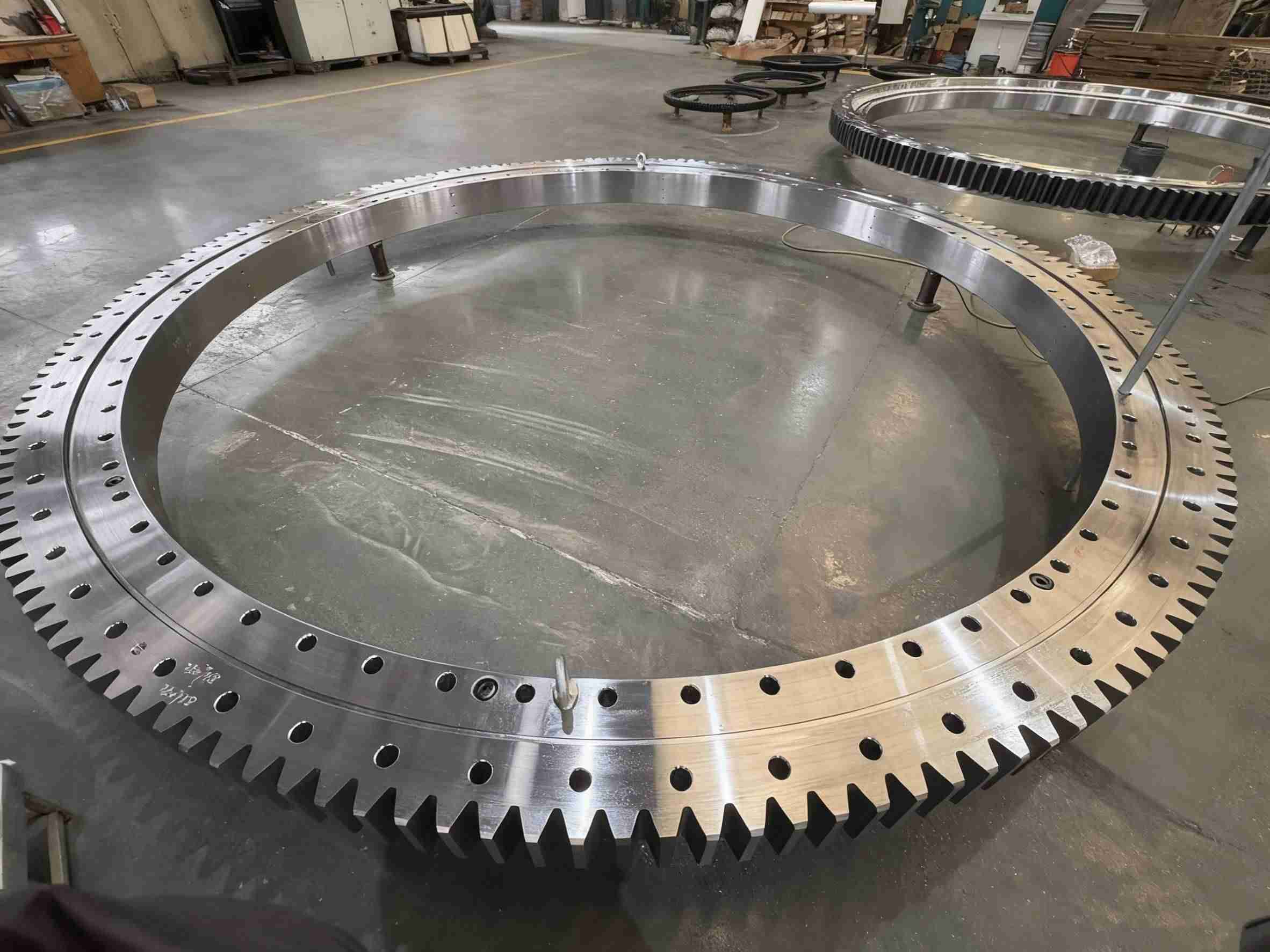
Standard bearings are typically capable of supporting axial or radial loads in only a single direction. LTZC large slewing bearings, however, are massive rotary support components designed to handle complex loads—specifically axial loads, radial loads, and overturning moments—that standard bearings cannot accommodate. They are typically utilized in industrial equipment requiring heavy-duty, low-speed rotational movement. A large slewing bearing consists of several key components: an inner ring, an outer ring, rolling elements, a cage, a sealing system, and a gear structure. Compared to conventional bearings, large slewing bearings feature significantly larger diameters, higher load-bearing capacities, and more complex structural designs to manage the forces acting upon them. The large slewing bearings manufactured by LTZC range in diameter from 200 mm to 13,000 mm, thereby meeting the diverse operational requirements of a wide array of industrial equipment.
How Do LTZC Large Slewing Bearings Work?
As a critical rotating load-bearing component in heavy-duty machinery, LTZC large slewing bearings integrate the functions of structural support, precise positioning, combined load-bearing, and rotational transmission. Featuring a circular overall structure, each bearing consists of inner and outer rings, rolling elements, cages, seals, and a gear ring. They are available in three configurations: internal gearing, external gearing, and non-geared (toothless). The design incorporates optimized sealing and lubrication systems to effectively prevent the ingress of debris into the bearing interior, thereby enabling reliable operation under harsh working conditions.
One end of the LTZC large slewing bearing is fixed to the equipment's base, while the other end rotates in conjunction with the gear ring, driving the movement of the upper platform and operational superstructure. The internal rolling elements distribute the load evenly along the raceway, allowing the bearing to simultaneously accommodate axial loads, radial loads, and overturning moments. This effectively counterbalances the equipment's self-weight, lateral impact forces, and eccentric overturning moments, ensuring smooth, snag-free operation. These bearings offer numerous advantages, including high load-bearing capacity, stable transmission, high precision, and resistance to impact and wear. The non-geared variant is typically suited for low-speed, light-load manual rotation applications, while the geared variants are predominantly utilized in automated, heavy-duty, and continuous-operation scenarios. These bearings are widely integrated into engineering machinery, mining equipment, port machinery, wind power systems, and various types of intelligent rotating platform equipment.
What types of large LTZC slewing bearings are available?
| Slewing Bearing Type | Structural Features | Typical Applications | Main Advantages |
|---|---|---|---|
| Single Row Four-Point Contact Ball Slewing Bearing | Single row ball design with four-point contact, available with external gear, internal gear, or without gear | crane slewing ring, aerial work platforms, packaging machinery, automation equipment | Compact structure, lightweight, easy installation, cost-effective |
| Double Row Ball Slewing Bearing | Double row ball structure with upper and lower rolling elements sharing the load | Port machinery, marine equipment, large rotary platforms | High stability, strong overturning resistance, suitable for heavy-duty applications |
| Crossed Roller Slewing Bearing | Cylindrical rollers arranged at 90° cross angles with line contact raceways | robot bearing, industrial robots, precision rotary tables, automation equipment | High rigidity, high precision, low friction, smooth rotation |
| Three-Row Roller Slewing Bearing | Three rows of rollers separately axial, radial, and overturning loads | Large crane slewing ring, port cranes, mining equipment | Extremely high load capacity, excellent impact resistance, long service life |
What are the advantages of LTZC large slewing bearings?
1. Robust Customization Capabilities
As a supplier of large slewing bearings, LTZC has dedicated over 30 years to the bearing manufacturing industry, accumulating extensive expertise in R&D and production. We have successfully resolved complex bearing challenges across various sectors—including port equipment, material handling systems, and construction machinery—and offer customized solutions for non-standard bearings tailored to meet the specific requirements of diverse industrial equipment.
2. High Load-Bearing Capacity
LTZC large slewing bearings are manufactured using 42CrMo high-strength alloy steel, enabling the entire bearing assembly to rotate with stability, efficiency, and precision under specified loads. LTZC large slewing bearings are particularly well-suited for applications such as crane slewing rings and excavator slewing bearings.
3. High-Precision Manufacturing Capabilities
For robotics and high-end automation equipment, LTZC bearings deliver exceptional rotational precision, minimal runout, and low noise levels, thereby meeting the rigorous demands of the advanced automation industry.
4. Superior Heat Treatment Processes
The service life of a slewing bearing is directly correlated with the quality of its heat treatment. LTZC’s advanced processing techniques ensure that our slewing bearings possess high wear resistance, effectively extending their operational lifespan and—through superior manufacturing processes—helping clients reduce maintenance costs.
5. Global Application Experience
LTZC products have been exported to numerous countries and regions, including Germany, Japan, South Korea, and Canada. Our application sectors span a wide range of industries, including construction machinery (excavators, cranes), port machinery (deck cranes, ship steering gears), automation robotics, and packaging equipment (blow molding machines, filling machines). This wealth of industry experience enables LTZC to quickly and accurately understand our clients' specific needs.
How to Select the Appropriate Large-Scale Slewing Bearing?
1. Selection Based on Load — The loads on different types of equipment vary significantly; therefore, axial loads, radial loads, and overturning moments must all be taken into consideration.
2. Selection Based on Rotational Speed — Large-scale slewing bearings typically operate under heavy loads at low speeds; however, the rotational speed directly impacts the fatigue life of the bearing.
3. Selection Based on Installation Space — Since large-scale slewing bearings have stringent requirements regarding installation space, segmented or lightweight designs should be considered when space is limited.
4. Selection Based on Operating Environment— If the equipment is exposed to harsh operating conditions—such as strong corrosion, extreme temperature fluctuations, or high dust levels—specialized bearing seals and lubrication systems must be designed.
LTZC bearing is available to assist you with the bearing selection process.
Common Questions Regarding Large Slewing Bearings
1. What are the functions of LTZC large slewing bearings?
LTZC large slewing bearings serve as the core rotating load-bearing components in heavy-duty equipment. Integrating support, positioning, compound load-bearing, and rotational transmission functions, they are capable of simultaneously withstanding axial loads, radial loads, and overturning moments. They enable equipment to perform continuous 360° rotation or reciprocating oscillation, making them suitable for a wide range of heavy-duty and complex operating conditions.
2. What are the structural features and classifications of LTZC large slewing bearings?
Structurally, they feature a circular design comprising inner and outer rings, rolling elements, cages, seals, and gear rings. They are classified into three types: internal-geared, external-geared, and non-geared (gearless); the geared variants represent the mainstream configuration for heavy-duty industrial applications. Manufactured from high-strength forged alloys and equipped with sealed lubrication systems, these bearings exhibit exceptional wear resistance, rugged durability, and protection against dust and water, ensuring stable, long-term operation even in harsh environments.
3. What types of loads can LTZC large slewing bearings withstand?
They are capable of simultaneously withstanding three critical types of loads: Axial loads, which support the equipment's self-weight and vertical operational pressures; radial loads, which counteract horizontal pulling forces and lateral impact forces to prevent equipment displacement; and overturning moments, which balance the tipping torques generated by cantilevered or eccentric operations, thereby suppressing equipment swaying or tilting and ensuring the safety and stability of heavy-duty operations.
5. What are the advantages and application scenarios of LTZC large slewing bearings?
They are characterized by high load-bearing capacity, smooth transmission, high positioning precision, low noise levels, and excellent resistance to impact and wear. The non-geared variants are suitable for low-speed, light-load manual rotation applications, while the geared variants are ideally suited for automated, heavy-duty, and continuous operations. These bearings are widely utilized in large-scale equipment across various sectors, including construction machinery, mining, port operations, wind power generation, and intelligent rotating platforms.
Contact LTZC for customizing bearing