WhatsApp
 jessica.chai@ltzzc.com
 0086-379-69950051

LTZC 6200mm Large-Diameter Bearing for Stackers and Reclaimers
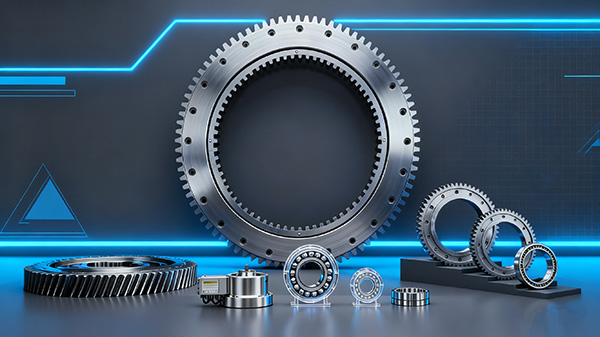
In heavy industrial sectors—such as ports, mining, metallurgy, and power generation—stacker-reclaimers serve as core equipment for the handling and transfer of bulk materials. They undertake critical tasks involving the stockpiling, retrieval, and conveyance of raw materials; consequently, their operational stability directly determines the efficiency and safety of the entire production process. The performance, precision, and service life of stacker-reclaimer bearings directly impact the equipment's operational efficiency, maintenance costs, and operational safety. Given that stacker-reclaimers typically utilize large-diameter, heavy-duty bearings, these components effectively function as the "joints" essential for the equipment's normal operation. As a specialized supplier of slewing bearings, LTZC has dedicated over 30 years to the field of large-scale bearing manufacturing. Leveraging sophisticated technical expertise, customized solutions, and reliable product quality, LTZC has developed and manufactured a 6200mm large-diameter bearing specifically designed for stacker-reclaimers. This product is precisely engineered to meet the rigorous operating conditions of various heavy-duty stacker-reclaimers, providing global heavy industry clients with efficient, stable, and durable bearing solutions that facilitate a dual enhancement in both production efficiency and equipment reliability.
I. What Are Stacker-Reclaimer Bearings?
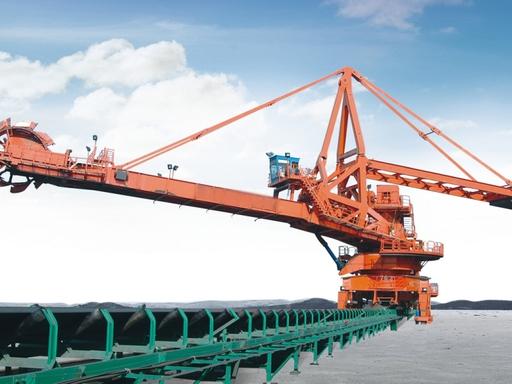
In modern bulk material handling systems, stacker-reclaimers are critical pieces of heavy machinery found in mining operations and port terminals, responsible for the stockpiling and retrieval of materials. Within this entire equipment system, the stacker-reclaimer bearing plays a pivotal role in providing rotational support and transmitting loads; it is one of the core components that determine the operational stability and service life of the equipment.
Structurally, stacker-reclaimer bearings typically fall into the category of large slewing bearings or heavy-duty turntable bearings, with diameters often measuring in the range of several meters—sometimes even exceeding 6,000 mm. These bearings are primarily installed at the stacker-reclaimer's slewing platform, enabling the equipment's superstructure to rotate continuously through 360° around a central axis while simultaneously withstanding complex, multi-directional loads generated by the superstructure itself, the handled materials, and dynamic operational forces.
In terms of operating principles, stacker-reclaimer bearings function by utilizing rolling elements (steel balls or rollers) that roll between the raceways of the inner and outer rings to effectively distribute and transmit axial forces, radial forces, and overturning moments. Compared to standard bearings, they are characterized by the following features:
Extremely High Load-Bearing Capacity: Capable of withstanding complex loads ranging from hundreds to even thousands of tons.
Massive Structural Dimensions: Diameters reaching several meters, classifying them as quintessential large-scale slewing bearings.
Low-Speed, Heavy-Load Operation: Characterized by extremely low rotational speeds, yet subject to continuous and significantly fluctuating loads.
Harsh Operating Environments: Subject to prolonged exposure to dust, shock impacts, temperature fluctuations, and corrosive conditions.
Consequently, a stacker-reclaimer bearing is far more than a mere mechanical component; it is a sophisticated, systemic product that integrates structural design, materials engineering, heat treatment processes, and advanced sealing and lubrication technologies. Its performance directly dictates the operational efficiency and safety of the entire stacker-reclaimer machine.
II. LTZC: Custom-Engineered Bearings for Stackers and Reclaimers
1. Operating Conditions and Challenges for Stacker and Reclaimer Bearings
Bearings used in stackers and reclaimers face a complex operating environment characterized by high dust levels and severe corrosion. Furthermore, they are required to operate continuously over long periods under conditions of low rotational speed and heavy load.
(1) High-Dust Environments
Stackers and reclaimers are frequently deployed in mining operations and port terminals, where they are exposed to environments with high concentrations of airborne dust. During operation, fine particulate matter can easily ingress into the interior of the bearings, leading to raceway wear, lubrication failure, and premature fatigue damage.
(2) Frequent Impact Loads
During the material reclaiming process, the uneven accumulation of bulk materials can result in instantaneous, unbalanced forces acting on the equipment. This generates significant impact loads that exert extreme stress on the bearing raceways and rolling elements.
(3) Coexistence of Heavy and Eccentric Loads
As stackers and reclaimers undergo slewing (rotational) movements, structural eccentricities and the uneven distribution of materials often subject the bearings to substantial overturning moments. This imposes rigorous demands on both the structural rigidity of the bearings and the specific design of their raceways.
(4) Low-Speed, Continuous Operation
Although the rotational speeds at which these bearings operate are typically low, the equipment is often required to run continuously for extended periods. Consequently, this necessitates the use of highly durable bearing materials and the implementation of a robust, well-engineered lubrication system.
(5) Temperature Fluctuations and Corrosion Issues
In open-air environments—particularly at port terminals—bearings must withstand significant diurnal temperature fluctuations. Furthermore, in coastal regions, they are required to resist corrosion caused by salt spray and marine atmospheres.
2. LTZC’s Bearing Solutions for Stackers and Reclaimers
When formulating bearing solutions for stackers and reclaimers, the LTZC team takes full account of the aforementioned complex operating conditions. Drawing upon the extensive experience accumulated over recent years in the manufacturing of bearings for this specific application, we employ design optimizations to ensure optimal load distribution. This approach facilitates the efficient and stable operation of the equipment, thereby helping our clients reduce maintenance cycles and lower overall operating costs. As a specialized supplier of slewing bearings, LTZC offers a comprehensive, systematic solution package designed to ensure that even massive bearings—such as those measuring 6,200 mm in diameter—continue to deliver exceptional performance, even when operating under the most extreme environmental conditions.
(1) Optimized Structural Design
The LTZC series employs a three-row roller slewing bearing structure. Compared to traditional single-row ball slewing ring or double-row ball slewing bearing designs, axial, radial, and overturning moment loads are distributed across separate raceways. This results in a more uniform load distribution, endowing the bearing with superior load-bearing capacity and resistance to deformation, thereby enhancing the operational stability of the equipment. Furthermore, the stress distribution within the raceways has been optimized to ensure even load distribution, thereby extending the service life of the bearing.
(2) High-Performance Materials and Heat Treatment
LTZC selects high-quality alloy steel as the primary material for its bearings. Through the application of deep-layer quenching and tempering processes, the raceway surfaces acquire exceptional hardness, toughness, and fatigue resistance. This specific combination of materials and processing techniques enables the bearing to effectively withstand heavy loads and impact-intensive operating conditions.
(3) Optimized Bearing Sealing Design
To address the challenge of dust ingress, LTZC has engineered a multi-layer sealing structure incorporating rubber sealing rings and dust-proof baffles. This sealing design significantly reduces the probability of dust penetrating the bearing's interior, thereby protecting both the raceways and the lubrication system at the source.
(4) Intelligent Bearing Lubrication Solution
LTZC equips this 6200mm large-diameter bearing with a centralized lubrication system to ensure the uniform distribution of grease. This system effectively prevents excessive friction during prolonged operation under low-speed, heavy-load conditions. Additionally, we recommend the use of high-viscosity, extreme-pressure (EP) grease specifically formulated to meet the demands of such low-speed, heavy-load operating environments.
(5) Comprehensive Technical Services
LTZC offers more than just products; we provide our customers with a comprehensive suite of technical services. This includes expert guidance on bearing installation and maintenance, as well as the provision of a corresponding warranty period, ensuring that our customers can purchase LTZC slewing bearings with complete peace of mind.
III. How to Replace Stacker-Reclaimer Bearings
Replacing the bearings on a stacker-reclaimer is a major equipment maintenance undertaking involving several critical steps—such as hoisting, alignment, and pre-tensioning—and must be executed in strict accordance with established specifications.
1. Removal of the Old Bearing
First, the equipment must be completely shut down, and the upper structure dismantled. Large-scale hoisting equipment is used to lift the upper slewing platform; subsequently, the connecting bolts are removed to allow for the gradual extraction of the old bearing. During this process, the original installation parameters should be recorded, and the condition of the connecting surfaces should be inspected.
2. Inspection of the Mounting Base
Inspect the bearing mounting surface for any impurities, oil stains, cracks, corrosion, or other defects. Such issues can compromise the bearing's performance; therefore, machining repairs must be performed if necessary.
3. Installation of the New Bearing
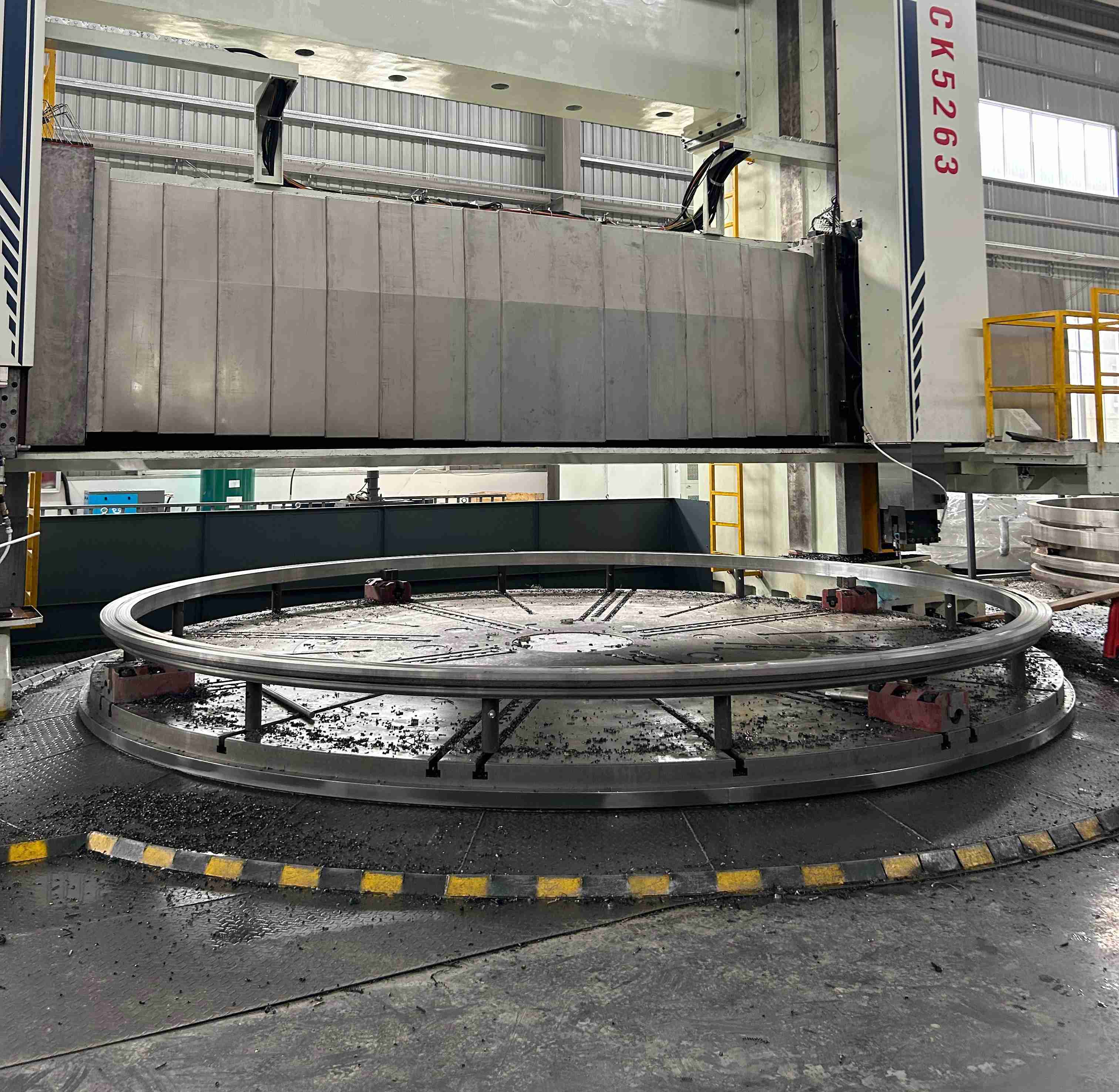
Hoist the 6200mm slewing bearing—supplied by LTZC—into its designated position. Using high-strength bolts, gradually tighten the fasteners in a diagonal sequence while strictly controlling the pre-tensioning force to ensure uniform load distribution.
4. Lubrication and Commissioning
Upon completion of the installation, ensure thorough lubrication is applied. Subsequently, conduct a no-load operational test and inspection to verify that the bearing operates smoothly without any abnormal noises or binding. The equipment may be put into formal operation only after all performance indicators have met the required standards.
Contact LTZC for detailed technical guidance.
IV. Common Issues (FAQ) Regarding Stacker-Reclaimer Bearings
1. Why are stacker-reclaimer bearings prone to premature wear?
Because stacker-reclaimer bearings operate for extended periods under conditions characterized by high dust levels, low rotational speeds, and heavy loads, dust particles can ingress into the bearing's interior. This leads to rapid lubrication failure, thereby causing the bearings to experience premature wear. LTZC recommends implementing high-efficiency sealing solutions and a regular lubrication regimen.
2. What causes abnormal noises in stacker-reclaimer bearings?
Common causes include damage to the raceways, breakage of rolling elements, or uneven lubrication. It is essential to shut down the equipment immediately for inspection to prevent further damage.
3. What is the typical service life of a stacker-reclaimer bearing?
Under conditions of proper maintenance, high-quality stacker-reclaimer bearings can have a service life ranging from 8 to 15 years. However, the actual service life depends on specific operating conditions, the standard of maintenance, and the bearing's design.
4. How can one determine if a stacker-reclaimer bearing requires replacement?
Indicators such as a significant increase in rotational clearance, the appearance of cracks on the bearing raceways, or frequent operational stoppages caused by jamming during operation suggest that the bearing requires repair. If the wear is severe, the bearing must be replaced.
5. How can the service life of stacker-reclaimer bearings be extended?
Bearing service life is of critical importance to customers, as it impacts not only operational efficiency but also maintenance costs. The service life of bearings can be effectively extended through proper lubrication management, effective sealing protection, and regular inspection and maintenance.
Furthermore, selecting a slewing bearing supplier with custom manufacturing capabilities—such as LTZC—can enhance bearing reliability right from the source.
Contact LTZC to order custom-engineered, long-life slewing bearings.